7 Amazing Gentoo Penguin Facts You Absolutely Need to Know
These iconic little fellows are widely considered the fastest swimmers among diving birds in the world and the third largest penguin species. Clumsy on land, but extremely capable in water, you can see them almost on every cruise to Antarctica and the subantarctic islands. Their streamlined bodies can dart through waters with speeds of up to 36 km/h (22 mph), which helps them escape from fierce predators such as leopard seals. Find out our top seven most interesting facts about these incredible Antarctic dwellers.
Quick Facts
- Name: Gentoo penguin (Pygoscelis papua)
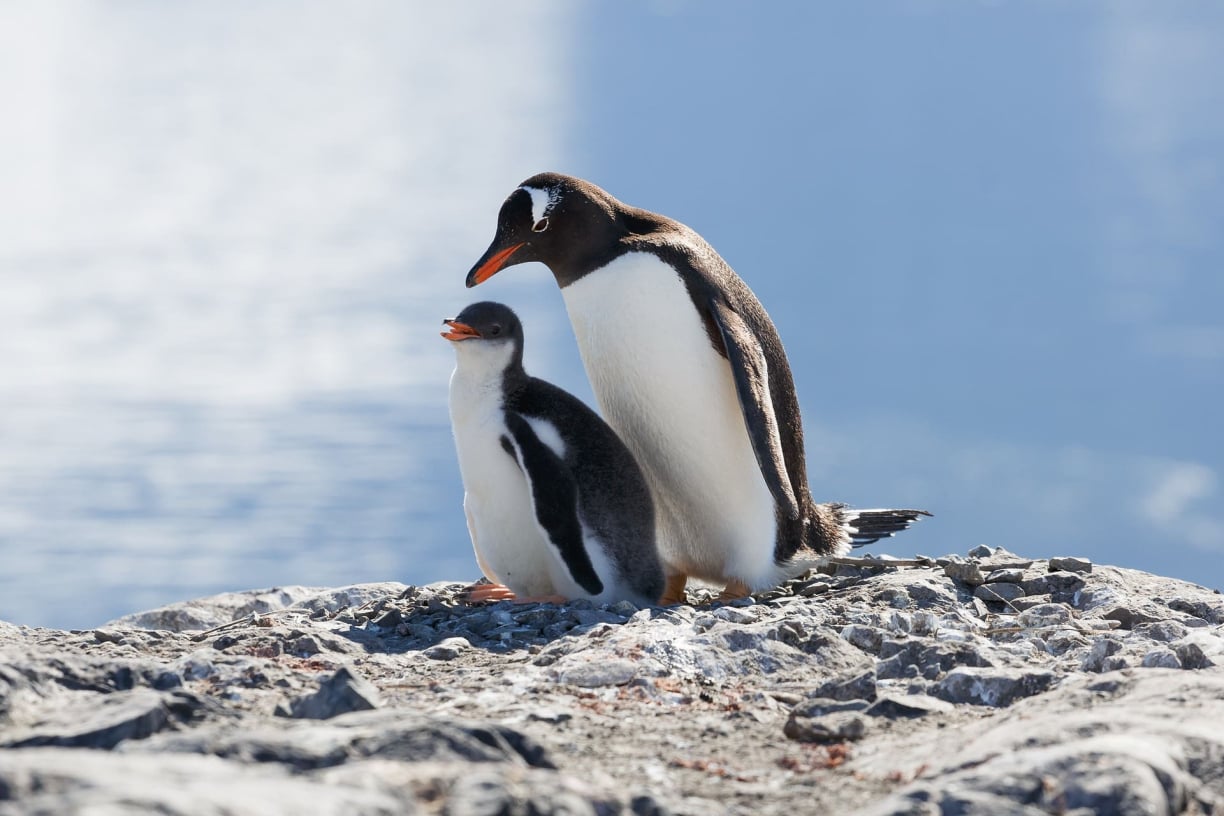
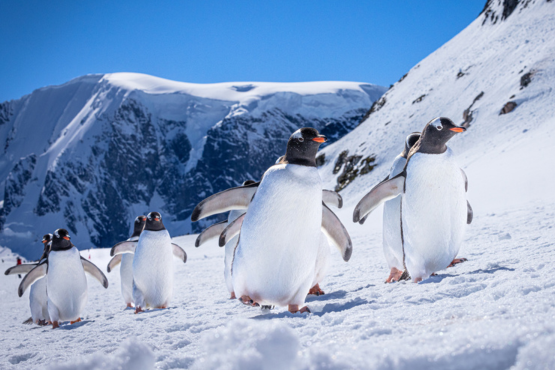
- Appearance: Orange-red beak, black body with white belly, white eye patches
- Height: 70 to 90 cm (28 to 35 in)
- Weight: 5 to 8 kg (11 to 18 lb)
- Swimming speed: Up to 36 km/h (22 mph)
- Diet: Antarctic krill, crustaceans, small fish, and squid
- Main predators: Leopard seals and orcas for adults, skuas and giant petrels for young birds, and elephant seals for eggs in nests (as elephant seals move about the beaches they may flatten nests)
- IUCN conservation status: Least concern
1 — They Are One of the Best-Dressed Goofballs in the World
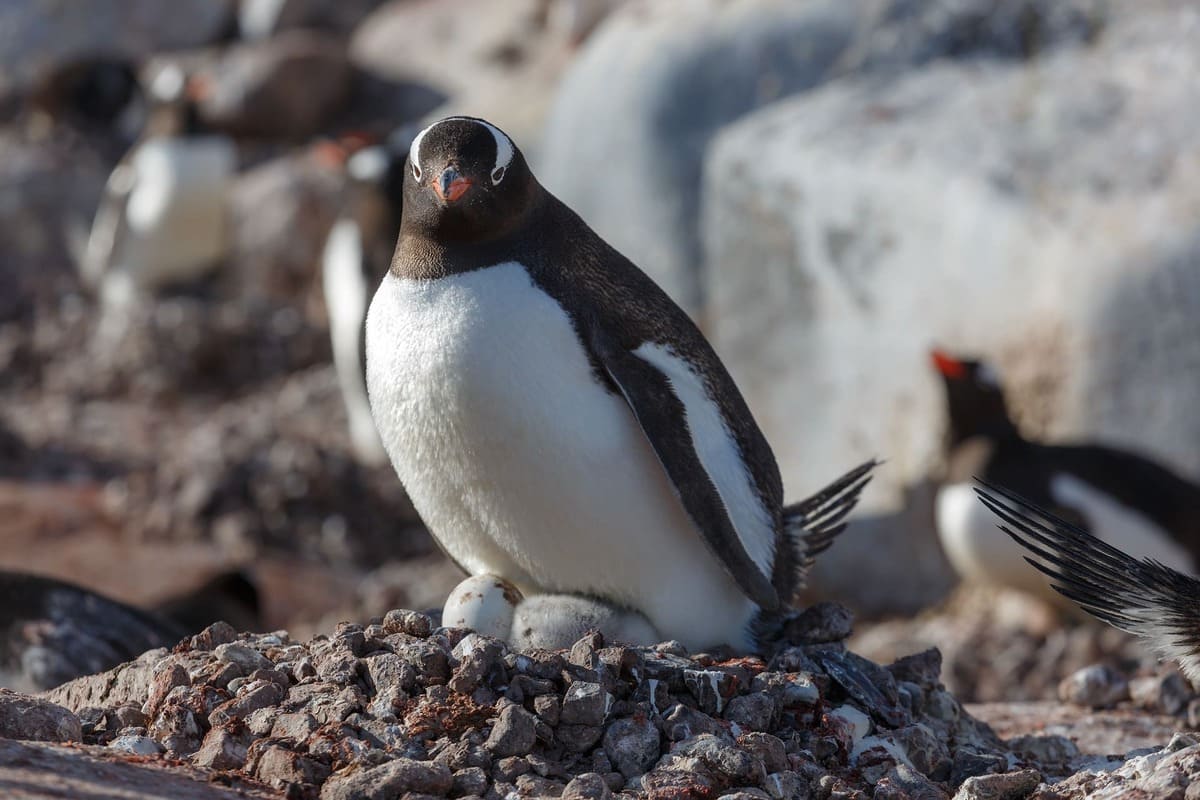
Gentoo penguins are a traveler’s favorite on all of our Antarctica cruises. They are easy to spot, with their bright orange beaks and elegant coats. Having one of the most prominent tails among all penguin species, brushing left and right behind them as they walk, they truly embody a classic white-tie attire. Reaching around 70 to 90 cm (28 to 35 in) in height (males are typically slightly larger than females), you can see them awkwardly waddling on beaches in the Falkland Islands, South Georgia, and around the Antarctic Peninsula. After the emperor penguin and king penguin, they are the third-largest penguin species in the world.
Most of the year, you’ll see them in their perfectly groomed plumage, apart from once a year, during their catastrophic molt. For around two to three weeks, they not only look disheveled, but also lose their old feathers entirely, keeping them grounded ashore. This extreme molting period follows after chicks fledge, usually around February and March in Antarctica. Only after their new coat has grown back can they enter the water and feed.
2 — Gentoo Penguins Prefer Beaches Over Icebergs
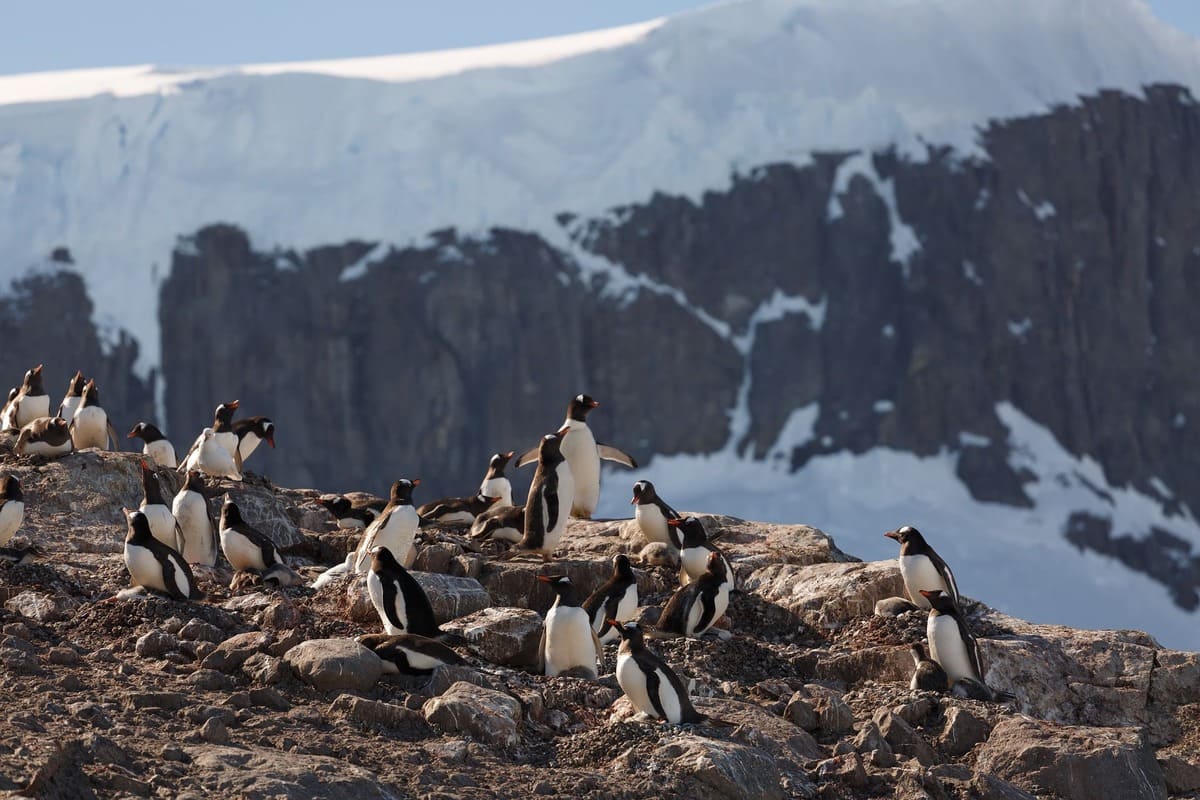
Unlike some Antarctic penguins that thrive on sea ice, gentoo penguins generally prefer ice-free coasts, though they are found as far south as 65 degrees latitude. Gentoos breed and nest in protected valleys and on rocky beaches along the Antarctic Peninsula, the Falkland Islands, South Shetland Island, South Sandwich Island, and South Georgia. During breeding season, Gentoo penguins forage close to their colonies, moving only within a radius of around 10 to 20 km (6 to 12 mi). Even after the breeding season ends and chicks fledge, gentoo penguins rarely move more than a few hundred kilometers away from their breeding sites. In comparison, other penguin species can travel thousands of kilometers during winter foraging and migration journeys.
Did you know that on our Antarctica cruises you’re almost guaranteed to see gentoo penguins? Each austral summer, a particularly famous gentoo colony with around 600 breeding pairs resides at Port Lockgroy on Goudier Island, where many expedition cruises anchor to visit the world’s southernmost post office and museum. The UK Antarctic Heritage Trust has been observing this gentoo penguin colony for over 30 years, studying its behavior and winter migration patterns. While exploring Port Lockroy, it isn’t unusual for a curious penguin to waddle up behind you while you’re busy snapping a photo of another. Browse our upcoming Antarctica departures to meet these adorable fellows in the wild.
3 — They Are the Fastest Swimming Birds on Earth
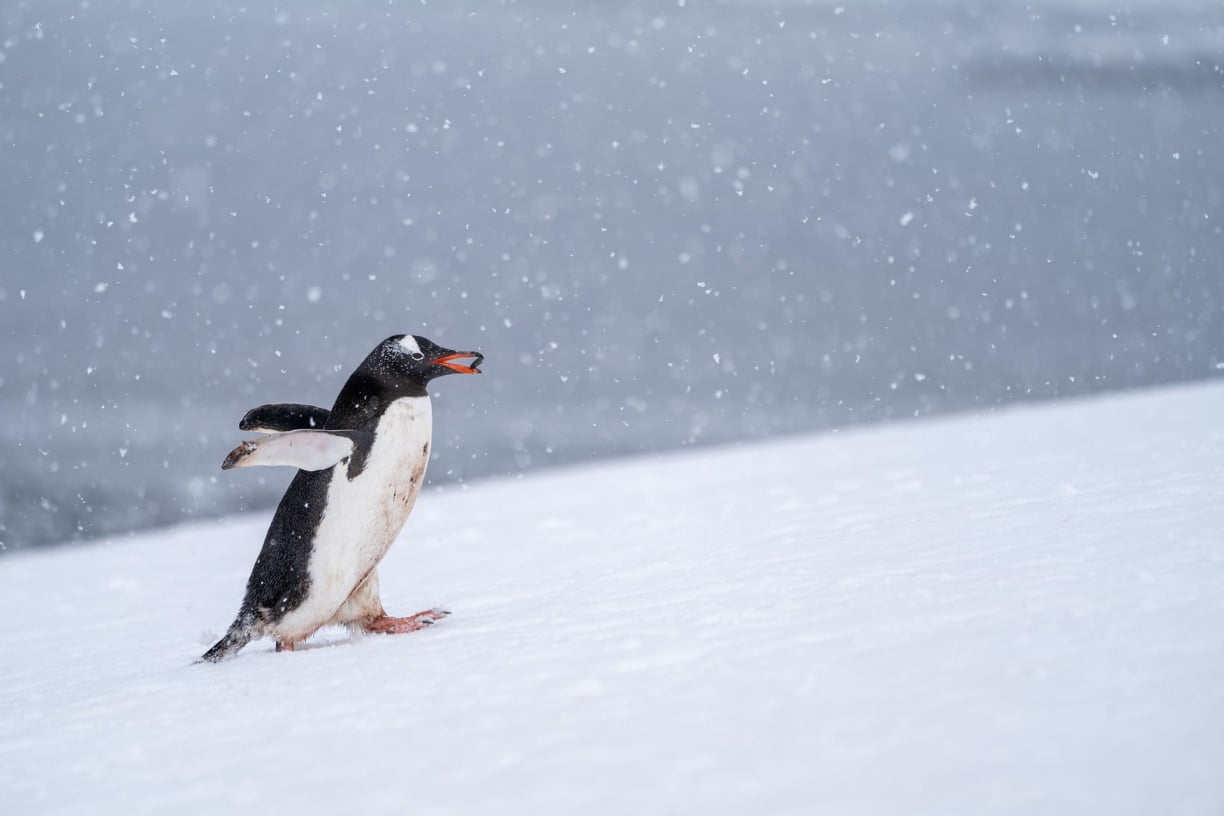
Did you know that gentoo penguins are Guinness World Record holders? With swimming speeds of up to 36 km/h (22 mph), they are the fastest-swimming bird in the world. It’s all in their streamlined bodies, which dart through the water like torpedoes. Their paddle-shaped flippers help propel them effortlessly through icy waters. According to a 2023 study published in Physics and Fluids, gentoos master the perfect combination of wing tilt and flapping frequency to reach these record speeds.
These birds aren’t just excellent swimmers, but also amazing divers. During their foraging sprees, they can dive as deep as 200 meters (655 feet) and remain underwater for up to seven minutes. Another remarkable adaptation happens inside their bodies. During deep dives, a gentoo penguin’s heart rate can drop from around 100 beats per minute to as few as 20 beats per minute, conserving oxygen and allowing the bird to remain underwater for extended periods while searching for food.
4 — Gentoo Penguins Woo Their Partners with Pebble-Presents
Gentoo penguins are true romantics among Arctic wildlife. During the breeding season in November and December, males pick carefully selected stones and present them to potential mates. Finding the best nesting site and showing it off to potential female mates is another way how male penguins try to attract a suitable partner. If a female approves of the nesting site and pebble gifts, the pair begins building a nest from collected stones, feathers, and bits of vegetation. After the female lays (typically) two eggs, both parents take turns incubating them for 34 to 37 days. This shared parenting continues once chicks are born, with both parents alternating between foraging trips and feeding their offspring.
Gentoo penguins are socially monogamous during a breeding season, and some pairs reunite year after year, often staying together for a lifetime. However, around 20% of pairs separate even within a breeding season, usually when a female chooses a partner with better potential for breeding success.
Fun Fact: Penguin males can be surprisingly sneaky! Instead of sourcing the perfect pebble themselves, some simply steal the stones from neighboring nests whenever the owner isn’t looking.
See these animals in the wild
Join us on an unforgettable expedition to discover the wonders you've just read about
or download our free brochure
5 — Gentoos “Paint” Antarctica Pink
Gentoo penguins play an important role in the Antarctic food web as both predator and prey. As mid-level hunters, they are preyed upon by leopard seals, orcas, and sea lions, while feeding on small fish, squid, and Antarctic krill. A carotenoid pigment called astaxanthin, present in krill, gives penguin guano its pinkish hue, and if you’ve ever visited a penguin colony, you may have noticed their pink, smelly “artwork” splattered across rocks, nests, and snow. The pink stains are even visible from space, helping researchers monitor colonies using satellite imagery from organizations such as NASA and the European Space Agency.
As gentoo penguins are opportunistic feeders and aren’t exclusively relying on Antarctic krill like other species, scientists analyze gentoo guano to detect shifts in ocean conditions and changes in prey availability.
Fun Fact: Penguin guano was once a commercially valuable resource, and was even used to make gunpowder! During the early 19th century, nitrates extracted from seabird guano were used in fertilizers and in the production of saltpeter, a key ingredient in explosives.
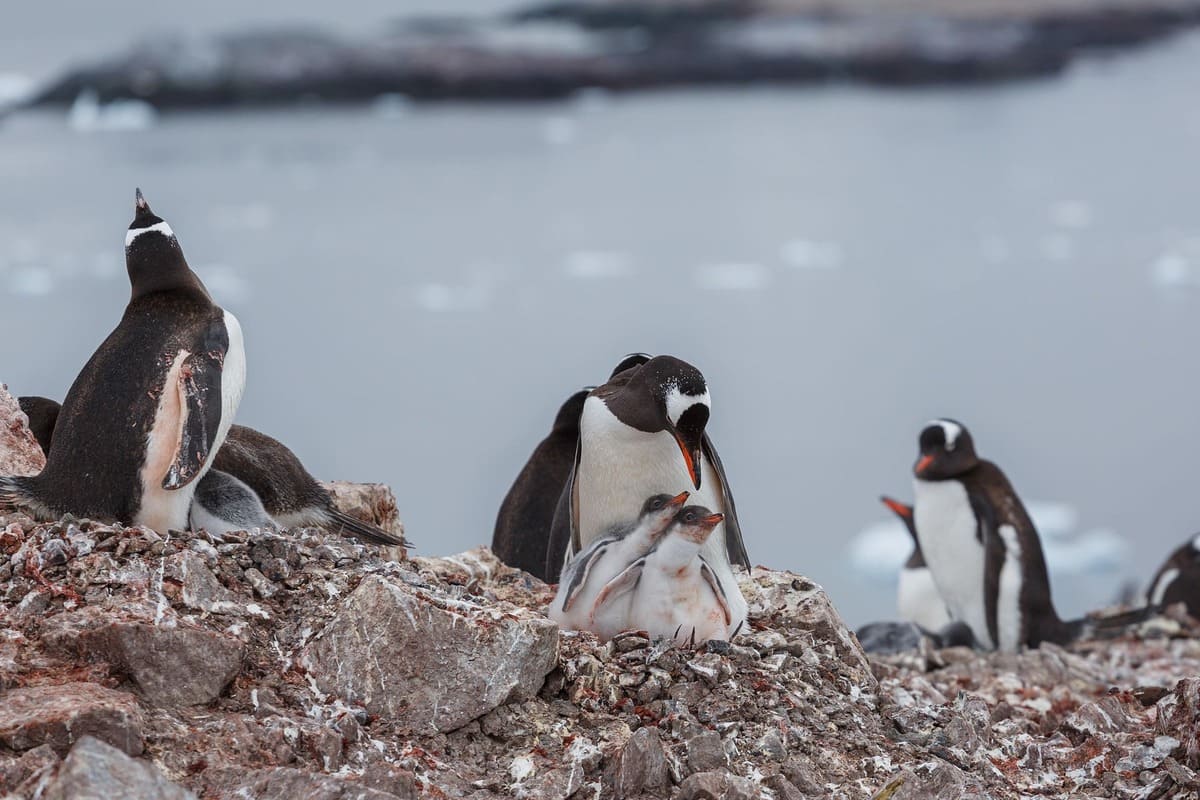
6 — They Are the Third-Largest Penguin in the World
Among 18 penguin species worldwide, gentoo penguins rank third in size, after the emperor and king penguin. Growing as tall as 90 centimeters (35 in), they are larger than other iconic Antarctic and subantarctic penguin species, such as Adélie, chinstrap, and rockhopper penguins. While emperor penguins thrive on sea ice close to the Antarctic continent, gentoo penguins prefer ice-free shores around the Antarctic Peninsula and subantarctic islands. That makes their colonies easier to access for wildlife expeditions.
Check out or size comparison of our travelers’ favorite penguins:
|
Penguin Species |
Height |
Weight |
Where to find them |
|
Emperor penguin |
100-130 cm (39-51 in) |
22-45kg (49-99 lb) |
Antarctic sea ice and pack ice |
|
King penguin |
70-100 cm (28-35 in) |
49-18 kg (20-40 lb) |
Subantarctic islands and ice-free coasts (vast colonies on South Georgia Island) |
|
Gentoo penguin |
70-90 cm (28-35 in) |
5-8 kg (11 to 18 lb) |
Ice-free Antarctic and subantarctic coasts |
|
Adélie penguin |
46-71 cm (18-28 in) |
4-6 kg (8-13 lb) |
Rocky Antarctic coasts and sea ice edges |
|
Chinstrap penguin |
68-76 cm (27-30 in) |
3-5 kg (7-11 lb) |
Rocky islands and Antarctic shores |
7 — Gentoos Are Winning the Antarctic Survival Game
As some Antarctic wildlife species face steep population declines, gentoo penguins are thriving and currently classified as “Least Concern” on the IUCN Red List. As they are less dependent on sea ice and can adapt their diet depending on prey availability, gentoo penguins appear more resilient than many other species when it comes to survival and population recovery. According to the Australian Antarctic Program and Birdlife International, there are currently around 387,000 breeding pairs worldwide. While gentoos were listed as “Near Threatened” until 2016, population numbers have increased over the past 20 to 30 years, especially in the Falklands.
Interesting fact: Gentoos may actually consist of four separate species. A 2020 study led by Dr. Jane Younger (University of Bath, UK) suggested that gentoo penguins living on the Falkland Islands should be treated as a distinct species, as they differ significantly from their cousins residing in Antarctica. And that’s not all – the researchers proposed splitting the world’s gentoo penguin populations into four separate species based on DNA evidence and physical characteristics. “The four species that we propose live in quite different latitudes,” explained Dr. Younger. “Gentoos tend to stick close to their home colonies and over hundreds of thousands of years, have become geographically isolated from each other, to the point where they don’t interbreed with each other.”
FAQs
How long do gentoo penguins live?
Gentoo penguins typically live 15 to 20 years in the wild, though their survival depends on avoiding predators such as leopard seals and orcas.
Why are gentoo penguins special?
Gentoos are the world’s fastest swimming birds, reaching 36 km/h (22 mph). They are even featured in the Guinness Book of World Records.
What makes gentoo penguins the fastest swimmers?
Gentoo penguins are built for speed, with streamlined bodies, powerful flippers, and stiff tails for steering. They master the perfect combination of wing tilt and flapping frequency to reach record speeds. During deep dives, their heart rate can also slow from around 100 beats per minute to about 20 beats per minute, helping conserve oxygen and allowing them to stay underwater longer.
How can you identify a gentoo penguin?
Gentoo penguins feature a bright-orange beak, white eye patches, and a black coat with a white belly. They reach between 70 and 90 cm (28 and 35 in) in height.
Where can you see gentoo penguins?
You can spot gentoo penguins in the Falkland Islands, around the Antarctic Peninsula, and subantarctic islands such as South Georgia. A very accessible place to see a colony with approximately 600 breeding pairs is at Port Lockroy – a popular stop for expedition cruises, where you can also find the world’s southernmost post office and museum.
Related Cruises
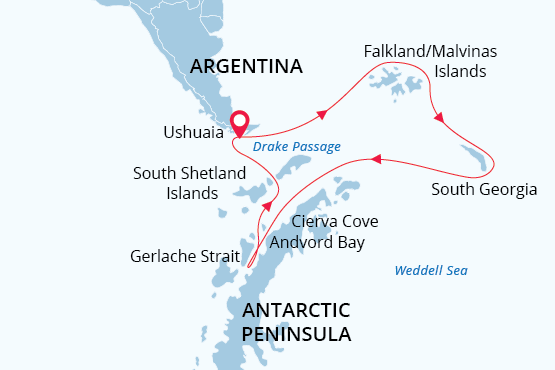
Falklands, South Georgia & Antarctica


Classic Antarctica


Antarctic Peninsula