Puffin Facts: 30+ fascinating Truths About the "Clowns of the Sea"
Cute, clownish, and completely captivating – meet the puffin, a small seabird belonging to the auk family (Alcidae), built for life both above and below the water. The Atlantic puffin (Fratercula arctica) is the most widespread puffin species and breeds across the North Atlantic, including Iceland, the British Isles, and Newfoundland. With a wingspan of roughly 47-63 cm (18.5-24.8 inches), it can reach flying speeds of up to 88 k/h (55 mph) and dive to around 60 m (200 ft) below the water surface.
They are true masters of multitasking. The backward-facing denticles inside their upper jaws let them hold multiple fish, while they continue hunting for more prey while firmly holding their previous catch in place. Many pairs return to the same nesting site each year to raise their chicks, called pufflings. The Atlantic puffin is currently globally listed as vulnerable. Read on to discover our favorite 30+ fascinating puffin facts!
Key Puffin Facts at a Glance
These small seabirds are not only colorful, but full of other surprises. Let’s get started with five interesting puffin facts to whet your appetite for what follows:
- Their beaks fluoresce under ultraviolet light.
- They can reach speeds of 88 km/h (55 mph) and dive to around 60 m (200 ft).
- Special glands help them to cope with salty seawater.
- Many pairs return to the same nesting site.
- Puffins have been observed using sticks as tools to scratch themselves!
What Does a Puffin Look Like?
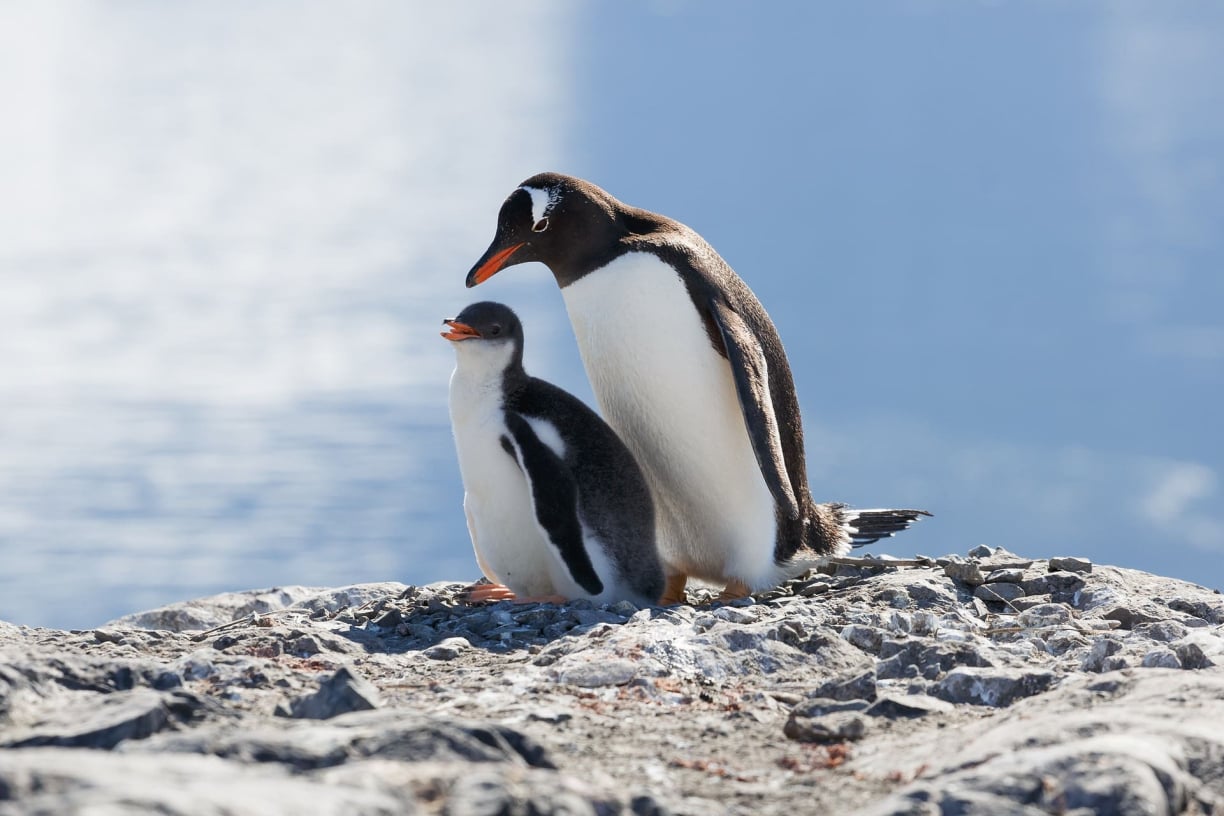
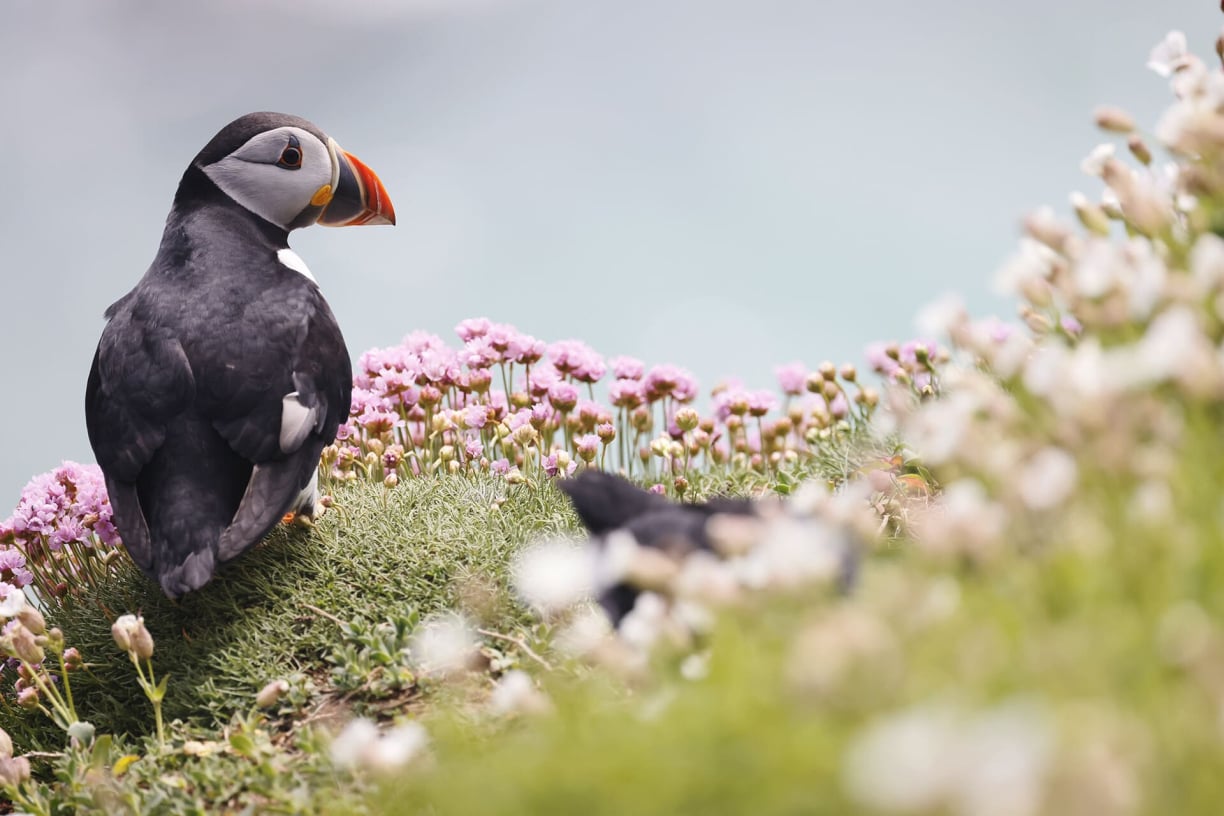
While puffins may look a bit like penguins, they are much smaller, comparable to approximately the size of a soda can. Adult birds measure around 26-29 cm (10.2-11.4 inches) and weigh roughly 310-550 g (10.9-19.4 oz). Their compact bodies are black above and white below, with a large triangular bill and bright orange feet. During the breeding season, their bills and feet become particularly vivid, caused by their carotenoid-rich diets.
If you’ve ever traveled the North Atlantic regions, you may have spotted the Atlantic puffin, but did you know that it has two Pacific relatives? The horned puffin (Fratercula corniculate) and tufted puffin (Fratercula cirrhata) are found around the North Pacific. They share the black-and-white look with their Atlantic cousins, but have their own distinctive features, such as pale-yellow feather tufts near their eyes (tufted puffin) and fleshy spike “horns” (horned puffin).
The Iconic Puffin Beak — Color-Changing and UV-Glowing
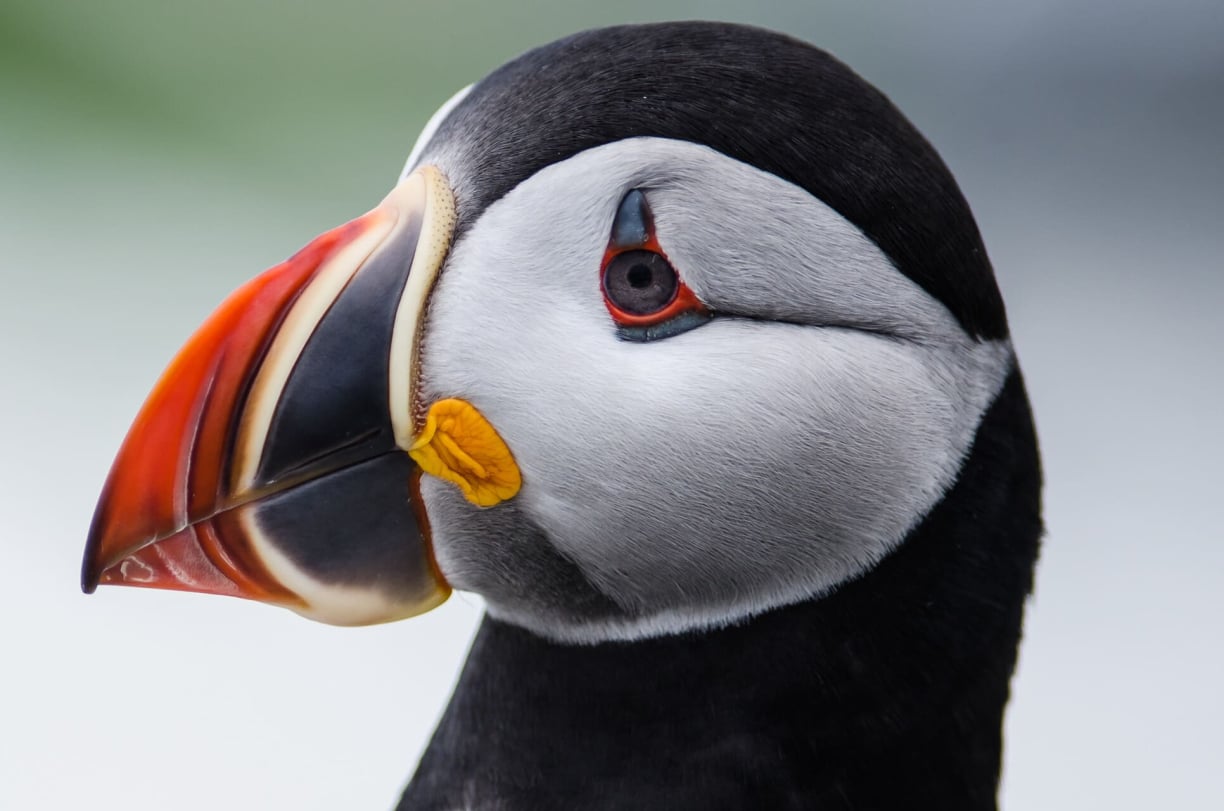
The Atlantic puffin’s bill is more than just colorful. During the breeding season, it changes to brighter colors, and recent research shows that bill color is also dynamic throughout the season. Parts of their bill are also photoluminescent under ultraviolet light, including the cere and lamellae. The exact reason why their bills are photoluminescent is still being debated, but researchers suggest that this could either serve as a social function during courtship or potentially help chicks locate their parents by recognizing their bills in the low-light conditions of their underground burrows.
Size and Weight: Bigger Than You'd Think or Smaller?
Here’s one Atlantic puffin fact that surprises a lot of our travelers: these charismatic seabirds may look a bit like penguins, but they’re much smaller! They are only about 26-29 cm (10.2-11.4 inches) long and weigh roughly 310-550 g (10.9-19.4 oz). You’d be able to comfortably fit them in your hand, as they are about the size of a soda can.
Camouflage: Nature's Countershading Design
The puffin’s black back and white belly provide excellent camouflage out at sea. In the ocean, countershading is a widespread adaptation that allows various species to move through the water undetected. This helps to confuse predators, as well as prey, helping puffins blend in with their surroundings from different angles. “It’s pretty common in the ocean, because if I’m hunting something or being hunted, if you look down on me, you can’t see me because the black is black and it blends into the abyss. And if you look up toward the sun, your belly is white and you blend in with the light,” Jacob Ligorria, a seabird ecologist and National Geographic Explorer, explains.
Meet the Puffin Family: Species Comparison
Many polar travelers assume there is just one species of puffin, but the puffin family is a little more diverse. The genus Fratercula contains three species: the Atlantic puffin (Fratercula arctica) – a favorite on our Arctic voyages, the horned puffin (Fratercula corniculate), and the tufted puffin (Fratercula cirrhata). The Atlantic puffin lives in the North Atlantic, while its two cousins inhabit the North Pacific.
|
Location |
Size |
Distinguishing Features |
|
|
Atlantic Puffin |
North Atlantic |
26-29 cm (10.2-11.4 in); 310-550 g (10.9-19.4 oz) |
Smallest puffin, colorful bill |
|
Horned Puffin |
North Pacific |
Ca. 38 cm (15 in); 483-648 g (17-22.9 oz) |
Black “horns” above the eyes; orange-yellow bill |
|
Tufted Puffin |
North Pacific |
36-40 cm (14.2-18.8 in); 520-1,000 g (18.3-35.3 oz) |
Largest puffin, long yellow head plumes during breeding season |
Atlantic Puffin vs. Horned Puffin vs. Tufted Puffin
To quickly identify a puffin by its appearance, look for a few iconic features. The Atlantic puffin has a colorful bill and a grayish-white face. It nests in burrows across the North Atlantic, in places such as Iceland, Newfoundland, the Faroe Islands, and the British Isles. The horned puffin has a distinctive fleshy horn above each eye and nests among rocky cliffs and crevices in the North Pacific. Tufted puffins feature iconic, long yellow head plumes and typically nest in deep ground burrows along Pacific coastal slopes.
The Great Name Mix-Up: Puffins vs. Manx Shearwaters
If you hear the Latin species name Puffinus puffinus, would you believe that it is not the scientific name for puffins? It is, in fact, the scientific name of manx shearwaters. The name comes from the Middle English words “pophyn” and “poffin,” which referred to cured carcasses of nestling shearwaters. These were considered a delicacy, with the use of “puffin” for the cured carcasses dating back to at least 1337. By the late 17th century, manx shearwaters were referred to as puffins, but the name “puffin” was later applied to the Atlantic puffin, possibly because of its similar burrow-nesting habits, and the way people hunted it. Though they are unrelated, people at that time used the same name for both birds. Since Puffinus puffinus was already taken as a scientific name, Fratercula arctica was chosen instead, which actually translates to “little friar of the north”.
Surprising Abilities: Flying and Diving Like a Pro
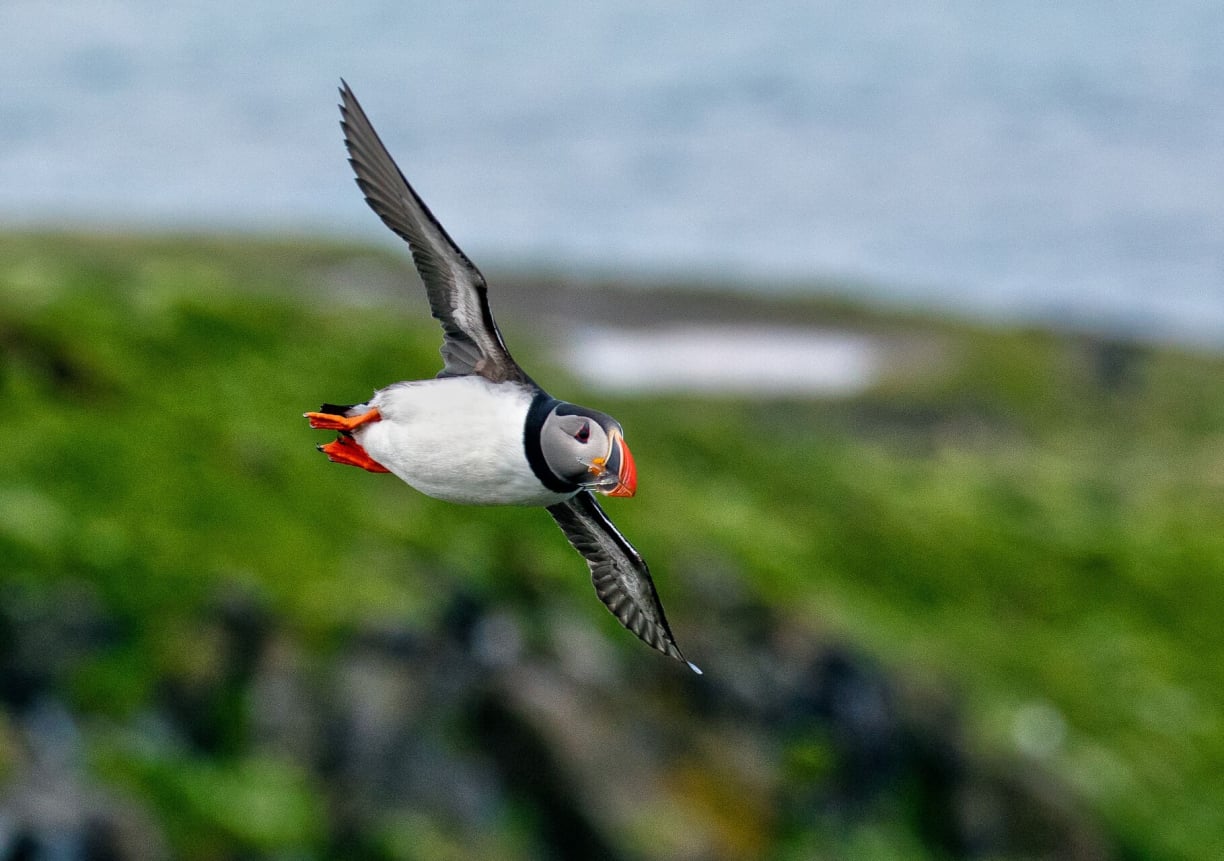
They may look similar to penguins, but puffins aren’t flightless. These seabirds are remarkably capable both in the air and underwater. Atlantic puffins can reach flying speeds of around 88 km/h (55 mph), with rapid wingbeats of up to 400 per minute, working very hard to keep their bodies airborne. Sometimes their landings on the water surface aren’t that smooth, with some birds landing almost face-first in the water. As their wings are narrow and short, they work much better as flippers underwater than as wings for generating lift flying. In the water, puffins are fast and graceful swimmers, popping their heads underwater to look for prey before swooping down for deep dives of up to 60 m (200 ft) to catch fish.
Why Puffins Fly Faster Than You'd Expect
If you see these birds for the first time, you wouldn’t believe that these stocky, almost awkward creatures can take off the ground at all, let alone reach such speeds. Yet the speeds reached by puffins are incredible, given their size and wing design. Their short, stiff wings require extremely rapid wingbeats of up to 400 beats per minute to keep them airborne. At full speed, an Atlantic puffin can reach approximately the same speed as a car traveling on a highway: around 88 km/h (55 mph). Puffin wings are an unusual compromise, allowing them to fly while also functioning as powerful flippers underwater.
Underwater Hunters: Diving Depths and Techniques
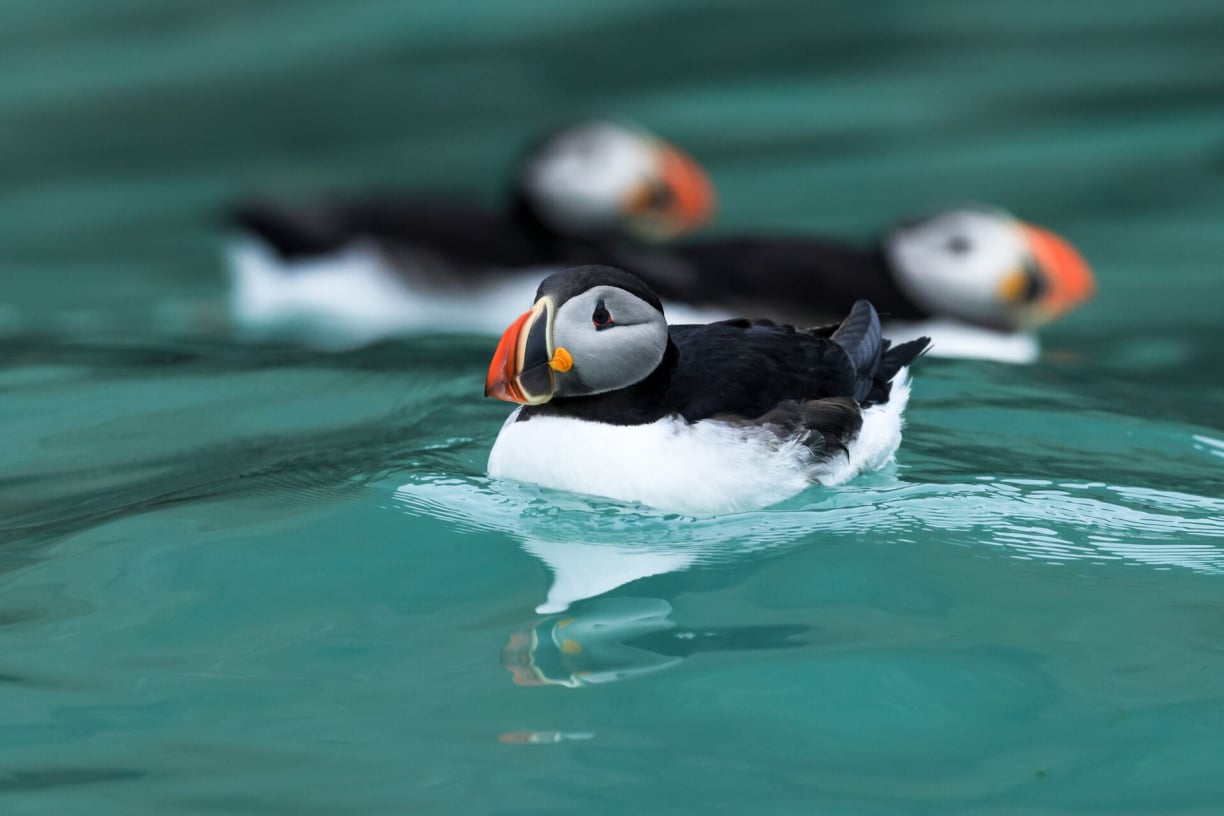
If you want to see the puffin’s full potential, you have to look beneath the surface. Puffins use their wings to glide underwater, beating them to generate thrust while their webbed feet act as rudders for steering. While they typically feed in shallower waters of around 10-30 m (32.8-98.4 ft), they can dive as deep as 60 m (200 ft) when necessary. During the breeding season, they forage in small groups of around seven birds, but during the winter they often forage alone or in pairs. Puffins are perfectly equipped for diving. Thanks to their dense bones, which make them less buoyant than many other birds with hollow bones, they are able to submerge quickly.
Built for Life at Sea: The Salt-Filtering Glands
Puffins can ingest seawater without dehydrating. Just like other seabirds, the Atlantic puffin has a built-in desalination system: a pair of salt glands above the eyes that remove excess salt from the bloodstream. The salt is partly excreted through these glands and partly through the kidneys. The concentrated salty fluid produced by the glands is expelled through ducts into the nasal passages, then trickles down the bill and is eventually shaken off.
Surprisingly Smart: Tool Use and Problem-Solving
Puffins aren’t just cute, they may also be surprisingly resourceful and quite intelligent. Based on researchers’ observations in the wild on Skomer Island (Wales) in 2014 and Grimsey Island (Iceland) in 2018, Atlantic puffins were seen picking up small sticks and using them to scratch their bodies. Their firsthand observations were published in PNAS in 2020, providing evidence that a puffin can use an external object to help it achieve a goal, a behavior that was, up to that point, particularly unexpected in seabirds. These studies prompted researchers to admit that they may have underestimated seabirds’ cognitive abilities in the past.
What Do Puffins Eat?
Puffins are mainly fish eaters, but exactly what’s on the menu depends on where they live and what’s available. Sandeels are an important food source in several North Atlantic colonies. A 1989 study in Shetland colonies showed that sandeels made up more than 90% of puffin chicks’ diets. A 2021 study found that among Norwegian puffin colonies, herring was the most common prey in adult puffin diets, representing about 86% of their diets. Puffins also forage for sprat, capelin, hake, and cod.
Puffins are incredibly dependent on small fish, and changes in prey availability, caused by warming seas, directly affect puffin populations. When sandeel and herring populations drop, puffins are forced to travel farther to find food for themselves and their chicks.
The Beak Trick: How Puffins Carry Multiple Fish at Once
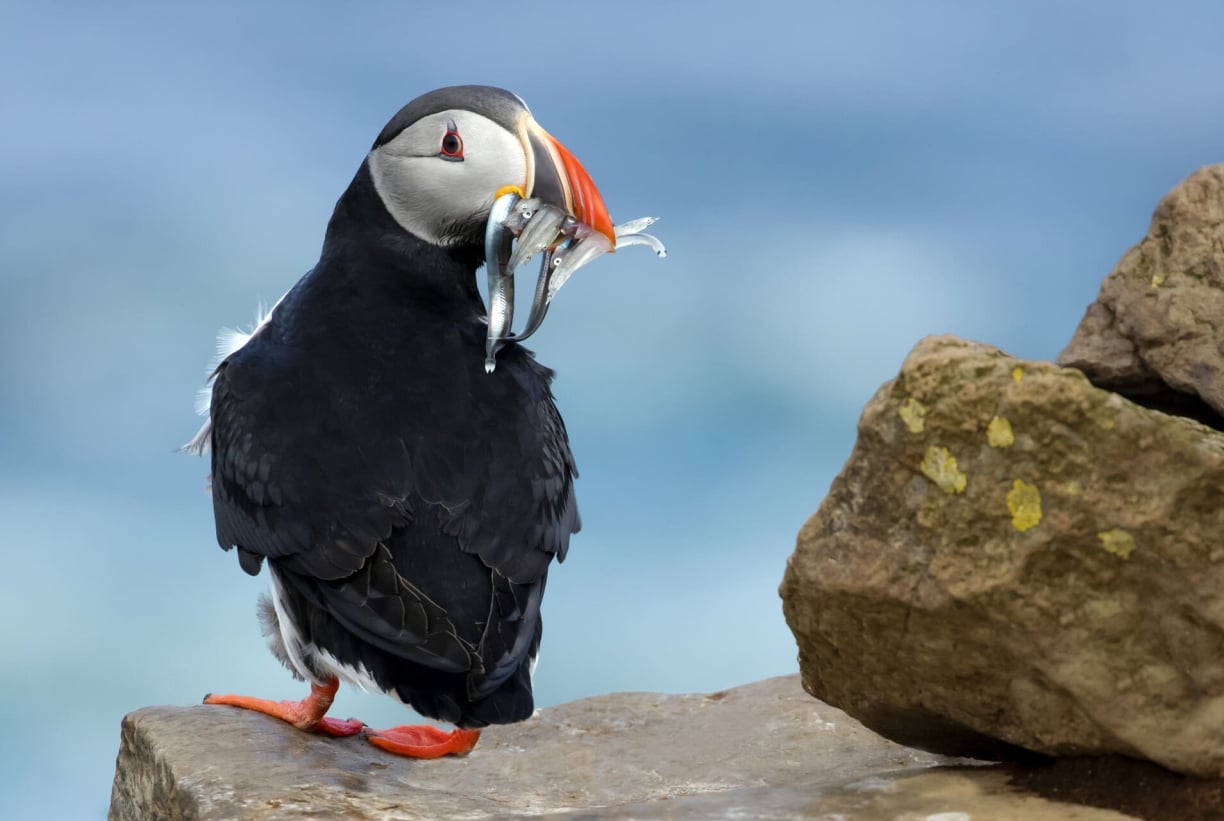
Puffins can carry a mouthful of prey to their burrows at once! Once they catch a fish, they can keep on fishing, holding all of their catch safely in their mouths. Their beaks feature backward-facing spines, also called denticles, inside the upper jaw, that work with a strong tongue to pin slippery fish in place. Their jaws have a flexible hinge, allowing them to control the degree to which their mouth opens, which helps them hold onto multiple fish. Puffins can carry around 10 fish on average at a time, but some have been seen with up to 60 fish simultaneously firmly wedged in their mouths.

See these animals in the wild
Join us on an unforgettable expedition to discover the wonders you've just read about
or download our free brochure
Puffin Love Lives: Mating and Breeding Behavior
Puffins may be real lovebirds – they often stay together for their entire lifespan, which can be up to 20 years, with the oldest recorded individual reaching 41! From around five years of age they start to breed, and pairs reunite for consecutive breeding seasons. Once a pair is reunited at the breeding colony, they reinforce their bond through a courtship behavior known as billing. After an incubation period of around 39-45 days, pairs typically raise a single puffling in a burrow, and both parents contribute to chick rearing.
Outside the breeding season, which is roughly two-thirds of the year, they live mostly solitary lives. Divorce happens if a puffin pair fails to raise chicks or if one becomes sick, but divorce rates are only around 7%. Carin Bondar, a biologist at the University of the Fraser Valley in British Columbia, explains why long-term pairing gives seabirds a distinct advantage: “Couples that have been together longer have the added bonus of partner familiarity and greater chances of reproductive success.”
And a 2017 study suggests that staying in sync and following similar migration routes during their separate winter journeys may help boost breeding success in puffin pairs. Tracking the winter migration paths of 12 pairs of Atlantic puffins with geolocation devices, zoologist Annette Fayet and her team at the University of Oxford found that the more similar the migration routes of the male and female partners were, the earlier they bred the following spring and the more likely they were to rear their offspring successfully.
Billing: The Puffin Courtship Ritual
After months apart at sea, Atlantic puffins reunite at their breeding colony and reinforce their pair bond through a behavior known as billing. The puffin pair rubs, taps, and rattles its colorful bills together, often accompanied by head-flicking and grunting displays. These bill-rubbing displays go on for about a minute, with brief intervals. Occasionally, an onlooking male may rush between the pair, resulting in a fight between the males.
Home Building: How Puffins Dig (and Sometimes Steal) Burrows
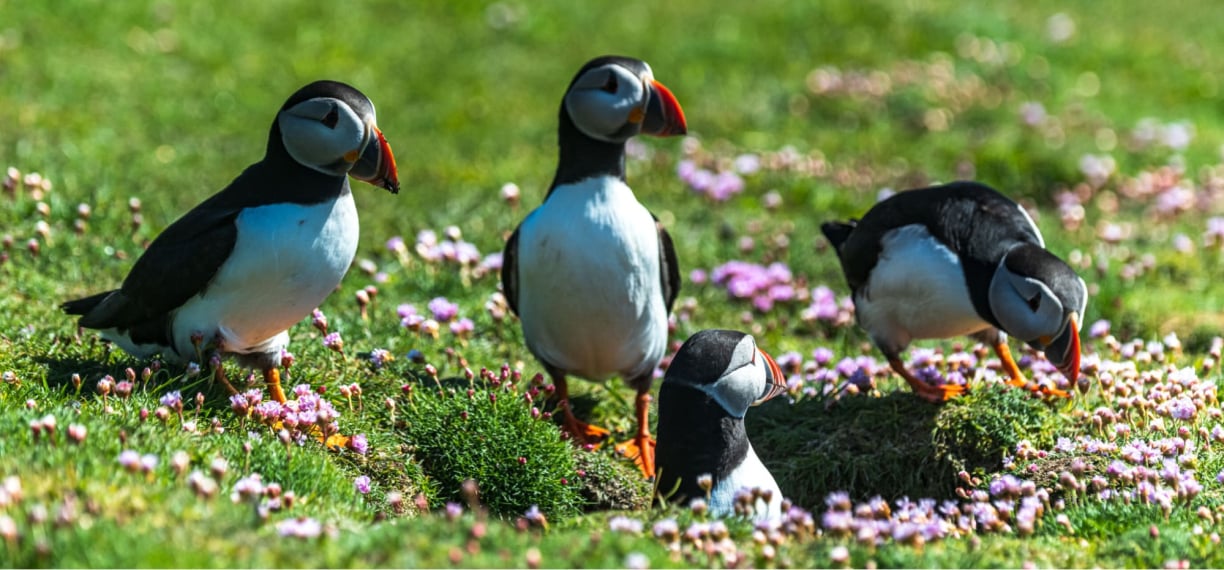
Atlantic puffins dig shallow burrows into the ground, using their bills and feet. Both partners help with the excavation, but males typically do more of the digging. Puffins may either reuse their burrows year after year or take over existing burrows dug by rabbits or manx shearwaters. Grass and twigs typically line the bottom of the burrow.
Burrows are valuable real estate, and puffins actively defend them against intruders. Parents take turns guarding the burrow entrance against other puffins that may try to take over the burrow.
From Egg to Ocean: The Puffling Life Cycle
The Atlantic puffin’s journey from egg to ocean is surprisingly fast. A female lays a single egg, which both parents take turns incubating for around 39-45 days. Once the little puffling hatches, it stays inside the burrow, where both parents bring fish to feed it and care for their little one. At first, they feed it directly from their bill; later they drop fish on the floor of the nest. After roughly 38-50 days, the chick is ready to leave the burrow. This usually happens at nighttime, when the little puffling flies directly out to sea. At this point, the puffling is fully independent, returning to the breeding site only after reaching sexual maturity, typically at around 3 to 6 years.
The Dangerous First Flight: How Pufflings Leave the Nest
For a young Atlantic puffin, the first flight is a dangerous adventure. Little pufflings typically emerge at night in late August and September, using natural moonlight to find their way toward the sea. Artificial lights can confuse them, drawing them inland instead. On Heimaey Island in Iceland, local volunteers run a Puffling Patrol, rescuing stranded chicks and helping them make their way to the ocean. During the fledging season, volunteers from the Puffling Patrol stay up late and roam the town, picking up stranded birds from under parked cars or near bins. It’s a long-standing tradition in Heimaey, and it may have started in the early 1990s when the town and its light pollution started to grow.
Where and When to See Puffins in the Wild
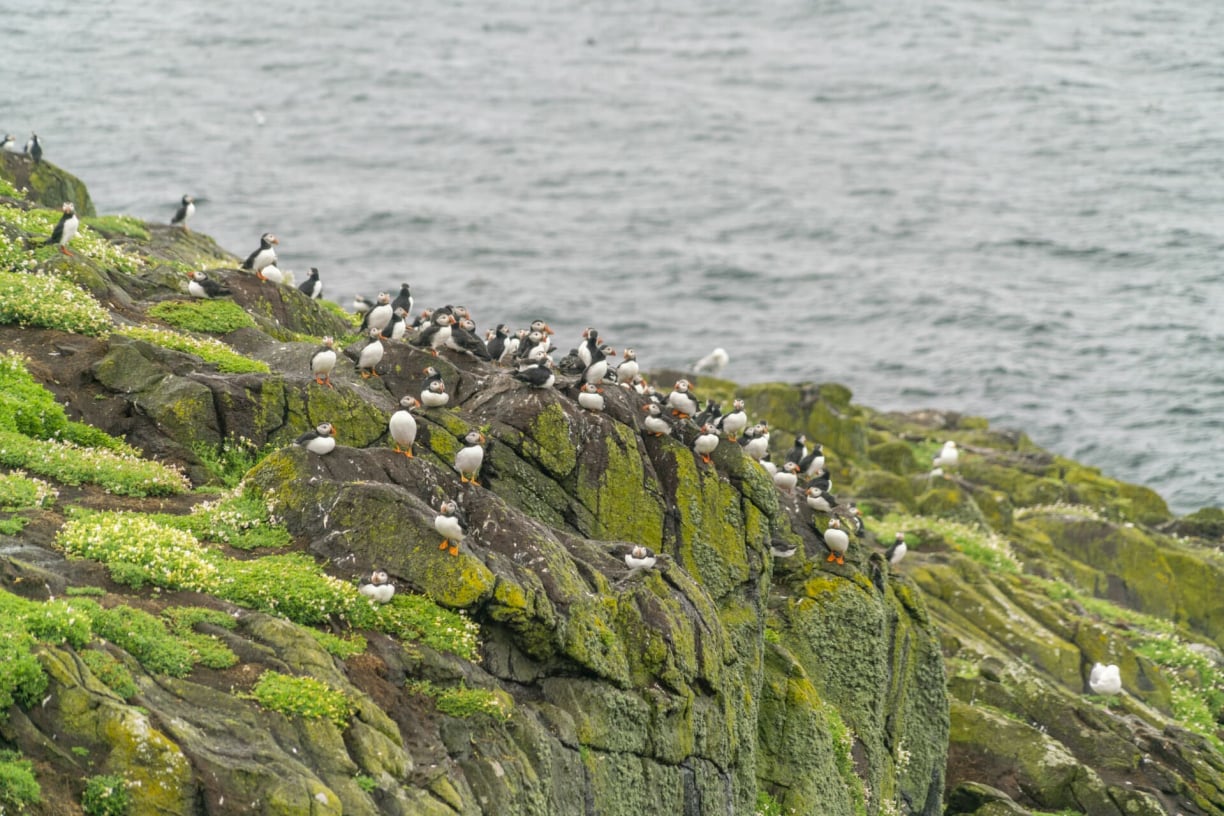
If you want to see adorable Atlantic puffins in the wild, timing is crucial. The best times to see their busy colonies are in June and July, but you can generally see them from late April through August. Iceland offers one of the world’s best-known and most accessible puffin-watching opportunities, for example, at the Westman Islands. The British Isles offer spectacular puffin colonies across Scotland, the Shetland and Orkney Islands, Ireland, and Wales. One of the most spectacular places to see puffins is at the Hermaness National Nature Reserve on Unst in Shetland, where you can see birds returning to the cliffs in spring just in time for breeding season. In the United States, Maine is the only state where you can see Atlantic puffins breeding, with several offshore colonies that are only accessible by boat.
An excellent way to explore prime puffin destinations is aboard a small expedition ship to the British Isles, with departures that visit the Faroe Islands, Iceland and the Westman Islands during peak breeding season. Our British Isles cruises put you aboard the 114-passenger M/V Sea Spirit, which navigates narrow coastal inlets inaccessible to larger vessels, so you can access remote colonies without disturbing them. Onboard naturalists help you understand these incredible seabirds and their peculiar behaviour on every landing. One route worth a closer look is North Atlantic Wonders, a 14-day voyage that takes in some of the region's best puffin-watching sites, including Fair Isle's colony of around 12,000 birds.
Best Puffin-Watching Destinations by Region
- Westman Islands (Iceland): Home to the world’s largest Atlantic puffin colony, with prime viewing opportunities from May to August, peaking in June and July
- Shetland – Hermaness, Sumburgh Head, and Fair Isle (Scotland): Outstanding puffin-watching locations, peaking in June and July
- Orkney (Scotland): Castle o’ Burrian on Westray or the Brough of Birsay are perfect to see puffins from late April through July
- Skomer Island (Wales): Puffins arrive from mid-April to late July, with May and June offering excellent viewing opportunities
- Farne Islands (England): Visit during the main breeding season from May to July
- Cliffs of Moher (Ireland): Puffins arrive in spring, and May and June are the best months to see them
- Maine (U.S.): Boat trips run from May through August to visit offshore colonies
Conservation Status: Are Puffins Endangered?
The Atlantic puffin is currently classified as Vulnerable on the IUCN Red List. Rapid declines across much of Europe may put the Atlantic puffin in danger of extinction, as data from Iceland indicates a 70% fall in populations since 1975. Antonio Vulcano, Senior Marine Conservation Officer at BirdLife Europe and Central Asia, notes that threats to seabirds in Europe are worsening with each year, with seabird populations declining and recovery taking a long time. “Puffins, an iconic species of the northern seas, are no exception. Stormy weather in the Atlantic during the winter has caused huge numbers of puffins and other seabirds to wash up dead on Spanish, Portuguese, French, and UK shores. This adds to an already long list of threats, such as food shortages due to overfishing, bycatch in fishing gears, and predation at breeding colonies by invasive alien species,” explained Vulcano in March 2026.
Visiting colonies respectfully and with a responsible tour guide also plays a role in conservation: small group expeditions, operators that adhere to appropriate distances and wildlife preservation guidelines, and tour operators that raise awareness of seabird conservation can all help shape the future of Atlantic puffins.
From Dinner Plate to Protected Species: A Brief History of Puffin Hunting
Puffin hunting is deeply rooted in North Atlantic culture. In Iceland, the tradition dates back to Norse settlement, while the Faroe Islands have a similar long history of using Atlantic puffins for food. During the Viking Age, hunting seabirds and collecting their eggs was crucial for survival, but for their descendants, the tradition lives on as part of their identity. Árni Hilmarsson, a local Icelandic resident, remembers his childhood growing up on bird meat, catching puffins with a traditional triangular net called a “háfur”. He shared his experiences in a 2017 article with the Smithsonian: “Each year, I would catch 5,000 or 6,000.”
The annual summer festival Thjodhatid in the Westman Islands, which dates back to 1874, traditionally included puffin delicacies as a typical snack for the celebrations. Due to their rapid decline, puffins are nowadays a rarity rather than a frequent menu item. Even locals have cut back on puffin consumption, and restrictions have increasingly limited puffin hunting across Iceland. In 2024, puffin hunting in the Westman Islands was limited to only 15 days, a reduction from the previous six-week season. And younger Icelanders seem to have lost the taste for it, suggesting puffin meat to be less of a delicacy and rather a cultural heritage. “My daughters and grandchildren don’t like it as much as I do; they don’t think it’s tasty,” said Eythor Hardarson, council board member and chairman of the Puffin Hunting Association on the Westman Islands.
Natural Predators: Gulls, Skuas, and Land-Based Threats
When it comes to puffin predators, Atlantic puffins face threats both in the air and on land. Great skuas can attack puffins and also steal fish from them, a behavior known as kleptoparasitism. Great black-backed gulls are another aerial predator and can swoop down on puffins. At sea, large fish and grey seals prey on puffins, while during the breeding season on land, predators, including cats, weasels, and red foxes, pose a threat. While the aerial and marine dangers are natural predators, introduced land predators, such as dogs, cats, and rats, cause additional human-caused pressure on vulnerable breeding colonies.
Conclusion: From Fascinating Facts to Conservation
Puffins aren’t just clownish, and, by making it this far in our newest blog, you should now be up-to-date on your puffin facts. With a better understanding of their lives and challenges, we hope to spread awareness to ensure a bright future, safe from extinction. Your next move? Support seabird conservation or visit a colony responsibly and join one of our small-ship expedition cruises to the North Atlantic. Learn from our experts, see them in the wild, and find out firsthand what makes them so special.
Frequently Asked Questions
How long do puffins live?
Atlantic puffins can live up to 20 years, with some individuals reaching their 30s and beyond. Cornell records the oldest known Atlantic puffin at 41 years, although such longevity is unusual. Given their long lifespan, they begin breeding at only around 3-6 years of age.
Do puffins mate for life?
Atlantic puffins are generally monogamous, and pairs often remain together for many years, returning to the same breeding colony, and sometimes even the same burrow.
What is a baby puffin called?
A baby puffin is called a puffling. Eggs are incubated by both parents for around 36-45 days, after which both feed the chick inside the burrow. The young usually leave their nests after about 38-50 days, typically at night, flying directly out to sea and becoming fully independent.
Can puffins fly?
Yes – despite their plump appearance, puffins are very capable flyers. Atlantic puffins can reach speeds of around 88 km/h (55 mph) and beat their wings up to 400 times per minute. Their short wings are adapted for both flying and swimming underwater.
Are puffins related to penguins?
No, puffins belong to the auk family (Alcidae), while penguins belong to a completely separate bird lineage. Puffins live in the Northern Hemisphere, whereas penguins are found in the Southern Hemisphere. Their similar black-and-white appearance and aquatic lifestyle are examples of convergent evolution, rather than evidence of a close evolutionary relationship.
Related Cruises
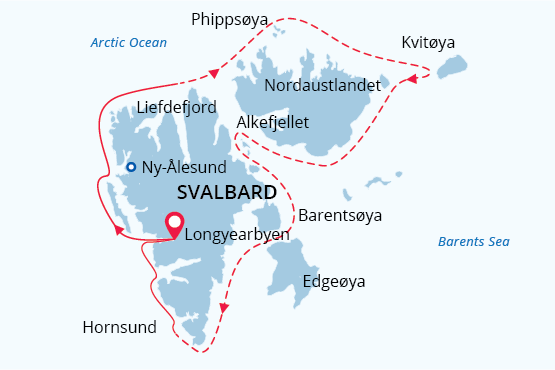
Svalbard Circumnavigation and Kvitøya


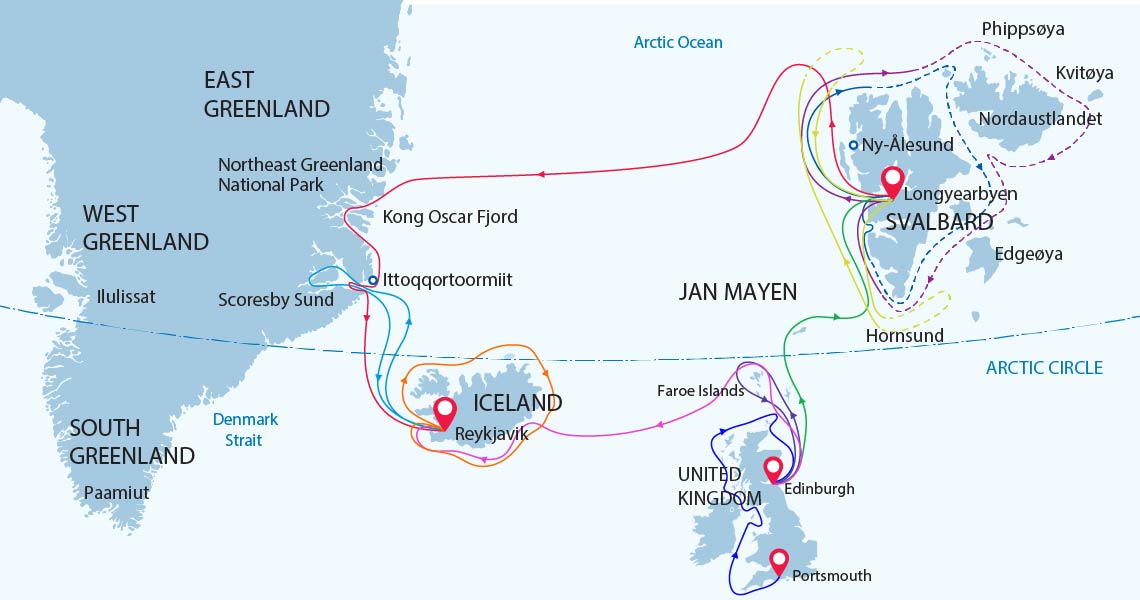

Arctic


West Svalbard & Polar Ice Edge