7 Amazing Humpback Whale Facts You Absolutely Need to Know
They are graceful giants of the ocean and can grow up to around 18 meters (60 feet) in length and weigh up to 40 tons (88,000 lb). Humpback whales (Megaptera novaeangliae) can live for up to 90 years and are famed for covering up to 8,000 kilometers (5,000 miles) between their summer feeding grounds and winter mating areas. Protected by the International Whaling Commission since 1986, humpback whale populations have had the chance to recover from near extinction. Our expedition cruises to Antarctica and the Arctic offer a high chance of spotting these amazing animals in the wild. Get ready for whale spotting and learn the seven most amazing facts about humpback whales in our new blog post.
1. They Are as Huge as a School Bus
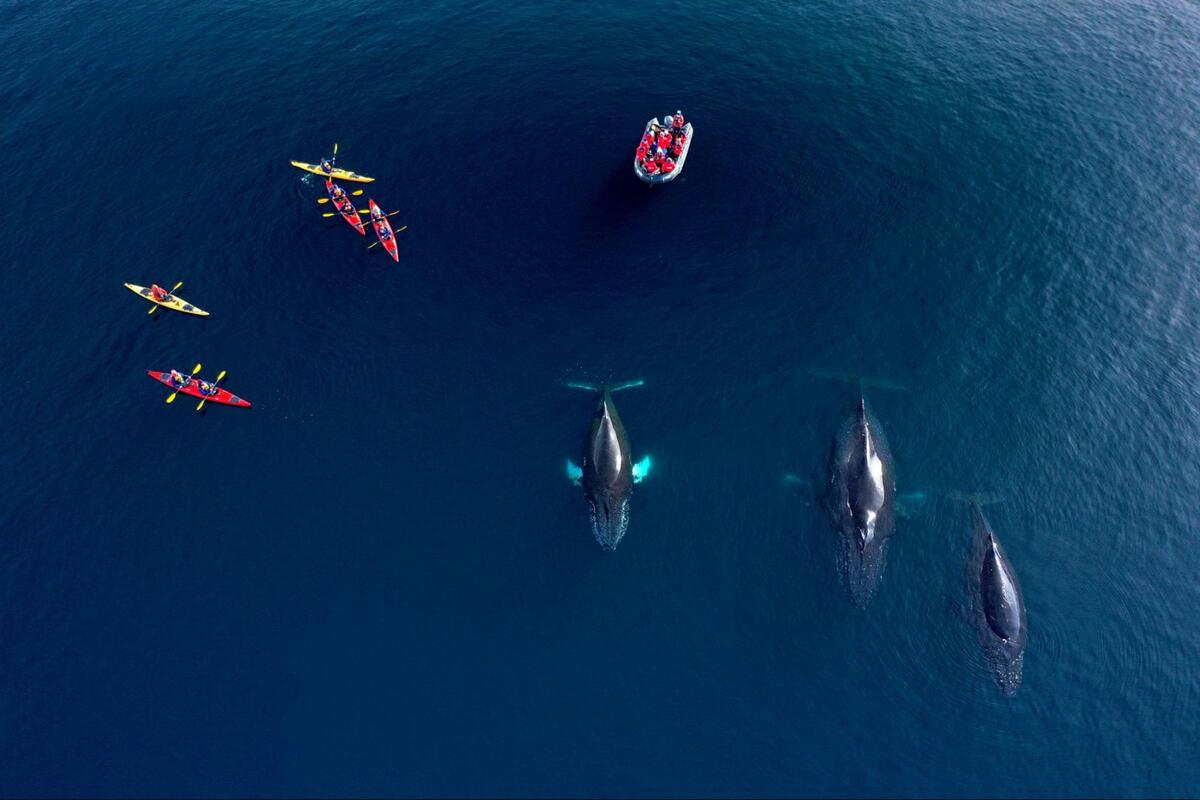
At up to 18 meters (60 feet), an adult humpback whale is about the length of a standard school bus, and females are generally larger than their male counterparts. Their long flippers resemble wings and make up almost one-third of the whale’s total body length. Usually dark grey or black in color, they feature white patches on their flippers, bellies, and the underside of the tail flukes. Southern Hemisphere humpback whales differ slightly in appearance from their Northern cousins, featuring more white markings on their flanks and bellies. Humpbacks inhabiting the Northern Hemisphere are generally darker with less white pigmentation.
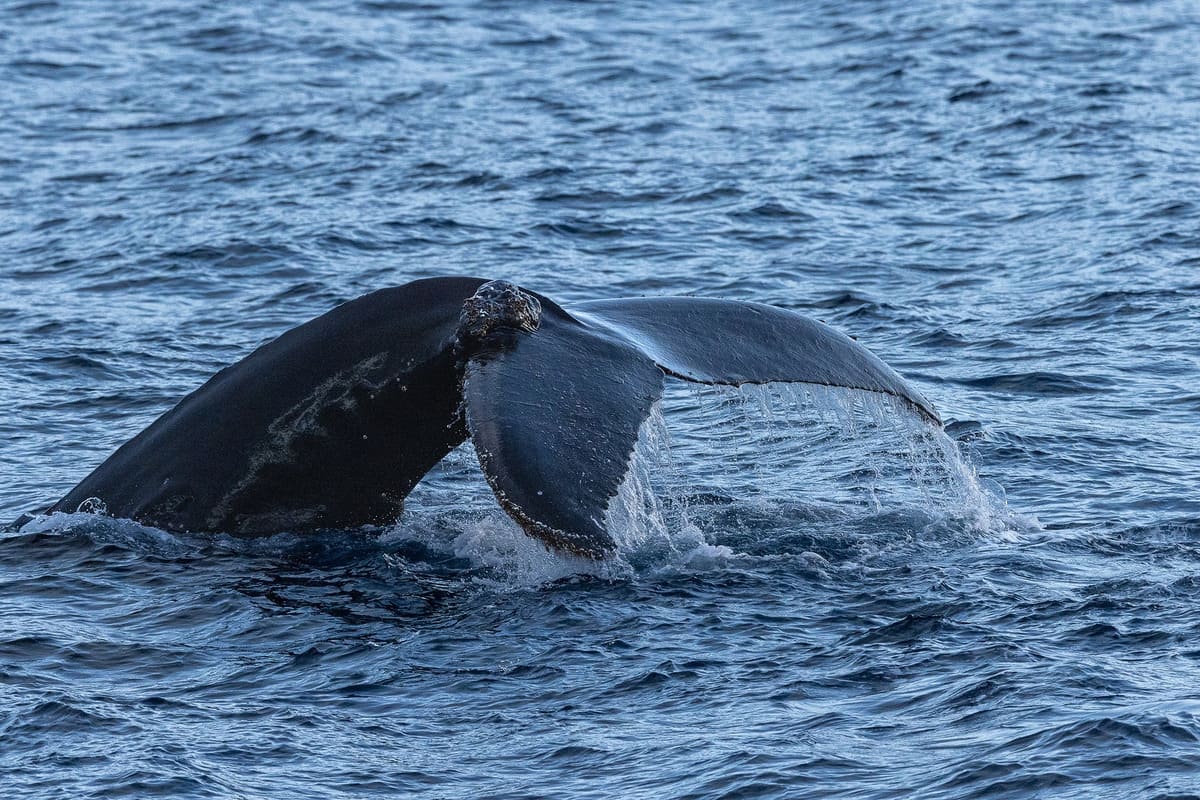
Humpbacks feature golf-ball-sized bumps on their upper and lower jaws, called tubercles, which contain an individual hair follicle (vibrissae). These are believed to help humpbacks detect vibrations in the water, locate food, and gain a more accurate understanding of their surroundings. And did you know that each whale features a unique pattern on the underside of its tail flukes? It functions like a fingerprint and is a crucial clue for identifying specific animals.
2. They’re Masters of Long-Distance Travel
Even if you consider yourself a globetrotter, chances are that humpback whales clock in more miles than some of the most seasoned travelers. Humpback whales can traverse over 8,000 kilometers (5,000 miles) to migrate from their cold, nutrient-rich feeding grounds to their breeding spots in the tropics. Populations in the Southern Hemisphere travel from the Antarctic Peninsula across the Equator to Columbia and even Mexico.
Modern satellite tracking and AI-powered photo identification make it possible to track migration routes, and detect population declines and recoveries. Happywhale, a research collaboration and citizen science platform, uses pattern recognition to create a comprehensive database of humpback whale photo IDs. And you can help Happywhale to expand it! The project relies on photos submitted by whale-watchers worldwide. Here is how you can help: join one of our expedition cruises to the Arctic or Antarctica, register on Happywhale, snap your best whale pictures, and submit them online.
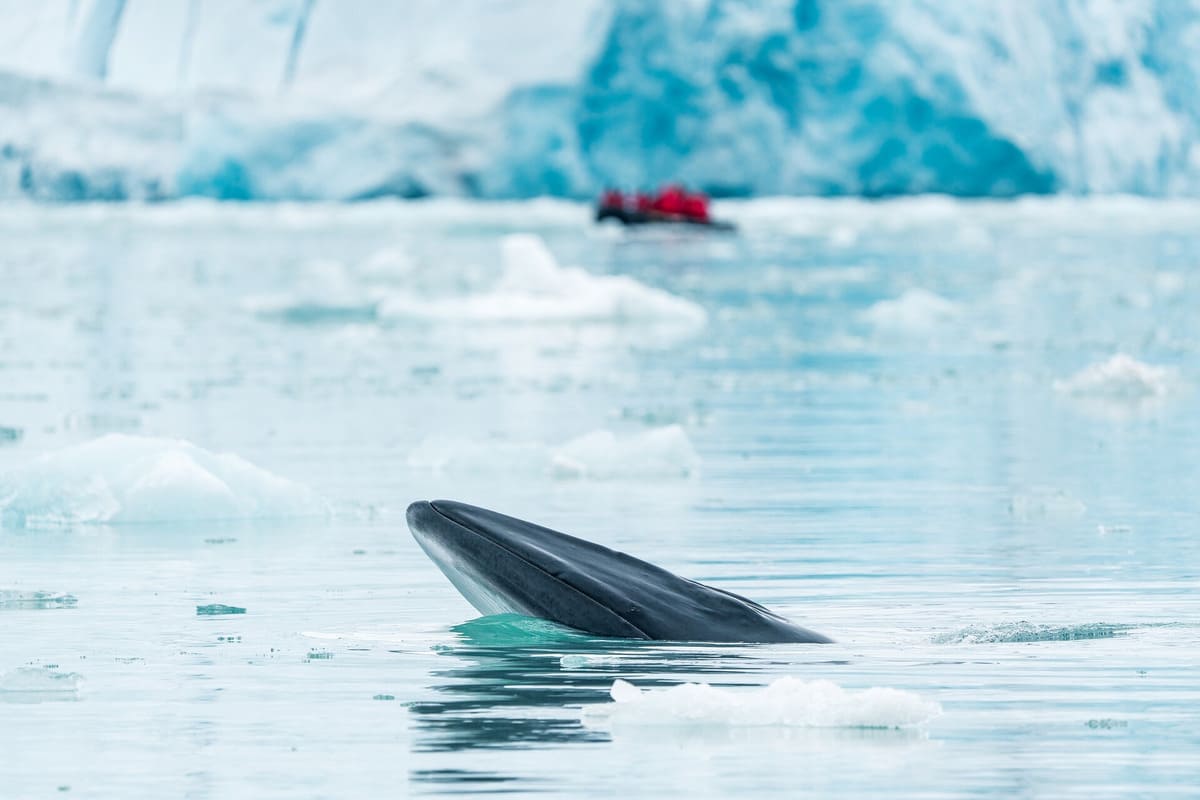
3. Humpback Whales Compose Complex Songs to Communicate
Humpback whales are among the ocean’s most famous musicians, using complex vocalizations to communicate across vast distances. Just as humans pass on traditional songs from generation to generation, humpback whale songs are learned, culturally transmitted and even evolve slowly over time. Scientists distinguish their vocalizations into song and non-song calls. While non-song calls are relatively short, songs show a clear structure with repetitive units and themes, similar to poetry. Although both males and females vocalize, scientists believe only males produce songs, mainly in their breeding grounds.
A 2025 study led by Dr. Ellen Garland from the University of St. Andrews shed light on the complexity of humpback whale songs and communication. “Whale songs are not a language; they lack semantic meaning. They may be more reminiscent of human music, which also has this statistical structure but lacks the expressive meaning found in language,” explained Dr. Garland. Did you know that humpback whales even stage musical gatherings? Dr. Garland and her team found that humpback whales use the Kermadec Islands near New Zealand as a stopover on their migration routes to gather and share complex songs among different populations.
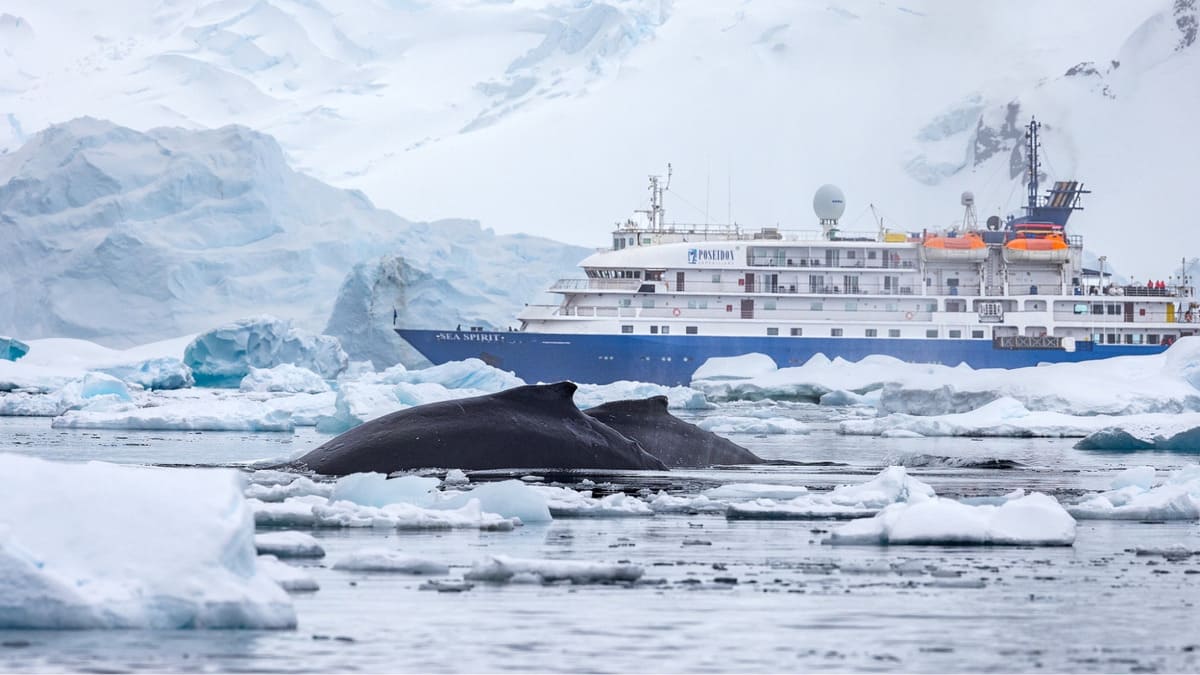
4. They Consume up to 1.5 Tons of Food Daily and Can Trap Prey in Bubble Nets
Plankton, small fish, and predominantly krill are on a humpback’s daily menu. In the Southern Hemisphere, humpback whales flock to Antarctic waters during the austral summer to feed on the abundant, nutrient-rich Antarctic krill. As baleen whales, their baleen plates (comb-like structures in their mouths), filter vast quantities of food from the water.
Did you know that humpback whales use an ingenious technique to hunt their prey? They use bubble nets to trap prey such as krill, herring, and young salmon. Whales dive below their prey and swim in circles while releasing bubbles from their blowholes. These create a curtain of rising air bubbles, which acts as a visual barrier and traps the prey. This feeding behavior is used not only during solo hunts but also when humpbacks feed in groups, and mostly when prey is scarce. When prey is abundant and dense, this energy-intensive technique typically isn’t used. Instead, humpback whales rely on it as a clever tool when prey is scarce to make feeding more efficient.
See these animals in the wild
Join us on an unforgettable expedition to discover the wonders you've just read about
or download our free brochure
5. Humpback Whales Defy Gravity
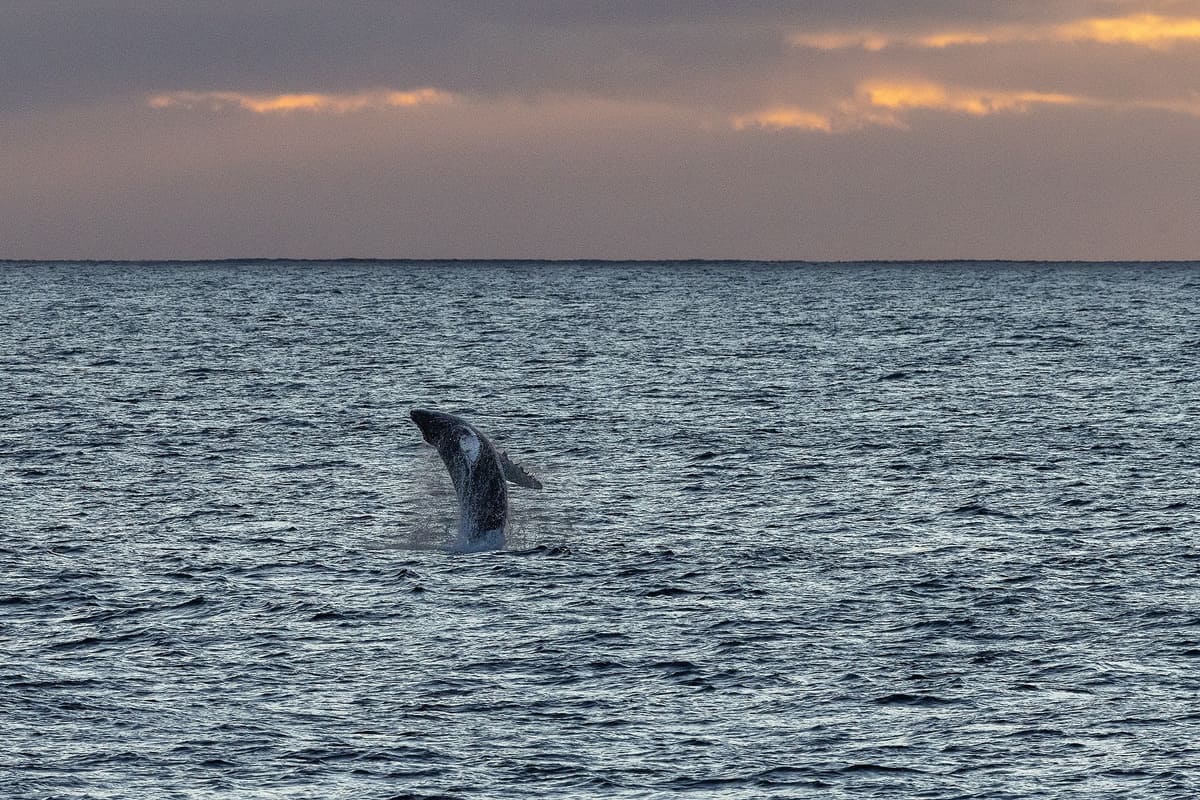
They are the undisputed stars of whale-watching cruises. During breaching, they launch their massive bodies out of the water, giving you a brief moment to snap some of the best wildlife pictures of your life. To complete this elegant maneuver, humpback whales use their powerful flukes to propel up to two-thirds of their massive bodies out of the water. Imagine weighing as much as a tank but leaping 12 meters (39 feet) above the water’s surface!
Breaching isn’t just a perfect opportunity to catch them on camera but is also thought to help humpbacks communicate with other whales, observe their surroundings, and even remove parasites from their bodies. The sheer force of breaching may effectively detach unwanted hitchhikers.
6. Humpback Whales Made One of the Greatest Comebacks in Ocean History
While humpback whales were heavily hunted from the early to mid-20th century for their meat, oil, and blubber, they’ve since made a remarkable comeback. Before the final moratorium on commercial whaling came into force in 1985, numbers dropped by up to 95% among some populations. According to the International Whaling Commission (IWC), population numbers in the Southern Hemisphere are back to around 70% of pre-whaling levels. The International Union for Conservation of Nature (IUCN) removed humpback whales from the list of vulnerable species in 2008.
While overall numbers show a promising recovery, the conservation status varies among different populations in the Northern and Southern Hemispheres. According to a 2026 NOAA Fisheries status assessment, four out of 14 distinct populations are still protected as endangered, with one listed as threatened. In U.S. waters, four whale stocks are considered depleted under the Marine Mammal Protection Act.
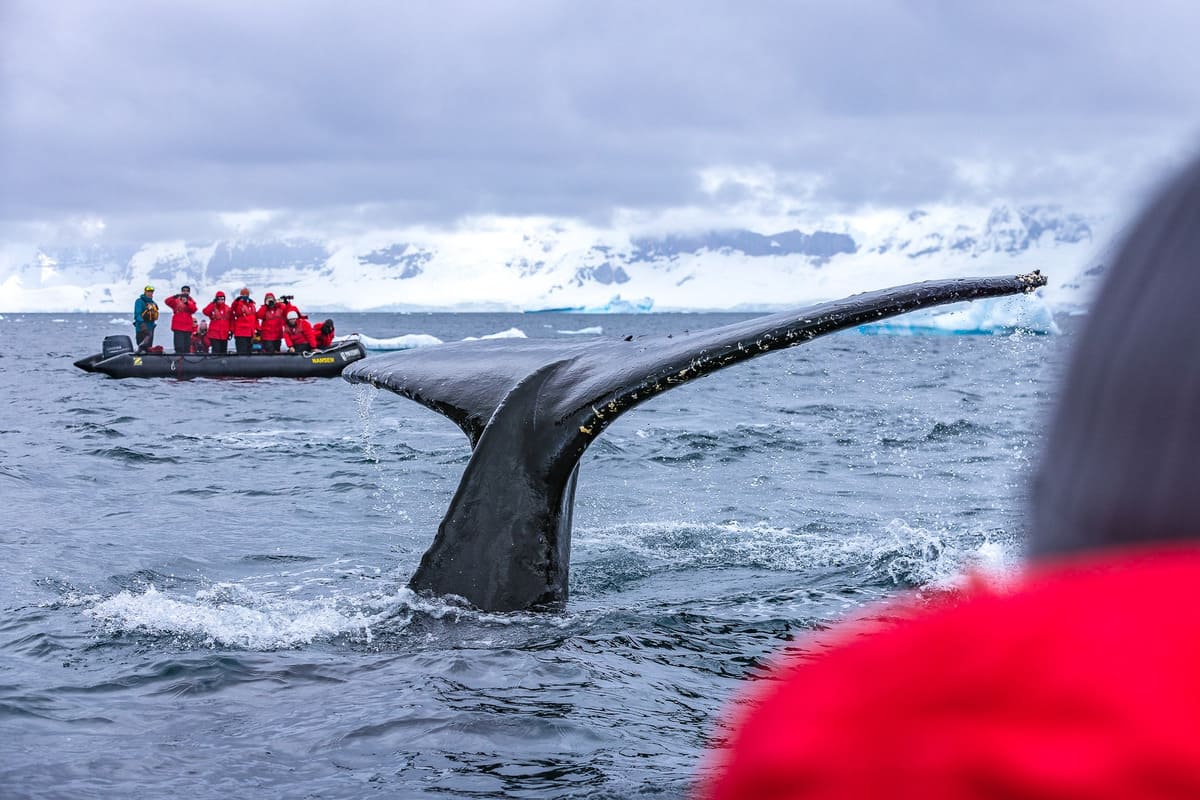
7. One of the Best Places to Spot Them is Antarctica
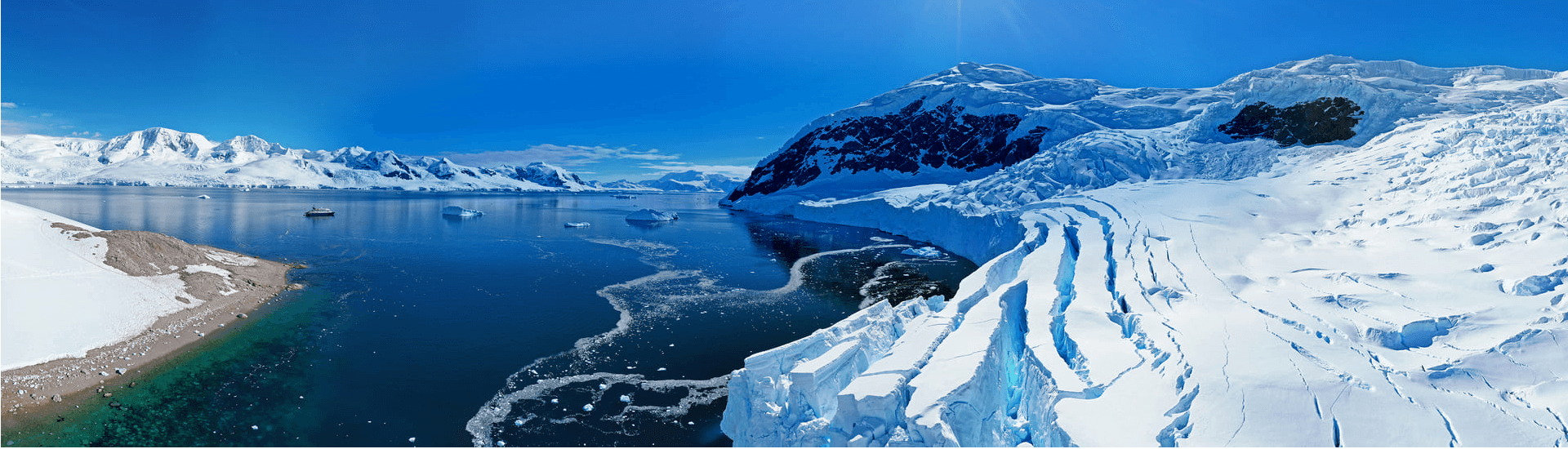
Ready to embark on an incredible whale-watching adventure? On our Antarctic Peninsula cruises, we frequently spot humpback whales in the wild. We organize our expedition cruises during the austral summer (from November to March) when temperatures are milder and wildlife activity is at its peak. The best months for whale watching are later in the season, around February and March, when whales return to their feeding grounds. Get ready for a once-in-a-lifetime wildlife adventure and book your cruise now.
FAQs
Are humpback whales friendly to humans?
Humpback whales are generally gentle and curious animals, often approaching ships and Zodiacs. While they aren’t aggressive toward humans, they are still massive animals. On our expedition cruises, we follow strict guidelines and maintain minimum distances during whale watching to ensure encounters are safe for both you and the animals.
Are humpback whales dangerous?
Humpback whales are not considered dangerous to humans, but their massive size can be dangerous if a person or boat is too close during a breach. IAATO guidelines include distances of at least 100 meters (328 feet) from whales, and boats must never approach whales head-on or from behind.
How long do humpback whales live?
Humpback whales typically live for around 45 to 50 years, but some individuals reach ages of 80 and even 90 years. Their age is determined by studying the layers in their earplugs, which act as indicator similarly to the growth rings of trees.
When is peak migration season?
In Antarctica, peak migrating season for humpback whales lasts from late February to March. During this time, whales gather in massive numbers to feed on the nutrient-rich krill before beginning their long journey north to their tropical breeding grounds.
What makes their songs unique?
Humpback songs are complex, rhythmic sequences that even evolve over time, are passed on to other whales, and shared between populations. These vocalizations can travel vast distances through the deep ocean.
How successful is whale watching?
While we can never guarantee that you spot specific wildlife on our cruises, Antarctica expeditions during the summer have very high chances of encountering whales. Especially around February and March, whale activity is high, as they return to feed on Antarctic krill during that period. From our large, open deck aboard the Sea Spirit, you have the best chances to spot them.
Related Cruises
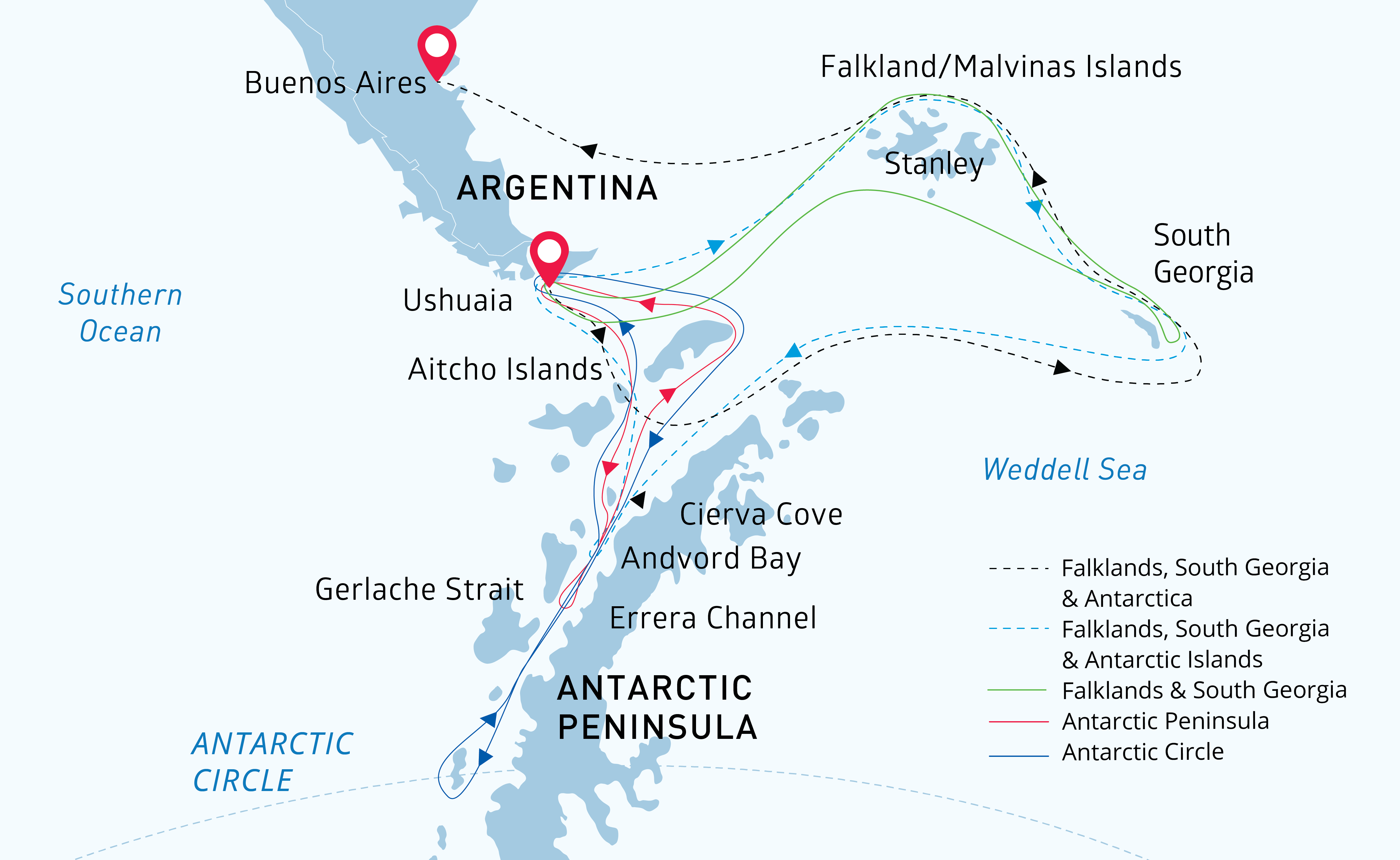
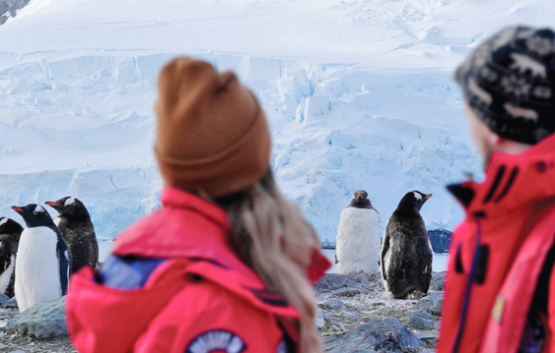
Antarctica


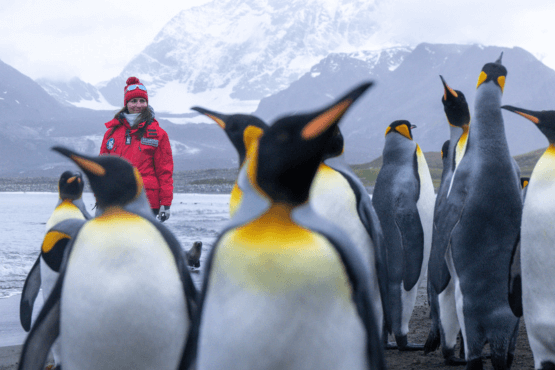
South Georgia & Falklands
Antarctic Peninsula