Antarctic Peninsula vs. South Georgia & Falklands Itinerary
The fundamental difference between an Antarctic Peninsula itinerary and one combining South Georgia and the Falkland Islands is the balance between Antarctic landscapes and the extraordinary concentration of subantarctic wildlife and polar history. Separated from the southern tip of South America by the Drake Passage, Scotia Sea, and Antarctic Convergence, both types of cruises typically start in Ushuaia, where you board a small expedition ship.
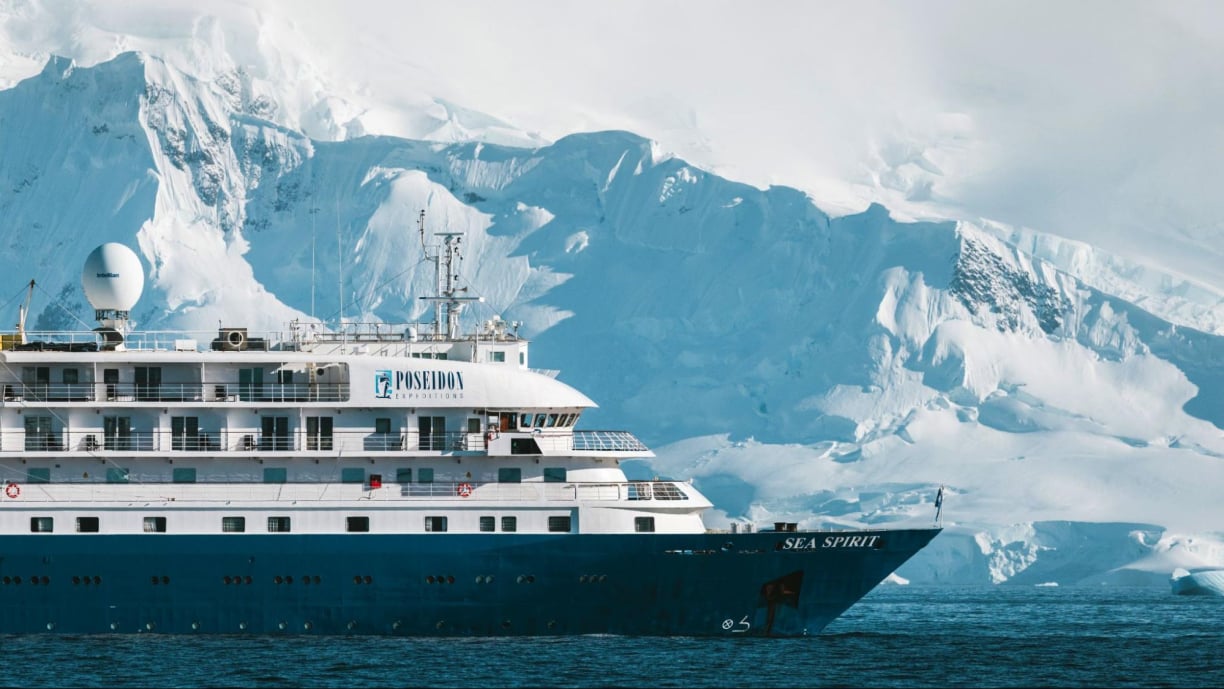
While you find glaciers, icebergs, snow-capped mountains, and iconic wildlife-viewing opportunities around the Antarctic Peninsula, South Georgia adds enormous king penguin colonies with over 450,000 breeding pairs, elephant seals, and historic sites associated with Shackleton to the itinerary. On the Falkland Islands, you’ll find incredible landscapes, birdlife, and a distinctly British flair. You can experience these destinations with Poseidon Expeditions aboard the 114-passenger M/V Sea Spirit. All guests explore together, without waiting aboard. We maximize time ashore with up to three landings per day, typically lasting around 2.5 hours each.
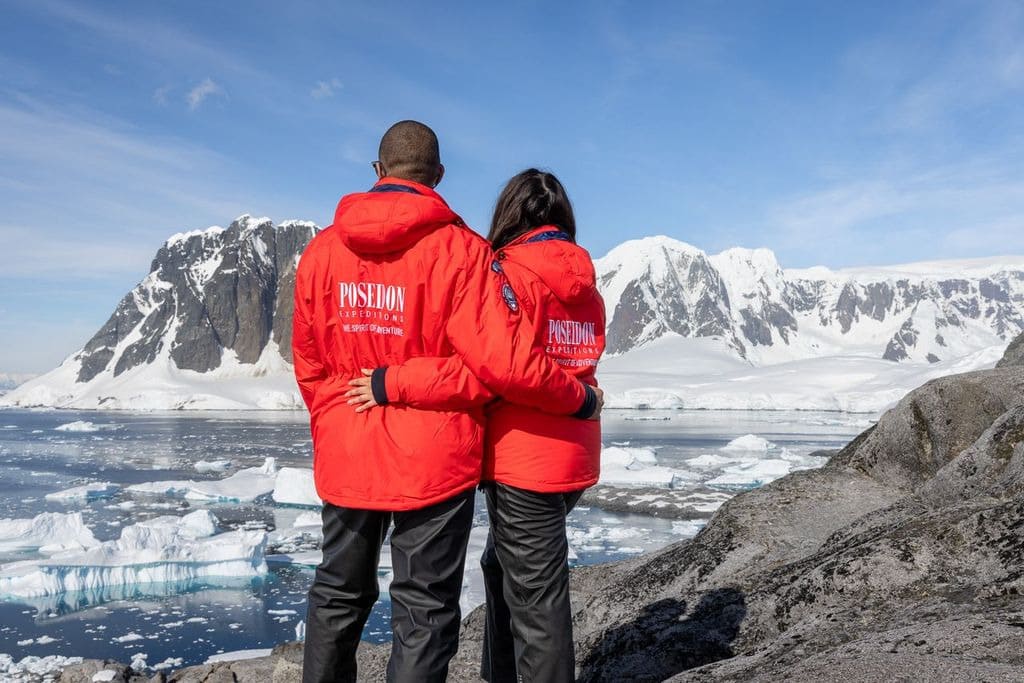
Ready to find your adventure? Read on to find out how to choose the right cruise and how these three destinations compare by landscape, wildlife, history, and seasonality.
Destination Comparison: Antarctic Peninsula vs. South Georgia vs. Falklands
Find out the key differences between the three iconic destinations on popular Antarctic and subantarctic cruise routes to help you choose your expedition.
|
Antarctic Peninsula |
South Georgia |
Falkland Islands |
|
|
Landscape |
Glaciers, icebergs, snow-covered mountains, sea ice |
Rugged mountains, glaciers, valleys, beaches, vegetation |
Rolling hills, lush grasslands, rocky coastlines, idyllic homesteads |
|
Wildlife |
Gentoo, Adélie, and chinstrap penguins, seals, seabirds, whales |
Huge king penguin colonies, elephant seals, seabirds |
Penguins, albatrosses, seabirds |
|
Accessibility |
Most direct route to the Antarctic continent through the Drake Passage |
More remote route, usually part of a longer expedition |
Usually combined with South Georgia and Antarctica |
|
History |
Exploration and scientific research, visits to functioning research bases |
Shackleton, whaling, Antarctic exploration |
Settlement, maritime history, Falklands War |
|
Experience |
Classic Antarctic scenery and wildlife |
Exceptional wildlife concentration and exploration history |
Wildlife, landscape, culture, and history |
Landscapes & Environments: A World of Difference
As you move south toward Antarctica, the landscapes change dramatically. Once you’ve crossed the Drake Passage to the Antarctic Peninsula, you’ll find a polar world of glaciers, mountains, and ice formations, giving you a true sense of remoteness. If you choose an itinerary that includes South Georgia as your destination, expect rugged mountains, glaciers, and open plains with vast king penguin colonies. Many travelers are amazed by the pristine beaches backed by an incredible alpine panorama. The Falkland Islands offer rolling hills, open grasslands, and idyllic homesteads, with a charming British atmosphere.
The Antarctic Peninsula: A True Polar Experience
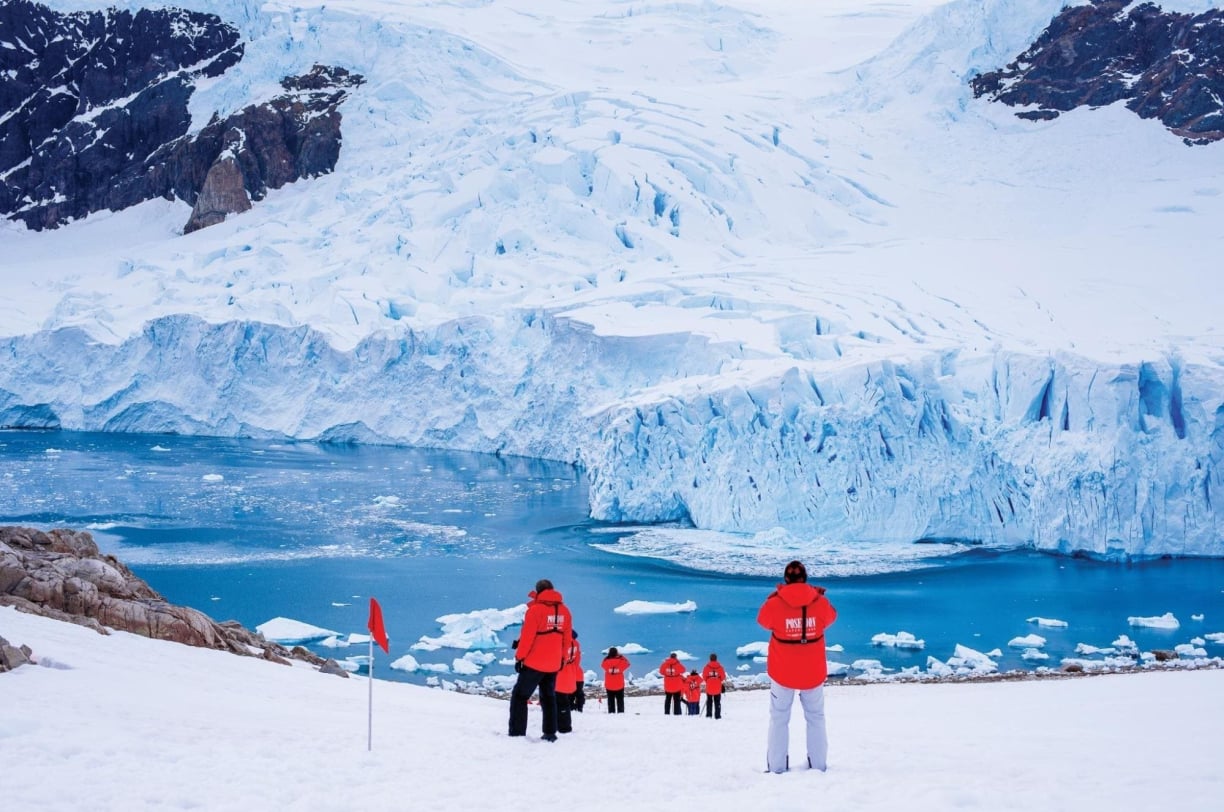
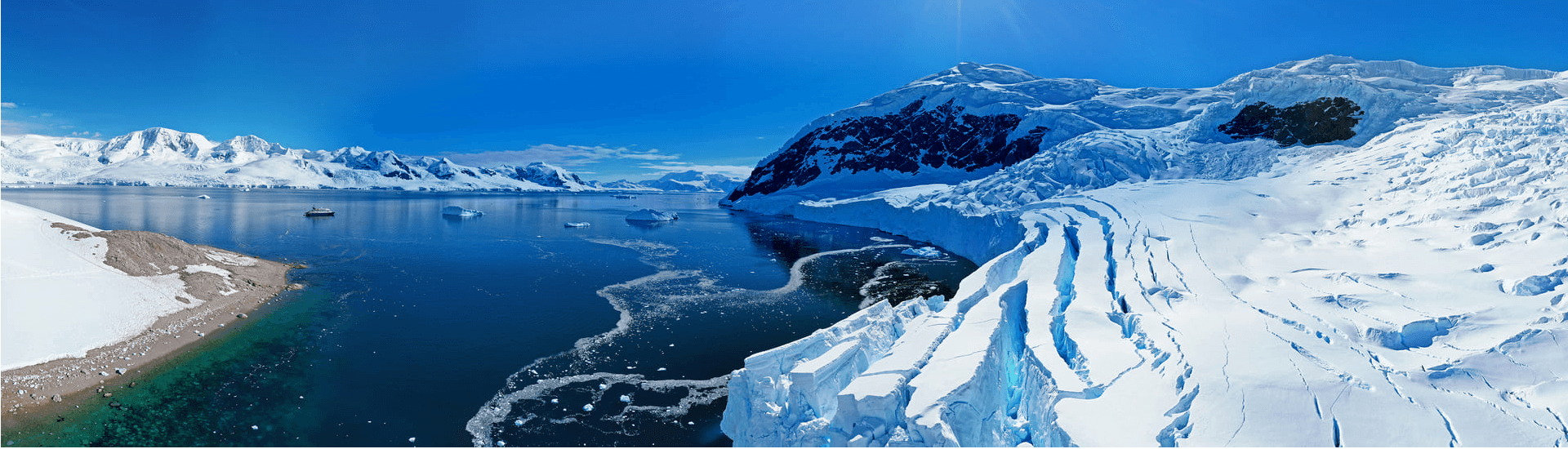
An Antarctic Peninsula itinerary gives you something that other destinations cannot: the chance to actually step onto the Antarctic continent. After crossing the Drake Passage, the landscape starts to change. Mountains rise from the sea, and glaciers carve through the wild coast. Enormous icebergs drift by your expedition ship in all shades of white and blue, creating unique opportunities for iconic Antarctic photography. At Paradise Bay, you’ll glide in Zodiac boats (or kayaks, if you’ve signed up for the kayak group) between the ice and towering mountains. Further south, the narrow Lemaire Channel is framed by steep, ice-covered peaks, creating one of the most dramatic passages in the region. Aboard a small expedition ship, such as our M/V Sea Spirit, we can access these waterways and get incredible views from the large open deck. Meanwhile, the Antarctic Sound, a 35-mile-long waterway, is known as “Iceberg Alley,” as you can see spectacular icebergs floating by.
For photographers, this region offers Antarctica’s famous palette of white, blue, black, and grey colors, dotted with iconic wildlife. And early and late in the season, spectacular sunsets bathe the landscapes in incredible hues of golden sunlight.
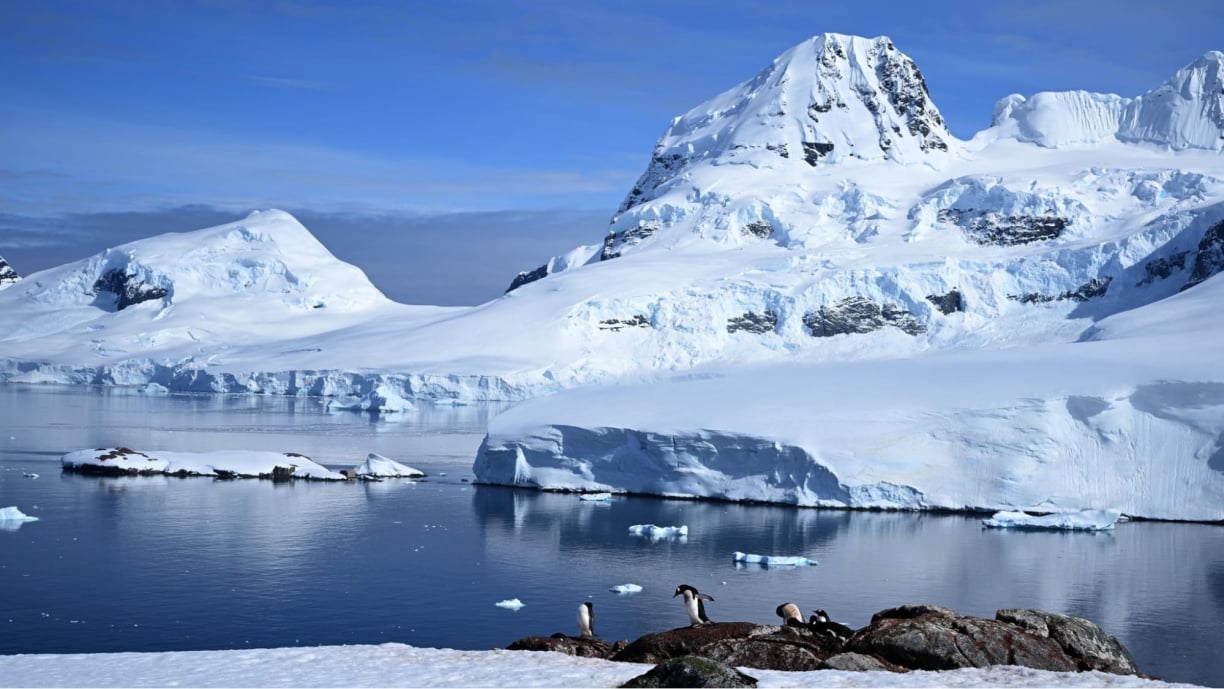
Some of the most iconic stops along the way include:
- Paradise Bay – towering glaciers, icebergs, and dramatic mountain scenery
- Lemaire Channel – a narrow, spectacular passage framed by steep, snow-covered peaks and ice-filled waters
- Gerlache Strait – glacier-lined scenery, massive icebergs, and frequent whale sightings
- Neko Harbour – a continental landing surrounded by glaciers, icebergs, and snow-covered peaks
- Deception Island – a volcanic, flooded caldera with black-sand beaches
- Port Lockroy – a historic British base combining Antarctic scenery with a glimpse of the continent’s research community
- Peterman Island – dramatic glaciers and mountains alongside gentoo and Adélie penguins
- South Shetland Islands – the northern gateway to the Antarctic Peninsula, with penguins, seals, and striking volcanic landscapes
- Antarctic Sound – expansive polar scenery and spectacular iceberg-filled waters
South Georgia & the Falklands: Subantarctic Splendor
In comparison to the white-and-blue scenery of the Antarctic Peninsula, South Georgia feels almost colorful. Steep mountains rise from the sea with glaciers spilling into its sheltered bays. Bright green moss and tussock grass cover the slopes during the austral summer. At Grytviken, you can visit the abandoned whaling station, nestled beneath the mountain panorama, near the route of Shackleton’s crossing of the island’s interior.
The Falkland Islands offer a different picture: rolling hills, open grasslands, idyllic homesteads, and rocky shores bustling with birdlife. In Stanley, colorful houses and a charming British atmosphere await you. The iconic whalebone arch and Christ Church Cathedral, the southernmost Anglican cathedral in the world, are two landmarks you can visit during your stay.
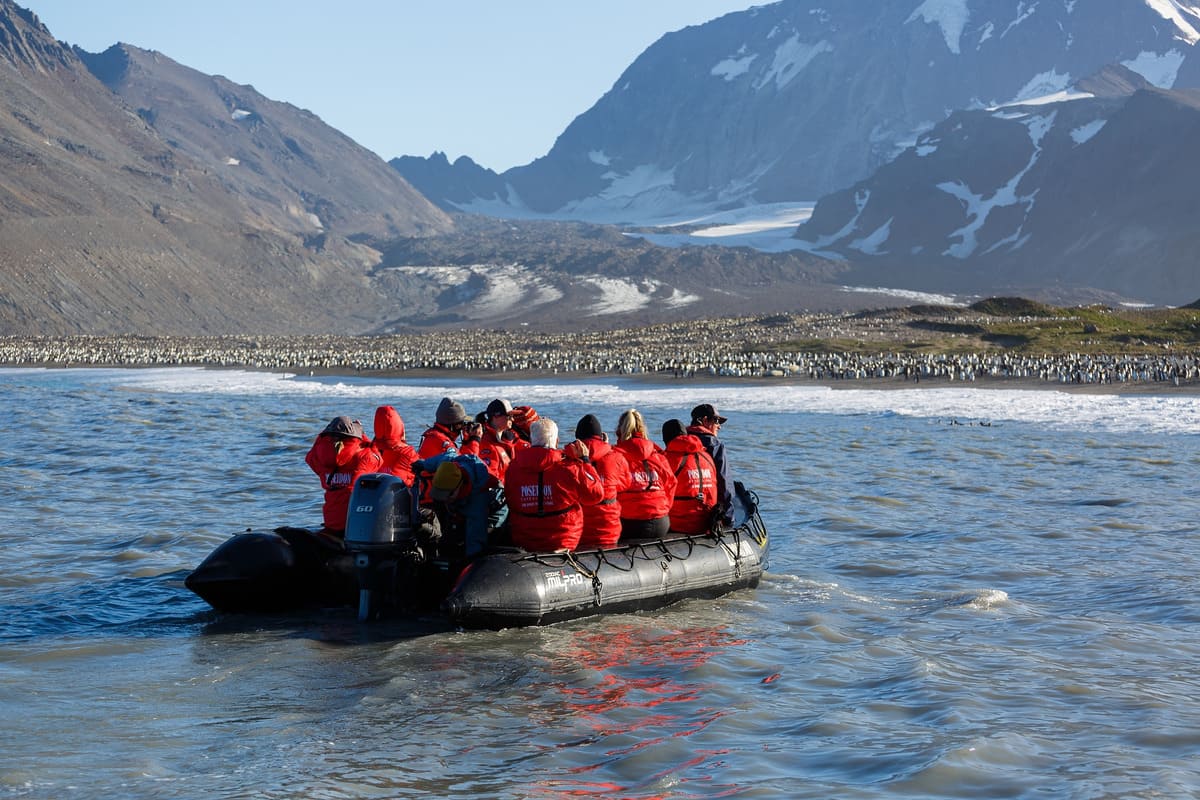
Some of the most scenic places to take in these landscapes include:
- St. Andrews Bay (South Georgia) – large king penguin colonies, tussock-covered plains and slopes, pristine beaches, and towering mountains
- Grytviken (South Georgia) – atmospheric remains of the historic whaling station beneath the island’s dramatic mountain backdrop
- Drygalski Fjord (South Georgia) – steep mountains, glaciers, and a spectacular fjord landscape at the island’s southern end
- Stanley (Falkland Islands) – colorful buildings, open landscapes, and a quaint port-town atmosphere with British charm
- Falkland Islands’ coastal landscapes – rolling grasslands and rocky shores
Wildlife Encounters: Quantity vs. Diversity
Antarctic wildlife is at the heart of any Antarctic expedition itinerary, and we have many travelers who have a must-see wish list for their voyage. Choose your itinerary based on your wildlife expectations, as each destination offers a different experience. South Georgia, often called the “Galapagos of the South,” is famous for its enormous concentration of animals, particularly kind penguin colonies and elephant seals, while the Antarctic Peninsula offers greater species diversity across smaller colonies, such as chinstrap, gentoo, and Adélie penguins. If you’re a bird lover, the Falklands are a must-visit destination on your journey.
Here’s how wildlife sightings typically compare across the three destinations:
|
Wildlife |
Antarctic Peninsula |
South Georgia |
Falkland Islands |
|
King Penguins |
Rare, as they prefer ice-free areas. If present, then on nearby islands, e.g. the South Shetland Islands. |
Over 450,000 king penguin breeding pairs are believed to inhabit the island, breeding in enormous colonies. |
Rare, but there is a colony at Volunteer Point. |
|
Gentoo Penguins |
Common |
Present |
Common |
|
Chinstrap Penguins |
Common |
Present, but in smaller numbers |
- |
|
Adélie Penguins |
Common |
- |
- |
|
Fur Seals |
Common (seasonally) |
Very abundant |
Present |
|
Elephant Seals |
Occasional |
Very abundant – massive gathering on the beaches |
Occasional |
|
Leopard Seals |
Common |
Occasional |
- |
|
Albatross |
Present |
Abundant |
Abundant |
|
Humpback Whales |
Common (seasonally) |
Common (seasonally) |
Present (seasonally) |
|
Overall wildlife experience |
Species diversity |
Exceptional concentration |
Seabird diversity |
Penguin Species & Colony Experiences
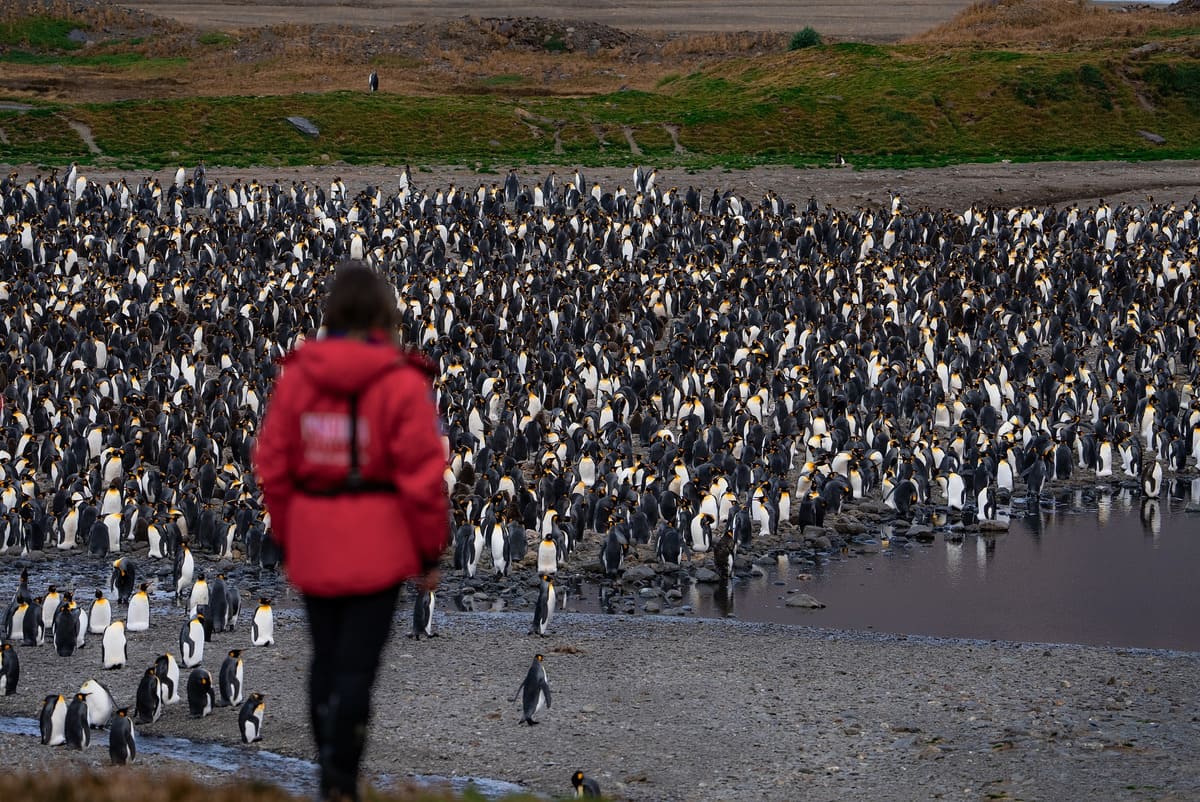
If king penguins are your dream sighting, South Georgia is the place to go. At Salisbury Plain and St. Andrews Bay, enormous breeding colonies stretch across the beaches and tussock-covered plains. A 2021 BAS survey using drone footage estimated around 250,000 breeding pairs at St. Andrews Bay alone. Climb the hills near the colonies and get an overview of the sheer numbers of birds gathered in one place, listen to their loud braying and calls, and observe them tending to their fluffy chicks.
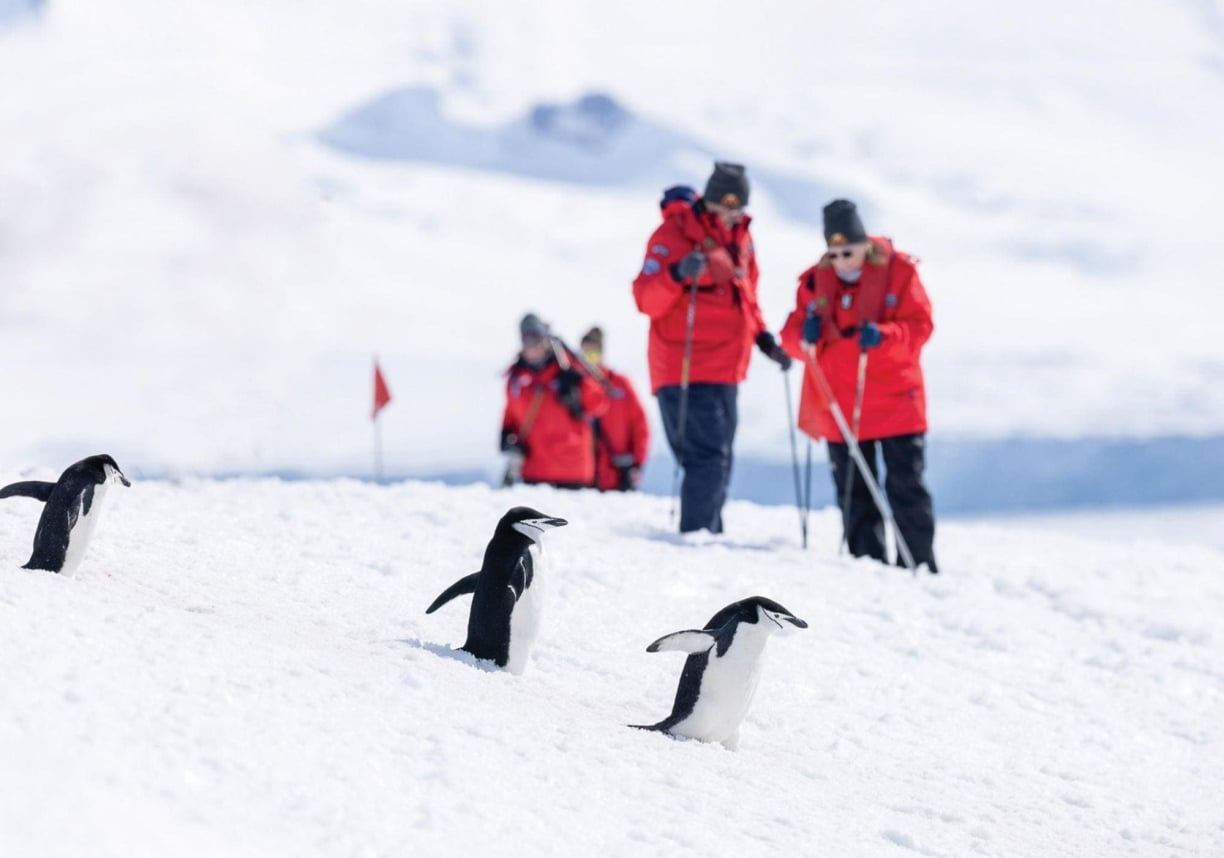
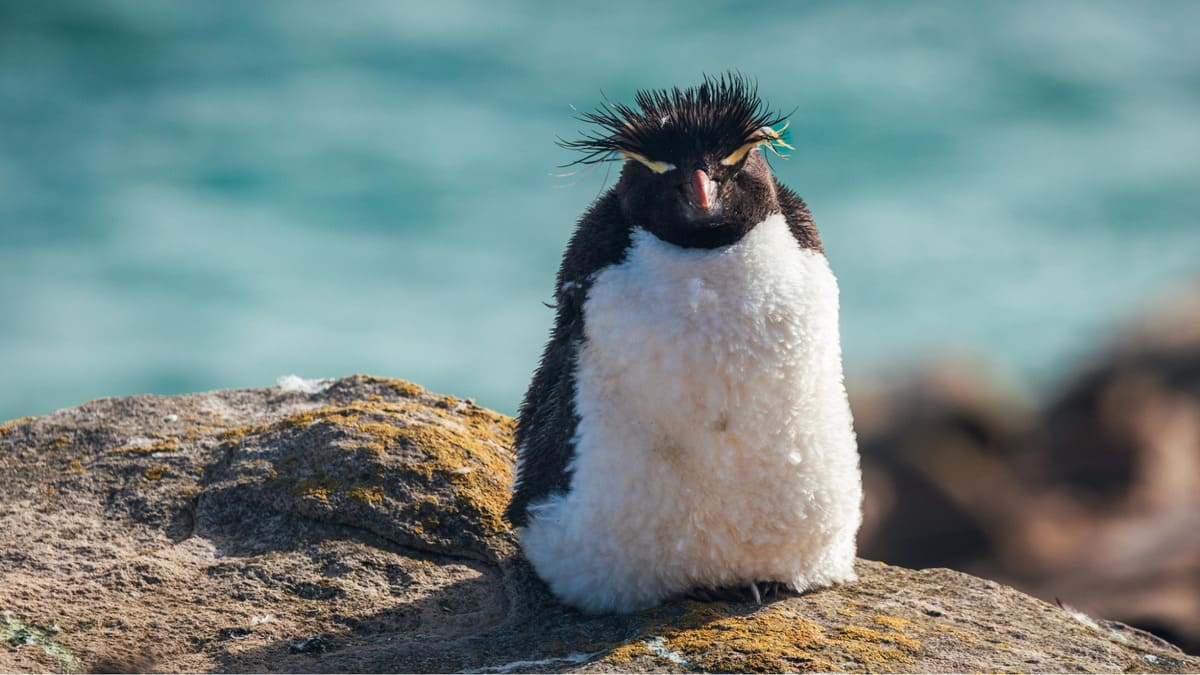
You can find gentoo, chinstrap, and Adélie penguins breeding in colonies of hundreds to thousands of birds around the Antarctic Peninsula. Further north and around South Georgia, you can encounter macaroni penguins, while rockhopper penguins inhabit the rocky shores of the Falkland Islands. Rockhoppers breed on rugged coastal slopes, hopping up and down steep terrain, making them a highlight for penguin lovers and photographers.
Here’s where you’re most likely to see each penguin species, and when:
|
Penguin Species |
Best Viewing Locations |
Best Viewing Period |
|
King Penguin |
South Georgia, around 450,000 breeding pairs across the island in large colonies, e.g. at Salisbury Plain and St. Andrews Bay |
Nov-Feb (chicks from Dec-Feb) |
|
Gentoo Penguin |
Antarctic Peninsula, South Georgia, and the Falklands, around 300,000 breeding pairs globally |
Nov-Feb (chicks from Jan-Feb) |
|
Chinstrap Penguin |
Antarctic Peninsula and South Georgia |
Nov-Feb (chicks from Jan-Feb) |
|
Adélie Penguin |
Antarctic Peninsula and South Georgia |
Nov-Feb (chicks from Jan-Feb) |
|
Macaroni Penguin |
South Georgia |
Nov-Feb (chicks from Jan-Feb) |
|
Rockhopper Penguin |
Falkland Islands |
Nov-Feb (chicks from Jan-Feb) |
Marine Mammals & Seabirds: Where to Find What
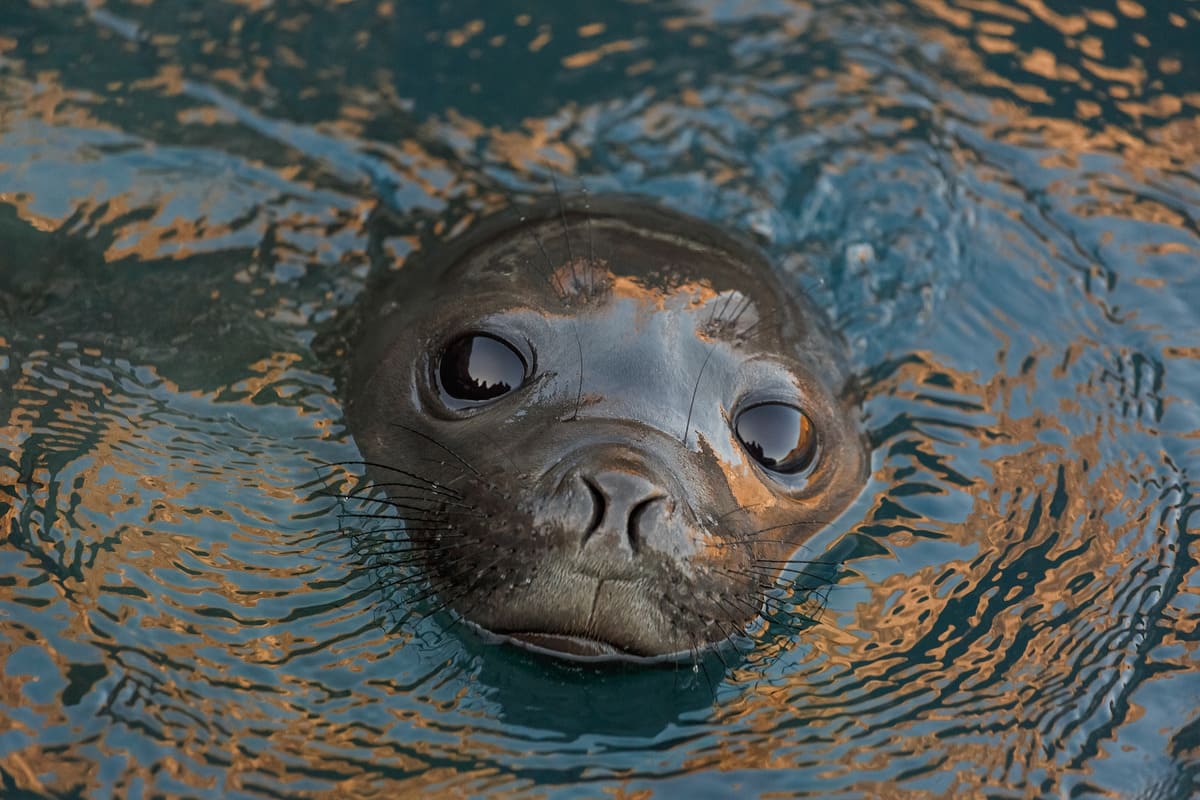
Are you looking for spectacular elephant seal encounters? During the breeding season from September to November in South Georgia, you can see enormous males battling for dominance on the picturesque beaches of the island. At St. Andrews Bay, a 2021 BAS survey recorded 6,074 females, 396 bulls, and more than 5,000 pups across the beach using drone footage. Elephant seal pups, with their large eyes and cute faces, are a dream for any wildlife photographer.
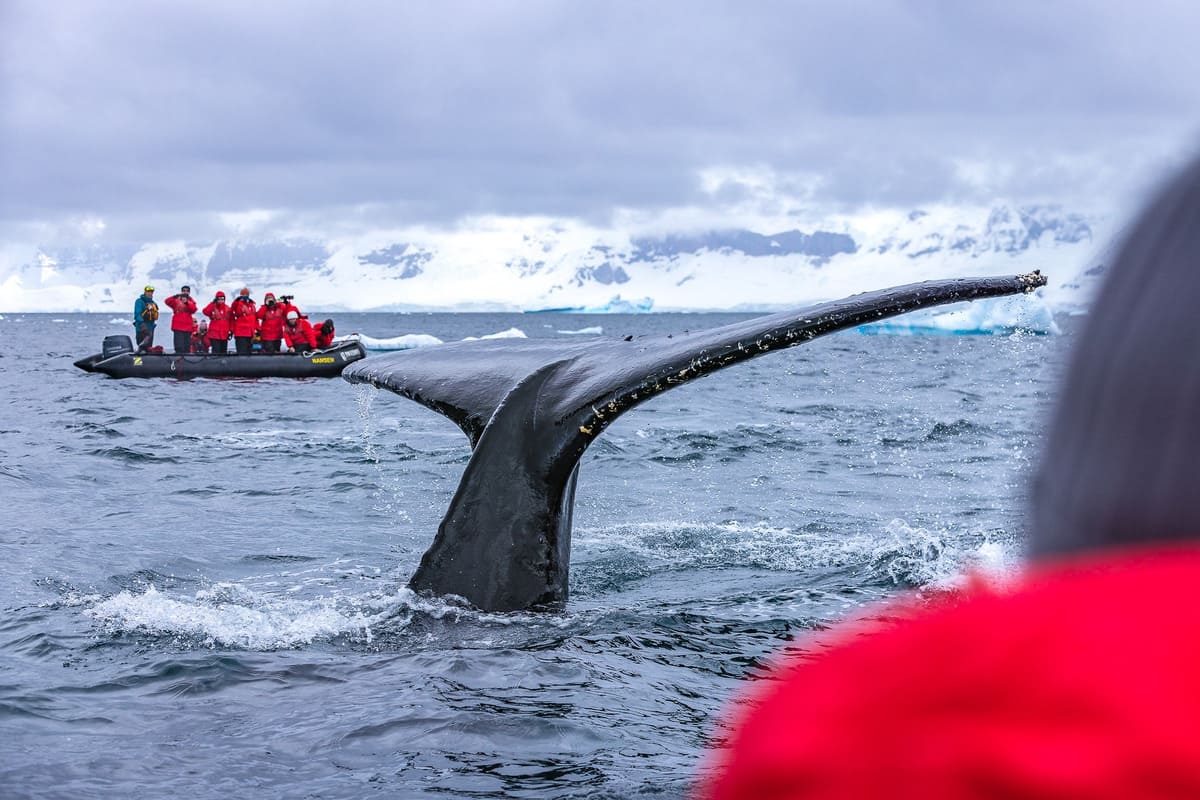
Fur seals are another South Georgia highlight, with pups born from mid-November through early January. Around the Antarctic Peninsula, you can spot leopard seals lazing on the pack ice and sometimes hunting penguins. In late summer, humpback whales return to the Southern Ocean, and you can also encounter orcas in Antarctic waters. And for bird lovers, South Georgia, as well as the Falklands, are prime habitats for seabirds, such as albatrosses and petrels.
Some of the most memorable wildlife encounters, and the best times to see them, include:
South Georgia:
- Elephant seal males battling on the beach (Sept-Nov)
- Female elephant seals and pups (Oct-Nov)
- Fur seal colonies and pups (Nov-Jan)
- Vast albatross nesting sites (Nov-Feb)
- Vast king penguin colonies (Nov-Feb)
Antarctic Peninsula:
- Penguins on icy shores sliding down snowy hills on their bellies (Nov-Feb)
- Leopard seals hunting in the water and resting on ice floes (Nov-Feb)
- Whales surfacing beside your ship or Zodiac (Jan-Mar)
- Occasional orca encounters (Nov-Feb)
Falkland Islands:
- Black-browed albatross (Oct-Apr)
- Rockhopper penguins (Oct-Apr)
- Diverse seabird colonies (Oct-Apr)
Ready to explore Antarctica?
Join us on an unforgettable expedition to discover the wonders you've just read about
or download our free brochure
Historical Significance & Cultural Elements
For history buffs, South Georgia is a great place to start your journey to learn more about the history of Antarctic exploration. The story of Ernest Shackleton and the ill-fated Endurance expedition comes alive when you explore Grytviken, the final resting place of Shackleton. You can see the places connected to his 1916 crossing of the island’s interior to reach Stromness whaling station, where he organized a rescue mission for his stranded crew on Elephant Island. During your visit, tour the Grytviken Museum, which features a lovely collection documenting the region’s exploration and whaling history.
Follow in Shackleton’s footsteps and visit the historical places on South Georgia connected to his heroic expedition. On our South Georgia, Falklands, and Antarctic Peninsula cruises, we may visit places such as Stromness, Leith, Grytviken, and the grave of Sir Ernest Shackleton at Grytviken cemetery.
On the Antarctic Peninsula, you’ll get a glimpse of modern and former Antarctic research bases, as well as scientific research conducted under the Antarctic Treaty. Depending on weather and sea conditions, you may visit Port Lockroy, a historic British base established in 1944 during World War II as a secret military mission called Operation Tabarin. Visit the local museum and send a postcard from the world’s southernmost post office.
Practical Trip Planning Considerations
Choosing an Antarctic expedition itinerary involves more than just deciding which incredible landscapes and wildlife you want to see. Expedition length, the timing of your trip, and vessel size all contribute to your experience. With most itineraries, the first leg of the journey will be a Drake Passage crossing. Then it’s up to you. For a shorter expedition, the Antarctic Peninsula offers a more compact itinerary, taking you to the continent and its incredible landscapes and wildlife in around 12 days. If you have more time, want to see king penguins and follow in Shackleton’s footsteps, choose an extended South Georgia and Falkland Islands departure. These voyages take around 21-23 days and give you much more time to immerse yourself in the region and get to know your fellow travelers.
Comprehensive Antarctic Expedition Itineraries
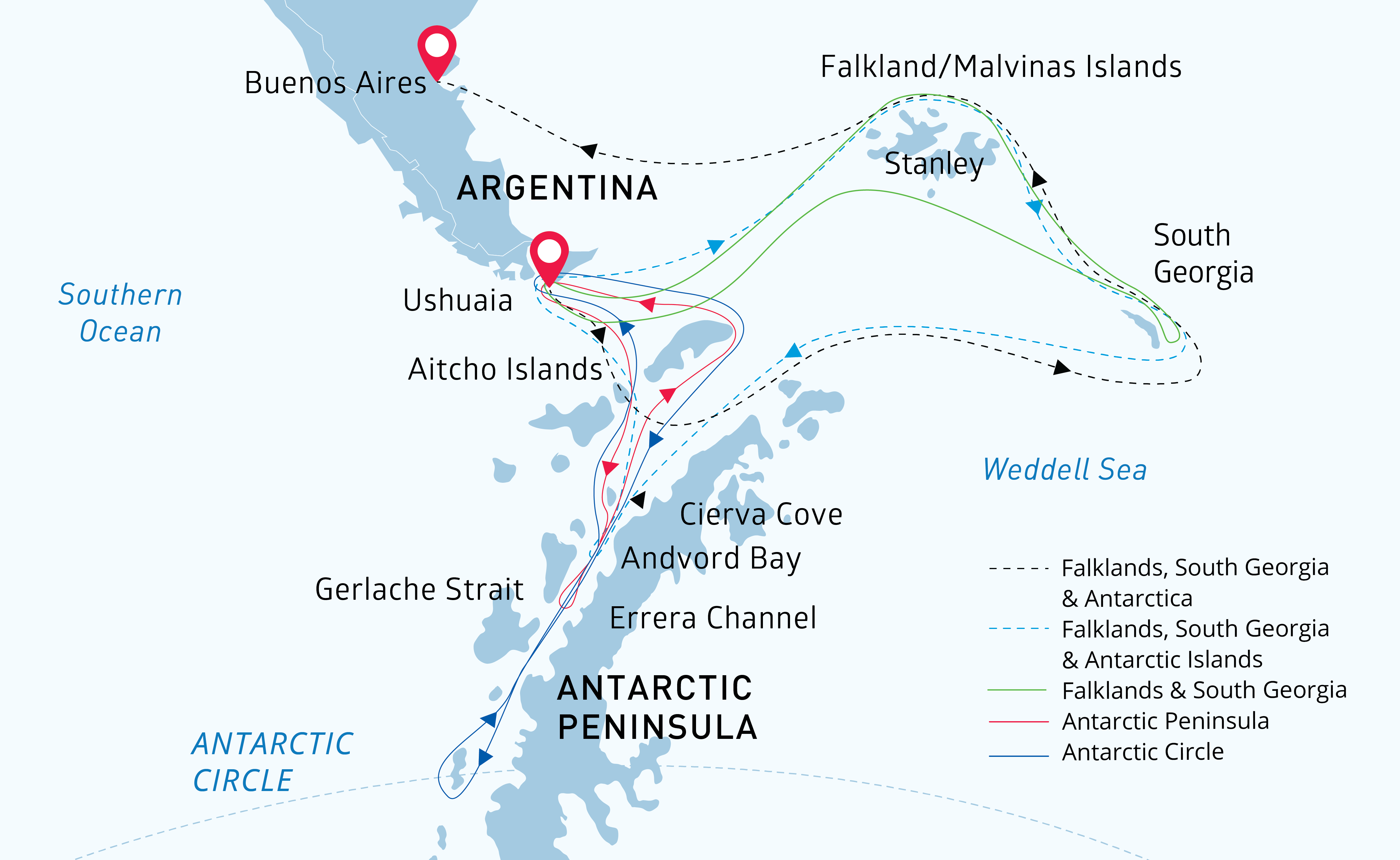
What can you expect on a typical itinerary that includes all three destinations? Expeditions such as our Antarctic Wildlife Adventure combine the Falkland Islands, South Georgia, and the Antarctic Peninsula in a 21- to 23-day voyage aboard the 114-passenger expedition vessel M/V Sea Spirit.
Days 1-5 typically include embarkation day and cruising through the Beagle Channel and South Atlantic en route to Stanley, in the Falkland Islands. You’ll have opportunities to see gentoo and rockhopper penguins, black-browed albatrosses, and idyllic grasslands.
On days 6-12, you’ll continue to South Georgia and visit incredible landing sites, including Salisbury Plain and St. Andrews Bay, with enormous king penguin colonies, elephant seals, fur seals, and wandering albatrosses, as well as historical sites, such as Grytviken and Shackleton’s grave.
On days 13-18, you’ll cruise to the Antarctic Peninsula, exploring the South Shetland Islands with the famous flooded caldera of Deception Island on the way. Explore highlights such as Port Lockroy, the picturesque Gerlache Strait and Lemaire Channel, Petermann Island, and Neko Harbour.
Enjoy the last days aboard your expedition ship while crossing the Drake Passage on days 19–20, before returning to Ushuaia.
Discover the Antarctic Wildlife Adventure itinerary in more detail and start planning your trip.
Cost Comparison: Peninsula-Only vs. Comprehensive Itineraries
With Poseidon Expeditions, a 12-day classic Antarctica voyage currently starts at around EUR 11,295 (ca. US$ 13,000) per person, while a voyage combining the Antarctic Peninsula, South Georgia, and the Falklands starts at around EUR 16,346 (ca. US$ 18,800) per person for the 2026 and 2027 seasons. The difference in price reflects not only the extra days of accommodation and meals aboard the M/V Sea Spirit, but also the additional opportunities for landings, Zodiac excursions, onboard lectures, and guided shore walks.
Seasonal Considerations for Antarctic Expeditions
The Antarctic expedition season runs from November through March, with each period offering a slightly different experience. For South Georgia, the season begins a little earlier, in October, and runs through March.
November: The early austral summer brings fresh snow, impressive icebergs, and penguins returning to their colonies for courtship and nesting. In South Georgia, elephant seal bulls compete for harems, while seabirds begin their busy breeding season in the Falkland Islands.
December-January: This is the height of the Antarctic summer, with mild temperatures and long daylight hours. Penguin chicks begin hatching, while South Georgia’s beaches are bustling with king penguins, fur seals, and elephant seal pups. The Falklands are an excellent place to see nesting penguins and seabirds.
February-March: As the season progresses, sea ice reaches its minimum and access to some areas farther south improves. Penguin chicks become more independent, while whale watching becomes a major highlight, with humpback and minke whales feeding in Antarctic waters. March also brings shorter days and spectacular sunsets.
Physical Considerations and Accessibility
You don’t have to be an athlete or an experienced hiker to join one of our expedition cruises, but you should be reasonably mobile and comfortable walking on uneven terrain. Getting in and out of the Zodiac boats isn’t difficult, but it does require you to step into shallow water during wet landings. We provide waterproof boots with a good grip that you can use throughout the cruise, including on such occasions.
While ashore, activities range from short guided walks to longer hikes, depending on the landing site and weather conditions. Typically, you can also choose to spend time exploring independently within the designated landing area. If you choose one of the optional additional activities, such as kayaking or camping overnight, it may require a higher level of fitness than our regular Zodiac cruises and shore walks. Keep in mind that these are remote destinations with challenging weather conditions and rough seas, and while we have an onboard physician, specialized medical assistance is not readily available. If you are comfortable outdoors in cold and changing conditions, can comfortably board a Zodiac, and can maintain your balance on uneven ground, our expedition cruises will be a rewarding and incredible experience.
Making Your Final Decision: A Personal Assessment
How do you really choose the right Antarctic expedition itinerary? Start by reflecting on what you expect most from your polar adventure.
Is this your first Antarctic trip, and do you want the classic Antarctica experience?
An Antarctic Peninsula itinerary takes you to the continent itself, where you can see dramatic landscapes with glaciers, icebergs, and snow-capped mountains, along with different penguin species and iconic wildlife.
Are you dreaming of wildlife encounters on an almost unbelievable scale?
Add South Georgia, where you can marvel at the vast king penguin colonies and beaches bustling with elephant and fur seals.
Do you enjoy combining wildlife with history and culture, or are you an avid birder? The Falklands and its capital, Stanley, offer rolling grasslands, incredible birdlife, and a distinctly British small-town charm to your expedition.
Are you a photographer looking for extraordinary opportunities? Consider the Antarctic Peninsula if ice formations and its typical monochromatic landscapes are your inspiration. Head to South Georgia if you want exceptional opportunities for wildlife photography, and the Falklands for birdlife and remote small-town flair. Also check our cruise schedule for specialized photography expeditions, which allow for longer landings during the golden hours, when the light is just perfect for capturing photographic masterpieces.
Spoiler: There isn’t really a bad choice you can make when it comes to expedition cruises like these. No matter which itinerary you choose, the untouched nature, incredible remoteness, iconic wildlife, and unique experiences will leave you in awe and may make you return for another adventure.
Frequently Asked Questions
What are the key differences between the Antarctic Peninsula, South Georgia, and the Falkland Islands?
The Antarctic Peninsula offers the classic continental Antarctica experience with glaciers, icebergs, mountains, and various penguin types. South Georgia is dominated by spectacular wildlife concentrations, including huge king penguin colonies and elephant seals, combined with polar exploration history. The Falkland Islands add grassland landscapes, seabirds, and a distinctly British cultural element.
How do wildlife concentrations differ between Antarctica, South Georgia, and the Falklands?
South Georgia is renowned for the sheer concentration of wildlife. A BAS drone survey estimated around 250,000 king penguin breeding pairs at St. Andrews Bay alone, while also recording thousands of elephant seals and pups during the pupping season. The Antarctic Peninsula offers greater penguin species diversity, including gentoo, chinstrap, and Adélie penguins.
What is the typical itinerary for a trip to Antarctica, South Georgia, and the Falkland Islands?
Poseidon Expeditions’ Antarctic Wildlife Adventure combines all three destinations in a 21- to 23-day expedition. Depending on the departure, the voyage typically visits the Falkland Islands and Stanley first, continues to South Georgia visiting sites such as Salisbury Plain and Grytviken, and then crosses to the Antarctic Peninsula before returning to Ushuaia.
What is the approximate cost difference between an Antarctic Peninsula-only itinerary and one that includes South Georgia and the Falkland Islands?
For the upcoming 2026-27 season, a 12-day classic Antarctica departure starts at around EUR 11,295 (ca. US$ 13,000) per person, and a 21- to 23-day voyage combining all three destinations starts at around EUR 16,346 (ca. US$ 18,800). Prices vary depending on the departure date and special offers.
What is the best month to do an Antarctic cruise?
There is no single best month for everyone. November brings fresh snow, early-season breeding activity, and impressive ice formations. December and January offer long daylight hours and abundant penguin activity, including chicks beginning to hatch. February and March bring excellent whale watching and more independent penguin chicks.
Related Cruises
Antarctica


Classic Antarctica
.png)
Antarctic Circle