Fridtjof Nansen: Arctic Explorer, Scientist, and Nobel Peace Prize Humanitarian
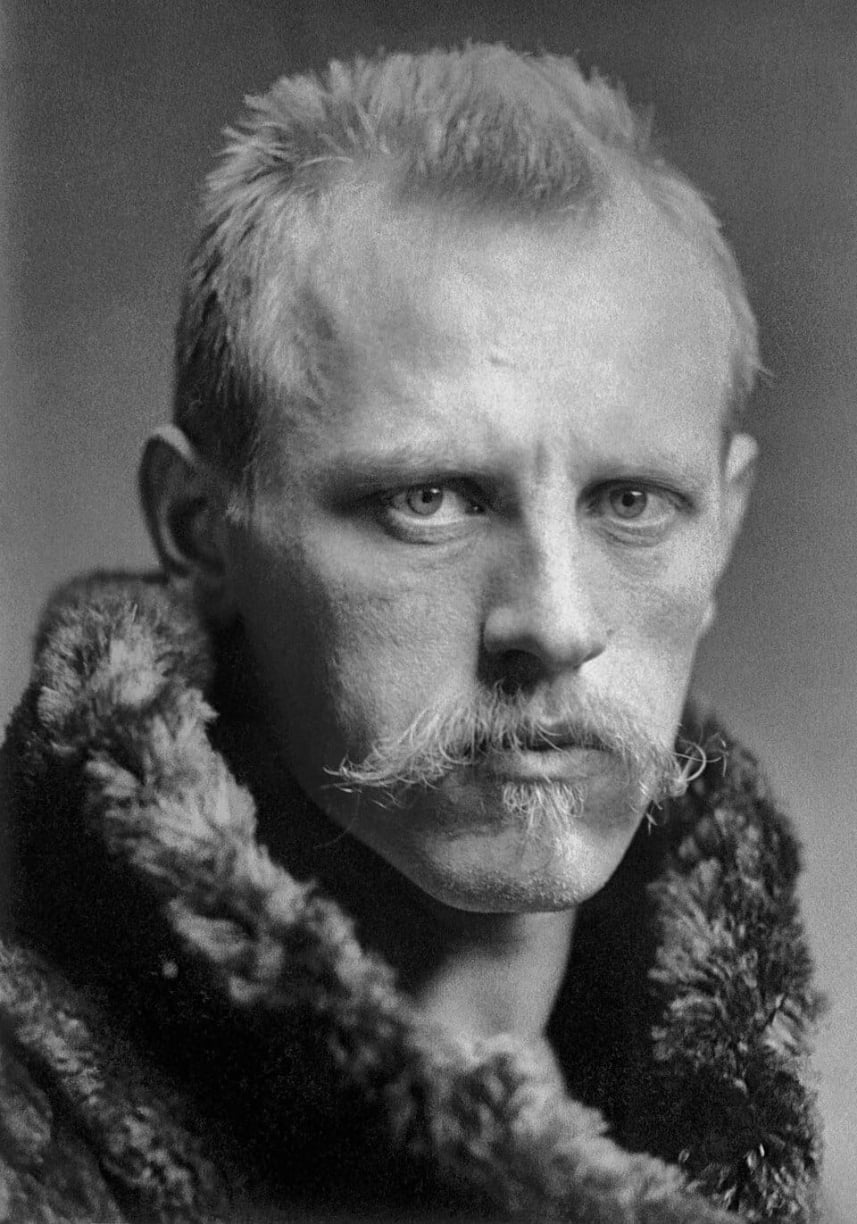
Fridtjof Nansen (October 10, 1861 – May 13, 1930), a Norwegian explorer, oceanographer, diplomat, and humanitarian, was a pioneer of Arctic exploration, leading the first successful crossing of Greenland’s interior in 1888. He became internationally famous for the Fram expedition, during which he and Hjalmar Johansen reached approximately 86°14′N, farther north than anyone had gone before. But his legacy stretched far beyond polar exploration. He played a crucial role in Norway’s independence in 1905, helped to establish the Nansen passport for stateless refugees, and developed the Nansen bottle for collecting deep-water samples. In recognition of his accomplishments, Nansen was awarded the Nobel Peace Prize in 1922 for his humanitarian work. Read on to learn more about Nansen’s fascinating personality, adventures, and accomplishments.
Who Was Fridtjof Nansen? A Quick Biography
You may know Fridtjof Nansen for his achievements as an explorer, but did you know that he was also a famous Norwegian athlete, oceanographic scientist, diplomat, and humanitarian? Born at Store Frøen, just outside Christiania (modern-day Oslo), he became one of Norway’s most celebrated figures, eventually earning the 1922 Nobel Peace Prize. Throughout his life, Nansen ventured beyond the possible and took on challenges that others considered impossible. His cross-country skiing experience from an early age would later serve him well on the Greenland ice sheet and in the High Arctic during his expeditions. He studied zoology and neuroanatomy, earning his doctorate in 1888, before developing into a pioneering oceanographic scientist. Nansen died at his home at Polhøgda, in Lysaker, Norway, on May 13, 1930.
Nansen’s life in five chapters:
- The athlete: A talented skier whose love for the outdoors helped him prepare for his achievements in polar travel.
- The explorer: He crossed Greenland’s ice sheet and became internationally famous for the Fram expedition.
- The scientist: He helped lay the foundations of modern oceanography.
- The diplomat: He played a key role in Norway’s independence in 1905 and later became the country’s first envoy to the United Kingdom.
- The humanitarian: After World War I, he worked extensively on the repatriation of prisoners of war and assisting refugees, as well as providing famine relief.
Key Takeaways
- Sportsman and athlete: Skier, outdoorsman, and endurance athlete
- Polar explorer: Greenland crossing, the Fram expedition, and the farthest north
- Scientist: Zoology, oceanography, and polar research
- Diplomat: Norwegian independence and international relations
- Humanitarian: Prisoners of war, refugees, the Nansen passport, and the Nobel Peace Prize
What Is Fridtjof Nansen Famous For?
- Crossing Greenland’s interior ice sheet in 1888
- Reaching a record latitude of approximately 86°14′N during the Fram expedition (1893-1896)
- Promoting the Norwegian independence movement
- Creating the “Nansen Passport” for protection of refugees in 1922
- Combating famine in modern-day Russia and Ukraine (1921-1922)
- Raising funds for Greek and Turkish mass evacuation in 1922
- Nobel Peace Prize in 1922
The Making of an Explorer: Nansen's Early Life and Training
Nansen’s lifelong love for the outdoors from an early age helped prepare him for becoming one of the most famous Arctic explorers in the world. At Store Frøen, surrounded by forests and open countryside outside of Christiania (now Oslo), he cultivated his passion for sports, physical challenges, and self-reliance. During his studies at the Royal Frederick University (now the University of Oslo), Nansen got his first taste of Arctic exploration in 1882 aboard the whaling vessel Viking, collecting marine specimens and experiencing the High Arctic.
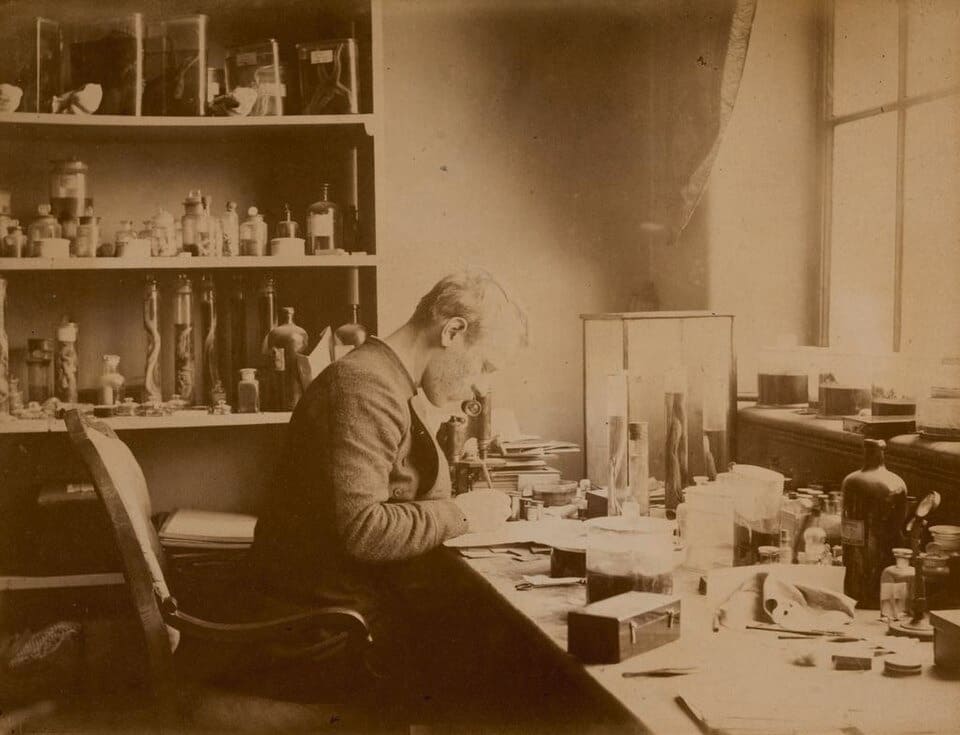
Nansen’s success as an explorer did not rely only on his skills as a sportsman, but also on his curious scientific mind. During his work at the Bergen Museum, he was inspired by Daniel Cornelius Danielssen, a physician and zoologist, and Gerhard Armauer Hansen, a physician and researcher who discovered the leprosy bacillus in 1873. While studying zoology and oceanography, he later became fascinated by the structure of the central nervous system during his work as a zoology curator at the Bergen Museum. He went on to complete his doctoral thesis on the subject and became one of the first internationally known Norwegian scientists to study the central nervous system.
His training in the outdoors, as well as his scientific education and experience in the Arctic, would push him forward through the extreme Arctic conditions during the Greenland ice sheet crossing in 1888 when he was just 27 and only five years later during his expedition north aboard the Fram.
Fridtjof Nansen – the Meticulous Scientist
Nansen was famous for his meticulous preparation of expeditions, attention to detail, and careful risk assessment. While he was known to plan his expeditions extensively and in great detail, even he faced near-fatal incidents. During the Fram expedition, his fellow explorer Hjalmar Johansen was attacked by a polar bear near Franz Josef Land. While Nansen struggled to reach their gun, which was inside a kayak and slowly drifting away, Johansen fought to fend off the polar bear by grabbing the bear’s throat. Nansen managed to grab the gun and shoot the bear, saving Johansen’s life.
Crossing the Uncrossable: The Fridtjof Nansen Greenland Crossing of 1888
What would you do if everyone told you that your plan was impossible? In Nansen’s case, you’d strap on your cross-country skis and ski straight across Greenland. Partly inspired by Finnish-Swedish explorer Adolf Erik Nordenskiöld, whose 1883 expedition pushed nearly 117 km inland, ascending the ice sheet in western Greenland, Nansen created his route venturing from east to west. Most other crossing attempts had started from the more inhabited western coast and ventured into the unknown. Nansen’s logic was that his team would head toward civilization, providing a better incentive to continue forward. As he stated in his book The First Crossing of Greenland: “There was no choice of routes, forward being the only word. The order would be:—Death or the west coast of Greenland.”
After battling the drift ice of East Greenland, they reached Umivik on August 10, 1888, and started their crossing. Six men – Fridtjof Nansen, Otto Sverdrup, Oluf Christian Dietrichson, Kristian Kristiansen Trana, Samuel Balto, and Ole Nielsen Ravna – climbed to an elevation of 2,720 m (8,924 feet) on the ice sheet before descending to Ameralik Fjord on September 26 in southwestern Greenland. From there, the group built a small boat from available materials and rowed to Godthab (modern-day Nuuk).
Why Nansen's Ski Strategy Changed Polar Exploration Forever
Nansen made cross-country skiing the expedition’s great advantage. Instead of relying on cumbersome logistics and large support operations, his small team traveled on skis, pulling their own sledges and carrying carefully calculated supplies. This made the expedition not only leaner, but also much more mobile than other Arctic expeditions at the time. Earlier crossing attempts, such as Nordenskiöld’s in 1870 and 1883, failed as they relied mainly on trekking on foot and pushing heavy equipment. During the 1883 expedition, however, two Sami participants were able to push farther across the ice on skis, after the main party was forced to stop by soft snow – a detail that would help inspire Nansen’s own strategy.
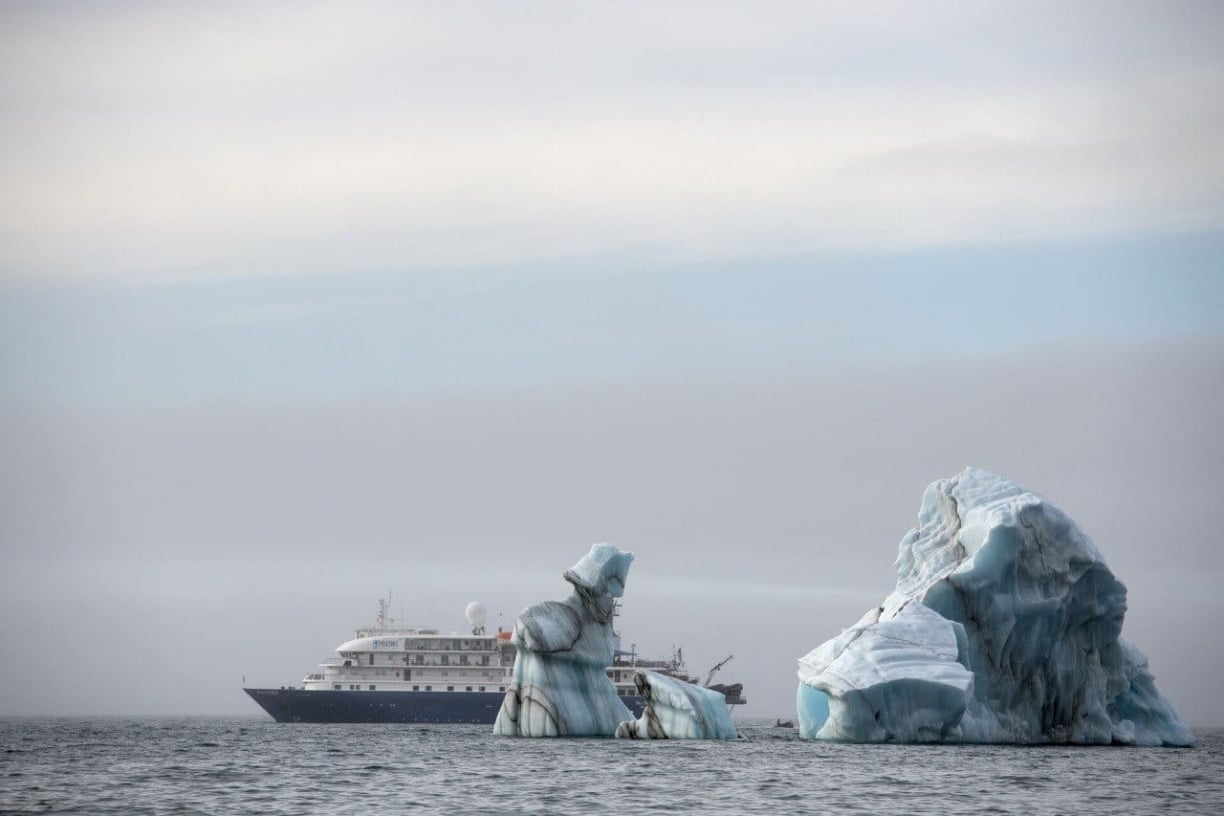
Did you know that you can see the same remote coastlines of Greenland that challenged Nansen in 1888 from the comfort of a small expedition ship? Aboard the 114-passenger M/V Sea Spirit, our Greenland expedition cruises reach the narrow fjords and remote bays that larger vessels cannot access — an authentic adventure to write your own polar story.
Building the Fram: The Ship Designed to Defeat the Arctic
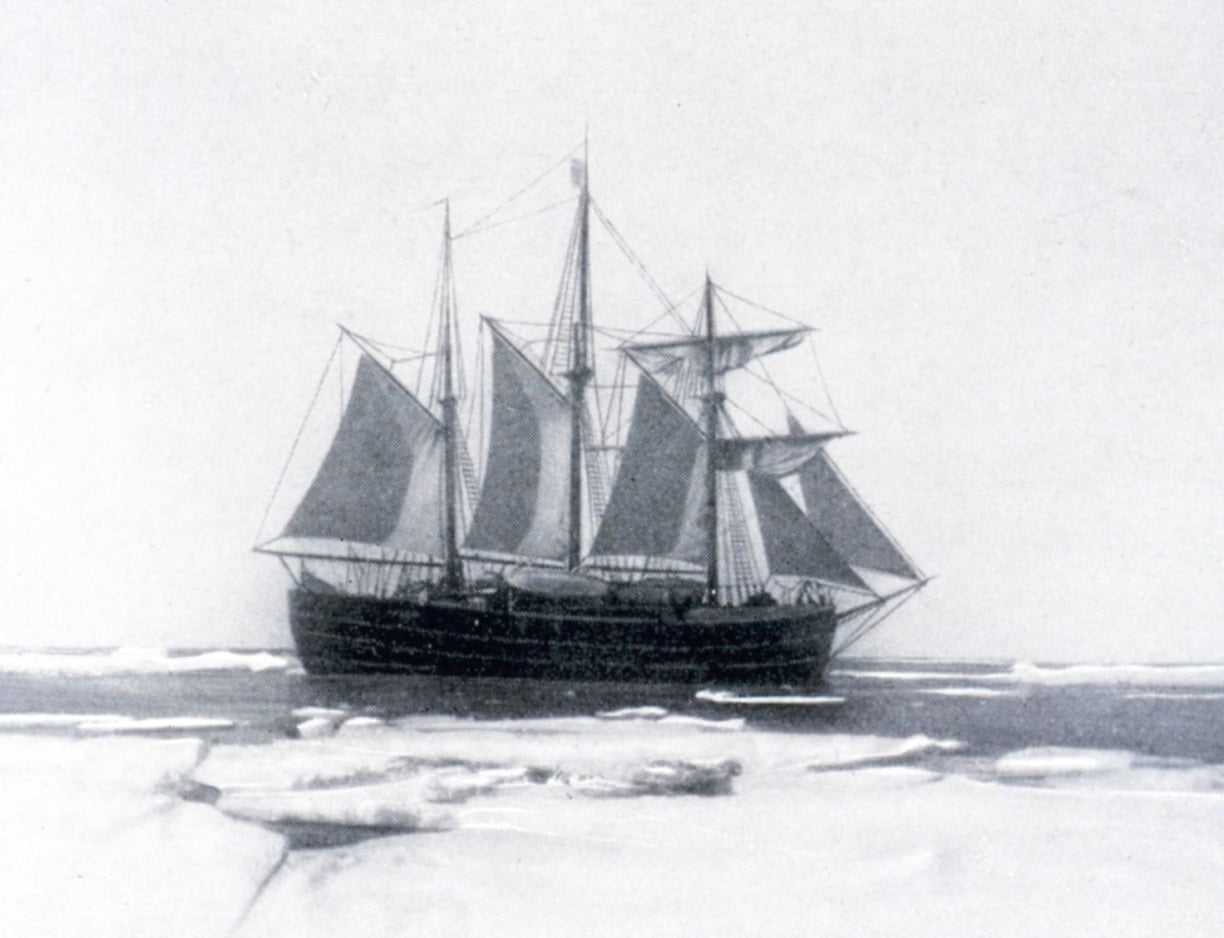
While many earlier attempts to reach the North Pole and travel across the Arctic ice had failed, Nansen’s plan was to build a ship as small and strong as possible, so that sea ice wouldn’t be able to crush it. His plan for the 1893-96 expedition was to trap the ship in the pack ice and use the currents to drift in the Arctic Ocean toward the North Pole. This strategy and the innovative ship design and its unusual proportions made it possible for Nansen’s party to push farther north than any previous expedition at the time. With fellow explorer Otto Sverdrup as a project adviser and Norwegian shipbuilder Colin Archer entrusted with the construction, they designed a ship that would not only withstand the ice but also escape its grip, with a hull that would allow the ship to be lifted by ice pressure rather than being crushed by it.
The three-masted schooner measured approximately 39 m (128 feet) in length and 11 m (36 feet) across the beam, with a displacement of around 800 tons. While the wide-beam-to-length proportions were beneficial to withstand sea ice, they made the ship roll and pitch uncomfortably in the open sea. The Fram was christened on October 26, 1892, by Fridtjof Nansen’s wife Eva. You can marvel at the original Fram vessel at the Fram Museum in Oslo.
Fun Fact: The Fram had an onboard windmill, which powered a generator to provide electricity for electric arc lamps. It wasn’t quite as comfortable as modern expedition vessels today, providing superior amenities and Wi-Fi, but the ship offered cutting-edge technologies for the 1890s.
Fram Specifications Compared
|
Feature |
Typical Arctic Expedition Ship of the Era |
|
|
Hull design |
Rounded and sloping, to allow ice pressure to lift the ship upward |
Primarily designed for sailing performance or conventional ice navigation rather than to be lifted by ice pressure |
|
Length |
39 m (128 feet) |
Considerable variations depending on vessel and expedition |
|
Crew capacity |
Small expedition party for several years in the Arctic |
Considerable variations, depending on ship size and mission |
|
Ice resistance |
Specially strengthened hull, rudder and propeller that could be raised out of the pack ice |
Some vessels had reinforced wooden hulls, few used Fram’s purpose-built hull geometry |
|
Purpose |
Arctic pack ice and North Pole exploration |
To navigate through or around Arctic ice |
Meet the Fram's Crew
While polar explorer Otto Sverdrup captained the ship as Nansen’s trusted second-in-command, accomplished gymnast Fredrik Hjalmar Johansen was so eager to join the expedition that he signed on as a stoker, shoveling coals to power the steam engine of the ship. Nansen would later choose Johansen as his companion for the daring dash toward the North Pole.
Other crew members included Theodor Jacobsen, an experienced sailor and navigator serving as mate; Henrik Greve Blessing, the ship’s doctor and botanist; Sigurd Scott Hansen, the expedition’s scientific officer; engineers Anton Amundsen and Lars Petterson; Bernhard Nordahl, a stoker and telegraphist; Ivar Mogstad, the ship’s general handyman; Adolf Juell, the ship’s cook; and Peder Henriksen, who had significant Arctic sealing and hunting experience.
The Fram Expedition and the Dash for the North Pole
On July 21, 1893, Fridtjof Nansen’s expedition left Vardø in northern Norway. Bound for the New Siberian Islands, the expedition reached the pack ice by September 22. Nansen’s plan was to freeze the Fram in the sea ice and drift with the currents toward the North Pole. Rather than fighting the ice, which had stranded previous expeditions on their way to the North Pole, he’d allow the ice to carry him north. Thanks to the innovative ship design that could withstand the pressure from drift ice, the crew stayed comfortably aboard the trapped ship, conducting scientific research. The data they collected proved that the Arctic Ocean was a deep, ice-covered ocean with a warm current flowing below the polar ice, disproving the popular belief at the time that the Arctic Ocean was a shallow sea potentially hiding a hidden landmass.
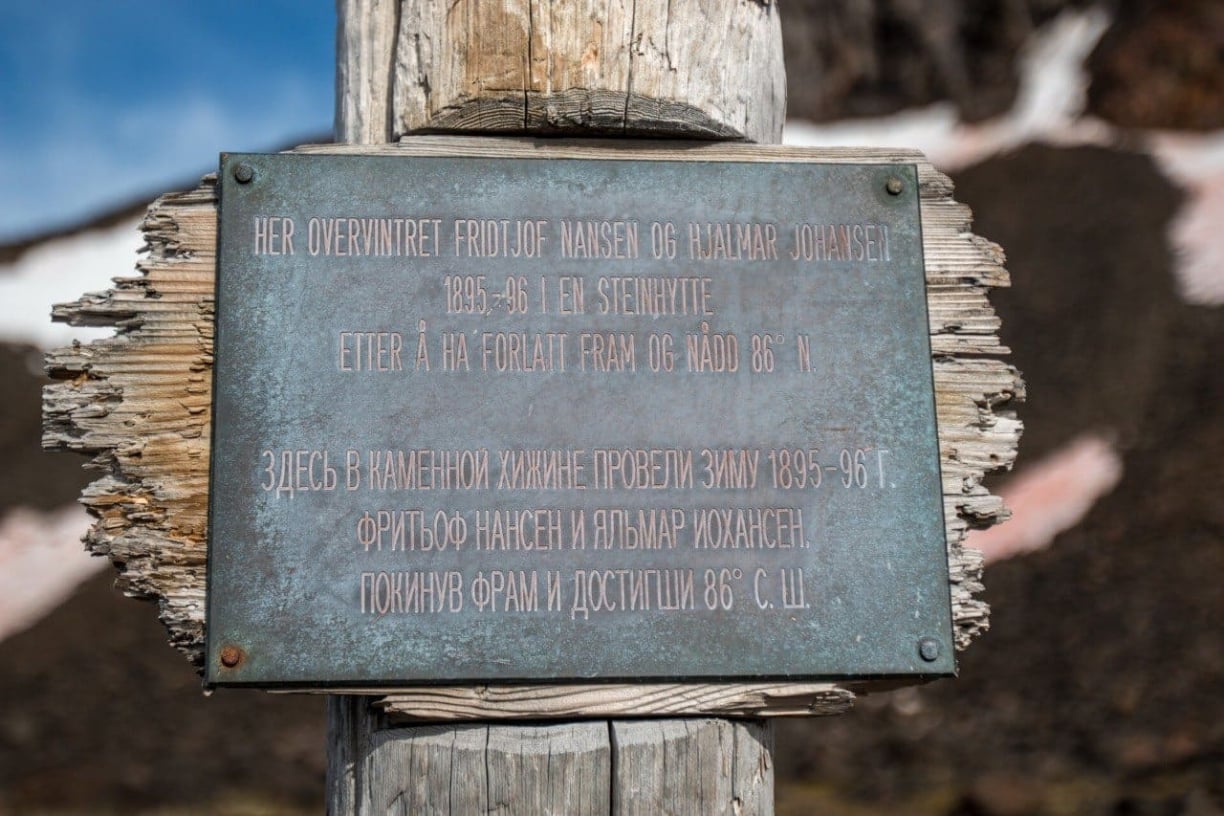
After three years, Nansen realized they weren’t getting as close to the North Pole as he had hoped. Determined to reach the North Pole, Nansen and Hjalmar Johansen set out north onto the ice, equipped with dog sleds, skis, kayaks, and supplies. The journey was brutal and progress was slow, with the ice constantly shifting, making every mile forward an enormous physical effort. On April 9, 1895, they turned back, having reached approximately 86°14′ N, the farthest north anyone had reached at the time. The return journey was just as trying. A polar bear attacked Johansen, while Nansen scrambled for their gun, which was in one of the kayaks that was beginning to drift away. While Johansen grabbed the bear’s throat with both hands, Nansen finally managed to recover the gun and shot the bear at close range.
After overwintering in a crudely built hut on Franz Josef Land, they reached Cape Flora on June 17, 1896, where they met by sheer coincidence British explorer F.G. Jackson, who took them back to Norway on his ship the Windward. By August 1896 Nansen was back in Vardø. Meanwhile, his crew aboard the Fram had drifted westwards and then southwards before finally emerging from the ice off the north coast of West Svalbard on August 13, 1896. By August 20, the Fram had also safely returned to Norway, reaching Skjervøy harbor, near Tromsø.
Today, Franz Josef Land is still one of the most remote and rarely visited archipelagos. Follow in the footsteps of Nansen and other polar pioneers on one of our expedition cruises to the archipelago, or sail the coastline of Svalbard aboard the M/V Sea Spirit, just as the Fram did over a century ago on its way home to Norway.
|
July 21, 1893 |
Departure from Vardø |
|
September 22, 1893 |
The Fram becomes locked in pack ice, beginning its planned drift across the Arctic Ocean |
|
April 9, 1895 |
Nansen and Hjalmar Johansen reach approximately 86°14′N |
|
Spring 1895 |
Polar bear encounter during their journey south |
|
June 17, 1896 |
After overwintering on Franz Josef land, Nansen and Johansen reach Cape Flora, where they unexpectedly meet Frederick Jackson, who takes them aboard the Windward |
|
August 1896 |
Return to Norway |
Follow in the footsteps of polar explorers
Join us on an unforgettable expedition to discover the wonders you've just read about
or download our free brochure
The Scientist Returns: Nansen's Groundbreaking Oceanographic Legacy
After Nansen’s return from the Fram expedition, he embarked on a quieter but equally important chapter of his career. In 1897, he was appointed professor of zoology at the Royal Frederick University (now the University of Oslo), and in 1908, he became a professor of oceanography.
Nansen’s meticulous approach to expedition planning was applied to the problem of studying deep water, which led to the development of the Nansen bottle. This contraption allowed scientists to collect seawater samples from specific depths. The Niskin bottle, invented in 1966 and still used today for deep-water sampling, is a successor to Nansen’s earlier model.
Cooperating with oceanographer Bjørn Helland-Hansen, Nansen conducted research aboard the Michael Sars in the Norwegian Sea. His 1909 publication, The Norwegian Sea, became widely known and helped advance the emerging field of physical oceanography and scientific research in the Arctic Ocean.
Did you know?
The Nansen bottle was a predecessor of the modern Niskin bottle, which is still used to collect deep seawater samples at specific depths in oceanographic research today.
From Explorer to Statesman: Nansen's Diplomatic Career
In 1905, the union between Sweden and Norway, formed after the Napoleonic Wars in 1814, reached a breaking point. Fridtjof Nansen, as an internationally celebrated citizen, used his fame to act as Norway’s diplomatic strategist during the independence movement, especially in Britain. Prime Minister Christian Michelsen sent him abroad to argue Norway’s case. Nansen brought the same calculated approach to diplomacy that had served him well on these polar expeditions, understanding when to take risks and negotiate and when patience was the better strategy.
He was not just publicly advocating for the dissolution of the union but was also entrusted with a secret mission to Copenhagen to persuade Danish Prince Carl to accept the Norwegian throne. Carl eventually agreed and became King Haakon VII following a referendum in Norway.
With Norway independent, Nansen was appointed minister to Great Britain, serving in London from 1906 to 1908. While building relationships with British politicians and strengthening Norway’s position internationally, his wife, Eva Nansen, stayed behind with their children in Norway and died of pneumonia in December 1907 during Nansen’s posting in London.
Kingmaker: Nansen's Role in Choosing Norway's First Modern Monarch
Nansen’s secret 1905 mission to Copenhagen helped secure a constitutional solution for his newly independent country. Christian Michelsen trusted him with the delicate mission to inquire whether Prince Carl of Denmark would consider accepting the Norwegian throne. It took several meetings and persuasion to get the prince to agree. At the request of Prince Carl, a referendum was held in Norway, with a decisive majority in favor of a monarchy rather than a republic and authorizing the government to invite Prince Carl to become king. He ultimately became King Haakon VII of Norway on November 18, 1905.
The Humanitarian Legacy: Nansen Passports, Refugees, and the Nobel Peace Prize
Fridtjof Nansen may have become world famous for his daring Arctic expeditions, but he created his most lasting legacy after he stepped off the ice. Following World War I, Europe faced a humanitarian crisis, with thousands of prisoners of war stranded far from home, while millions of people faced displacement, statelessness, and starvation.
As High Commissioner of the League of Nations, Nansen was asked in 1920 to organize the repatriation of prisoners of war, many of whom were held in Russia and Siberia. Working with limited resources and navigating a politically fractured Europe, his efforts helped bring approximately 450,000 prisoners home in just a year and a half. In 1921-1922, millions faced starvation during the Russian famine. Nansen traveled to the affected regions, witnessing the scale of suffering firsthand and advocating for international assistance. His relief mission worked under an agreement with the Soviet government, while international efforts involved organizations such as Herbert Hoover’s American Relief Administration.
One of Nansen’s most famous humanitarian achievements is the Nansen passport, addressing the problems refugees were facing due to the lack of internationally recognized identification papers. The Nansen passport, first issued in 1922, served as an identity document and travel permit.
Nansen continued his humanitarian work by supporting the resettlement of Greek and Turkish populations following the Greco-Turkish War and later became a prominent advocate for Armenian refugees. In 1922, Nansen was awarded the Nobel Peace Prize for his work repatriating prisoners of war, organizing international relief, and serving as the League of Nations’ High Commissioner for Refugees. In 1954, the Nansen Refugee Award was established by the United Nations High Commissioner for Refugees, honoring exceptional work protecting and supporting refugees, displaced and stateless people. It was named after Fridtjof Nansen because of his pioneering humanitarian work and the earlier establishment of the Nansen passport.
Nansen's humanitarian legacy rests on five achievements that reshaped how the world responds to displacement and crisis:
- Repatriation of prisoners of war: Helping approximately 450,000 prisoners return home
- Humanitarian work: Creating the “Nansen Passport,” the first internationally recognized ID for stateless refugees and first legal instrument used for international protection of refugees, allowing them to move across borders safely
- Combating famine: Organizing a massive relief effort that helped an estimated seven million people affected by starvation in Ukraine and Russia in 1921-1922
- Greek and Turkish mass evacuation: Raising funds for an unprecedented population exchange in 1922 and systematically relocating 1.25 million Greeks and 500,000 Turks, following the Greco-Turkish War, in an effort to address deep-seated minority conflicts
- Armenian refugee advocacy: Advocating for the rights of Armenian refugees and people affected by persecution and displacement
The Nansen Passport Explained
In Europe’s post-WWI era, where the maps were being redrawn, countries suddenly ceased to exist, and many people who fled their homes became stateless. Many refugees lacked internationally recognized identification papers, and millions of people who fled abroad were stateless and stranded far away from their homes. Nansen’s solution was a passport, serving as both an identity document and a travel permit, allowing people to seek work in third countries and cross borders safely. Around 450,000 Russians and Armenians received Nansen passports. The document was issued for a small fee for those who could afford it and given for free to those experiencing financial hardship.
The Final Years: Death and Lasting Tributes
By the end of the 1920s, Fridtjof Nansen had mastered the dangers of Arctic exploration, the challenges of political crises, and the tireless efforts to improve the lives of people affected by humanitarian disasters. After enduring the personal tragedy of losing his first wife, Eva, in 1907, Nansen married Sigrun Munthe, his second wife, in 1919. He continued to travel extensively and engage in research and international diplomatic work.
In early 1930, Nansen fell seriously ill. King Haakon VII visited him during his final illness, and though Nansen appeared to be recovering at first, he suddenly died on May 13, 1930. He was 68 years old. He was laid to rest in the garden of his home at Polhøgda, under a birch tree with a view of the fjord. After his death, the family gifted the house to the University of Oslo, where it now serves as a workplace for researchers who study the environment, climate, and international cooperation – topics that were close to Nansen’s heart. While the house is not open to the public, you can access the garden to visit Nansen’s grave.
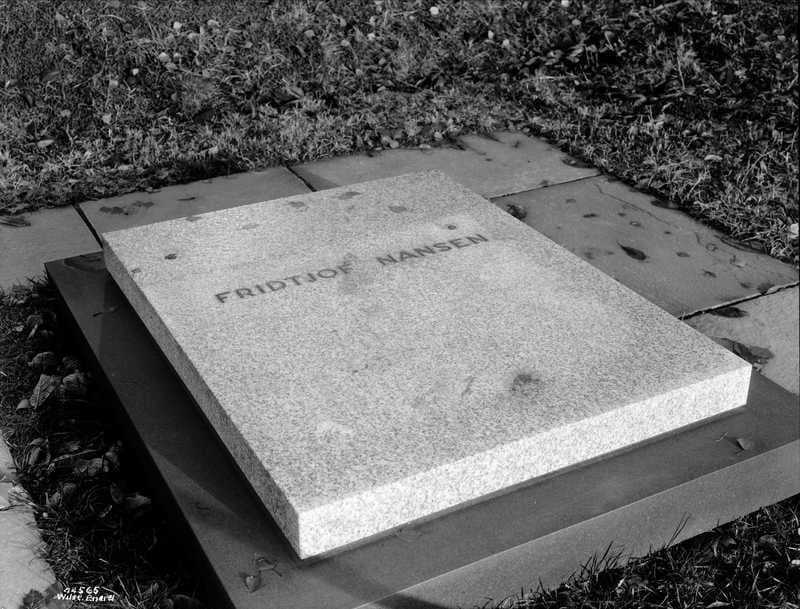
Creative Commons Attribution-Share Alike 3.0 Unported license
Fridtjof Nansen's Enduring Legacy Today
More than a century after Nansen’s death, his legacy can be found in Arctic research and scientific institutions to modern expedition ships. The Fridtjof Nansen Institute in Lysaker, located at his former home at Polhøgda, continues his scientific legacy as an independent research institute. His name also sails the world’s oceans aboard the Fridtjof Nansen-class frigates, led by the HNoMS Fridtjof Nansen, serving the Royal Norwegian Navy. The expedition ship MS Fridtjof Nansen carries tourists into the Arctic and Antarctic regions, offering polar adventures to people from around the world. In the Arctic Ocean, the Nansen Basin and the Nansen-Gakkel Ridge preserve the explorer’s connection to the far north.
Nansen’s humanitarian legacy continued after his death through the Nansen International Office for Refugees, established under the League of Nations to carry on his work. The organization continued assisting refugees and issuing Nansen passports and was awarded the Nobel Peace Prize in 1938.
In recognition of his scientific work on the nervous system, certain nerve fibers in the spinal cord became known as “Nansen fibers.” His work in oceanography also gave its name to the Nansen-Petterson water bottle, used for collecting deep-sea water samples. In honor of his research as a zoologist, his name was also given to several Arctic marine worm and crustacean species, such as the Magelona nanseni and the Onisimus nanseni.
Books, Quotes, and the Man Behind the Myth
If you want to learn more about Fridtjof Nansen’s life, achievements, and adventures, his books are the best place to start. They reveal a thoughtful and philosophical man, fascinated not only by ice but also by ideas.
- Farthest North (1897): Nansen’s first-person account of the Fram expedition and his journey across the Arctic ice with Hjalmar Johansen. It offers insight into his decision-making, endurance, and approach to uncertainty.
- Adventure, and Other Papers (1927): A collection of essays reflecting Nansen’s thoughts on adventure, peace, and human progress, including his 1926 rectorial address at the University of St. Andrews, where he explained his philosophy of commitment: “Let me tell you the secret of such so-called successes as there have been in my life, and here I believe I give you really good advice. It was to burn my boats and demolish my bridges behind me. Then one loses no time in looking behind, when one should have quite enough to do in looking ahead – then there is no chance for you or your men but forward. You have to do or die!”
He also published various articles. In an 1891 article, A New Route to the North Pole, he wrote: “The history of the human race is a continual struggle from darkness toward light.” If you are interested in a biography of the famous explorer, Roland Huntford’s 800-page book, Nansen: The Explorer as Hero, which covers the extraordinary life of Fridtjof Nansen, is the perfect reading recommendation for you.
The Artist Within: Nansen's Poetry and Painting
The brave-explorer image of Nansen tells only part of his story. From an early age, drawing was a natural way for Nansen to express himself. While studying in Bergen, he took drawing and watercolor lessons from Franz W. Schiertz. While Nansen eventually chose science over art, he continued drawing throughout his life and taught himself lithography, using the technique to illustrate his scientific work and dissertation. His drawings and sketches depicting animals convey lively, agile movements, making his publications both richly illustrated and visually engaging. Nansen’s artistic precision was another expression of the meticulous mind that he applied to most of his endeavors in life.
Love, Loss, and a Complicated Second Marriage
Nansen’s first wife, Eva, was a celebrated singer and pioneer of women’s skiing, making the Nansen household a lively cultural meeting place for artists, scientists, and intellectuals. After her death from pneumonia in 1907 and the death of his youngest son in 1913, Nansen married Sigrun Munthe in 1919. Their marriage was difficult, with Nansen frequently traveling on diplomatic and humanitarian missions.
Frequently Asked Questions
What did Fridtjof Nansen do?
Fridtjof Nansen was a Norwegian polar explorer, scientist, diplomat, and humanitarian. He led the first successful crossing of Greenland’s interior in 1888, pioneered Arctic oceanographic research, helped Norway navigate its independence in 1905, and later served as High Commissioner for Refugees for the League of Nations. He received the Nobel Peace Prize in 1922.
What was Fridtjof Nansen famous for?
Fridtjof Nansen became famous for leading the first crossing of Greenland and later reaching approximately 86°14′N during the Fram expedition, setting a new farthest north record. He later became internationally renowned for humanitarian work, including for creating the Nansen passport for stateless refugees, and received the 1922 Nobel Peace Prize.
What was Fridtjof Nansen's ship called?
Fridtjof Nansen’s famous polar ship was called Fram, meaning “Forward.” Designed and built by Norwegian shipbuilder Colin Archer, it had a specially rounded hull designed to rise with the pressure of sea ice rather than being crushed by it. Today, Fram is preserved at the Fram Museum in Oslo.
Did Fridtjof Nansen get a Nobel Peace Prize?
Yes, Fridtjof Nansen received the Nobel Peace Prize in 1922 for his leading role in repatriating prisoners of war, international relief work, and serving as the League of Nations’ High Commissioner for Refugees. His humanitarian legacy included the Nansen passport, which provided stateless refugees with internationally recognized identity and travel documentation.
What is the lasting impact of Fridtjof Nansen's work on today's world?
Nansen’s humanitarian work helped establish an early international system for assisting stateless refugees. The Nansen passport, introduced in 1922, became a precursor to the refugee travel documents provided under the 1951 Refugee Convention. His scientific legacy also lives on through oceanographic sampling technology: the Nansen bottle was an early depth-sampling device, later superseded by the Niskin bottle.
What was significant about Nansen's Greenland expedition?
Nansen’s 1888 Greenland expedition was the first successful crossing of Greenland’s inland ice, traveling from east to west on skis. His small team reached an elevation of 2,720 m (8,924 feet) and demonstrated the effectiveness of skis and lightweight expedition methods in polar travel. The expedition became a landmark in the development of modern Arctic exploration.
Related Cruises
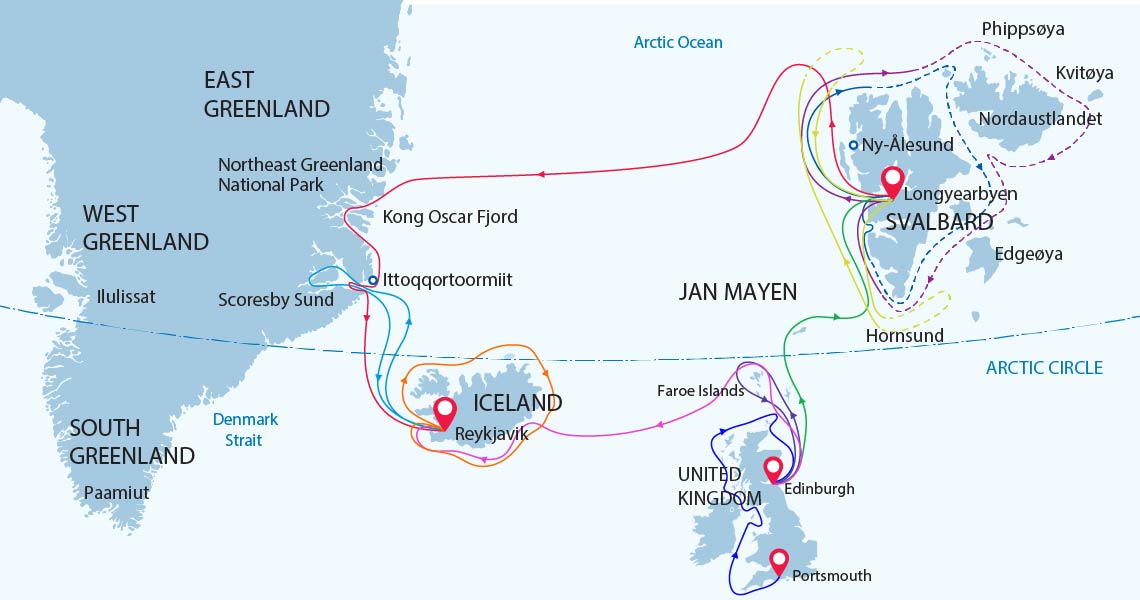
Arctic


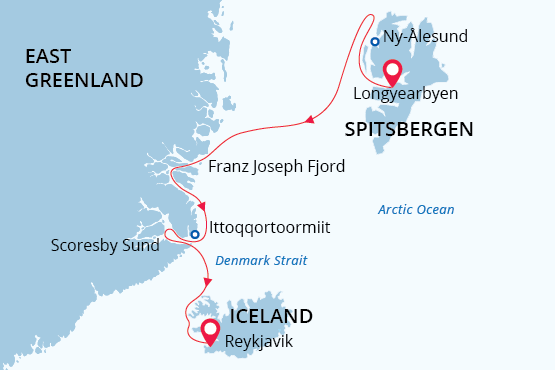
Svalbard, Greenland & Iceland


East Greenland