Who Owns Greenland and Why: 10 Facts About the World’s Largest Island
From the idyllic settlements of the west coast to the wild east coast, who owns this remote island? Given its size and isolated location, Greenland could be a nation of its own, but is in fact an autonomous country within another. Read on to find out about the historic ties and heritage of Greenland, to which nation it belongs today and why.
Which Country Owns Greenland?
While Denmark technically does not own Greenland anymore, the world’s largest island is still part of the Kingdom of Denmark. It was a Danish colony until 1953, when it was made a part of Denmark. Greenland was finally granted home rule in 1979. The self-government act referendum in 2008 further extended its autonomy, allowing Greenland to govern its own affairs and have its own parliament, prime minister, anthem and flag. The Danish government still controls areas such as citizenship, monetary policy, the military and foreign affairs. While Greenland has its own local Government, Greenlandic representatives are present in the Danish parliament.
Did you know that while Denmark is part of the European Union, Greenland is not? It is considered an overseas territory, but not part of the EU or Schengen zone. Chances are, however, that if you require a visa to visit Greenland, you may also need a Schengen visa, as travelling to Greenland will most likely have you transfer through an EU or Schengen-member country (such as Iceland or Denmark).
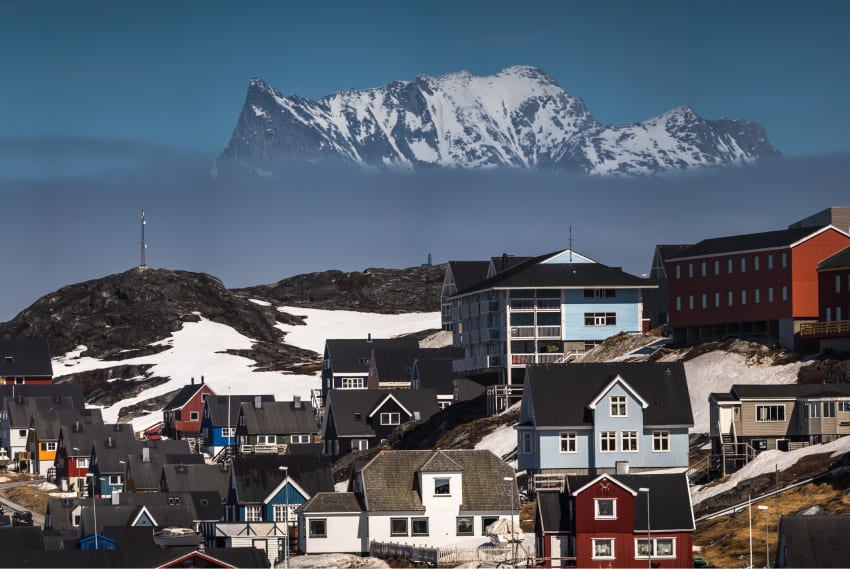
History of Greenland and Its Ownership
Early Viking history and settlements shaped the claims of Denmark and Norway to Greenland up to the modern-day area. Erik the Red settled in 983 CE. Lutheran missionary Hans Egede arrived in 1721, marking the start of Denmark’s colonization of Greenland from 1721 to 1953. During World War II, Greenland fell under United States military protection during Denmark’s occupation by Germany when Danish ambassador Henrik Kauffmann signed a defense agreement in 1941 at his own initiative (but in the name of the king). This was also strategically important for the United States due to the proximity of Greenland to the North American continent. Denmark joined NATO in 1949, which opened further opportunities for the United States to place bases in Greenland. The United States holds a military base in Quaanaaq (northern Greenland) to this day. The project of constructing the Pituffik Space Base was originally kept secret, but made public in 1952 after a North Pole exploration party discovered it by accident.
Greenland was granted home rule in 1979 and self-governance in 2008 by Denmark, paving the way for further independence. Since 2009, the Greenlandic language has been the sole official language of Greenland.
10 Interesting Facts About Greenland
The extreme Arctic climate, incredible ice sheet, mesmerizing northern lights, vibrant Inuit cultures and modern capital city – there is no limit to what you can discover on this amazing island called Greenland. Get your traveler’s spirits high and find out about our top ten Greenland facts, which will make you want to catch the next flight (or voyage aboard a comfortable cruise ship) to the world’s largest island.
1. It’s the Largest Island in the World
It’s the world’s largest island that isn’t a continent (sorry Australia, by definition you are a continent, not an island). Stretching over 2,16 million km2 (836,000 square miles), more than 80% of its landmass is covered by the Greenland ice cap. It’s one of the least densely populated countries in the world (0.14 people per square kilometer or 0.3 per square mile) and you’ll find most settlements in coastal areas, as the interior features the enormous Greenland ice sheet. Mount Gunnbjörn, Greenland's highest point, is located on its east coast.
2. Greenland Really Was Once Green
While Erik the Red gave Greenland its iconic name to promote the remote island with its particularly harsh climate to settlers, Greenland’s name is heavily misleading. It was not that green, even during Erik’s days. Most of the island is covered by snow and ice, and only the tough tundra plants can grow there in the warmer months. But he wasn’t’ all that wrong, just too late in history. A study by Ice Core (published in the journal Science in July 2023) suggests that around 416,000 years ago (give or take a few thousand years), Greenland was actually green and largely ice-free!
3 It’s an Autonomous Country
Greenland, even though it’s a part of Denmark, is an autonomous country. While a colony of Denmark from 1721 to 1953, Greenland was granted home rule in 1979 and further self-governance after the 2008 referendum. While certain aspects are still controlled by Denmark (such as foreign policy, citizenship and defense), Greenland decides on domestic affairs and civil matters.
4. Its History Goes Back Over 4,500 Years
The earliest people (of the Saqqaq culture) are believed to have crossed to north and west Greenland as early as 2500 BCE. After that, people from the Dorset culture (around 2,500 years ago) and Thule culture (around 1,000 years ago) arrived on the island. In 983CE Norwegian Viking Erik the Red discovered the island (landing in South Greenland), advertised it as paradise for settlers and created the first Norse communities in southern Greenland. By the 15th century, Norse settlements had ceased to exist. In 1721, Hans Egede marked the beginning of Greenland’s colonization, when he set up a Lutheran mission with permission of the Kingdom of Denmark-Norway. Colonization ended in 1953 and home rule was granted in 1979, allowing Greenland to be autonomous.
5. There Are No Eskimos in Greenland
Around 88% of the local population are Inuit or of mixed Inuit-Danish descent. The remaining population consists of Europeans, mostly Danes. While some outsiders may refer to Greenlandic people as Eskimos, the indigenous people of Greenland much prefer to be called by their native subculture: Inughuit, Tunumiit or Kalaallit.
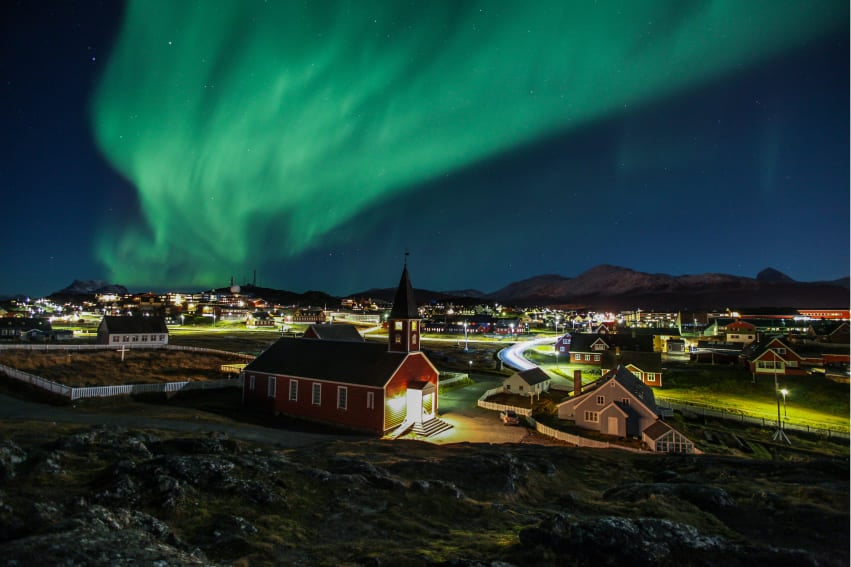
6. Greenland Features a Multilingual Nation
Greenlandic (spoken by approximately 90% of the population) is closely related to Inuit languages present in Canada. There are three main dialects spoken in Greenland: the Kalaallisut (west Greenland), Tunumiit (east Greenland) and Inuktun (north Greenland). After home rule was established in 1979, both Greenlandic and Danish languages have been used for public life and affairs. Today, young Greenlanders are taught both languages in school, as well as English.
7. Hitting the Road May Get You Nowhere
As long as you stay in town, you’ll have roads to drive on. Once you leave the city limits, there are no roads to connect the settlements in Greenland. There is also no railway system in Greenland. If you plan to travel around, you can do so by plane, ship or helicopter, and dog sled or snowmobile during the winter. The best and also most popular way to travel for Greenlanders and tourists alike is by boat.
8. You Can Try Whale Meat in Greenland
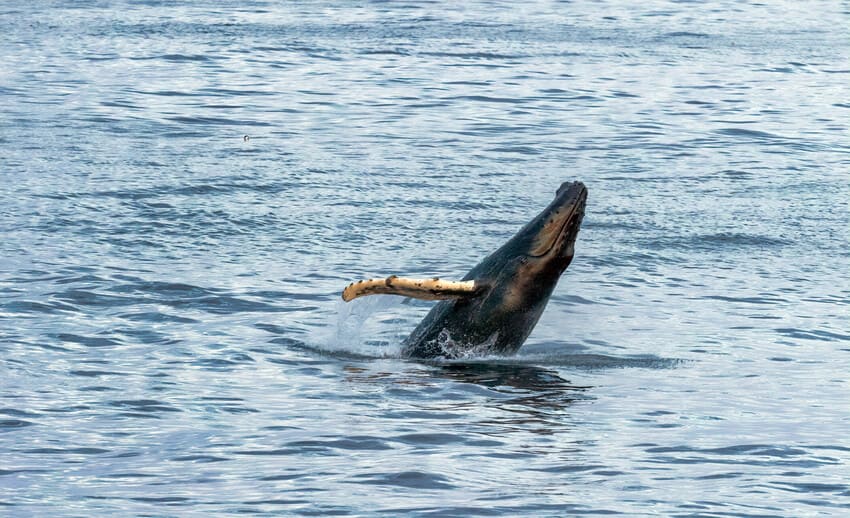
There are a few places on Earth where whaling is still legal, and the Danish dependencies of the Faroe Islands and Greenland are among them. Whale and seal hunting is permitted with specific quotas awarded to different regions. With the exception of the blue whale, which is under protection, locals consume whale meat in Greenland, however exports of whale and seal meat is prohibited. For fans of fishing, Greenland is a prime spot, especially from July to September. There are lots of fish and local seafood on offer, which constitute a major part of Greenland’s economy.
9. The Capital Nuuk is Modern, Vibrant and a Cultural Hot Spot
Given its remoteness in the high north, you wouldn’t believe how much culture is packed in this little place on Greenland’s west coast. Learn about the history and cultural heritage of the country at the Greenland National Museum, listen to a concert at the Katuaq Cultural Center or enjoy fine art collections and the free ArtWalk podcast city tour at the Nuuk Art Museum. Relax in one of the local restaurants and cafés, or just take a walk and enjoy the beautiful city surrounded by fjords and rugged mountains.
10. There’s a Time When the Sun Doesn’t Set
Travel during the summer (May 25 to July 25) and experience the midnight sun. You can only witness this incredible phenomenon in high latitudes and Greenland is one of the most magical places to see it. Visit on June 21 and celebrate Greenland’s national day, which falls on the same day as the summer solstice. The 24-hour daylight will give you ample time to enjoy this beautiful place and explore without limits.
FAQs
Who owns Greenland today?
Greenland is an autonomous country, but part of the Kingdom of Denmark. The official currency is the Danish kroner (Danish crown).
Does the United States own land in Greenland?
The United States of America currently has one military base in northern Greenland, the Pituffik Space BASE (up to April 6, 2023 it was called the Thule Air Base). At this base, US law applies.
Why does Denmark still own Greenland?
Denmark does not own Greenland. In 1979, Greenland was granted autonomy (after the home rule referendum). In 2008, Greenland got further power transferred from Denmark with the Greenlandic self-government referendum.