Iceland and Greenland: The Ultimate Arctic Travel Guide
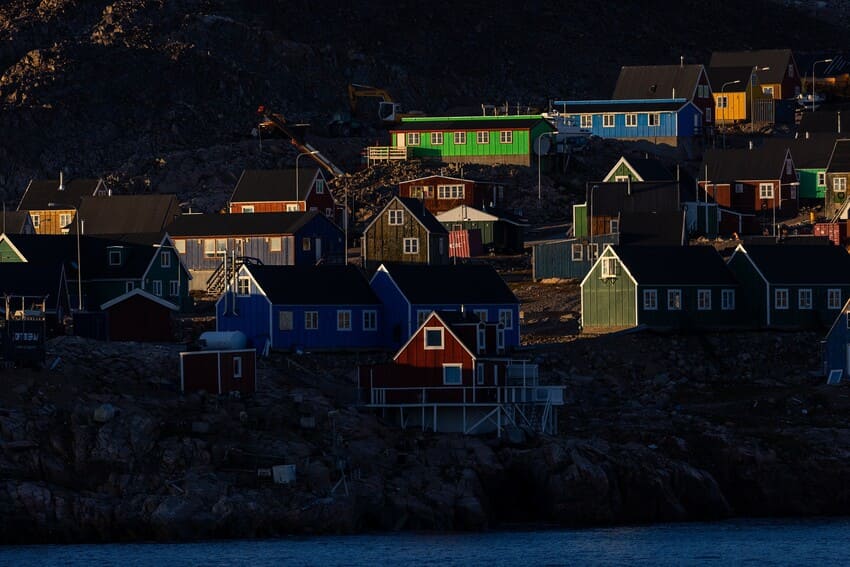
Greenland vs. Iceland – which place should you visit? They’re both prime locations in the Arctic, and should be on top of every real adventurer’s travel list. But what should you expect? Find out why Greenland isn’t really that green, and what part of Iceland is actually covered by ice. Find out which spots are the best to visit, how to get there and how you can combine both destinations in one trip! Read on, and get inspired for your next polar adventure with our ultimate travel guide.
History Highlights – The First Settlers
Imagine a group of pious monks setting sail for an uninhabited volcanic island in the North Atlantic Ocean in search of solitude, only to be driven off the island a few decades later by a bunch of Norse heathens! When Norse settlement in Iceland started in 870 AD, Irish monks had already presumably inhabited the island for decades or even centuries prior, according to traces of Christian artefacts found in man-made caves in southern Iceland.
At the time when Irish monks packed up to leave Iceland in repulsion of the arriving pagan Vikings, Greenland had already seen roughly two millennia of migration waves of Paleo-Inuit and other Inuit cultures, such as the Saqqaq, Dorset and Thule people. When Norwegian Viking Erik the Red arrived on the gigantic island in 983 AD, after being banished from Iceland for manslaughter, he gave Greenland its iconic name, hoping the fertile-sounding name would attract other Norse settlers. While Greenland may have been a lot warmer and suitable for farming back then (around 280 farms were successfully established), its name was still an exaggeration and just a clever marketing trick.
Christianity eventually caught up with Iceland and Greenland around 1000 AD. In Iceland, it arrived through various missionaries from the Norwegian kingdom, and in Greenland through Leif Eriksson (Erik the Red’s son).
Origins of Iceland’s Name
There isn’t really that much ice in Iceland to justify its name, so who gave it its iconic misleading label? According to the Landnámabók, a medieval chronicle of Icelandic settlement, Viking king Flóki Vilgerdarson was led by three ravens to Iceland’s Westfjords. While the first summer looked promising, with an abundance of fish in the fjords feeding the party, the livestock they brought with them died during the first winter. Discouraged and planning to leave the island in spring, Flóki climbed the nearest hill. The spectacular view of the ice-filled fjord, coupled with the somber realization of his party’s major winter fail, sparked the rather prosaic name of the newly-found land: Ice+land. The chronicles note, however, that he returned later to settle permanently in Iceland.
Origins of Greenland’s Name
If you’ve ever seen pictures of Greenland, you have noticed that the place isn’t all that green! While Greenland’s climate around the time of its discovery by the Norsemen (around 1000 years ago) may have been warmer, its name was still mostly a historic marketing promotion that stuck. When Erik the Red was exiled from Iceland for manslaughter, he arrived on the southern shores of Greenland in 983 AD. When Erik returned around three years later to Iceland, he promoted the newly-found territory as Greenland, hoping to attract settlers to follow him. Even with warmer temperatures at that time, it wasn’t the farmer’s paradise that Erik was praising it to be. From around 500 original pioneers, Greenland’s Norse population never exceeded 3,000 inhabitants, and by the 1500s had disappeared entirely.
Communication
If you speak English, you won’t have any problems getting around Iceland. While the official language is Icelandic (similar to Old Norse), most locals speak fluent English, even in smaller communities. In restaurants, you’ll find English menus pretty much everywhere, and some even ditched Icelandic menus altogether, offering only English ones. According to RUV, the national news broadcasting service, the Icelandic Consumer Agency is planning formal legal action against restaurants that fail to provide Icelandic versions of menus and other promotional materials. In December 2024, they found that out of 83 restaurants visited in the capital city, 34 of them displayed English menus only.
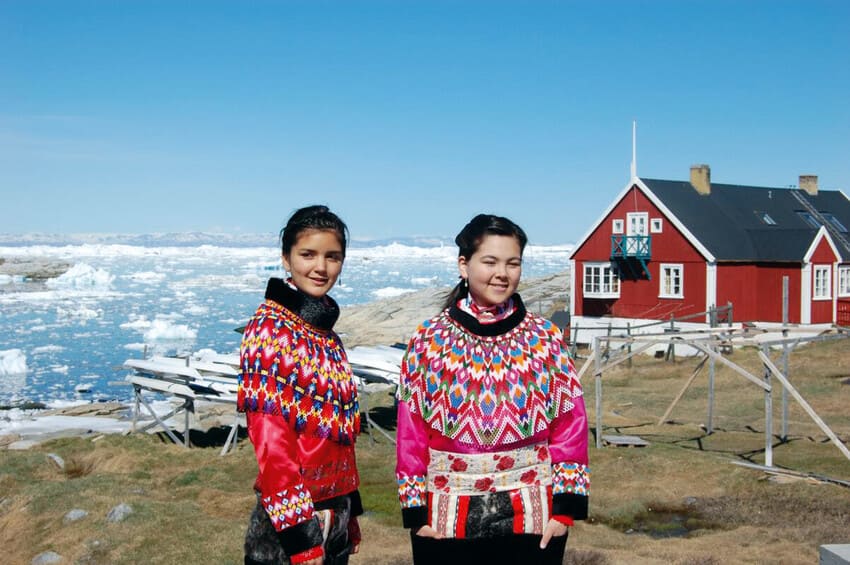
Getting around Greenland may be a bit trickier. While people in major cities and touristic places speak English fluently, people in smaller communities may only speak Greenlandic, their official language. Greenlandic belongs to the Inuit languages also found in Alaska and Canada, and there are three different dialects: West, East and Thule Greenlandic.
Climate and Weather
Planning a visit, you may wonder which place is colder, Greenland or Iceland? Iceland features an oceanic climate in its coastal regions, and a subarctic tundra climate in the interior, with relatively mild winters and cool summers. In comparison to this, Greenland features an Arctic climate in its coastal regions and a polar climate on its ice cap. Given its high latitude and the large ice cap covering the interior, Greenland is much colder than Iceland. The Greenland ice sheet covers roughly 80 percent of the island, reflecting sunlight and thus keeping temperatures low. Average winter temperatures in Greenland range from -5C to -60C (23F to 76F), while summer temperatures range from 0C to 10C (32F to 50F).
Because of its sheer size, the actual temperatures you’ll experience in Greenland depend on where you find yourself. You may enjoy relatively mild winter temperatures in Nuuk with -5C to -10C (23F to 14F), or freeze in the interior near the Klinck weather station, which holds the record for the lowest temperature ever recorded in the Northern Hemisphere with -89.4C (-132.9F) measured in 1972. It’s the North Atlantic Current that keeps Iceland relatively warm. Average winter temperatures range from -1C to -10C (30F to 14F), and 10C to 15C (50F to 59F) in summer.
Transportation and Accessibility
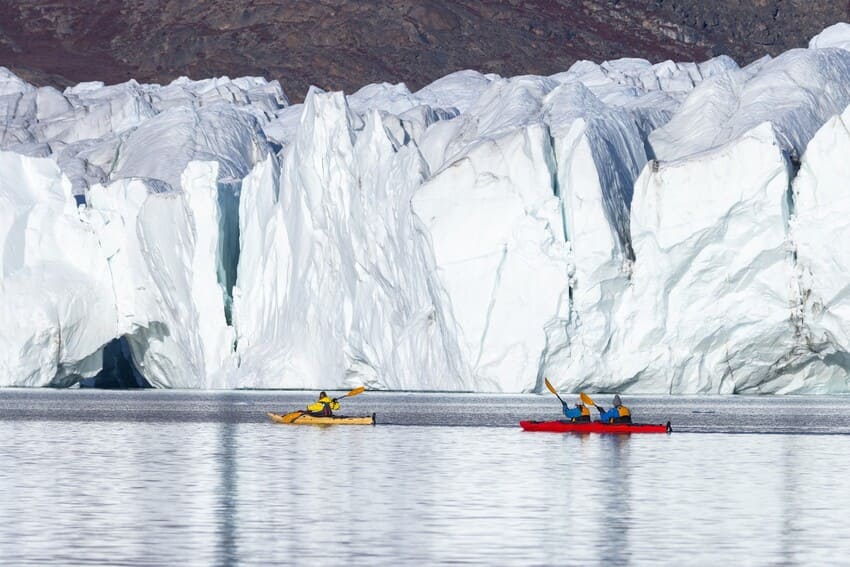
Both destinations, Greenland and Iceland, are accessible to visitors. When it comes to planning your trip, the difference between Iceland and Greenland depends on the mode of transport and type of trip to choose. If you want to explore Iceland, you can perfectly manage on your own. There are rental car companies in town, and you can follow Route 1, which leads you in a circle around the island. Major tourist spots are located right off the road. A trip to Greenland requires a little more planning and an adventurous spirit. There is neither a road nor a train network in Greenland, and the only way to get around is by air and sea. While a trip to Nuuk doesn’t require a lot of preparation, venturing into remote communities and the interior is challenging. This is why Greenland is one of those locations where an expedition cruise will be the best choice. Aboard a small ship, you can cruise to the most spectacular and remote places, see the highlights and gems of the region, while enjoying all comforts aboard.
Natural Wonders and Landscapes
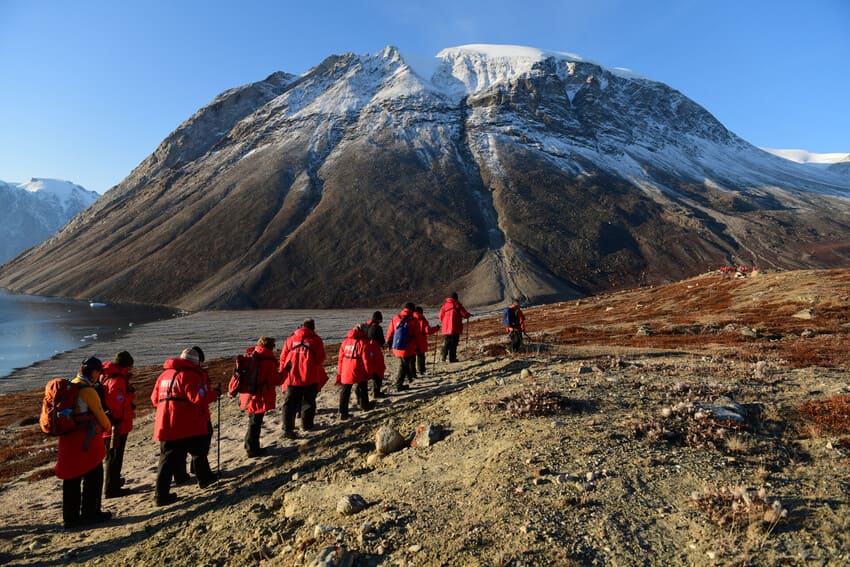
Greenland isn’t predominantly green and Iceland isn’t all that icy. While these prime Arctic locations deceive visitors with their names, the scenery in both locations is breathtaking and unique! Visit Iceland to find spectacular natural beauty like volcanic landscapes, black sand beaches, natural hot springs, lush green hills and towering waterfalls. Visit ancient Viking ruins and learn about Iceland’s early settlers. Travel to Greenland to see breathtaking glaciers, the wildlife and landscapes of the Northeast Greenland National Park (the largest national park in the world) and to get to know local Inuit culture. Both Iceland and Greenland are very different, and we think both are a must-visit for serious Arctic travelers!
Discover Glacial and Ice Formations
Iceland features around 11 percent of total ice-cover, which you can marvel at in the form of outlet glaciers, mountain glaciers, ice streams and cirque glaciers. The largest is the Vatnajökull ice cap in the southeastern part of the island, covering an area of 8,300 square kilometers (3,200 square miles). There are seven volcanoes under the Vatnajökull ice cap, and most of them are active. In 1996, the last subglacial eruption took place (so far), breaking through the ice and throwing ash clouds of ten kilometers into the sky. The area is accessible for tourists, and you can actually hike on the glacier. It lies within the Vatnajökull National Park and offers outdoor activities such as hiking, camping, jeeping and birdwatching.
While Greenland’s ice cap is much larger, it’s also less accessible, covering the wild interior of the world’s largest island. It’s also the reason why Greenland is colder than Iceland, functioning like a giant air conditioner, reflecting sunlight back into the atmosphere and keeping the temperatures low. You can visit and walk on the ice cap in Kangerlussuaq. Several tour operators offer excursions to see the largest ice sheet in the Northern Hemisphere. And to see the largest icebergs, travel to the Ilulissat Icefjords, Disko Island and Disko Bay, a UNESCO World Heritage Site and one of the most famous destinations in Greenland. For those who enjoy glacier walking, there are several trails around the Ilulissat Icefjord, and the area around Disko Bay is also a great spot for whale watching!
Experience Diverse Landscapes
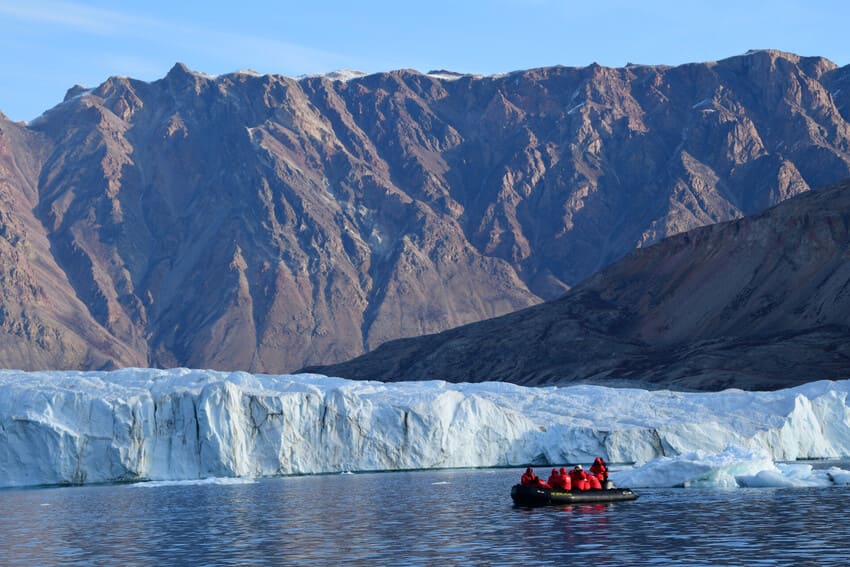
Imagine high mountains, lush green valleys and sheep farms – where could you expect this scenery? If you’ve read attentively so far, you may correctly remember that Greenland is mostly covered by ice, so it’s gotta be Iceland then, right? Wrong. While most of Greenland is covered by an inhospitable ice sheet, there are coastal regions in southern Greenland where modern Inuit communities continue sheep farming, just as Norse settlers did in the 10th century. To see Greenland’s most iconic landscapes, visit Scoresby Sund, the world’s largest fjord system. It’s located in a remote part of Greenland and is best accessed via sea, for example, as part of an expedition cruise. It stretches over 350 kilometers (220 miles) inland from the Greenland Sea and amazes visitors with its towering cliffs, giant icebergs and glaciers.
Iceland is equally diverse and surprising! Leave the capital via Route 1, and you will see how quickly the scenery changes within a few hours of driving. See impressive waterfalls, such as Seljalandsfoss and Skogafoss in the morning, walk on one of the famous black sand beaches near Vik for lunch, visit an ancient Viking village surrounded by green hills in the afternoon and finish the day at Diamond Beach, where crystal-clear chunks of ice are scattered on the black sand beach. Plan a multi-day trip and continue on Route 1 to see the entire island. Take a boat tour in the Jökulsarlon Glacier Lagoon and see icebergs floating in blue waters. Visit crystal blue ice caves near the Vatnajökull glacier and then continue to the northern part of the island, where you’ll find a moon-like volcanic landscape. Discover Myvatn, a volcanic lake in northern Iceland and hike around the Hverfjall crater.
Fun fact: The 2013 movie The Secret Life of Walter Mitty, which sends the protagonist on an incredible adventure through Greenland and Iceland, was actually solely filmed in Iceland. You can visit the locations featured in the film: Höfn, Vatnajökull National Park and Seydisfjordur. Want to depart on your very own Greenland and Iceland journey? Check outour Iceland and Greenland cruise schedule!
Enjoy Thermal Hot Springs
If you enjoy soaking in geothermal hot springs, Iceland may be the prime destination for you. There are popular maintained spots such as the world-famous and Instagram-hyped Blue Lagoon, Krauma geothermal baths, Myvatn nature baths, Krossneslaug and Laugafell hot springs, as well as various smaller and unmaintained natural springs (for wild bathing), such as the Landmannalaugar hot spring, Askja hot spring crater lake and Galtahryggjarlaug, located in the Westfjords.
While Greenland features the Uunatorq hot springs near Qaqortoq in the south, it doesn’t offer quite as many different spots to dip into natural hot pools when compared to Iceland. You can take a water taxi from Qaqortoq harbor to reach the springs. It’s a scenic place, and if you’re into Viking history and mythology, you’ll be excited to know that apparently ancient Viking warriors used to soak here after fierce and bloody battles.
See the Northern Lights
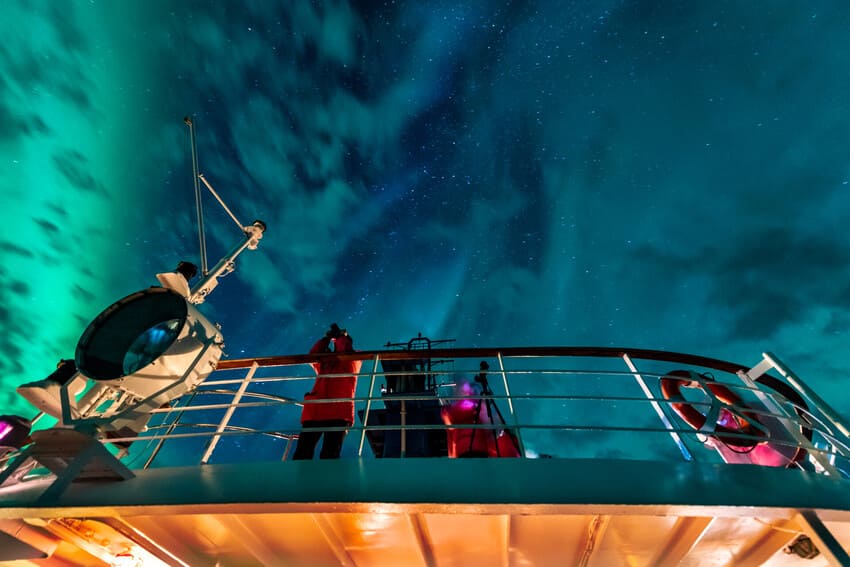
You can catch the aurora borealis in Greenland and Iceland. The best time to spot them is from September, when the midnight sun sets, to approximately April. While 2024 featured a solar maximum with prime viewing opportunities around the world, even in lower latitudes, 2025 is equally promising. According to the Space Weather Prediction Center at the National Oceanic and Atmospheric Administration (NOAA), a solar maximum is also expected for July 2025. While you may even be able to get a glimpse of the aurora borealis from the capitals of Reykjavík and Nuuk, the best chance to see them is away from civilization and light pollution. Our iconic northern lights cruise is perfectly timed to experience them in the most remote and beautiful spots around the East Greenland coast.Book your spot now:
Unique Wildlife Experiences
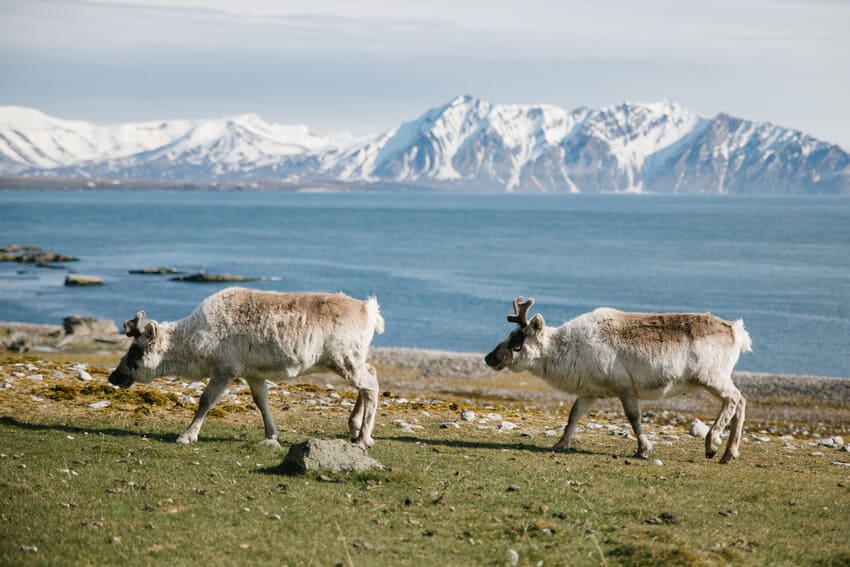
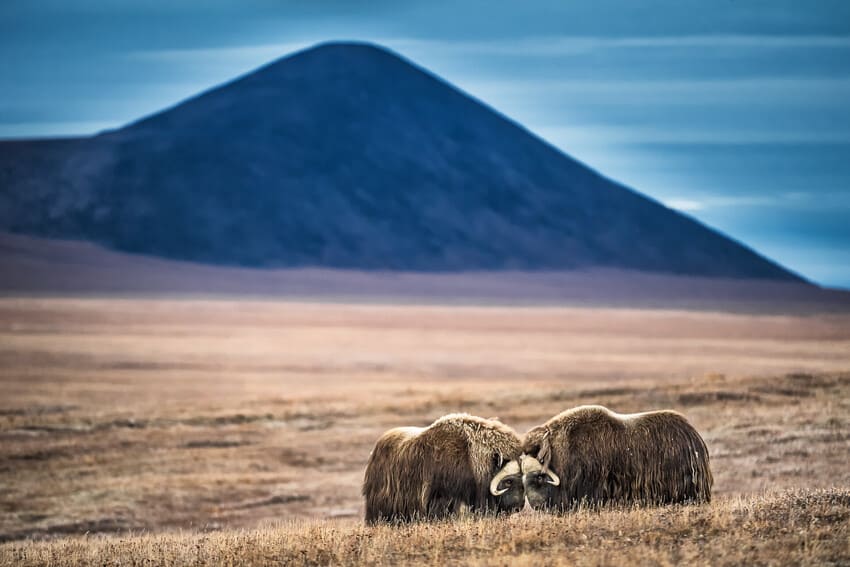
Iconic species in Greenland are polar bears, muskoxen, Arctic reindeer, Arctic foxes, Arctic hares, Greenland wolves, whales, walruses and seals, as well as rare Arctic birds. East Greenland is a prime place for wildlife, such as the Northeast Greenland National Park, Scoresby Sund and King Oscar Fjord. Since there are no roads, many wildlife viewing spots are difficult to access, and small shipcruises are the best way to get around. Most ships will also offer Zodiac excursions (in small motorized boats) to get a closer look at wildlife without disturbing it.
When visiting Iceland, look out for reindeer, Arctic foxes, seals, dolphins, whales, Icelandic sheep and Icelandic horses. A good place to see abundant wildlife, as well as over 52 bird species, is the Thingvellir National Park. Iceland is a paradise for birdwatchers! Around 85 species of rare birds are spotted regularly around the island, including puffins. The largest puffin colony is located in the Westman Islands, and birds frequent the area from around May to August. Greenland, as the northernmost breeding ranges in the world, features a few small puffin colonies near Nuuk and Disko Bay, but Iceland is definitely the better spot to see them.
Iceland vs. Greenland – Top 10 Activities
Traveling to Iceland? Find out our favorite top ten activities:
- Bathe in one of the many thermal hot springs, such as the (man-made) Blue Lagoon or one of the many wild baths
- Visit iconic waterfalls (such as Seljalandsfoss, Gullfoss, Dettifoss and Skogafoss)
- Visit the Snaefellsnes peninsula and experience a miniature version of Iceland in one day (historic villages, wildlife, dramatic mountain ranges, waterfalls, beaches and the famous Kirkjufell mountain)
- Explore Iceland off the beaten path in the north: Lake Myvatn, Akureyri, Asbyrgi canyon and Husavik
- Visit Iceland’s largest glacier, ice caves and the Jökulsarlon Glacier Lagoon at Vatnajökull National Park
- Take incredibly surrealistic beach pictures at Vikurfjara, the Reynisfjara black sand beaches and the stranded mini icebergs at Diamond Beach
- See the northern lights
- Snorkel between the tectonic plates at Silfra and experience the clearest waters in the world
- Discover Reykjavík’s unique vibe, music and art festivals, restaurant scene and sights
Venturing to Greenland? Make sure you tick off our top must-dos:
- Explore the beautiful coastlines of Eastern Greenland
- Discover Scoresby Sund, the largest fjord system in the world
- Try dog sledding or snowmobiling (for example, at Kangerlussuaq, Sisimiut or Ilulissat)
- Walk on the Greenland ice sheet (the largest ice sheet in the Northern Hemisphere) near Kangerlussuaq
- Book a boat trip and go whale watching
- Witness the northern lights in one of the most remote and beautiful places on Earth
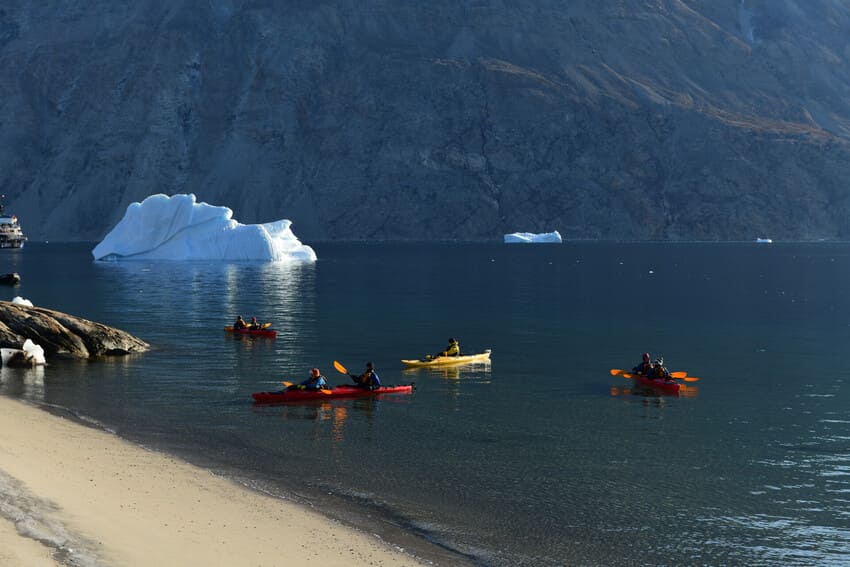
Did you know that by booking our East Greenland expedition cruise you’ll already cover eight must-dos from the list? Contact us to find out which ones are included! Also, for those who want to explore Iceland and Greenland in one trip, some of our cruises to Greenland embark or disembark in Reykjavík! Arrive a few days earlier or extend your stay, and discover this incredible island at your own pace. Choose your adventure now:
And for the ultimate once-in-a-lifetime bonus experience, check out our 2026 total solar eclipse in Greenland cruise! Find out more here:
FAQs
Greenland versus Iceland, which is colder?
Both Iceland and Greenland are located on the Arctic Circle, but Greenland is much colder. Around 80 percent of Greenland’s landmass is covered by ice, compared to the 11 percent ice-cover of Iceland. While both capitals, Reykjavík (Iceland) and Nuuk (Greenland), are located around 64 degrees northern latitude, average winter temperatures (January) are from 3C to -3C (37F to 26F) in Reykjavík, and -5C to -10C (23F to 14F) in Nuuk.
Why is Greenland so uninhabited?
Since the Greenland ice sheet covers the majority of the island, most areas feature an extremely harsh Arctic climate, especially throughout the interior. That’s why most Greenlandic towns are found in coastal regions.
Which is better to visit, Iceland or Greenland?
This depends on your travel preferences, budget and activities you enjoy. Iceland is generally easier to visit, and many people explore via rental car. Greenland is also accessible, but with the absence of roads, getting around is more difficult. Ideally, you’ll explore both regions, and you can do so by booking an expedition cruise taking you to both Iceland and Greenland.