How Do You Get to Antarctica? Ship, Flight and Route Guide
Visiting Antarctica is easier than you might think. Most travelers reach the White Continent in one of two ways, either by expedition ship from Ushuaia (Argentina) or by charter flight from Punta Arenas (Chile) to King George Island. If you choose to cruise, you’ll cross the Drake Passage in approximately two days, while a flight will take you to the Antarctic Peninsula in roughly two hours. Both routes have their charm, and the best choice depends on your preferences, available time, and budget.
Antarctic activities must be authorized by the relevant national competent authority under the Antarctic Treaty System. IAATO membership is voluntary, but choosing an IAATO member operator is recommended for travelers seeking responsible and well-regulated Antarctic tourism. Your window of travel is the austral summer, from November to March, when weather and ice conditions allow access by ship and plane. A typical expedition cruise costs approximately EUR 8,000–45,000 (US$ 9,000-US$ 50,000) or more per person, depending on the expedition you choose, the vessel, cabin category, and itinerary. Read on to find out how to go to Antarctica and which route may be best for you!
Key Takeaways — How to Get to Antarctica at a Glance
Here’s what I wish someone had told me before I started planning a trip to Antarctica:
- Two ways to get there: By expedition ship or by plane, with fly-cruise options combining both.
- Antarctic gateway cities: Ushuaia (Argentina) as the main departure point for expedition cruises, Punta Arenas (Chile) as the main gateway for charter flights to Antarctica.
- King George Island: The fly-cruise entry point, reached in roughly two hours by air.
- Drake Passage: Expedition cruises take approximately two days to cross this stretch of sea.
- Travel season: November through March, during the austral summer.
- IAATO: Look for an IAATO member tour operator committed to responsible Antarctic tourism.
- Average cost: Expect approximately EUR 8,000–45,000 (US$ 9,000–50,000) or more per person for an Antarctic expedition.
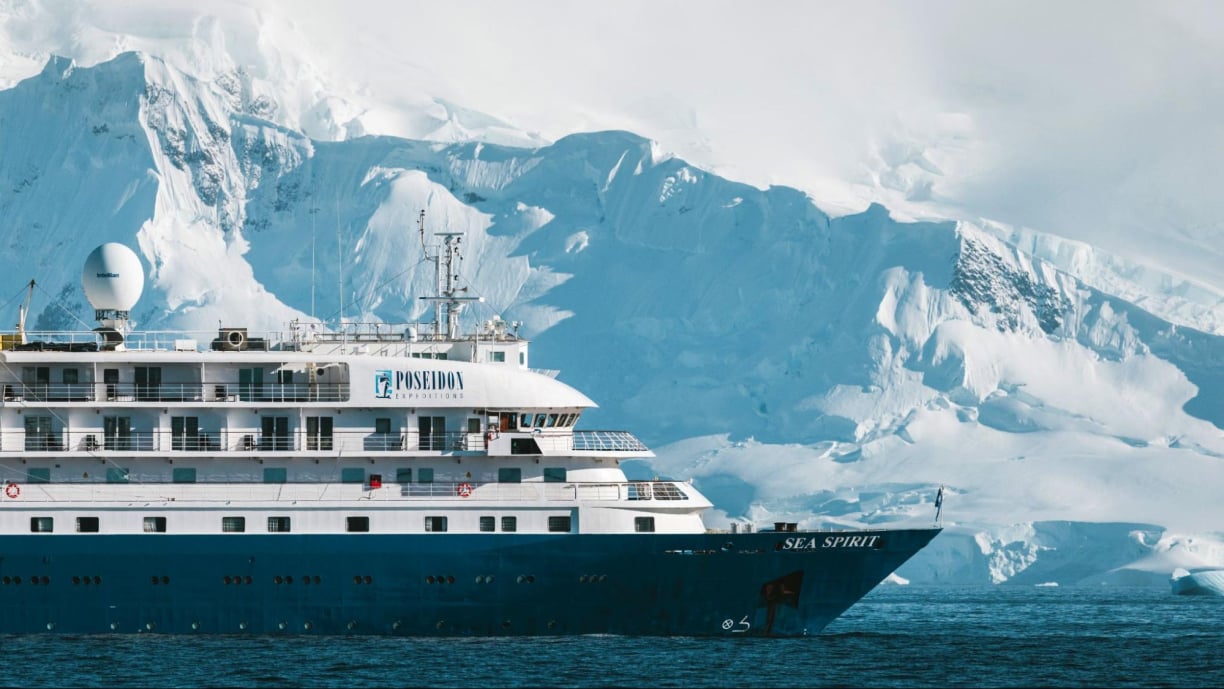
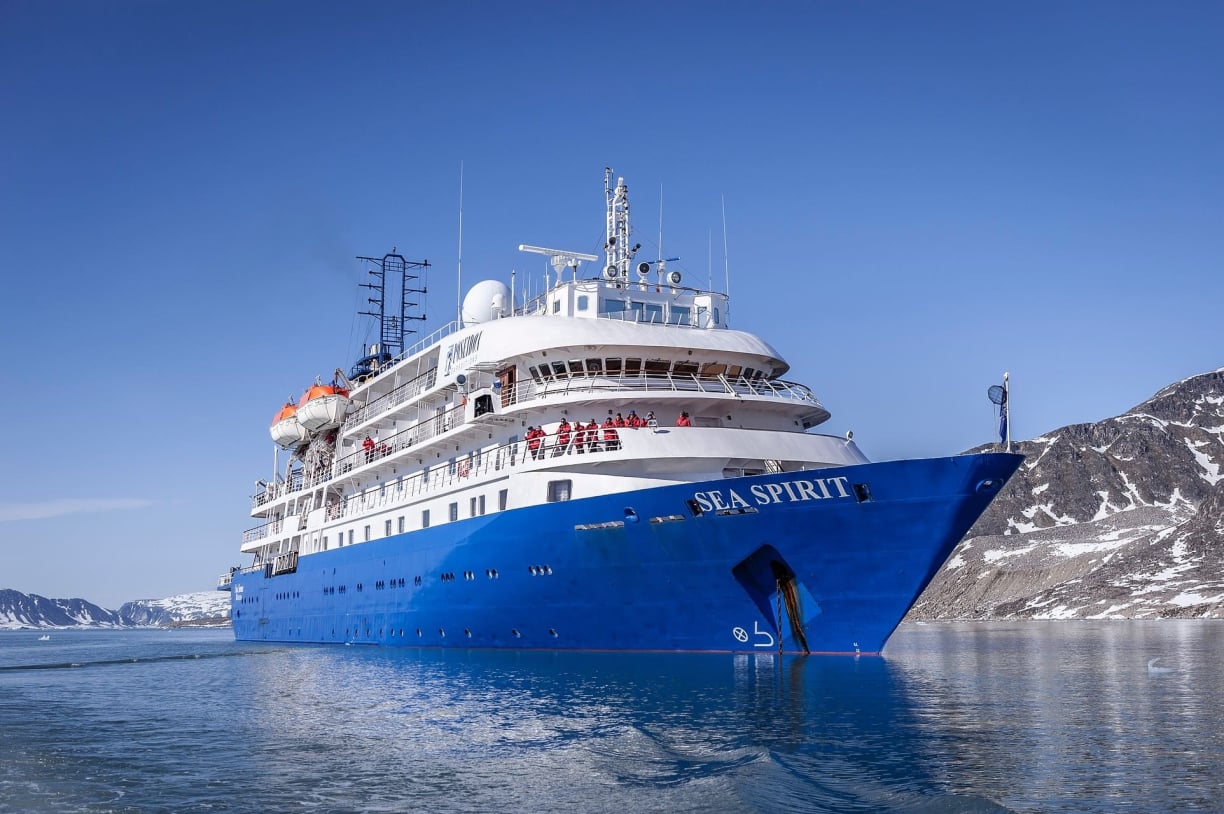
Why choose a small-ship expedition? Small-ship cruises, such as Poseidon Expeditions’ Antarctica expeditions aboard the 114-passenger vessel M/V Sea Spirit, allow everyone to explore at the same time, whether ashore or in Zodiac boats. With up to three landings a day, averaging around 2.5 hours each, you’ll maximize your time discovering Antarctica’s incredible landscapes and wildlife.
See current Antarctica cruises and dates.
Is Antarctica Actually Accessible to Regular Travelers?
As first-time traveler, you may ask yourself how to travel to Antarctica and how to choose the right tour operator. While Antarctica is incredibly remote, visiting the White Continent has become increasingly popular, and not only among scientists and researchers. The travel season runs during the Antarctic summer from November through March. According to the International Association of Antarctica Tour Operators (IAATO), more than 100,000 visitors have traveled to Antarctica in each of the past several seasons, with 113,518 travelers during the 2025-26 season alone.
You don’t need a visa for Antarctica, but you must meet the entry requirements of the country you travel through. If you plan to board an expedition cruise in Ushuaia, you will need to check the entry requirements for Argentina. Tourism is permitted under the Antarctic Treaty System, but all expeditions must be authorized by the relevant national authorities. Choosing an IAATO member tour operator helps ensure that your trip follows responsible tourism guidelines.
So how can you travel to Antarctica? One of the first decisions is whether to cross the Southern Ocean by ship or plane.
Ship or Flight? The Two Main Ways to Get to Antarctica
The very first questions to ask yourself when planning an Antarctica trip are how much time you have and whether you are able to tolerate rough seas. There are two main ways to visit Antarctica: by expedition cruise ship or by plane, usually as part of a fly-cruise expedition.
If you want to follow in the footsteps of historic explorers and approach the continent by ship, you’ll be crossing the legendary Drake Passage. You’ll board your expedition ship in Ushuaia, Argentina, and cross the Southern Ocean in around two days each way. Alternatively, you can fly from Punta Arenas, Chile, to King George Island, just off the Antarctic Peninsula. While this saves you travel time and allows you to avoid the rough seas of the Drake Passage, this option can be more expensive and may also cut your adventure a little short. Let’s compare the two options:
Ship vs. Flight to Antarctica at a Glance
|
|
Expedition Cruise |
Fly-Cruise Expedition |
|
Journey Time |
Around 2 days each way crossing the Drake Passage, typically 10-12 days for a classic expedition |
Around 2-3 hours by plane each way, typically 8 days for a fly-cruise combination |
|
Departure City |
Ushuaia, Argentina |
Punta Arenas, Chile |
|
Drake Passage Experience |
Cross the passage by ship and experience either calm seas (“drake lake”) or rough seas (“drake shake”) |
Fly over the passage and avoid the sea crossing |
|
Typical Average Cost |
Example: 10-day classic expedition starting from EUR 8,000 (US$ 9,000) for basic options in a shared cabin, depending on the tour operator |
Example: 8-day fly-cruise from around EUR 15,600 (US$ 17,600) per person, depending on the tour operator |
|
Best for |
Adventurous travelers who enjoy the open sea, have more time, and want an authentic Antarctic expedition experience |
Travelers with limited time who don’t mind potentially rough seas |
|
Season |
November-March |
During the austral summer, but fewer departures and greater dependence on suitable flying conditions |
The Gateway Cities — Where Your Antarctic Journey Really Begins
Before you actually reach Antarctica, you first need to pass through one of the gateway cities. For most travelers, this means heading to South America, with Ushuaia and Punta Arenas serving as the main departure points. From there, your journey continues across the Southern Ocean to the Antarctic Peninsula. Don’t underestimate the gateway city leg! Plan and budget a few extra days to allow for flight delays, international connections, and time to prepare for your big journey.
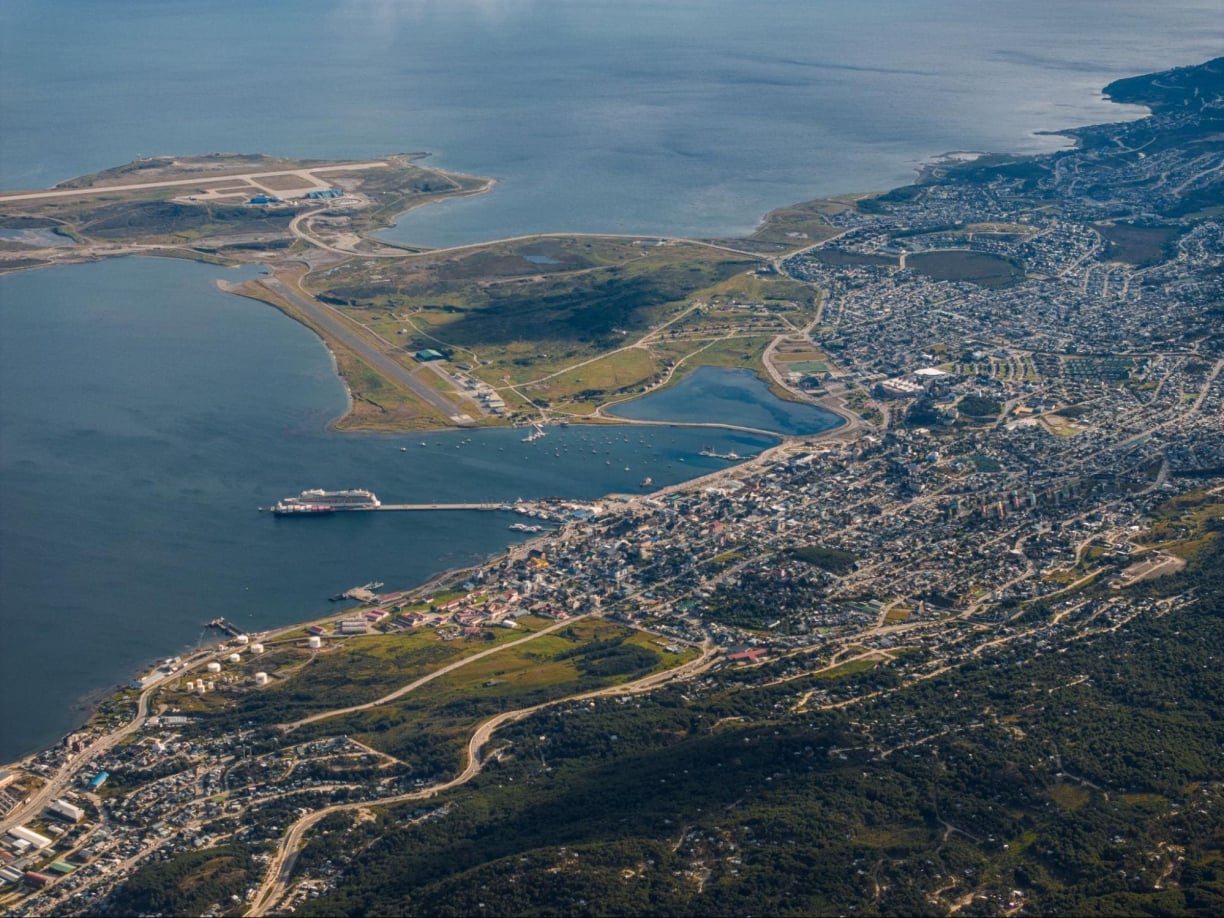
Getting to Ushuaia, Argentina — The World's Southernmost Departure Port
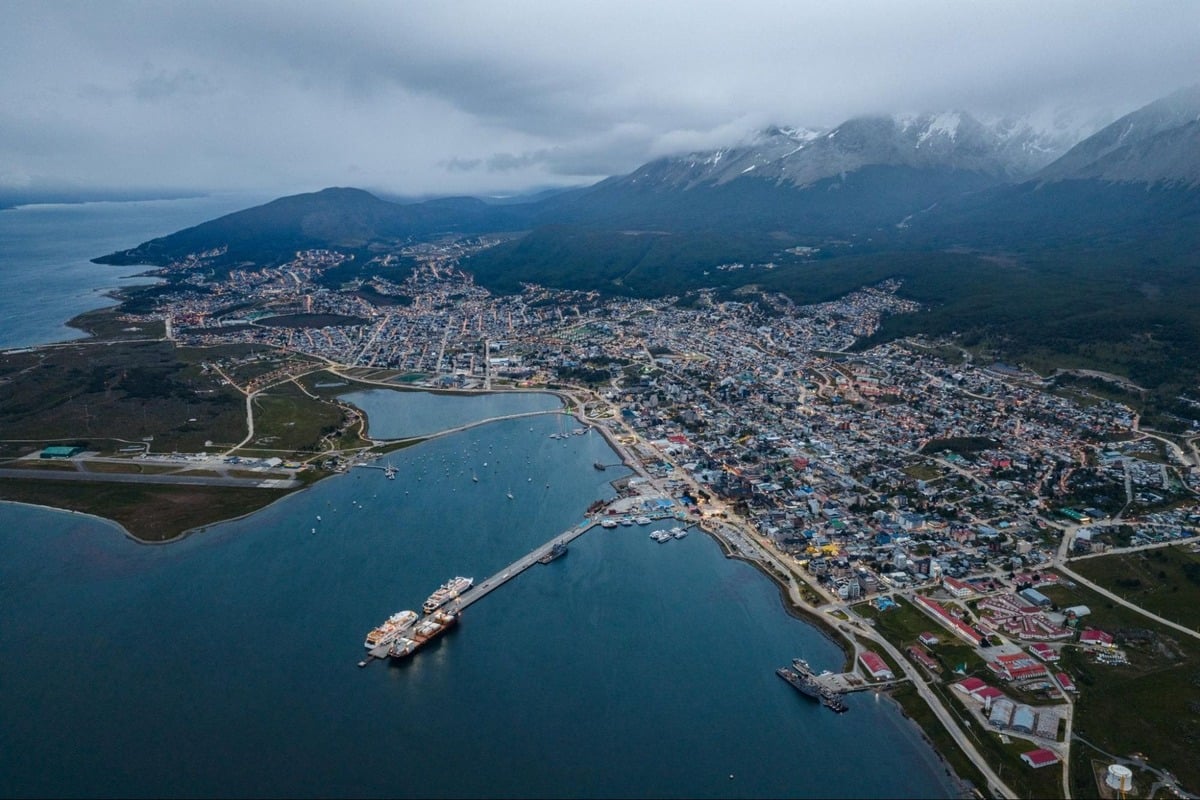
Located on Tierra del Fuego at the southern tip of Argentina, Ushuaia is the main departure point for Antarctic expedition cruises. From Ushuaia, expedition ships sail through the Beagle Channel before entering the Drake Passage on their way to Antarctica. As an international traveler on the way to Antarctica, your journey will usually take you through Buenos Aires first, before continuing via a domestic flight to Ushuaia, which takes around three and a half hours. You will most likely arrive at Ezeiza (EZE) airport, which handles most international arrivals, and then depart from a different airport, Aeroparque Jorge Newbery (AEP), which is a major hub for domestic flights. If you need to transfer, allow at least 80 minutes for the transfer between airports in addition to time for check-in. Check your ticket carefully, as some flights to Ushuaia may also depart from Ezeiza.
If you plan a longer layover in Argentina’s capital, check out our top 3 things to do during a Buenos Aires stopover:
- Eat famous Argentine beef at Don Julio, a Michelin-starred restaurant and one of the city’s best-known parrillas.
- Experience Argentine tango at Salón Marabú, a traditional dance hall where you can enjoy wine and food, and watch or join the dancing.
- Explore Latin American art at MALBA, featuring an impressive collection of modern and contemporary art.
Getting to Punta Arenas, Chile — The Fly-Cruise Starting Point
If you want to know how to fly to Antarctica and avoid crossing the Drake Passage by ship, your journey will most likely take you through Punta Arenas, Chile. If you’re arriving internationally, you’ll typically transfer in Santiago through Arturo Merino Benitez International Airport (SCL), which operates direct flights to Punta Arenas (PUQ), taking approximately three and a half hours. Airlines such as LATAM offer this route with several flights per day. If you plan a layover in Santiago, budget at least around 30 to 45 minutes by taxi during normal traffic hours to reach the airport from the city center.
Once you reach Punta Arenas, you’re about to start your Antarctic adventure. From here, charter flights depart to King George Island, which is just off the Antarctic Peninsula. The flight takes around two hours, but departures can be delayed, as they depend entirely on weather conditions. Delays of up to three days are possible – unlike a conventional flight, this is part of an expedition, and a weather-dependent, flexible schedule. Arrive at least one day prior to your trip to attend a mandatory pre-flight briefing before heading south.
If you have time to explore Santiago, we recommend:
- Take the cable car at Cerro San Cristobal up the hills for panoramic views of Santiago and the Andes.
- Discover Santiago’s historic center, exploring Plaza de Armas, the Metropolitan Cathedral and La Moneda Palace.
- See the art and cultures of the Americas at the Chilean Museum of Pre-Columbian Art.
Other Antarctic Gateways — Cape Town, Hobart, and Invercargill
If you’re looking to venture beyond the Antarctic Peninsula on one of the few less-traveled routes of the Ross Sea and East Antarctica, your departure port may be Hobart, Tasmania, or the Port of Bluff, near Invercargill in New Zealand. Another gateway city for reaching Antarctica by ship or plane is Cape Town, South Africa, which also offers access to the subantarctic Prince Edward Islands and fly-in expeditions to Queen Maud Land.
These voyages require considerably more time at sea, and often include stops at remote subantarctic islands such as Macquarie, Auckland, and the Campbell Islands. Such expeditions typically feature longer itineraries, and cruise prices are generally higher than those for classic Antarctic Peninsula cruises.
Antarctic Gateways at a Glance
|
Gateway City |
Main Route and Destination |
Approximate Crossing Time |
Approximate Distance to Antarctica |
|
Ushuaia, Argentina |
Antarctic Peninsula, crossing the Drake Passage |
2 days at sea each way |
1,100 km (684 miles) |
|
Punta Arenas, Chile |
Fly-cruises to King George Island and the Antarctic Peninsula, avoiding the Drake Passage |
Ca. 2 hours by charter flight |
1,200 km (746 miles) |
|
Hobart, Tasmania/Australia |
East Antarctica and the Ross Sea, sometimes including Macquarie Island |
Around 5-7 days at sea |
2,600 km (1,616 miles) |
|
Port of Bluff/Invercargill, New Zealand |
Ross Sea, sometimes including the Auckland and Campbell Islands |
Around 5-7 days at sea |
2,750 km (1,710 miles) |
|
Cape Town |
Fly-in expeditions to Queen Maud Land and the South Pole, occasional ship-based voyages |
5-7 hours by charter flight |
4,000 km (2,485 miles) |
Getting to Antarctica by Ship — The Classic Expedition Cruise Experience
There’s a moment in Ushuaia when your journey to Antarctica becomes real. You’re standing in the harbor, just moments before stepping aboard your expedition ship. The quayside is bustling with passengers getting ready to board, and the crew is making its final preparations. As the ship slowly pulls away from the harbor, heading south toward the legendary Drake Passage, you’ll spot seabirds circling above. From deck, you take in the incredible scenery of the Beagle Channel before the ship finally reaches open waters. That’s when you start to realize that you have left civilization behind and are about to venture into one of the most remote regions on Earth. It’s not surprising that around 95% of Antarctic tourists arrive by ship. It’s a journey that is as much a part of the experience as the destination itself.
The Drake Passage — What It's Really Like (And How to Prepare)
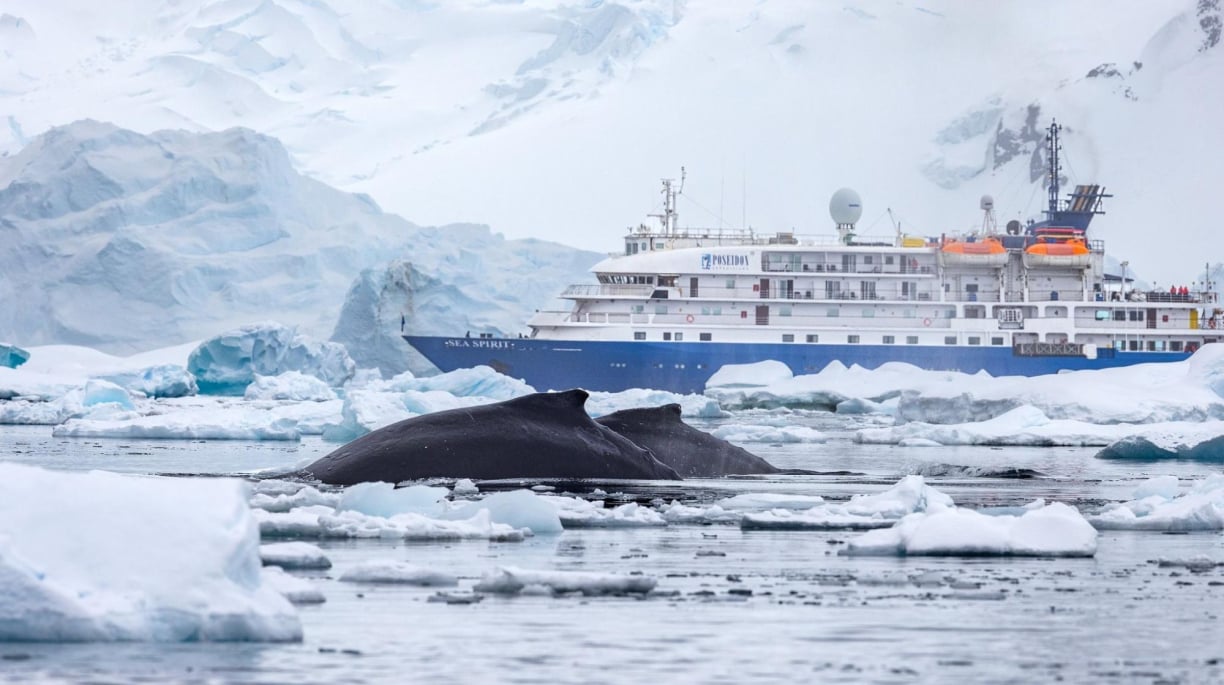
This roughly 850-kilometer (530-mile) stretch between South America and the Antarctic Peninsula has a reputation for a reason: it’s one of the most unpredictable waterways you’ll encounter on your way to Antarctica. The Southern Ocean connects the Atlantic, Indian, and Pacific Oceans and is home to the Antarctic Circumpolar Current (the largest current system in the world). With no continental land barriers to slow the powerful westerly winds at these latitudes, they sweep around Antarctica, generating rough waters and waves. The Drake Passage is the narrowest bottleneck through which this current flows, featuring an average depth of 3,400 meters (11,000 ft), making this stretch so challenging and rough to cross.
Aboard an expedition cruise ship, the crossing takes around two days each way, and it’s a gamble whether you may experience calm conditions (known as “drake lake”) or rough waters (known as “drake shake”). You might be lucky and enjoy smooth sailing, or find yourself trying to keep your balance as the ship rolls and pitches through the waves. Conditions vary throughout the season, so while generally the seas at the height of summer tend to be calmer, you never know what experience you’ll get.
Worried about seasickness? Let’s be honest: it can affect anyone, even experienced travelers who rarely feel unwell on boats. You might have felt seasick on another boat tour and feel perfectly fine aboard your Antarctic cruise, or the other way around. Susceptibility varies from person to person and even throughout your life. Even your mindset can influence how well you can cope with the crossing. Symptoms range from mild dizziness and nausea to vomiting, but the good news is that there are ways to prevent or (at least) ease it!
Don’t spend the weeks before your trip imagining the worst. The Drake Passage crossing is a normal part of the expedition, the ship and crew are prepared for it. Sea conditions can always change along the way. You may brace for the worst and then glide over calm waters, enjoying sunshine on deck and looking out for seabirds and whales.
Tips from our expedition team and frequent travelers:
- Choose your cabin wisely: If you are prone to motion sickness, try to secure a cabin on a lower deck and closer to the middle of the ship, where the movement feels less pronounced than at the bow or stern.
- Look outside and take walks on deck (if possible): Starting to feel queasy? Get some fresh air and focus on the horizon. Avoid reading, scrolling on your phone, or watching videos, as all these activities can worsen the sensory mismatch between what your eyes see and what your inner ear feels.
- Eat and stay hydrated: Don’t skip meals. It may feel strange, but you want your stomach to be neither too full nor completely empty. Eat regularly, drink water, avoid too much alcohol and heavy foods.
- Sleep well: Being tired can make motion sickness even worse, so get plenty of rest.
- Bring the right motion sickness medication: Ask your physician before departure about available medication. These are generally most effective when taken before symptoms begin, but note that they can cause drowsiness.
Don’t worry too much: Some people feel absolutely fine, others need a day or two to adjust, while some feel unwell and retire to their cabins for the crossing. By the time we reach Antarctica, most of our travelers are feeling better and ready to explore!
Seasickness Prevention Kit
(always ask your doctor or pharmacist whether these are suitable for you):
- Scopolamine patches: Typically, a prescription medicine in some countries, applied behind the ear before travel.
- Dramamine: An over-the-counter motion sickness medication (in some countries). It can cause drowsiness.
- Acupressure wristbands: Drug-free, some travelers find them helpful, although scientific evidence for their effectiveness is limited.
- Ginger-anything: Tea, capsules, candies, or ale. Evidence is mixed, but it may work for some people, especially if you tolerate it well.
How Long Does It Take to Get to Antarctica by Ship?
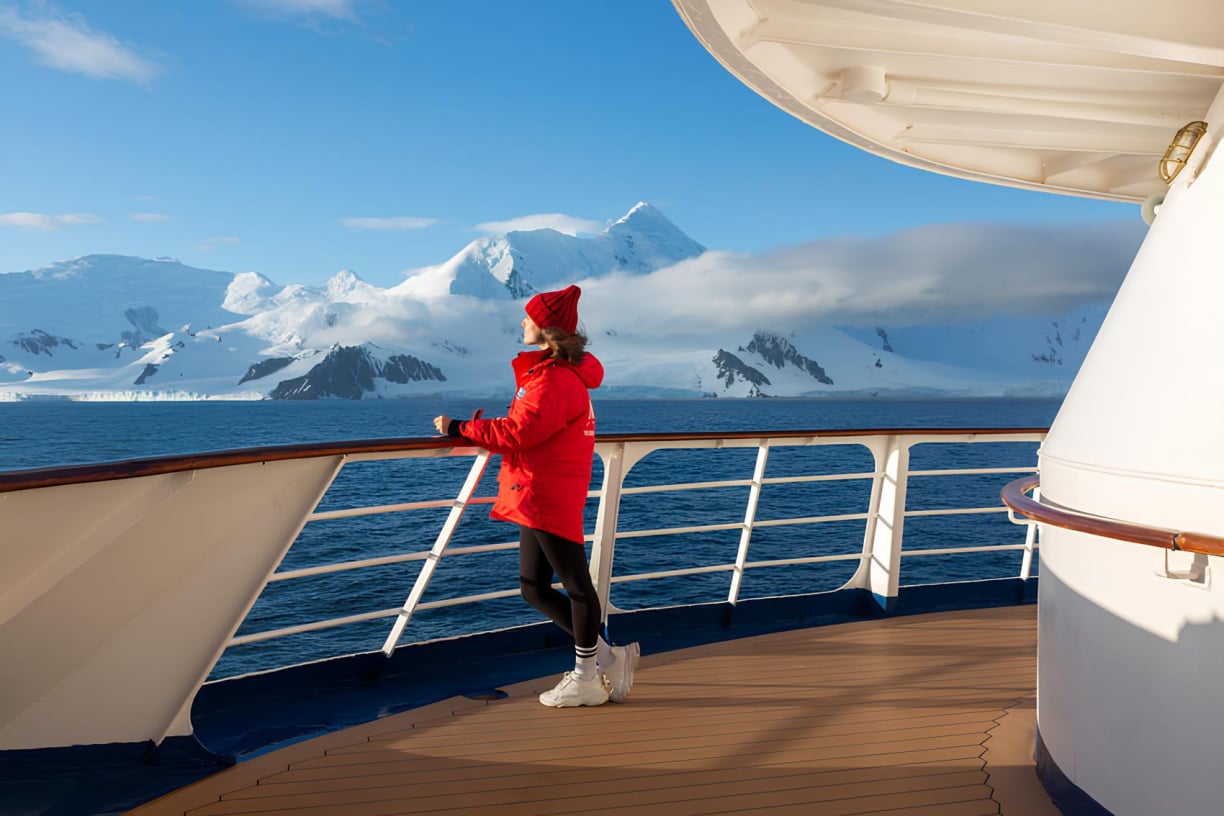
Your total travel time to Antarctica will depend on where you start your journey. Most travelers start by booking their international flights to Buenos Aires, and the travel time will depend on where in the world they’re travelling from. From there the journey continues:
- Take a domestic flight to Ushuaia, which takes around three and a half hours. We recommend arriving at least a day or two before your cruise starts.
- Cross the Drake Passage aboard your expedition cruise ship – this will typically take around two days each way.
- Depending on the itinerary, you will have around four to five days to explore the Antarctic Peninsula. For the classic 10-12-day Antarctica cruise, this means you’ll spend around four to five days exploring the region, including time at sea along the Antarctic Peninsula. Longer cruises of 18-21 days may include South Georgia and the Falkland Islands. These longer itineraries add days at sea, as well as days to explore these additional destinations.
- You will cross the Drake Passage again on your return journey, arriving back in Ushuaia for disembarkation.
Choosing the Right Expedition Cruise Ship — What to Look For
Nowhere in the world does ship-size matter more than in Antarctica. Based on extensive experience in and around Antarctica, passenger capacity directly affects your opportunities to go ashore.
- Small ships (under 100 passengers): They offer the most intimate experience, greater flexibility, and potentially more landing opportunities, but often come at a higher price.
- Medium ships (around 100-200 passengers): An excellent balance of comfort, onboard facilities, and expedition experience.
- Large ships (200-500 passengers): Usually offer more amenities and competitive fares, but may face landing restrictions. Ships carrying more than 500 passengers cannot offer passenger landings in Antarctica.
IAATO guidelines allow a maximum of 100 passengers ashore from one vessel at a time. This helps protect landing sites, wildlife, and the fragile Antarctic environment. Before booking, you can verify whether your operator is an IAATO member at iaato.org.
Questions to ask operators before booking:
- How many passengers does the ship carry?
- How many landings are typically scheduled per day?
- Is the operator an IAATO member? (if you haven’t checked yourself)
- Is the vessel equipped and certified for polar operations?

What to Expect Onboard an Antarctic Expedition Ship
An Antarctic expedition ship is not your usual cruise ship experience! From the moment you board, you become part of a small community of fellow explorers, guided by an expedition team of naturalists, biologists, historians, and polar specialists. The atmosphere? Exciting, informal, sociable, and adventurous – just like an authentic expedition should be. You’ll usually receive a branded expedition parka, which keeps you warm on outings, and rubber boots to keep your feet dry during shore landings.
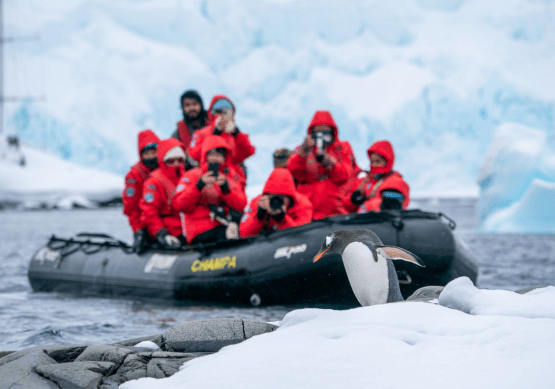
No two days are quite alike. Each morning you’ll wake up with a new view from your window, followed by a hearty breakfast, which you enjoy sharing tables with like-minded travelers. Get to know each other, swap travel stories, and compare wildlife photographs – the common areas are places to connect and reflect. After an update from the expedition leader, followed by a briefing about the day’s itinerary and landing sites, weather, and wildlife, it’s time to climb into a Zodiac. Whether you’re heading out for a cruise on water or a scheduled landing – you’ll be guided by your professional expedition team. Float amid icebergs, walk past penguin colonies (and smell them), set foot on the Antarctic Peninsula, and photograph seals resting on ice floes. Got questions? Chat with your guides and ask everything you’ve always wanted to know about the region.
Back on board, enjoy a gourmet lunch. Join onboard lectures, which bring the region to life, covering everything from wildlife and geology to history and marine biology. Some itineraries also offer optional kayaking and camping. Relax in your cabin, catch up with other expeditioners at the tea and coffee station, or share stories over dinner. Enjoy a nightcap at the bar and chat with members of your expedition team to get a sneak peek at the next day’s program. Our tip: look for a strong expedition team with extensive polar experience and a staff-to-passenger ratio of 1:10 (or better) to get the most out of your Antarctica experience.
Ready to explore Antarctica?
Join us on an unforgettable expedition to discover the wonders you've just read about
or download our free brochure
Getting to Antarctica by Flight — Every Airborne Option Explained
While there are no regular scheduled commercial passenger flights to Antarctica, there are several ways to fly to Antarctica either aboard a charter flight or as part of an organized expedition. Fly-over flights depart from Australia and give you spectacular aerial views, but without a landing. Fly-in expeditions take you onto the Antarctic continent, where you can visit camps in the interior or near the South Pole. Fly-cruises depart primarily from Punta Arenas in Chile and take you by charter flight to King George Island, where you board an expedition ship to explore the Antarctic Peninsula, bypassing the Drake Passage sea crossing.
Fly-Over Flights — Antarctica From the Air
If you just want to get the big picture – seeing Antarctica from above – a fly-over flight may be a good choice. These sightseeing flights depart only from Australian cities such as Melbourne, Sydney, Brisbane, and Perth. Aboard a Boeing 787 Dreamliner, you’ll fly over the continent and back, covering around 9,500-10,500 km (5,900-6,525 miles). The roundtrip takes approximately 12-15 hours (depending on which city you depart from), including around three to four hours over the Antarctic continent. Expect to see ice fields, glaciers, and the rugged mountain ranges of the interior. Such flights currently cost from around AUD 1,399 (US$ 980) per person, depending on your seating class. If you have extremely limited time or cannot manage a sea voyage, this is a relatively cheap way to see the continent. You won’t get close enough to see wildlife though, and the routes and visibility depend on weather conditions.
Fly-In Expeditions — Reaching the Antarctic Interior
One of the most extreme and adventurous ways to visit Antarctica is to fly into the continent’s remote interior. Tour operators such as Antarctic Logistics & Expeditions (ALE) operate charter flights to Union Glacier’s blue-ice runway in the Ellsworth Mountains. The flight takes you to ALE’s base camp on the Antarctic continent in around four hours. From there, you can ski the last 60 nautical miles (around 111 km, or 69 miles) to the South Pole on a guided expedition. These kinds of expeditions typically start from around US$85,000 per person.
Other excursions fly you to Antarctica’s remote emperor penguin colonies. On this nine-day trip, you depart by plane from Punta Arenas, arriving at Union Glacier in Antarctica. From there you’ll fly to the colony and enjoy scenic hikes and excursions. Currently, prices start at approximately US$64,600 per person. Accommodation on these expeditions is in heated, double-walled sleeping tents with communal showers and toilets.
If you are an avid mountaineer, you can fly to the continent to climb Mount Vinson, the highest peak in Antarctica at 4,892 m (16,050 ft). This 12-day experience starts with a flight to Union Glacier from Punta Arenas, and requires a certain level of physical fitness and prior mountaineering preparation.
Fly-Cruise — The Best of Both Worlds
A fly-cruise combines the convenience of flying to Antarctica (above the infamous Drake Passage) with a cruise around the calmer waters around the Antarctic Peninsula. Instead of spending two days crossing the Drake Passage, you reach King George Island near the Antarctic Peninsula in around two hours. From there, a Zodiac takes you from the airstrip to the expedition cruise ship, and your Antarctic cruise begins. You can also book itineraries that combine flying across the Drake Passage one way, and crossing it aboard a ship the other. Fly-cruise options typically cost nearly twice as much as standard Antarctic cruises.
This option is ideal if you have limited time or are particularly concerned about seasickness. Keep in mind that flights are highly weather-dependent, and delays of a day or more are possible. You’ll also miss one of the greatest experiences of a traditional Antarctic voyage: approaching the continent by sea. Neither choice is wrong – it simply depends on the kind of adventure you want.
How Long Is the Flight to Antarctica?
How long it takes to reach Antarctica by plane depends on your route:
- Fly-over flights from Australia: Around 12-15 hours round trip, including approximately three to four hours over the Antarctic continent.
- Fly-in expeditions from Punta Arenas: Around four hours one way to Union Glacier, where you can embark on a variety of expeditions, such as skiing to the South Pole, visiting emperor penguin colonies, or climbing Mount Vinson.
- Fly-cruises from Punta Arenas: Around two hours one way to King George Island, crossing the Drake Passage by air. From there, you board your expedition ship and start your cruise.
How Far Is Antarctica? Understanding the Distances
Antarctica is closer than you imagine – at least if you’re traveling from the southern tip of South America. The Antarctic Peninsula lies approximately 1,100 km (684 miles) from Ushuaia, Argentina. This is roughly equivalent to the distance from New York to Chicago or Vienna to Paris in a straight line. The legendary Drake Passage can make the journey more daunting than the distance suggests, but crossing it is also a rite of passage, especially for first-time Antarctica travelers.
Punta Arenas in Chile is around 1,200 km (746 miles) from King George Island, while Hobart in Australia features a greater distance of around 2,600 km (1,616 miles) from East Antarctica.
Booking Your Antarctic Expedition — What to Look for in an Operator
Choosing the right tour operator is one of the most important decisions when planning how to visit Antarctica. It will determine your comfort, experiences, and safety during the trip. Start by checking whether the operator is a member of the International Association of Antarctica Tour Operators (IAATO). Membership is voluntary, not a formal certification, but it demonstrates a commitment to responsible tourism. IAATO guidelines limit shore landings to 100 visitors from one vessel at a time. Some operators provide a higher staff-to-passenger ratio, which gives you a more intimate and immersive expedition experience.
Before booking, compare several operators and check whether the fare includes Zodiac excursions, guided landings, meals, lectures, and equipment such as rubber boots and an expedition parka to keep. International flights to the gateway cities, additional hotel nights, gratuities, and optional activities are typically not included. Watch out for last-minute offers, special deals, and early booking discounts. If you’re lucky, you may find last-minute deals with discounts of up to 30-40% around two to three months before the cruise starts.
Five questions to ask before booking:
- Is your company an IAATO member?
- How many passengers are aboard the cruise ship?
- What is the expedition team’s guide-to-passenger ratio?
- What experience do the expedition team and leaders have in Antarctica?
Practical Travel Tips — How to Prepare for Getting to Antarctica
A little preparation makes a big difference when traveling to one of the most remote places on Earth. We’ve prepared a checklist for first-time travelers:
- Get the right insurance: This is non-negotiable, and your policy must explicitly cover Antarctica, including emergency medical treatment and evacuation. You are in one of the most remote places on Earth, and rescue teams in the Southern Ocean may take several days to reach a vessel or a remote camp in the interior.
- Check health requirements: While no specific vaccinations are required for Antarctica, make sure your routine vaccinations are up to date and check the entry requirements of your gateway country. Ask your tour operator for assistance if needed!
- Pack to dress in layers: Bring thermal base layers (wool or synthetic, no cotton), warm mid-layers, a waterproof outer shell, a hat, gloves, and a scarf. Check whether your tour operator provides rubber boots and a parka.
- Prepare for the Drake Passage: If you’re prone to seasickness, contact your physician about what medication may work for you. Don’t wait until you feel unwell.
- Protect your electronics: Cold drains camera batteries quickly, so bring spares, extra memory cards, and a waterproof camera case. Keep spare batteries warm in an inside pocket or use hand warmers to help keep them warm between outings.
- Check passport and visa requirements for the country of your gateway city.
- Carry a little local currency for expenses before boarding.

Which Way Should You Get to Antarctica?
So how do you get to Antarctica? The best route depends on your time, budget, and the kind of adventure you’re looking for. Here’s what we would recommend for different types of travelers:
- For the fullest Antarctic experience (just as historic explorers discovered it): Choose a classic 10- to 12-day expedition cruise from Ushuaia aboard a small expedition ship. You’ll cross the legendary Drake Passage and explore the wildlife and landscapes of the Antarctic Peninsula. Daily Zodiac excursions, onboard lectures, and shore landings give you the authentic expedition feel.
- Short on time but want to set foot on the continent: Fly from Punta Arenas to King George Island as part of a fly-cruise journey. You’ll skip the Drake Passage and save several days at sea, but you still get to explore the continent.
- For visiting very remote destinations: Cruise to East Antarctica and the Ross Sea on extended Antarctica expeditions departing from Hobart or the Port of Bluff near Invercargill.
- Just want to see the continent from above: Consider a sightseeing flight departing from an Australian city such as Melbourne or Sydney. You’ll get aerial views but won’t land.
- For extreme adventurers: Fly to Union Glacier for mountaineering, skiing to the South Pole, or visiting emperor penguin colonies.
Regardless of which route you choose, check that your operator is an IAATO member and follows the guidelines for responsible travel in Antarctica.
A Classic Antarctic Expedition with Poseidon Expeditions
If a classic 10- to 12-day voyage from Ushuaia sounds right for you, consider Poseidon Expeditions’ Classic Antarctica: Realm of Penguins & Icebergs cruise. You’ll sail aboard the 114-passenger expedition ship M/V Sea Spirit and explore the Antarctic Peninsula, with up to three landings or off-ship activities a day.
Frequently Asked Questions
How much will it cost to go to Antarctica?
A classic expedition cruise departing from Ushuaia typically costs approximately EUR 8,000–45,000 (US$ 9,000-US$ 50,000) or more per person. Fly-cruises from Punta Arenas generally start at EUR 15,600 (US$ 17,600), while specialized fly-in expeditions can exceed EUR 80,000 (US$ 89,000) per person. The cabin category, ship, and itinerary are usually the biggest cost factors.
What are the best ways to get to Antarctica?
You can reach Antarctica aboard an expedition cruise ship from Ushuaia, crossing the Drake Passage, or fly from Punta Arenas to King George Island as part of a fly-cruise. Some extended expedition cruises also depart from Hobart in Australia or from the Port of Bluff, near Invercargill in New Zealand. A ship offers a more immersive journey, while flights save time and can help you avoid the Drake Passage crossing.
Is it cheaper to fly or take a cruise to Antarctica?
Taking a classic expedition cruise is generally cheaper than a fly-cruise, or a fly-in expedition. Flying to King George Island costs nearly twice as much as a ship-based expedition, although prices vary considerably by operator, itinerary, and cabin category.
How can I legally travel to Antarctica?
Tourism in Antarctica is legal under the Antarctic Treaty System. Book your expedition with an IAATO member operator committed to responsible tourism and following the guidelines for Antarctic tour operators.
What is the best time of year to travel to Antarctica?
The Antarctic travel season runs from November to March, during the austral summer. Early-season expedition voyages offer pristine landscapes and spectacular ice formations, while December and January bring penguin courtship and chicks. February and March are ideal for whale watching.
Related Cruises
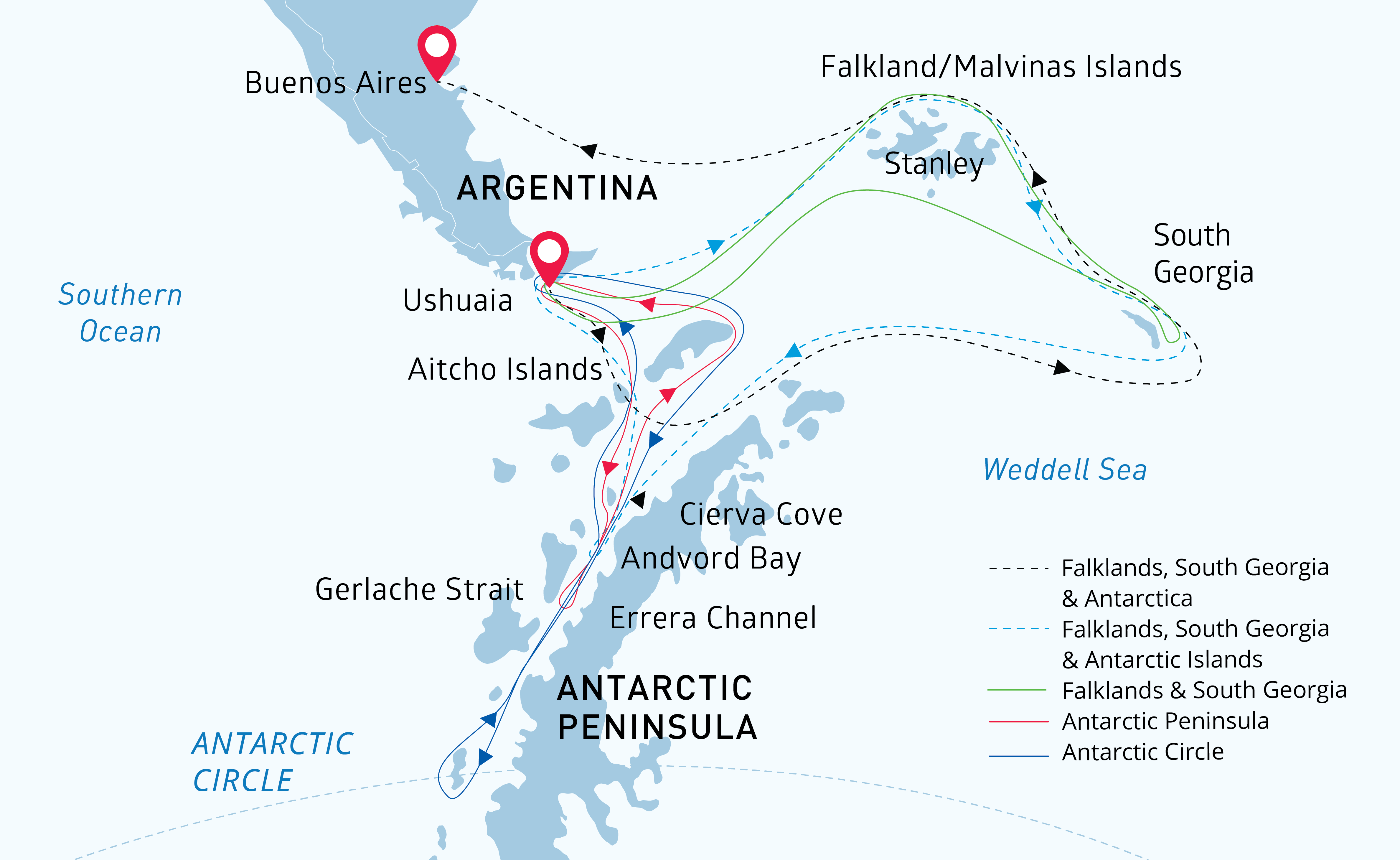

Antarctica


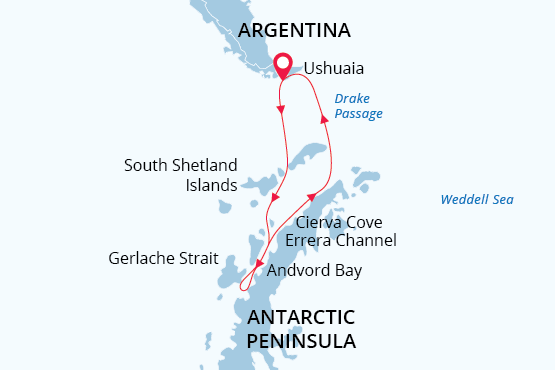
Classic Antarctica
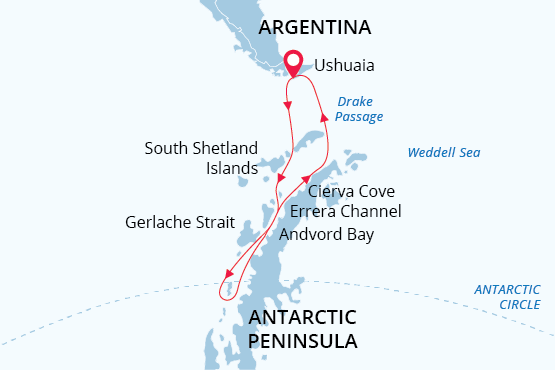
Antarctic Circle