How Big Is Antarctica? Complete Size Guide with Comparisons & Measurements
Antarctica is big enough to reset your sense of scale entirely. The icy continent covers approximately 14.2 million square kilometers (5.5 million sq mi), according to NASA, which is nearly 9.5 percent of the Earth’s total land surface. Also called the “White Continent”, it is the fifth-largest continent in the world and would cover nearly the area of two Australias. And did you know that Antarctica’s size isn’t static? Its total area varies not only depending on whether you count drifting ice shelves or just grounded landmass, but also seasonally. According to the British Antarctic Survey (BAS), sea ice during the Antarctic winter can cover roughly 20 million square kilometers of the surrounding ocean, which more than doubles the continent’s regular extent.
Ready to get a feel for the size of this fascinating continent on the bottom of the world? Read on – we’ve prepared interesting facts, figures, and practical size comparisons to give you a comprehensive perspective.
Area of Antarctica—Understanding the Measurements
When talking about the size of Antarctica, it’s crucial to determine what we’re actually measuring. The standard total area of approximately 14.2 million square kilometers (5.5 million sq mi) includes not only the massive ice sheet covering 98 percent of the continent, but also its floating ice shelves and Antarctic islands.
Excluding the floating ice shelves, you’ll come to around 12.3 million square kilometers (4.8 million sq mi) – a staggering difference of roughly 1.9 million square kilometers (700,000 sq mi). For comparison, that’s approximately the size of Texas and Alaska combined. Thanks to the Bedmap3 project of the British Antarctic Survey (BAS), which collects data on ice sheet thickness, surface elevation, and bedrock topography, it’s possible to look beneath the ice and determine the real landmass of the continent. Using Bedmap3 data, scientists can also define boundaries such as the grounding line, which is the critical point where grounded ice transitions into floating ice. This distinction helps separate permanent ice structures from seasonal sea ice and highlights why Antarctica’s size is dynamic.
What's Included in Antarctica's Total Area?
The main part of Antarctica is formed by its large landmass, covered by the Antarctic Ice Sheet, which stretches over around 98 percent of the continent’s land area. This enormous ice sheet stores around two thirds of the world’s surface freshwater. The total area of Antarctica includes the glacier-covered bedrock of the mainland, the ice shelves extending from the glaciers into the oceans, and the numerous Antarctic islands scattered around the continent.
|
Region |
Area |
|
Antarctica (grounding line) |
Ca. 12.3 million km2 (4.8 million sq mi) |
|
Ice Shelves |
Ca. up to 1.56 million km2 (602,000 sq mi) |
|
Antarctica (including ice shelves and islands) |
Ca. 14.2 million km2 (5.5 million sq mi) |
|
Antarctic Islands |
Estimated with around up to around 300,000 km2 (up to around 100,000 sq mi) |
Understanding Antarctica's Boundaries—Grounding Line vs. Ice Shelf Margin
The grounding line marks the boundary where ice resting on bedrock transitions to floating on the ocean. If Antarctica’s size is measured solely along this grounded ice barrier, the total area amounts to approximately 12.3 million square kilometers (4.8 million square miles). Measurements taken along the ice shelf margin, however, result in a larger total size of about 14.2 million square kilometers (5.5 million sq mi). British Antarctic Survey (BAS) projects such as Bedmap3 provide essential data for scientists to map Antarctica’s topography in detail and peek beneath the ice sheet, which often reaches a thickness of over four kilometers (three miles). Only with data like this can researchers determine where the continent’s bedrock ends, and the ocean begins, as about 75% of Antarctica’s coastline is fringed by floating ice. And its size based on the ice shelf margin may reduce rapidly in the future, with few signs of recovery.
Research led by Dr. Benjamin Davison from the University of Leeds in 2023 shows that over 40 percent of Antarctica’s ice shelves have gotten smaller over the past 25 years. “We expected most ice shelves to go through cycles of rapid but short-lived shrinking, then to regrow slowly. Instead, we see that almost half of them are shrinking with no sign of recovery,” said Dr. Davison.
The "Pulsating Continent"—Antarctica's Dramatic Seasonal Transformation
Did you know that Antarctica is the most dynamic continent when it comes to size? It follows a dramatic rhythm driven by seasonal sea ice, expanding during the austral winter and retreating during the austral summer (resembling a pulsating motion). During winter, seawater around Antarctica freezes outward from coastal regions, forming vast ice fields. At its peak, this frozen ice mass can extend to nearly 19 million square kilometers (7.3 million sq mi), effectively doubling Antarctica’s size compared to summertime. According to the National Snow and Ice Data Center, the maximum extent of sea ice expansion is usually reached around September.
With the onset of summer, sea ice retreats toward the continent, and by the end of February, only 2 to 3 million square kilometers (roughly 770,000 sq mi) usually remain. However, these changes are not reflected in Antarctica’s official size measurements. Unlike calculations that include ice shelves and glacier-fed extensions (measuring along the ice shelf margin), sea ice is a temporary, natural phenomenon. It affects not only ship navigation and scientific access, but also wildlife migration.
Seasonal Timing and Cycles—When Antarctica Reaches Its Extremes
Have you ever wondered why most Antarctic expedition cruises operate between November and March? That’s when the Southern Hemisphere experiences summer, sea ice is at its minimum, and ships can safely approach the continent and access landing sites. And while each year shows slight variations, Antarctica’s seasonal rhythm is remarkably consistent. Sea ice reaches its minimum extent in late February or early March, and its maximum in September. Compared to the typical summer minimum of 2 to 3 million square kilometers (77,000 to 1.16 million sq mi) and a winter maximum of about 19 million square kilometers, 2025 recorded unusual low values. During the 2025 winter season, Antarctic sea ice cover reached a maximum of 17.81 million square kilometers (6.88 million sq mi) in September, which marks the third-lowest in the 47-year satellite-recording period.
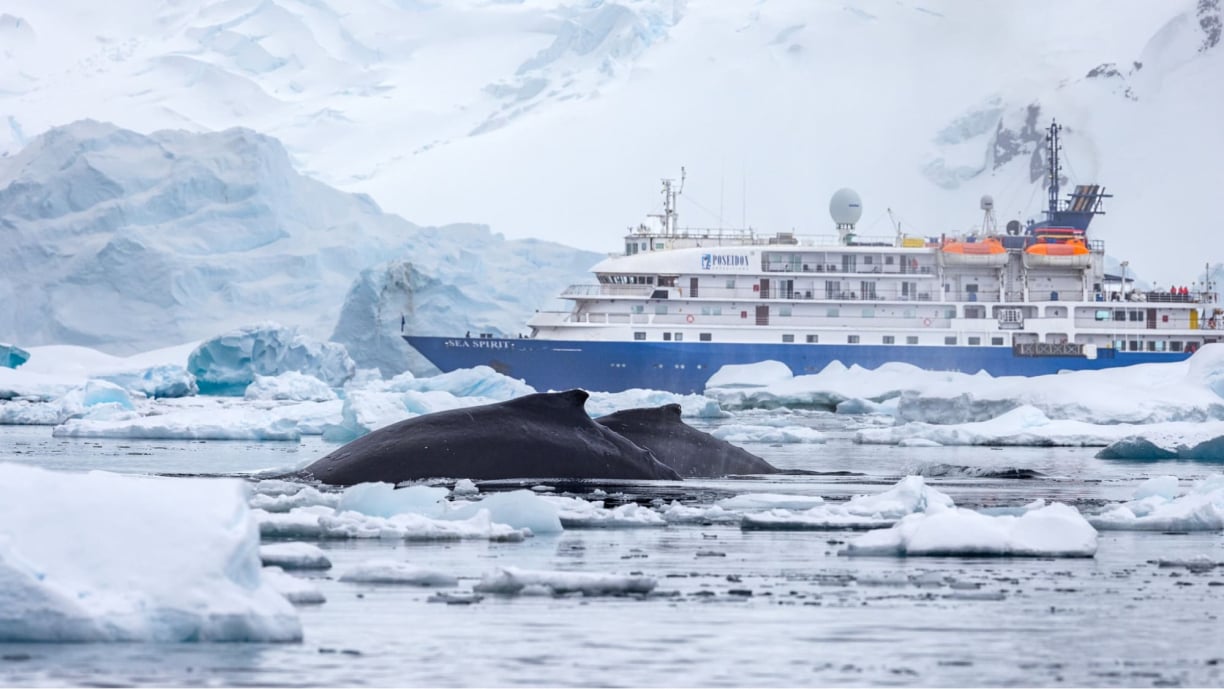
The 2025 summer season also set records. In March 2025, NASA satellite imagery showed a sea ice minimum of around 1.98 million square kilometers (764,000 sq mi). According to the National Snow and Ice Data Center (NSIDC), 2025 marked the fourth consecutive year with sea ice dropping below 2 million square kilometers (772,000 sq mi). According to long-term satellite records, Antarctic sea ice minimums show a downward trend of around 6,500 square kilometers (2,500 sq mi) annually.
Why Sea Ice Differs from Ice Shelves
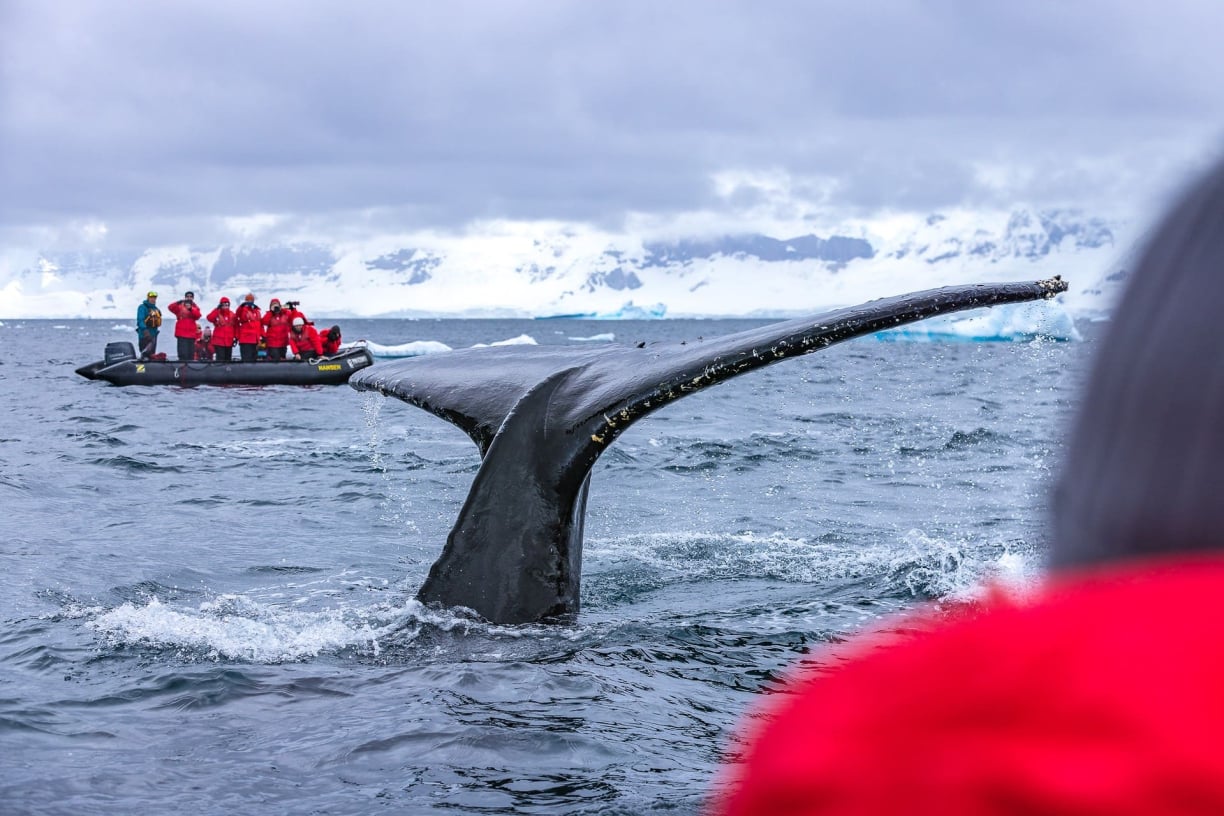
Not all ice is the same. Both are frozen, but sea ice and ice shelves are fundamentally different, especially when it comes to determining the continent’s size. Ice shelves are made of freshwater, formed when glaciers flow off the massive Antarctic Ice Sheet into the ocean. These are considered relatively permanent structures and are included in Antarctica’s standard continental area measurement. Sea ice forms directly from freezing seawater, growing and melting seasonally. The extent of sea ice is not counted as part of Antarctica’s official size.
Why Antarctica Looks So Big on Maps—Map Distortion Explained
Have you ever wondered why, on maps, Antarctica often looks larger than Africa or Eurasia – or in some cases even bigger than half of the planet? It’s a cartographic illusion, created by mapmakers to fit our round planet onto a flat surface. High-latitude landmasses, such as Antarctica and Greenland, are therefore stretched beyond their real sizes, and give you a false sense of true size. The Mercator projection, created in 1569 by Gerardus Mercator, is one of the world’s most widely used map projections in history. It was designed to support marine navigation, transforming the globe’s curved surface into a rectangular grid by straightening both meridians (north-south lines) and parallels (east-west latitude lines). While Mercator maps are excellent for navigation charts, they grossly distort the perceived size of landmasses farther away from the Equator. For a more balanced and visually realistic depiction of your favorite polar regions, the Winkel Tripel or Gall-Peters projections are more suitable tools.
Understanding the Mercator Projection Mechanism
Why does the Mercator projection distort Antarctica’s appearance so dramatically? On a globe, the Earth’s meridians converge at the poles, while parallels shrink in length as they approach the poles. This makes the equator the longest parallel, with a circumference of around 40,075 kilometers (24,901 miles). Mercator maps force all meridians to become straight, parallel vertical lines, and all parallels to become straight, evenly spaced horizontal lines. To preserve accurate navigation angles, landmasses must be stretched as latitudes increase. As a result, the farther a region lies from the Equator (such as Greenland or Antarctica) the more exaggerated this stretching becomes. When the curved surface of our planet is flattened onto a rectangular map sheet, the Antarctic Circle appears nearly the same length as the Equator. In reality, however, the Equator circumference measures around 40,075 kilometers (24,901 miles), while the Antarctic Circle is only around 15,909 kilometers (9,900 miles) in circumference.
Landmasses around the equator are relatively true to their size, but by 60° latitude, areas appear roughly twice their true size. And once you reach the poles on a Mercator map, you’re looking at some of the most exaggerated geography on Earth. To give you a better understanding, we’ve prepared a brief comparison highlighting the key differences between Mercator, Winkel Tripel, and Gall-Peters projections:
|
Projection |
Mercator |
Winkel Tripel |
Gall-Peters |
|
Origin |
Gerardus Mercator (Flemish cartographer), 1569 |
Oswald Winkel (German mathematician), 1921 |
James Gall (Scottish clergyman) & Arno Peters (German historian), 1855/1974 |
|
Primary Purpose |
Marine navigation, straight-line compass bearings |
General reference mapping with balanced accuracy |
Equal-area representation and thematic mapping |
|
Effect on Antarctica Visuals |
Dramatically oversized, often larger than Africa or Eurasia |
Enlarged but close to true proportions |
Correct relative size, but vertically stretched |
|
Common Use |
Nautical charts, web maps, historical atlases |
Modern atlases, National Geographic maps |
Educational and political maps |
Antarctica Size Comparisons—How Big Is Antarctica Really?
Unless you’re number-nerdy, a professional geographer, cartographer, or heavy Google Earth user, Antarctica’s 14.2 million square meters (5.5 million sq mi) may not mean that much to you. Its sheer size is deceiving, unless you put its landmass in contrast to more familiar territories. You can’t fully trust maps either, as some depict Antarctica heavily inflated and distorted beyond recognition. But how big is Antarctica in reality? It’s not only the fifth-largest continent, and larger than Europe and Australia, but also covers 10 percent of the Earth’s total land area. Imagine a landmass twice the size of Australia, or one and a half times the size of the United States. Only Asia, covering around 30 percent of the Earth’s land area, is roughly three times larger than Antarctica.
Even measuring Antarctica isn’t straightforward. Its total size depends on how you define its boundaries: do you measure along the grounding line, counting only the bedrock landmass, or do you include ice shelves and glaciers extending into the surrounding oceans? And, additionally, the continent’s visual size changes dramatically throughout the year due to seasonal sea ice expansion and retreat. Read on and we’ll stack Antarctica side by side with continents, countries, and familiar landmarks to help you grasp the true scale of this unknown landmass.
Continental Comparisons – The Fifth-Largest on the Planet
Antarctica is the only continent on the planet without a native human population. It’s also the coldest and driest of them all, and also the last continent to be discovered, in 1820. Measuring about 14.2 million square kilometers (5.5 million sq mi), how does Antarctica compare to the other six continents in terms of size?
Antarctica vs. Australia
Compared to Australia, which covers about 7.7 million square kilometers (2.97 million sq mi), Antarctica is nearly twice as large.
Antarctica vs. Europe
Europe extends over roughly 10.2 million square kilometers (3.9 million sq mi). Antarctica is about 1.4 times larger. Even if you discount Antarctica’s ice shelves, Europe is still around two million square kilometers (770,000 sq mi) smaller.
Antarctica vs. South America
Slightly larger than Antarctica, South America covers approximately 17.8 million square kilometers (6.9 million sq mi).
Antarctica vs. North America
Antarctica is roughly just over half the size of North America, which measures approximately 24.7 million square kilometers (9.5 million sq mi).
Antarctica vs. Africa
With 30.4 million square kilometers (11.7 million sq mi), Africa is more than twice as large.
Antarctica vs. Asia
As the world’s largest continent, Asia stretches over 44.6 million square kilometers (17.2 million sq mi). Antarctica is roughly 30 percent the size of Asia.
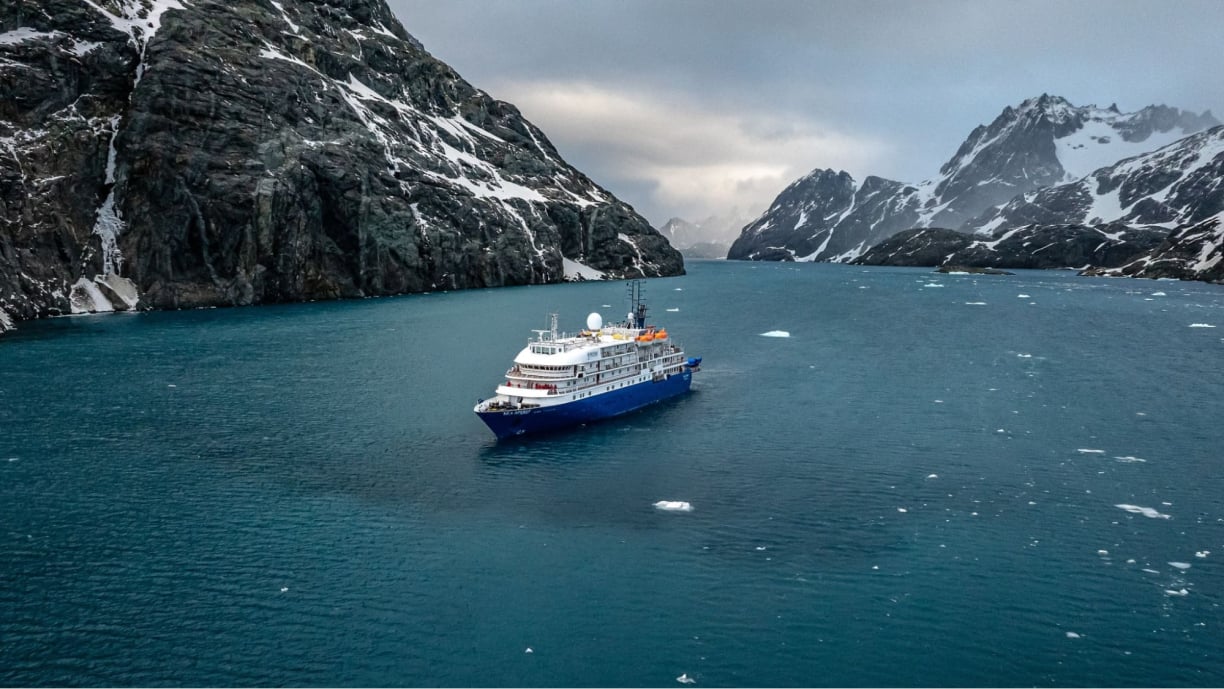
Country-Specific Comparisons - Antarctica vs. the World You Know
Antarctica belongs to no nation in the world but is governed by the 1959 Antarctic Treaty System. Originally signed by 12 nations, it includes 58 signatory parties as of 2025, and ensures that the region is used only for peaceful purposes and scientific research. With no national borders of its own, how does Antarctica compare to major countries in the world?
Antarctica vs. the United States
The United States covers 9.8 million square kilometers (3.8 million sq mi), making Antarctica about one and a half times larger. If you combine the U.S. and Mexico, you get roughly the area of Antarctica.
Antarctica vs. United Kingdom
At just 243,610 square kilometers (94,000 sq mi), you could fit about 50 United Kingdoms inside Antarctica!
Antarctica vs. China and India
Together, China (9.6 million square kilometers / 3.7 million sq mi) and India (3.3 million square kilometers / 1.3 million sq mi) nearly match Antarctica’s grounded area, excluding ice shelves.
Antarctica vs. Russia
Russia, spanning over 17.1 million square kilometers (6.6 million sq mi), is the only country in the world that outsizes Antarctica.
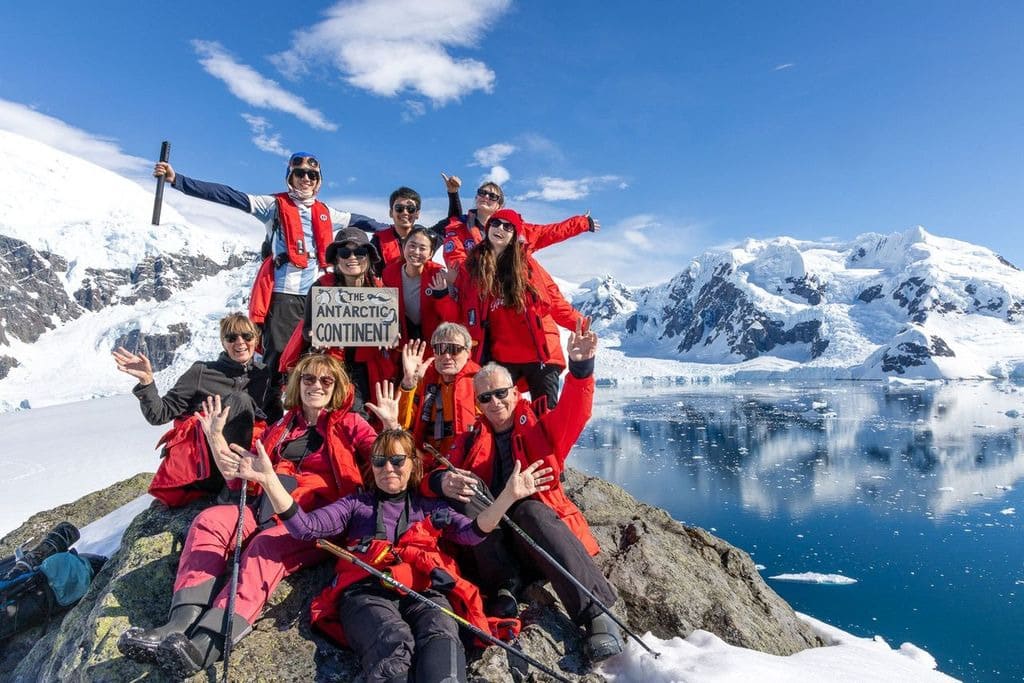
Antarctica vs. Greenland and the Arctic
Both Greenland and Antarctica are extremely cold, remote regions, featuring enormous ice sheets. Both regions have recorded some of the lowest temperatures ever measured on Earth. Greenland holds the record for the Northern Hemisphere with -69.6°C (-93.3°F), measured at the Klinck weather station in December 1991, while Antarctica holds the global world record with -89.2°C (-128.6°F) at the Vostok Station in July 1983.
In terms of landmass, Greenland covers only about 2.16 million square kilometers (836,330 sq mi), making Antarctica more than six and a half times larger. Antarctica’s ice sheet alone is over eight times larger than Greenland’s, which spans approximately over 1.7 million square kilometers (660,000 sq mi).
Did you know that with Poseidon Expeditions you can visit both Greenland and Antarctica? Browse our upcoming Arctic and Antarctic cruise catalogue and find the polar adventure of your dreams!
Antarctica as the World's Largest Desert
If you’re thinking of a desert adventure, would Antarctica come to your mind? It is the largest desert on Earth, defined by extremely low precipitation, often below 5 centimeters (2 inches) per year. Classified as a polar desert, Antarctica is even drier than many hot deserts.
Compared to the world’s largest hot desert, the Sahara, which covers about 9.2 million square kilometers (3.6 million sq mi), Antarctica is roughly one and a half times larger.
Some of the driest places on the Antarctic continent are the ice-free McMurdo Dry Valleys, in Victoria Land. Covering around 4,800 square kilometers (1,800 sq mi), parts of this region haven’t seen significant precipitation for nearly two million years.
Interesting Fact: Small rainfall events can occur. The McMurdo Dry Valleys Long-Term Ecological Research Program (McMurdo LTER) recorded a rare rain event in the Taylor Valley on December 21, 2018.
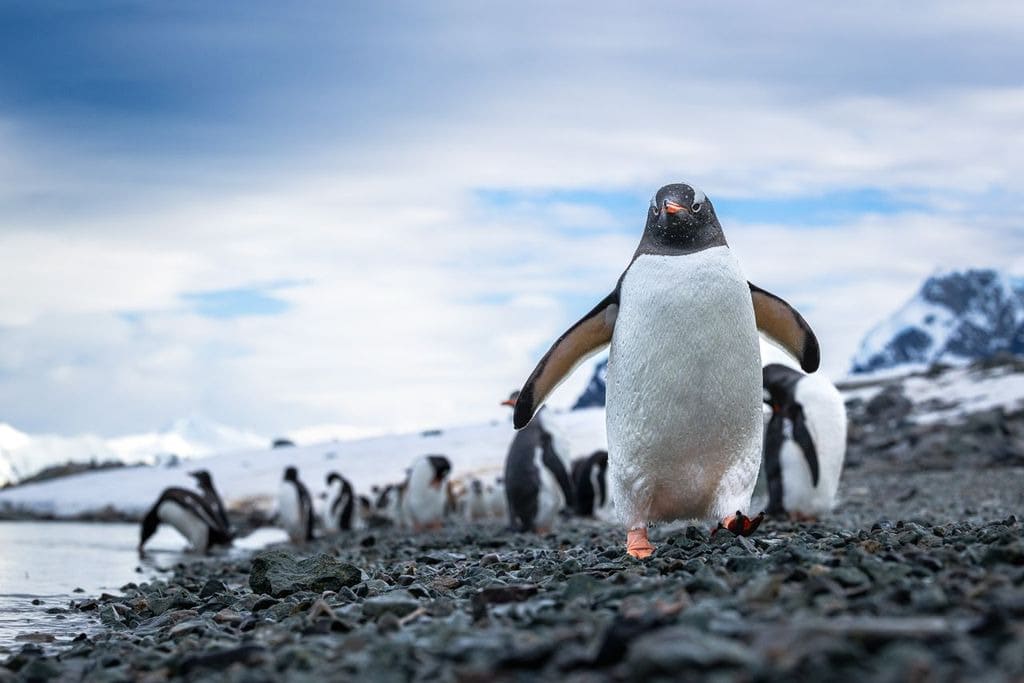
Antarctica's Components—Ice Sheet, Ice Shelves, and Land
Antarctica may look like a huge frozen mass on the map, but it’s made up of very distinct components that shape the continent, and even influence the global climate system. Let’s dissect Antarctica and see what makes it so special.
The Antarctic Ice Sheet: The Frozen Heart of the Continent
With a total area of around 14 million square kilometers, the Antarctic Ice Sheet covers around 98 percent of the continent. Approximately 90 percent of the world’s total ice is located in Antarctica. The average thickness of the ice sheet is around two kilometers (1.2 mi), but at its thickest point, it reaches 4.7 kilometers (3 mi). It contains a total ice volume of around 27 million cubic kilometers (6.5 million cu mi), which would raise the global sea level by 58 meters (190 ft) if all the ice melted at once. This enormous ice sheet holds around 90 percent of the world’s land ice, and contains over 60 percent of the world’s freshwater.
And its ice sheet is not uniform, but divided into three parts. The largest and thickest, the East Antarctic Ice Sheet, accounts for the majority of Antarctica’s ice volume. Much of it rests on land above sea level. The smaller West Antarctic Ice Sheet features large portions grounded below sea level. This makes it sensitive to ocean warming. The smallest is the Antarctic Peninsula Ice Sheet, experiencing some of the most rapid warming on the continent.
The British Antarctic Survey (BAS) project Bedmap3 has enabled science to get more refined data on ice thickness and volumes. In a 2025 press release, Peter Fretwell, BAS mapping specialist, noted that Bedmap3 revealed the Antarctic Ice Sheet to be thicker than previously thought, with a larger volume of ice grounded on the rock bed below sea level. This means that warm ocean water intruding at the continent’s edges poses an even greater risk of ice loss.
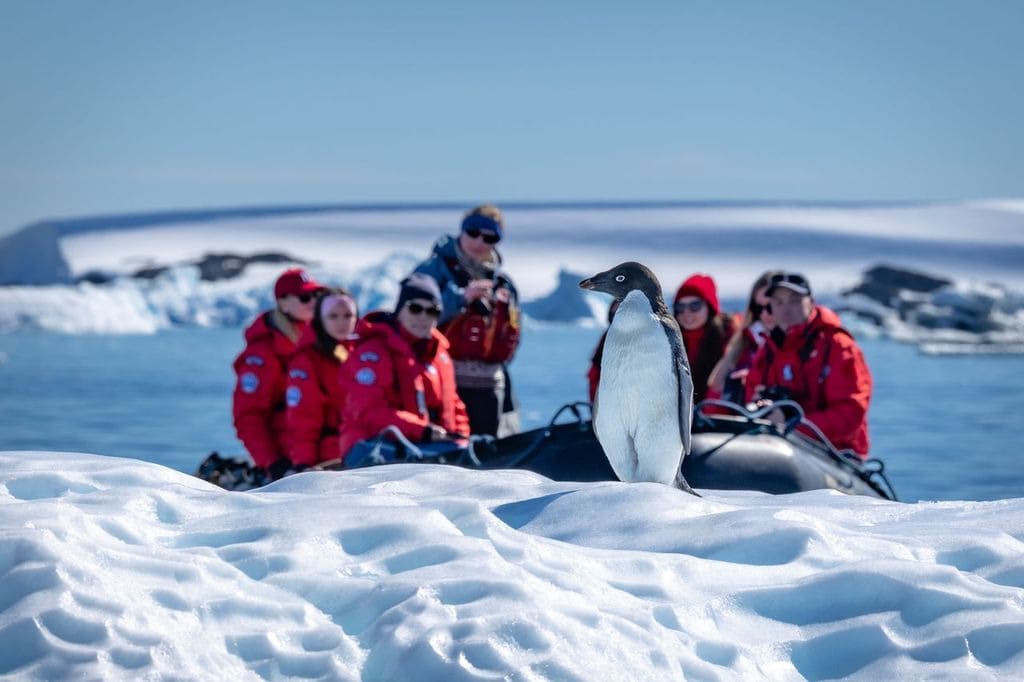
Ice Shelves: Antarctica’s Floating Fringe
Unlike the continental ice sheet, which rests on bedrock, ice shelves are thick slabs of glacial ice that float on the ocean. They form where land-based glaciers flow outward and spread over seawater. Around 75 percent of Antarctica’s coastline features ice shelves, which together cover up to 1.6 million square kilometers (620,000 sq mi), an area larger than France, Germany, and Spain combined. Some of the largest ice shelves in Antarctica are the Ross Ice Shelf, covering approximately 500,000 square kilometers (193,000 sq mi), and the Filchner-Ronne Ice Shelf, at around 420,000 square kilometers (162,000 sq mi).
Beneath the Ice: Antarctica’s Hidden Landscapes
Antarctica’s frozen surface hides a vast, rugged landscape of mountains, valleys, lakes, and deep canyons. For decades, scientists have tried to peek beneath the ice with tools such as airborne radars, seismic surveys, and satellite data. With Bedmap3, led by the British Antarctic Survey (BAS), researchers were able to produce a high-resolution map of the continent’s subglacial topography. Complex sub-ice drainage networks became visible, offering new insight into how meltwater flows beneath the ice sheet toward the ocean.
Fun Fact: Without ice, Antarctica would consist of a large landmass and an archipelago. East Antarctica, composed of older metamorphic rocks, would emerge as a landmass roughly the size of Australia. West Antarctica, made up of younger, volcanic, and sedimentary rock, would appear as a chain of mountainous islands.
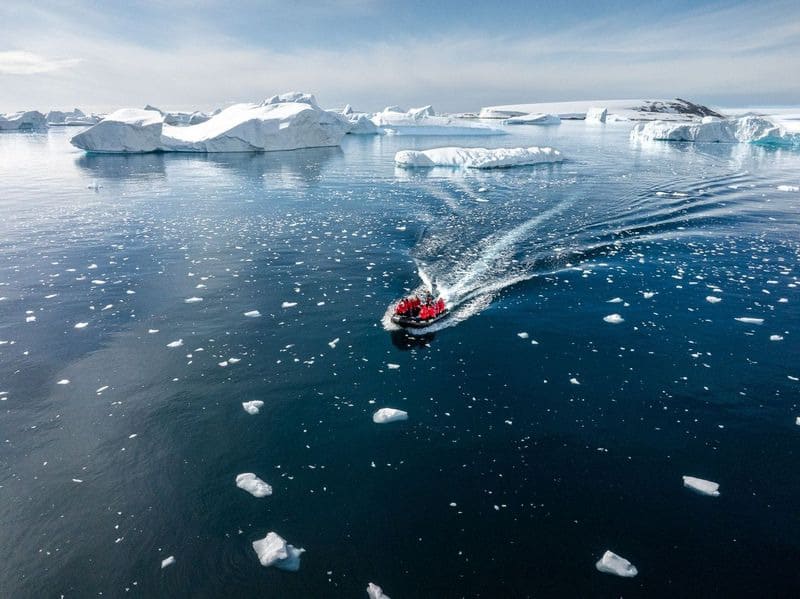
A View from Space—Seeing Antarctica's True Scale
Since early explorers set foot on Antarctica, attempts to measure its size began. The first person to get a perspective from above was Australian aviator Sir Hubert Wilkins aboard a monoplane on December 20, 1928. American explorer Richard E. Byrd followed only a year later by flying over the South Pole on November 29, 1929. In the 1960s, the first satellite imagery taken by NASA’s Nimbus-1 showed Antarctica from space, revealing the full extent of its shape and size for the first time in history. Since 1972, the Landsat program, managed by NASA and the U.S. Geological Survey (USGS), has provided continuous images of Earth’s land surface and today provides data for the most accurate mapping of Antarctica’s landmass and its grounding line. However, satellite images are essential for purposes beyond accurately mapping Antarctica from space. The British Antarctic Survey (BAS) has been using satellite photo coverage for decades to study sea-ice variations and cloud patterns, and even to monitor wildlife, such as emperor penguin migration patterns.
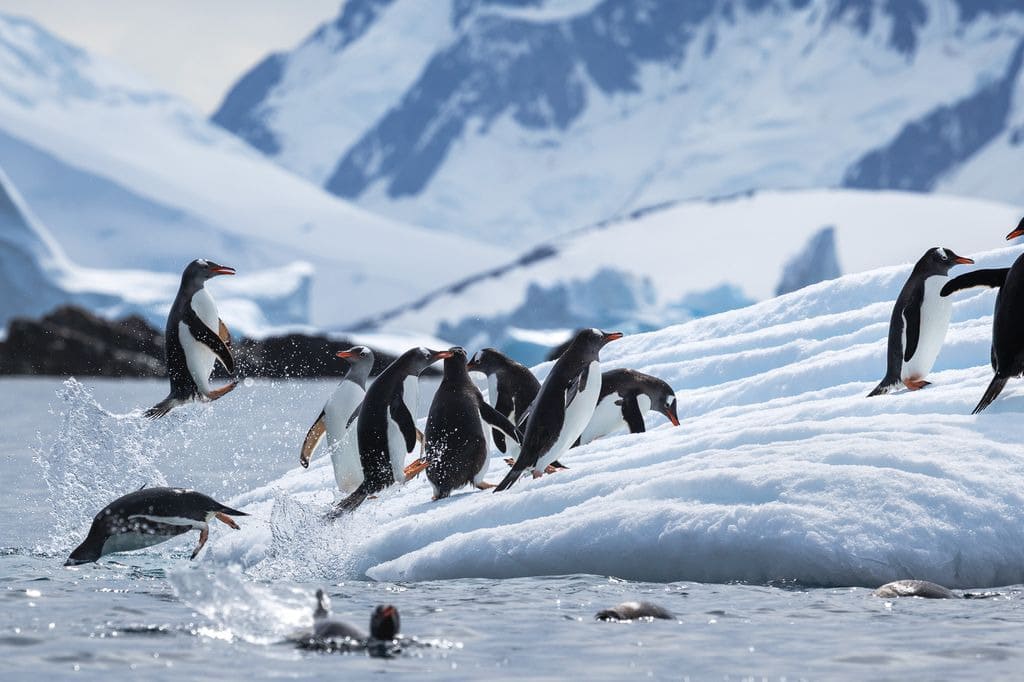
Experience Antarctica Yourself
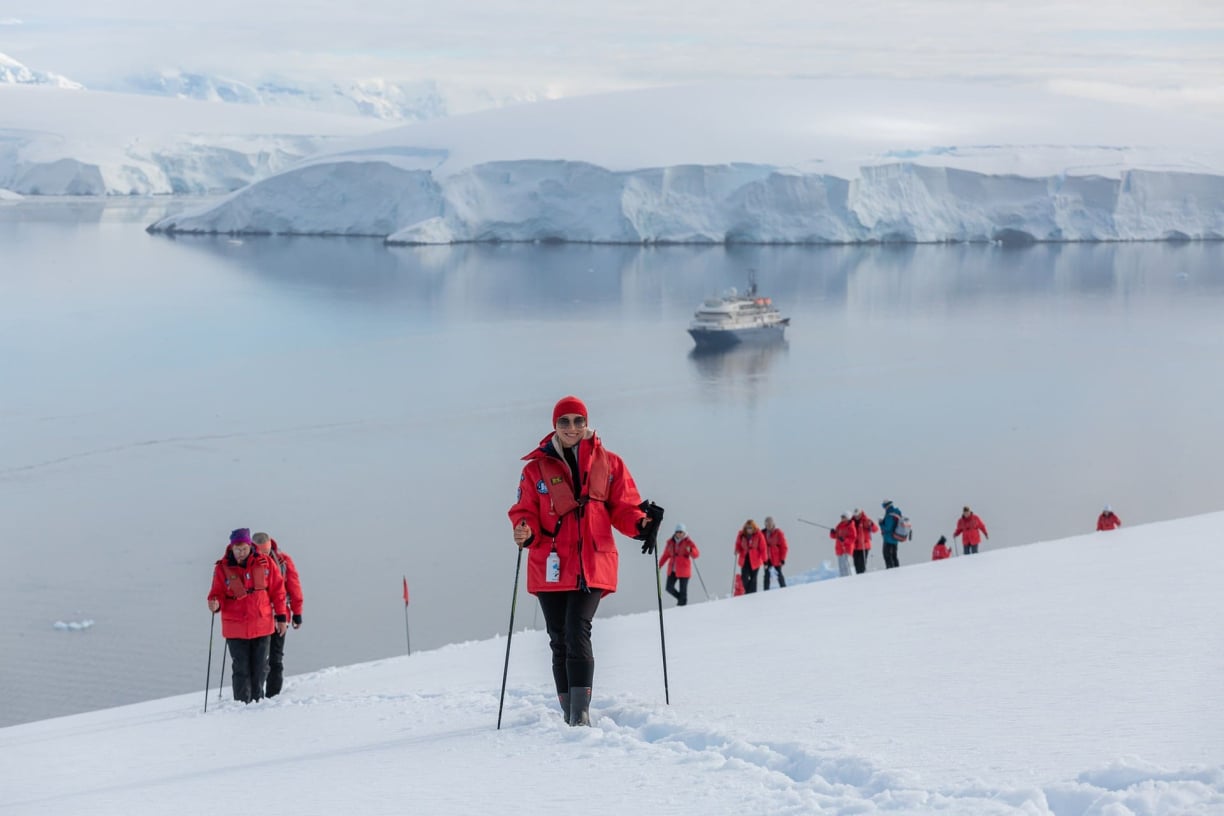
You’ve seen Antarctica stretched, distorted, and possibly ill-proportioned on maps – more accurately on satellite imagery, and maybe even on pictures of the white landscapes in glossy nature magazines – but the only way to get a real sense of the continent is to visit. Only when you set foot on the continent will you experience its true dimensions, vast white landscapes, and wildlife. Since there are no roads, the best way to explore is by ship. Follow in the footsteps of the early explorers and approach the continent while standing on deck aboard a small expedition ship. As the ship draws closer, you see majestic glaciers and giant icebergs floating in the nearby ocean. Most expedition cruises lead you around the Antarctic Peninsula, which offers the best wildlife viewing, breathtaking scenery, and milder temperatures during the austral summer.
On a two-week cruise you’ll see the highlights of the Antarctic Peninsula, but this is only a small fraction of the whole continent. There is no voyage that allows you to see the entire continent and fully grasp its vastness. Considering the total size of Antarctica at 14.2 million square kilometers (5.5 million sq mi), the Antarctic Peninsula, stretching over 522,000 square kilometers (201,000 sq mi), is only a small part of the continent.
Ready to experience Antarctica firsthand? Check our upcoming departures and find your adventure.
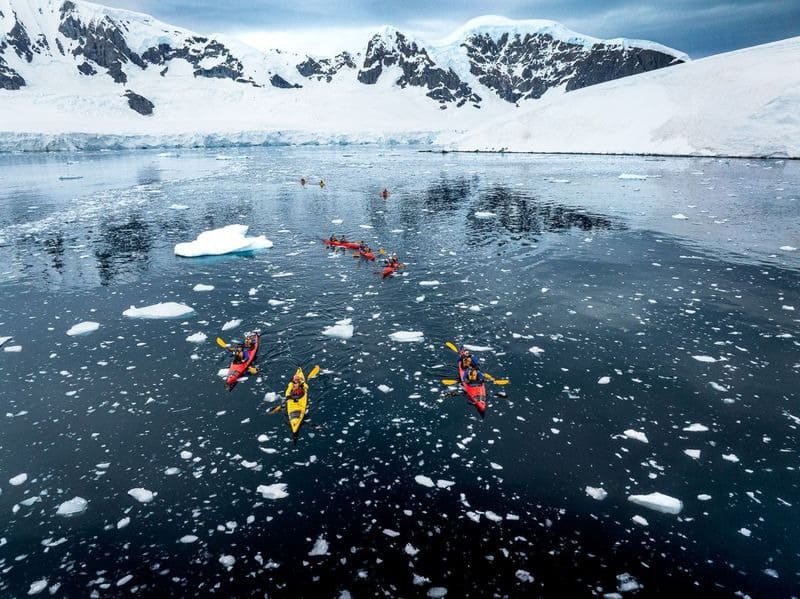
Conclusion—Antarctica: A Continent Beyond Comparison
So, how has your perception of the White Continent changed? Nearly twice the size of Australia, one and a half times the size of the United States, and the fifth-largest continent in the world, Antarctica stretches over 14.2 million square kilometers (5.5 million square miles) around the South Pole. Distorted on some maps, clearly visible on satellite imagery, and a huge white mass on any globe, it was one of the last continents to be discovered, mapped, and measured.
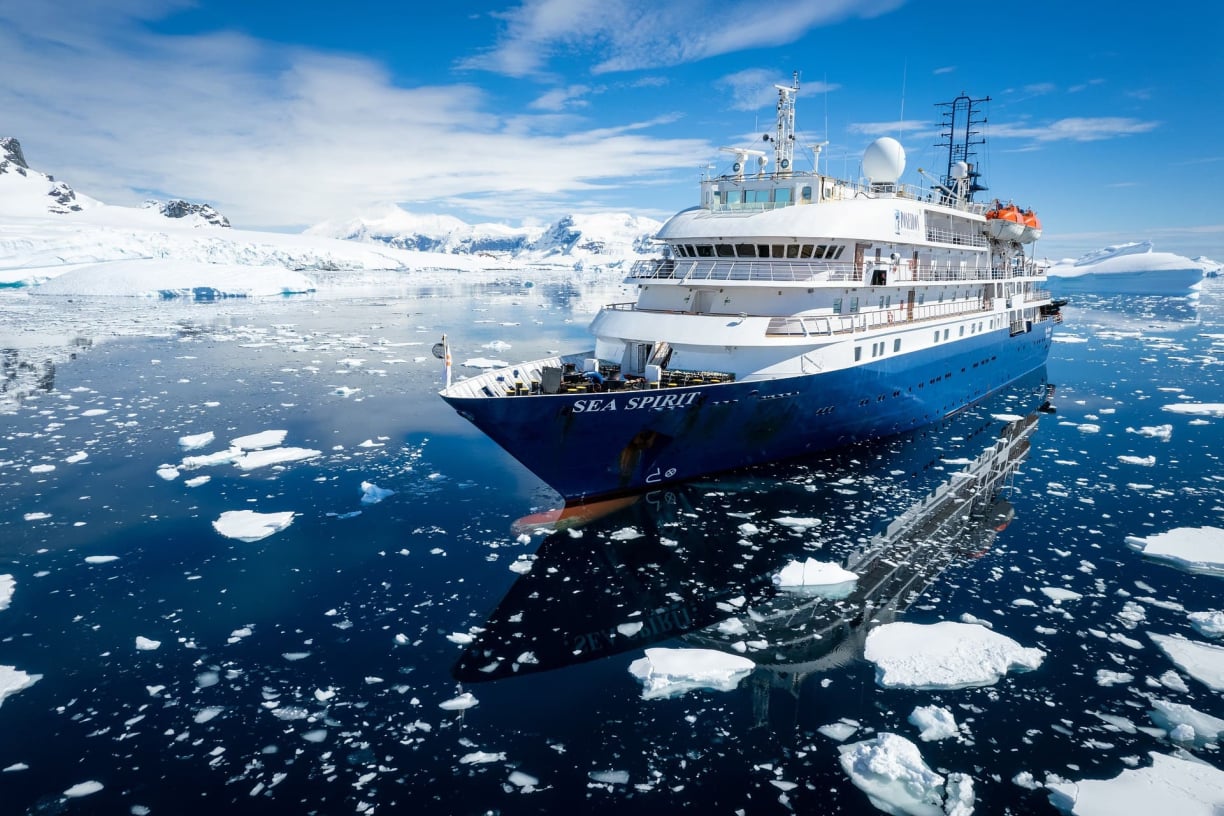
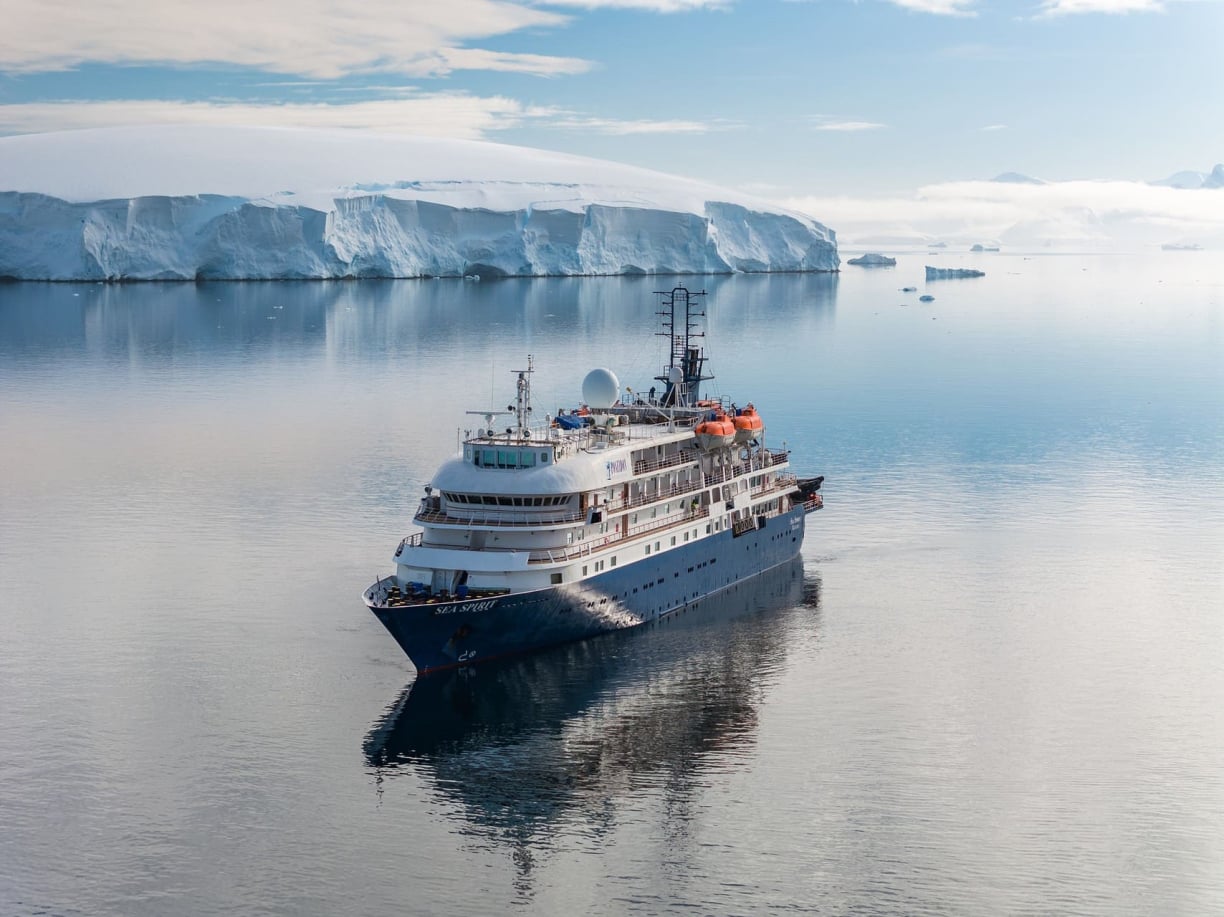
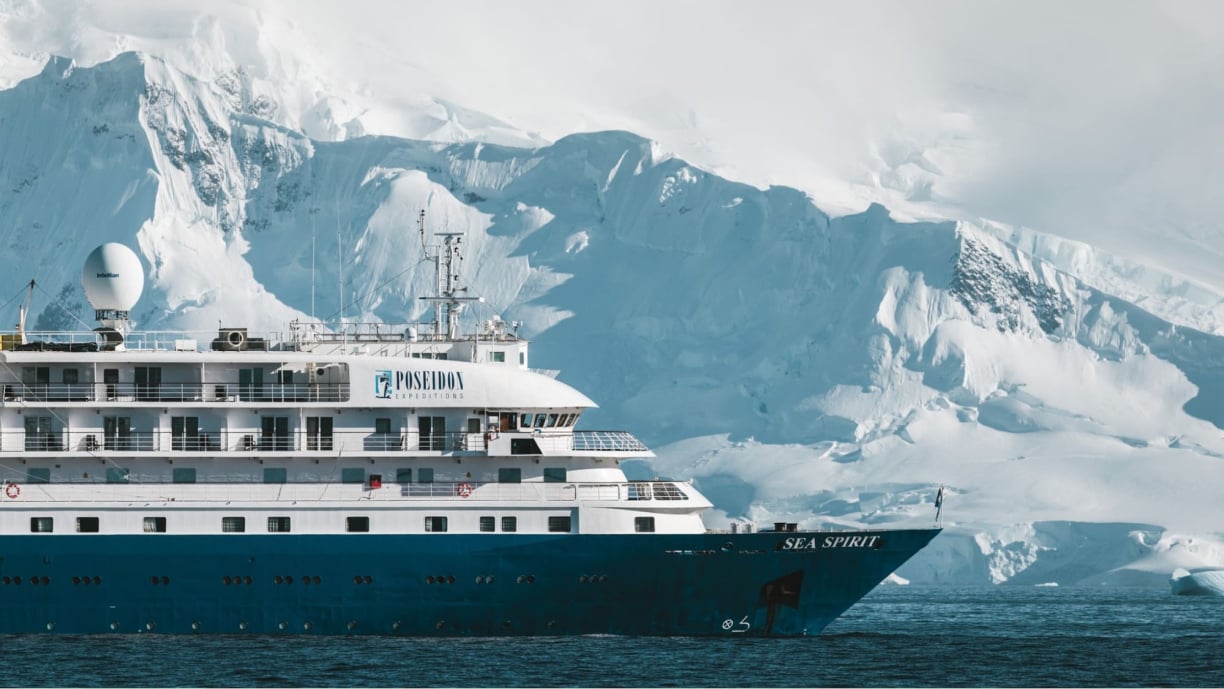
Even today, the true size of Antarctica is difficult to determine. If you’re measuring along the grounding line, you’ll get the size of the actual bedrock landmass. Add the ice shelves extending into the ocean, and you gain about 1.56 million square kilometers (602,000 sq mi). Include the Antarctic islands and you’ll have the continent’s total area. Seasonal sea-ice variations add to the confusion, extending in winter and retreating in summer. Form your own impression of Antarctica and join one of our expedition cruises to the continent! We’ll await you aboard our small expedition ship, the Sea Spirit, ready to embark on an unforgettable Antarctic adventure.
FAQs
How big is Antarctica in square miles and square kilometers?
Antarctica covers 14.2 million square kilometers (5.5 million sq mi), including its ice shelves and islands. This measurement uses the ice shelf margin as the outer boundary, which is usually used as the standard geographic definition.
Why does Antarctica appear larger on maps than it actually is?
The Mercator projection, originating in the 16th century for navigational purposes, straightens meridians and parallels, causing distortion of any landmass farther from the Equator. This heavily inflates Antarctica’s size on some maps.
How does Antarctica's size compare to the United States?
Antarctica, at 14.2 million square kilometers (5.5 million sq mi), is approximately 1.5 times larger than the United States, which stretches over around 9.8 million square kilometers (3.8 million sq mi).
What does the "pulsating continent" nickname mean?
Antarctica is sometimes called the “pulsating continent” because its surrounding sea ice dramatically fluctuates seasonally. It expands from a minimum of two to three million square kilometers (770,000 sq mi) in the late austral summer in February to nearly 19 million square kilometers (7.3 million sq mi) by the end of the austral winter in September.
Is Antarctica really bigger than Europe?
Yes, Antarctica is significantly larger than Europe, which covers about 10.2 million square kilometers (3.9 million sq mi). The White Continent is approximately 40 percent larger than Europe.
How much of Antarctica is covered by ice?
Over 98 percent of Antarctica is covered by ice. The vast Antarctic Ice Sheet averages two kilometers (1.2 miles) in thickness and contains about two-thirds of the Earth’s freshwater.
Why are there two different size measurements for Antarctica?
The standard measurement of 14.2 million square kilometers (5.5 million sq mi) uses the ice shelf margin as a boundary, while measuring along the grounding line reveals the size of Antarctica’s bedrock landmass to be around 12.3 million square kilometers (4.8 million sq mi). The difference represents the area covered by ice shelves, which fringe roughly 75 percent of Antarctica’s coastline.
How does Antarctica compare to Greenland?
Antarctica is around 6.6 times larger than Greenland, which measures around 2.16 million square kilometers (836,330 sq mi). The Antarctic Ice Sheet dwarfs the Greenland Ice Sheet, being more than eight times larger. Both regions appear grossly distorted on Mercator map projections.
Is Antarctica the world's largest desert?
Antarctica, classified as a polar desert, is the largest desert on Earth. It is approximately 1.5 times larger than the Sahara Desert, which covers around 9.2 million square kilometers (3.6 million sq mi) and is the largest hot desert on the planet.
Does Antarctica's size change over time?
Sea-ice fluctuations influence the size seasonally, while changes in ice-shelf margins have a long-term effect. Ice shelves are receding in many regions, which gradually reduces the continent’s total area. The enormous land-based Antarctic Ice Sheet itself remains relatively stable, though its thickness varies over time.