Who Owns Antarctica?
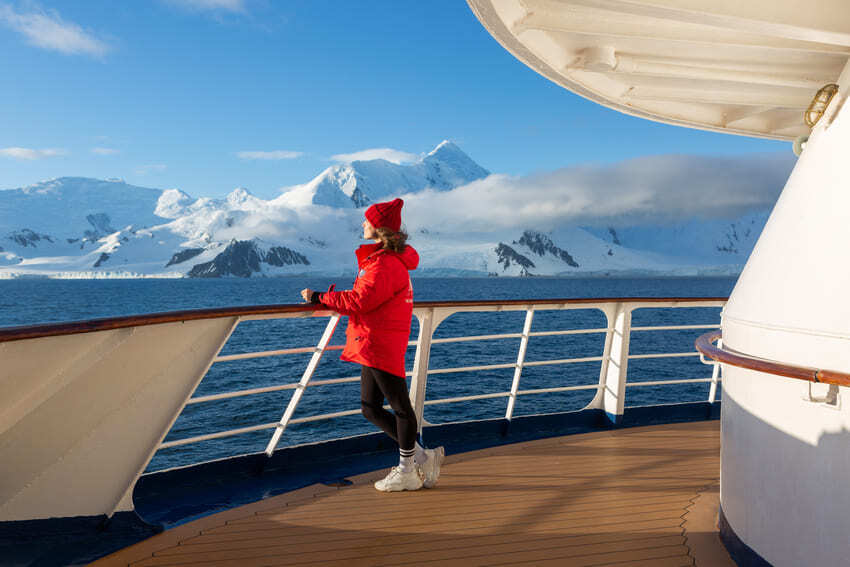
As an incredibly fascinating continent in one of the most remote places on Earth, it’s not surprising that many nations have tried to own a piece of Antarctica over the past two centuries since its discovery. Early explorers, whalers and sealers travelling the Southern Ocean in the 18th and 19th centuries started to claim bits and pieces of the continent and its adjoining islands for their countries of origin. To this day, seven territorial claims still exist, slicing Antarctica’s territory along its longitudes. But who is the true owner of the White Continent?
Historical Claims
Early Claims: Spain and South American Nations
Imagine claiming a hypothetical piece of land that you haven’t discovered yet, In fact, you’re not even sure of its existence. When Terra Australis (Latin for Southern Land) started to appear as a vague entry on maps starting from the 15th century, Spain ambitiously claimed all territories south of the Strait of Magellan down to the South Pole and created the Governorate of Terra Australis in 1539.
As former Spanish colonies, this ancient claim fostered Chile and Argentina’s foothold with regards to territory claims on the continent in the 20th century. In 1939 Argentina claimed a triangular area (which included the Antarctic Peninsula) extending to the South Pole. Chile followed in 1940 by claiming parts of West Antarctica, a territory overlapping partially with British and Argentinian claims.
Expansion of Claims: Let the Race Begin
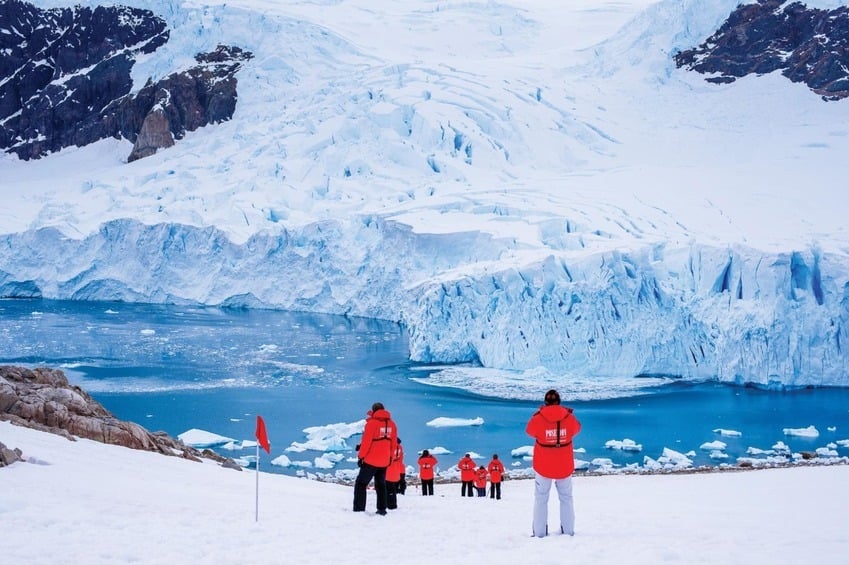
As a hotspot destination over the past centuries for explorers, adventurers, sealers and whalers, many countries developed a keen interest in Antarctica and claimed a part of the incredibly remote continent.
British claims
Britain’s history with Antarctica goes way back. Did you know that British explorer Captain James Cook was the first person to successfully circumnavigate Antarctica in the late 18th century? And only a few decades later, Edward Bransfield became one of the first to sight the southernmost continent in 1820.
With a continuous presence on the subantarctic Falkland Islands since 1833, Britain extended its territorial claims in 1908, declaring sovereignty over South Georgia Island, the South Orkneys, South Shetlands and South Sandwich Islands, as well as Graham’s Land on the Antarctic mainland. Modifying its claim in 1917 to incorporate the territory stretching all the way to the South Pole, the area is now what represents British Antarctica.
Following Britain’s official claim, six other countries put forward their own territorial claims, with two of them claiming territory in the British parts.
French claims
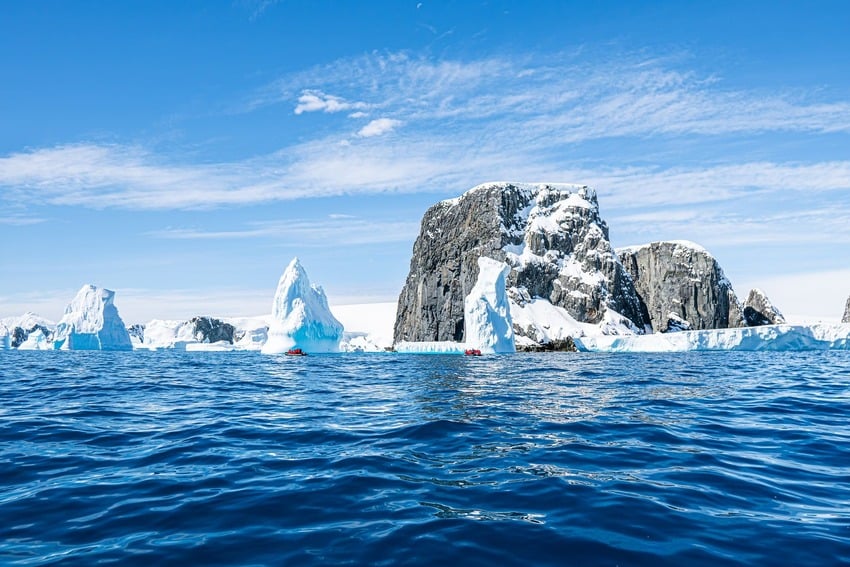
Upon discovering Antarctica’s coastline in 1840, French explorer Jules Dumont d’Urville named this stretch of the continent Adelie Land, after his wife Adele. In 1924, France confirmed their historic claim of 1840 on the continent.
New Zealand’s claims
In 1923, New Zealand declared sovereignty over the Ross Dependency, a territory that includes the Ross Ice Shelf, Ross Sea, Ross Island and Transantarctic Mountain Range and extends to the South Pole. This territory was originally part of Britain’s claimed territory.
Australian claims
In an ambitious move, Australia claimed 42 percent of the Antarctic continent 1933. As of today, only four sovereign nations recognize this claim, with some such as the U.S. and Russia outright rejecting it.
Norwegian claims
To ensure their whaling privileges, the Nils Larsen and Ola Olstad expedition to Peter I Island in 1929 claimed the small island for Norway. Concerned with Britain’s prior Antarctic claims, which were feared as an attempt to bring the whaling industry under British rule and taxation, Norway made its territorial claims in 1939.
The Role of Geopolitics in Antarctica
Early 20th Century Conflicts and Tensions
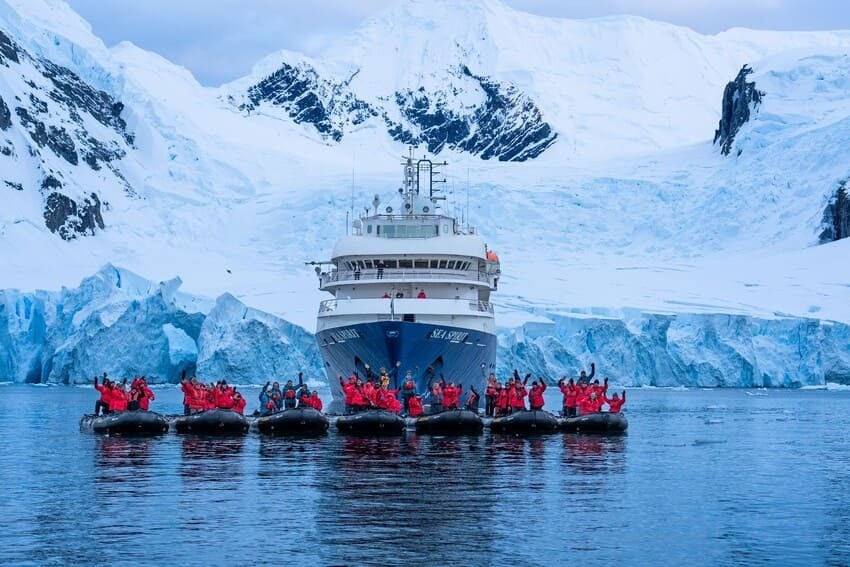
Following the Heroic Age of Antarctic Exploration in the 19th century, when international expeditions put their focus on scientific and geographical research, the transition into the 20th century changed the polar game, with the race to the South Pole and the first territorial claims on the continent.
South Atlantic Conflict
British-Argentine tensions sparked a series of battles and undeclared wars, such as the battle on Deception Island in 1948 (resulting in no casualties) and the Hope Bay incident of 1952, in which Argentinian soldiers opened gunfire over a landing British party, arriving to re-establish and supply the earlier burnt Antarctic base. The decades-long conflict of sovereignty culminated in the invasion of the Falklands on April 2, 1982, when Argentine troops arrived at Port Stanley, followed by the invasion of South Georgia and the South Sandwich islands a day later. The conflict ended 74 days later with Argentina surrendering. The conflict resulted in military casualties in the hundreds on both sides, as well as three civilian Falklanders.
World War II
Nazi Germany sent an expedition in 1938 to Antarctica to survey and make aerial photographs of parts of Antarctica. This trip also was to potentially serve as a basis for possible future claims of Antarctic territory (New Swabia). While Antarctica didn’t see any battles during World War II, the encroaching German interest and fears of Japanese incursions into the Falklands prompted other nations to step up their Antarctic presence. The United States set up two bases (before abandoning them two years later) and Britain launched Operation Tabarin in 1943. By establishing a permanent presence, Britain not only enforced its own claims to the Falkland Island Dependencies, but also allegedly stopped any attempts by the Kriegsmarine (German navy) from using the remote islands for its own purposes. Under the pretext of fear and turmoil during wartime, Argentina and Chile moved in as well, claiming territories in the region.
Cold war on the coldest continent
With tensions rising between the U.S. and Soviet Union after the end of World War II, fears of the Cold War reaching Antarctica prompted the formation of the Antarctic Treaty, which was initially signed by 12 nations. This step aimed to protect the region from militarization, nuclear weapons testing and further conflicts. As of 2024, 57 countries worldwide have signed the Antarctic Treaty.
The Impact of WWII on Antarctic Claims
While Antarctica saw very little of World War II, the conditions of the final peace treaty deterred any future territorial claims on the part of Japan. The threat of Nazi Germany using the waters around the continent for the Kriegsmarine prompted the U.S., Britain, Chile and Argentina to increase their presence in Antarctica during the war. Their presence wasn’t solely to ensure peace in the region, but also to affirm their territorial claims, which went on to provide grounds for further tensions and eventually the need for a treaty to regulate the use of Antarctica for generations to come.
Paving the Path to Polar Peace: the Formation of the Antarctic Treaty
The International Geophysical Year
Paving the way for the Antarctic Treaty, the International Geophysical Year, running from July 1, 1957 to December 31, 1958 provided major breakthroughs in scientific research with over 4,000 scientific stations being set up worldwide and 50 of them in Antarctic waters. While the program covered science topics worldwide, the Antarctic continent, as the planet’s least studied region, proved to be a significant focus of the event.
The International Geophysical Year wasn’t only a major pretext for the Antarctic Treaty, but also contributed to the permanent establishment of the Amundsen-Scott South Pole Station in 1956 and resulted in a long list of scientific findings, such as the discovery of the Van Allen radiation belts.
Antarctic Treaty
With the success and scientific excitement of the International Geophysical Year still lingering in Antarctic latitudes, the formation of the Antarctic Treaty could not have come at a better time. The fear of Cold War tensions spreading to the White Continent prompted U.S. President Dwight D. Eisenhower to create a system to govern Antarctica. Twelve nations, who later became the original signatories of the Antarctic Treaty on December 1, 1959, gathered in sixty sessions between June 1958 and October 1959 for negotiations leading to the Antarctic Treaty System. These parties were also former participants of the International Geophysical Year: Argentina, Australia, Belgium, Chile, France, Japan, New Zealand, Norway, South Africa, the UK, US and USSR.
Coming into force on June 23, 1961, the Antarctic Treaty aimed to build on the cooperation and results of the International Geophysical Year, and likewise aimed to demilitarize the Antarctic zone and diminish territorial disputes. The treaty, consisting of fourteen articles, was originally set for a minimum of 30 years and applied to all territories south of 60 degrees south latitude. The main Antarctic Treaty obligations went as follows:
-
Peaceful purposes only: Antarctica would be used for scientific research and peaceful cooperation
-
The scientific freedom applied during the International Geophysical Year would continue to guarantee scientific cooperation and investigation, and its results would be shared freely
-
All claims of nations would be held static from the date of signature without any further rights to claim sovereignty
-
No nuclear activity or radioactive waste disposal would be permitted in Antarctica
-
Any party could appoint and send observers with the freedom to inspect other nations’ structures and installations in the area
-
Contract parties would ensure that no actions contrary to the treaty are carried out
-
Regular meetings would be held and any disputes would be resolved peacefully
Modern Governance of Antarctica
The Antarctic Treaty System (ATS) Overview
As of 2024, the Antarctic Treaty includes 57 signatory countries worldwide. Among them, there are currently also 29 consultative parties, which consist of the original treaty signatories of 1959 and other parties involved in extensive research in Antarctica. While all signatories are allowed to participate in the annual Antarctic Treaty Consultative Meetings, only parties with consultative status are allowed to part-take in decision-taking.
There are several related organizations assisting the Antarctic Treaty System in their work:
-
The Scientific Committee on Antarctic Research (coordinating research programs and promoting cooperation)
-
The Council of Managers of National Antarctic Programs (advising on practical matters, such as exchanging logistic information)
-
The International Union for Conservation of Nature, the United Nations Environment Program and the Antarctic and Southern Ocean Coalition (functioning as experts to conservation)
-
The International Hydrographic Organization, the World Meteorological Organization and Intergovernmental Oceanographic Commission (providing technical expertise)
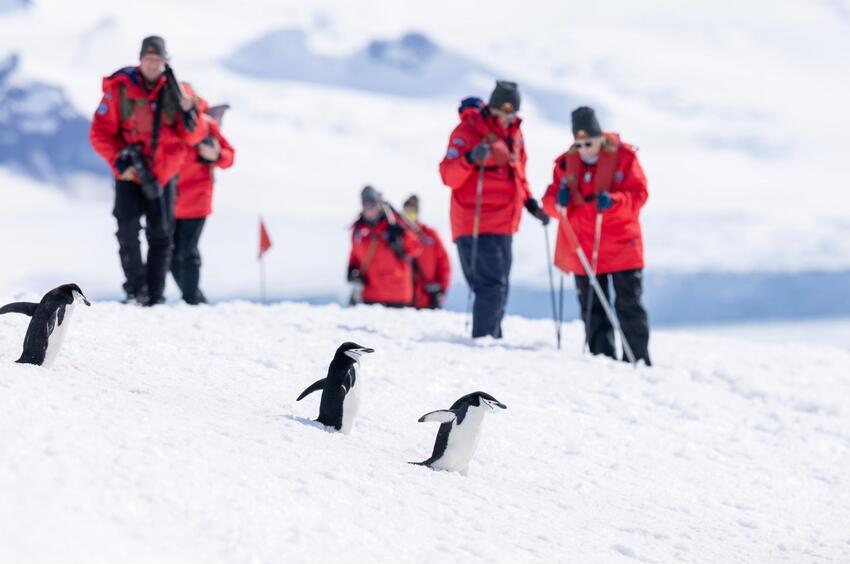
The Role of Consultative Parties
Becoming a consultative party in the Antarctic Treaty presupposes extensive involvement on the Antarctic Continent. Substantial research activities on the continent, or being one of the original signatories is a must to be considered for this select group. The consultative parties not only meet to provide guidelines and regulations on the work of the Antarctic Treaty, but also work closely with the Committee for Environmental Protection and provide recommendations to their own governments on measures that go in line with the objectives of the treaty.
Flexibility and Adaptability of the ATS
The Antarctic Treaty’s articles are not set in stone and continue to be in the making. Providing ample opportunities to develop and adjust to new realities, new protocols can be adopted by consensus voting of the consultative parties. And that’s what may keep protecting Antarctica in the future. With ongoing climate change and increased tourism over the past decades, the high degree of flexibility and adaptability is key to staying proactive on matters to protect and regulate activities on the White Continent.
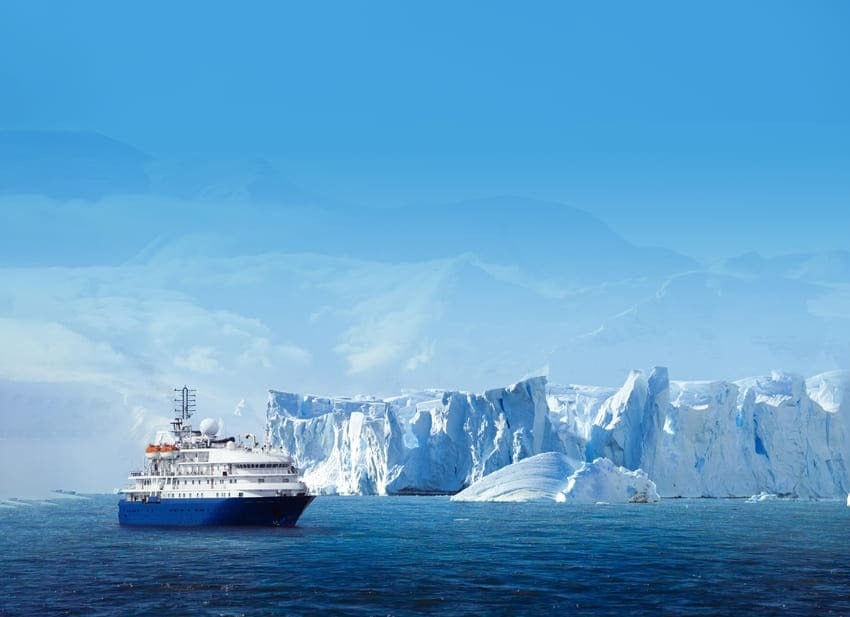
Tourism in Antarctica
History of Antarctic Tourism
For centuries Antarctica’s remote location discouraged the leisurely traveler from making the arduous journey south, making this destination the domain of daredevils and extreme explorers. With the Antarctic Treaty System promoting the peaceful use of Antarctica, the doors for tourism started to open in the late 1950s. In 1958, Argentina launched its first touristic voyage with 98 paying guests aboard the ship Les Eclaireurs to Deception Island. Departing from Ushuaia, this port on the southern tip of Argentina remains the place to start your journey to this day, accounting for 90 percent of all cruise ships leaving to the White Continent.
With visits significantly increasing in the 1970-90s, the Protocol of Environmental Protection to the Antarctic Treaty (1991) addressed the tourism issue in Antarctica. As a result, the International Association of Antarctica Tour Operators (IAATO) was born. Advocating for safe and environmentally responsible travel to Antarctica, all major Antarctica tour operators today are part of this association. And polar beauty continues to be a bestseller: the 2024 Antarctic season saw a record 122,072 travelers in Antarctica.
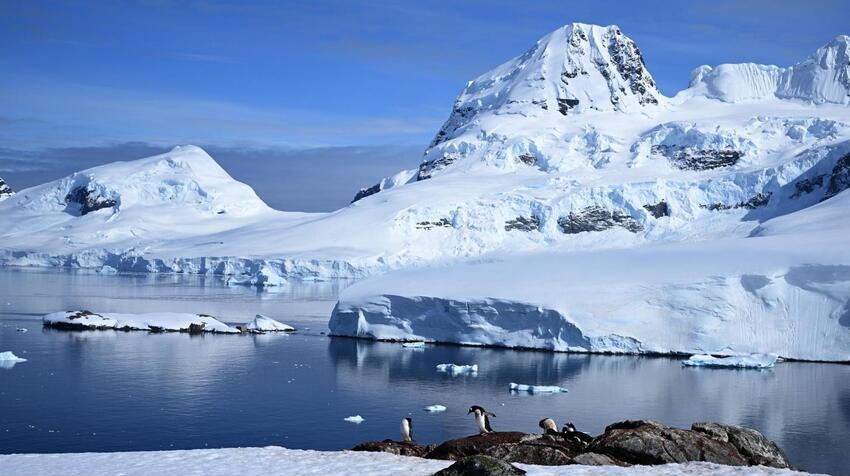
The Role of IAATO in Regulating Tourism
It’s one of the most incredible places on Earth and the work of the IAATO ensures it will stay like this for generations to come. The association keeps records of tourist numbers, advocates for environmentally responsible travel, waste disposal and minimum impact on wildlife and nature. When travelling to Antarctica, check that your chosen tour operator is part of the IAATO. Their professional expedition team will guide you according to its principles during your time in Antarctica!
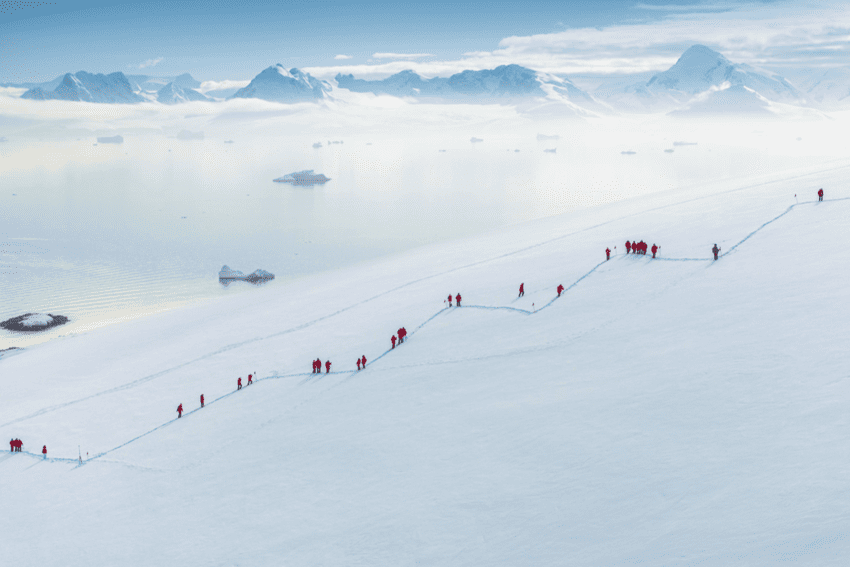
Challenges and Opportunities in Sustainable Tourism
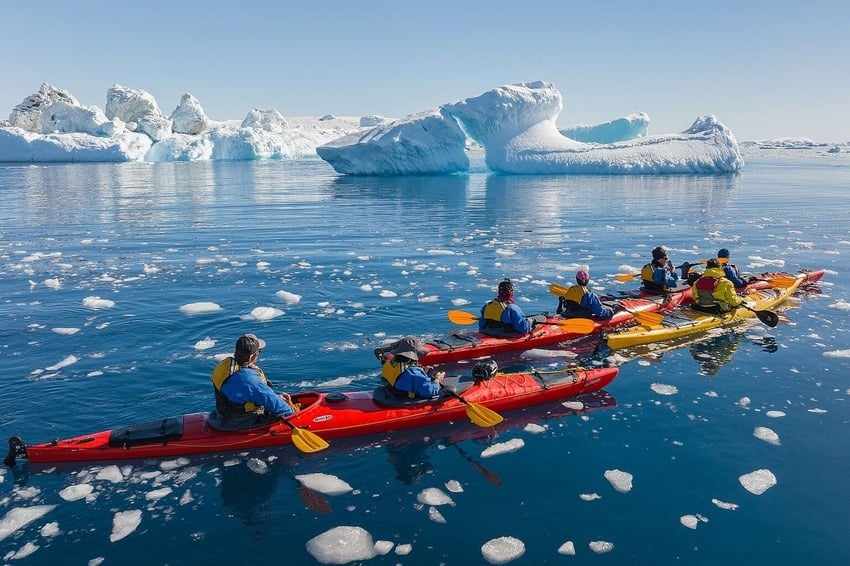
While a trip to Antarctica may be the unforgettable experience of a lifetime, it’s not the most suitable adventure if you want to keep your carbon footprint low. According to a research published by the Antarctic Science Institute in Cambridge in 2011, the average tourist trip to Antarctica produces around 5.44 tons of CO2 emissions per traveler, of which 30% accounts for the air travel to reach the departure port.
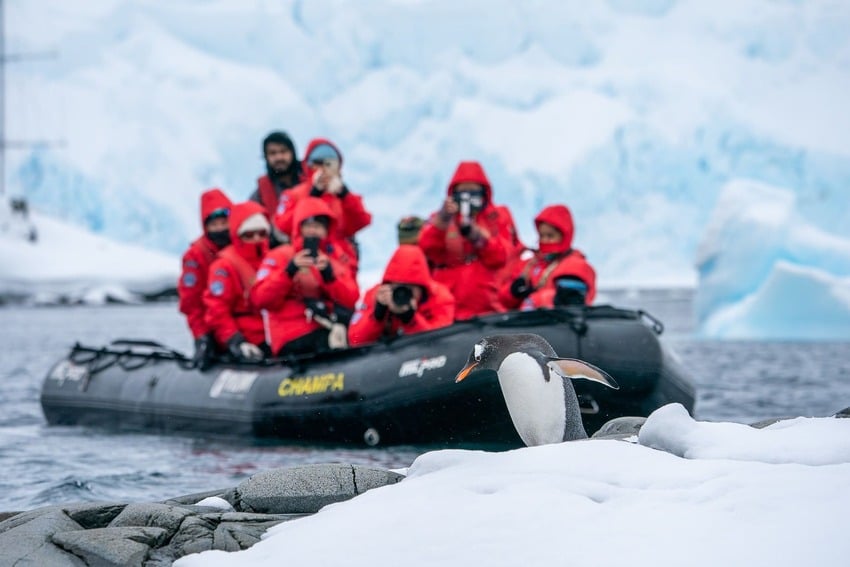
Visitors also potentially disturb wildlife; that’s why the work of the IAATO and a full commitment of responsible tour operators to the IAATO guidelines is crucial. At the moment the IAATO relies on self-regulation of tour operators (after all, you won’t find any rangers patrolling the Antarctic continent), which puts a high degree of trust and responsibility with the respective company. But there’s good news: competition among tour operators aspiring to be leaders of sustainable tourism drive high industry standards. Paired with the continuous work of the IAATO and Antarctic Treaty, measures to tackle the increasing tourist numbers to protect the continent may find new avenues to ensure environmentally responsible trips. Antarctic tourism, if done right, can inspire and educate people from around the world, and thus gain support for protection programs.
The Future of Antarctica
Impact of Climate Change on Antarctica
Global warming hasn’t spared the White Continent. The Antarctic Peninsula is one of the planet’s rapidly warming regions, with upper ocean temperatures west of the peninsula having increased over 1C (1.8F) since 1955. While oceans are warming worldwide, the Antarctic Circumpolar Current is warming even more rapidly. Global warming brings a lot of changes and potential threats to the continent, with a few of them being:
-
Continuous warming may contribute to ice shelf melting and a potential future rise in sea levels
-
With changes in sea ice, distribution of penguin colonies and other wildlife are changing as well (emperor penguins heavily dependent on sea ice have declined by up to 50% in some places)
-
A warmer climate brings non-native plant species to the region, threatening the local ecosystem
-
The warming of ocean water disrupts krill growth, a major food source for Antarctic wildlife
Prospects for Scientific Research and Balancing Preservation
Protecting Antarctica is key to continuing research about our planet in the future. But research teams bring human activity to the continent and with it logistics, transportation, sources of food and fuel, needs for energy and drinking water, potentially polluting the region. At the same time, research results may just solve future climate crises. Antarctica’s massive ice sheet contains a record of our planet’s atmosphere through time, trapped in tiny air bubbles. Frozen ice core samples taken on the continent explain how our planet’s climate changed in the past and may give cues on how to tackle climate change in the future.
FAQs
Can I buy land in Antarctica?
You cannot own land in Antarctica. Even though different nations have made claims over the past decades, the Antarctic Treaty ensures that nobody can legally own it.
Does the US own any land in Antarctica?
While nobody legally owns Antarctica, seven countries maintain a basis for territorial claims on the continent, among them the United States. As a signatory country of the Antarctic Treaty, the United States, however, does not recognize such claims and promotes Antarctica’s status as a place for peaceful research and cooperation.
Is Antarctica guarded?
There is no government or military in Antarctica to guard the continent and the territory is treated similarly to the open sea, belonging to no one and everyone simultaneously. The Antarctic Treaty ensures that the territory is used for peaceful purposes and international scientific cooperation, without anyone claiming its territory.
Has anyone been born in Antarctica?
As of 2024, eleven human babies have been born in Antarctica. The first person born on the continent was Argentinian Emilio Marcos Palma on January 7, 1978.