Wandering Albatross
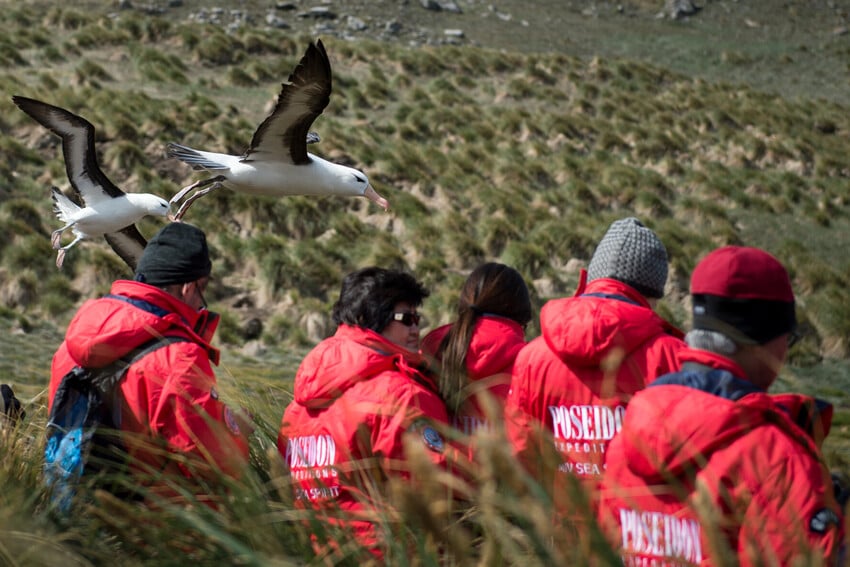
Gliding in the skies for hours at a time without a single wing flap, wandering albatrosses are masters when it comes to flight efficiency! With the largest wingspan among all bird species in the world (up to 3.5m, or 11.5 feet), a wandering albatross can fly around the world in just 46 days. GPS tracking of wandering albatrosses revealed a flightpath of over 15,000 km (around 10,000 miles) over sea before returning to land. An Airbus A380, in comparison, can fly non-stop for around 14,800 km (9,200 miles) before having to refuel. You can find these majestic birds around the oceans and islands of the Southern Hemisphere. During breeding season, you can spot them on land on subantarctic islands such as South Georgia, Prince Edward Island, Macquarie Island and the Kerguelen and Crozet Islands.
Wandering Albatross Fact
- Name: Wandering albatross
- Scientific name: Diomedea exulans
- Other names: White-winged albatross, snowy albatross or goonie
- Length: Up to 135cm (4.4 feet)
- Weight: 6 to 12kg (13-26 lbs.)
- Wingspan: Up to 3.5m (11.5 feet)
- Habitat: In the Southern Hemisphere (Southern Ocean, Pacific Ocean, South Atlantic, subantarctic and subtropical waters)
- Breeding grounds: On various islands between 46 and 56 degrees southern latitude
- Diet: Small fish, squid and other cephalopods, jellyfish and crustaceans
- Appearance: Grey, black and white wings with a hooked bill
- Conservation status: Vulnerable
- Predator/biggest threats: Adult birds do not have any natural predators, but the biggest threats are longline fishing and climate change
- Best place to see them: Since they spend most of their life at sea, the best place to see them is at their breeding grounds on the subantarctic islands. An expedition cruise to the Antarctic Peninsula and surrounding islands gives you the best chance of seeing them!
Habitat and Distribution
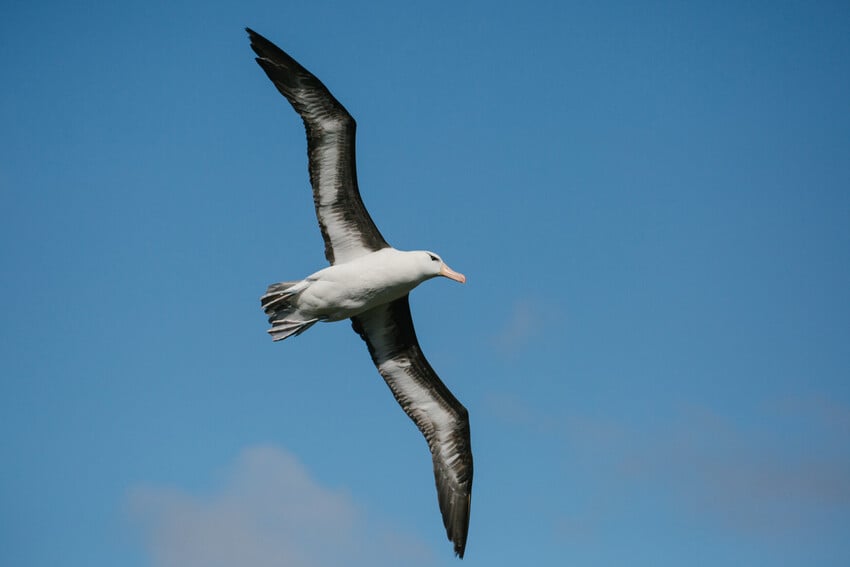
The skies, ocean and islands of the Southern Hemisphere, from the Antarctic to subtropical waters, are the wandering albatrosses roaming grounds. With a habit ranging around 77 million square kilometers (ca. 30 million square miles), the birds spend most of their lives in the waters around Antarctica, Africa, Australia and New Zealand. Once the mating season begins, breeding adults migrate to their trusted breeding spots on different subantarctic islands. Wandering albatrosses usually breed every other year during the Antarctic summer (November to July). That’s also when expeditions to the subantarctic islands are possible and the best time to see Antarctic wildlife, including the wandering albatrosses, as they are only land-bound during breeding.
Feeding Habits and Diet
The open ocean is the wandering albatrosses’ all-you-can-eat buffet. Hunting alone or in small groups, wandering albatrosses feed by swooping towards the water surface to catch their prey with shallow dives. Everything from squid, octopus, fish to crustaceans lands in their large bills. Because of their salty, ocean water-heavy diets, they possess a supraorbital (salt) gland above their nasal passage, which helps them excrete excess salt. You can see this excretion as a pink-yellow stain on the animal’s neck. Unlike many other seabirds, wandering albatrosses can also feed during nighttime. On average, foraging trips last for up to 50 days at a time, with shorter feeding trips during the breeding season. And these birds aren’t picky when it comes to food. They are known to feed on penguin and seal carrion, and even follow fishing boats to snatch scraps and garbage.
Flight and Speed
Wandering albatrosses use their large wingspan, wind shear and S-shaped dynamic soaring techniques to move nearly effortlessly through the skies. There isn’t much flapping needed, but lots of gliding to stay airborne. By climbing upwind and diving downwind through surface shear layers, the birds extract energy from these maneuvers, which allows them to stay airborne for long periods at a time and lets them cover vast distances in flight. And wandering albatrosses are fast! They can reach speeds of around 70km/h (45mph), depending on wind speed. Once the wandering albatross touches land, most of its iconic in-flight elegance vanishes and its clumsy alter ego emerges. Wandering albatrosses waddle awkwardly and often stumble over their own feet. While they can touch down on land and water, land-bound descents can often result in crash landings into groups of other birds in their breeding colonies.
Reproduction and Mating
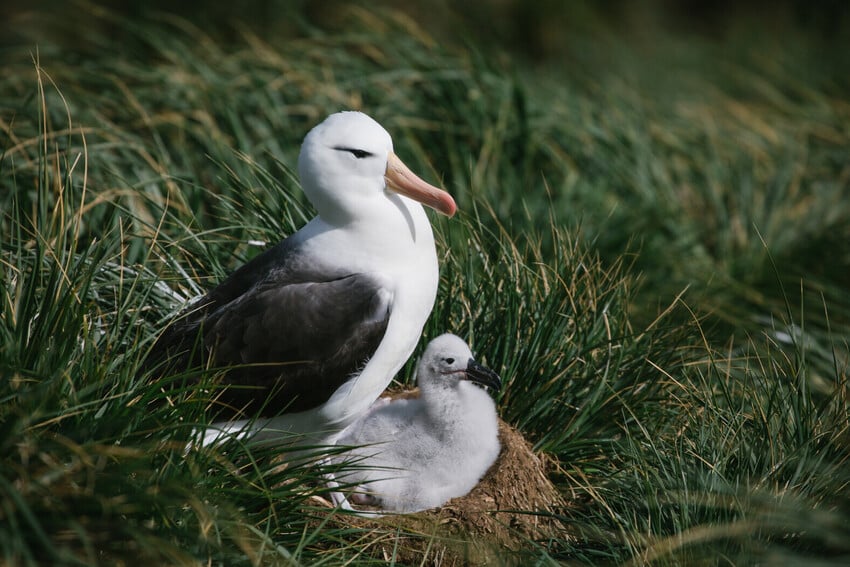
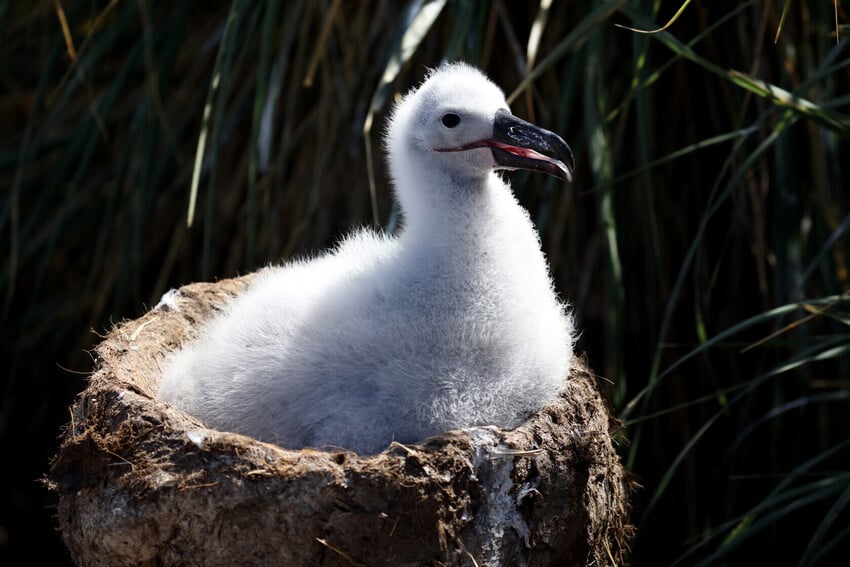
Wandering albatrosses reach sexual maturity at around 11 years of age and mate for life. Come breeding season, males woo females by dancing around them. Females take their time choosing a good mate (after all, they’re stuck with them for a lifetime) and it can take a few years for two birds to find each other. Couples breed every other year on subantarctic islands, where they build a large and untidy nest of mud, tussock grass and other vegetation. Adult females lay one egg, which measures around 10 cm in length, between December and January. Both parents take turns incubating their egg, relieving each other every two to three weeks until the chick hatches after around 78 days. Albatross parents then feed their young one in turns, regurgitating meals of squid and fish. The older the chick gets, the more the parents will go hunting at the same time, leaving the chick unattended for longer intervals. Chicks are fed this way for nearly nine months before they take off to live life on their own.
Lifespan and Longevity
Wandering albatrosses live to around 60 years of age. As the birds age, their color pattern changes and the black markings on their white wings recede to just the tips. The albatross species has the longest life span among birds on the planet. A laysan albatross named Wisdom is currently 73 (as of 2024) and the longest living documented bird…and he’s still actively breeding!
Behavior and Social Structure
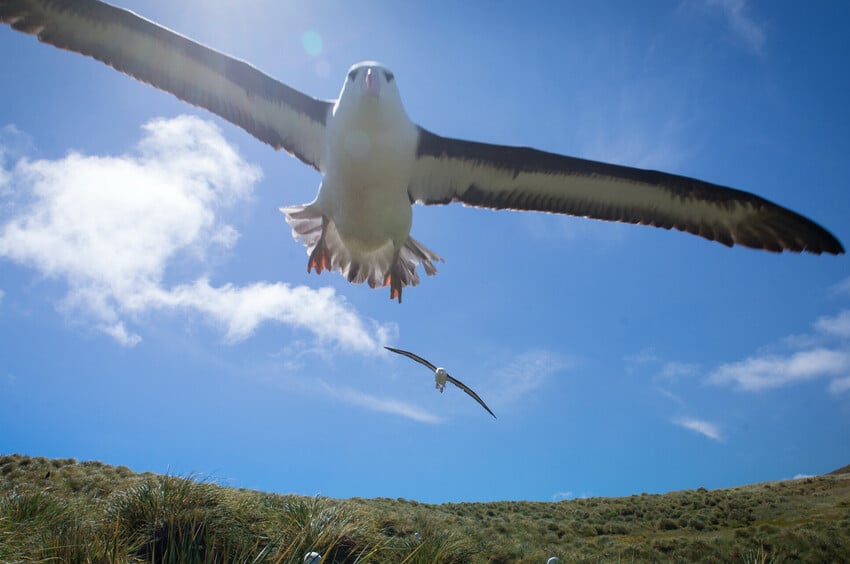
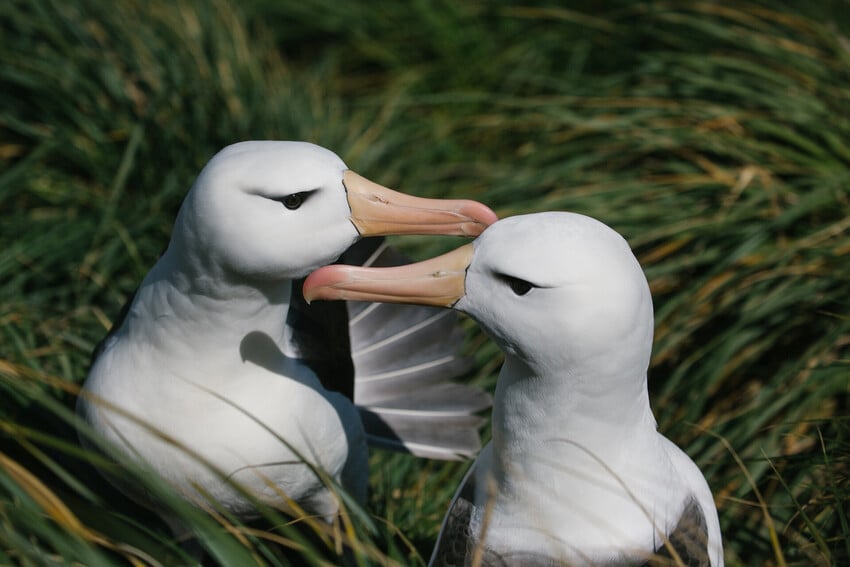
Wandering albatrosses usually live their lives in small groups. And they can be very loud when mating and defending their nest or territory! In their breeding populations you can hear them bill clapping and croaking loudly. During mating season, adult males put on elaborate dances in addition to trumpeting, croaking, bill-clapping and touching to win over their preferred mate. On the open ocean, albatrosses gorge on prey in small groups, but large feeding frenzies usually occur around fishing boats.
Population and Conservation Status
Listed as vulnerable on the International Union for Conservation of Nature (IUCN) red list, there are currently around 26,000 birds on the planet. With no natural predator, the main threat to wandering albatrosses are fishing hooks, longlines and plastic pollution in the ocean. Wandering albatrosses love to snatch bait and fish from fishing boats, and can get trapped on their hooks. Though most breeding populations and sites are protected within nature reserves, a study in the Proceedings of the National Academy of Sciences showed a dramatic decline in various albatross populations over past decades. On Bird Island (located on the tip of South Georgia Island), nesting colonies have been decreasing by up to 65% over the past 35 years. According to the study, the fishing industry and climate change are primarily to blame. Conservation efforts to save this species are targeted at relocating fisheries, population monitoring, protecting their breeding grounds, as well as removing and avoiding the introduction of foreign predators to the subantarctic islands.
Ecological Contribution of Wandering Albatrosses
While the wandering albatrosses and other seabirds rely on the subantarctic region as their breeding ground, the islands’ ecosystem heavily depends on these manure-producing visitors. The nutrients from large colonies of birds fertilize the local vegetation. With their great appetite for fish, squid and crustaceans, the wandering albatrosses also contribute to the ocean’s health by controlling the population of many marine species.
Fun Facts about Wandering Albatrosses
Dead albatross – bad luck
In European maritime lore, albatrosses were considered to be the souls of lost sailors. If an albatross would be killed or would die aboard a ship, it was considered bad luck. This myth is featured in Samuel Taylor Coleridge’s poetry from 1798 (The Rime of the Ancient Mariner), where a sailor kills an albatross and his crew mates subsequently make him wear the remains of the dead bird around his neck as punishment and to fend off looming misfortune.
Great sense of smell
Nothing escapes the wandering albatross’ sense of smell! Whether it’s prey or a smelly fishing boat, albatrosses know where to find their next meal.
Not-so-ready for take-off
While albatrosses are master gliders, taking off from land can be tricky for them. As their wings are designed for gliding over the sea, they need a bit of headwind and runway to get airborne.
Fat chicks
In order to survive the winter in the subantarctic region, albatross chicks need a fattening diet, which is eagerly provided by their parents. Some of those fluffy babies grow bigger than their parents and can weigh up to 10kg (22 lbs.)!
FAQs
How long do Wandering Albatrosses live?
The lifespan of a wandering albatross (also called the snowy albatross or white-winged albatross) can be up to and even over 60 years.
Do Wandering Albatrosses have any natural predators?
Adult birds of the wandering albatross species have no natural predators. Young birds can become prey to skuas, sheathbills and invasive species, such as cats and rats.
How long can a wandering albatross fly without stopping?
Wandering albatrosses can stay in the air for days without landing and can spend up to six years on the ocean before returning to land. Wandering albatrosses feed on the open ocean, spending most of their lives at sea. Usually, though, albatrosses will return to their breeding grounds on the subantarctic islands every two to three years.
How many Wandering Albatrosses are there today?
Currently there is an estimated population of around 26,000 birds.