Top 10 Facts About Walruses
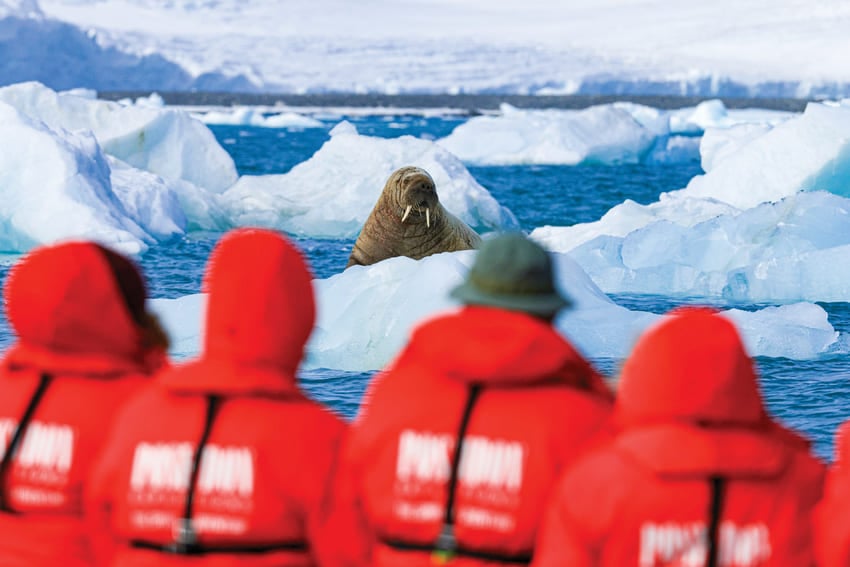
You can’t miss these iconic dwellers of the north when visiting the Arctic! Walruses are perfectly adapted to the icy climate of the northern seas, have a unique way of foraging for food, are extremely social and vocal and can go over three days without sleep! With their voluminous, blubbery bodies and iconic tusks, they are one of the top wildlife favorites our travelers look out for on their cruise expeditions. Read on, and get to know this incredible species with our top ten walrus facts.
1 – There Are Two Subspecies: Atlantic and Pacific Walruses
While a grown male Atlantic walrus can reach an impressive weight of up to 1,200 kg (2,600 lb), the Pacific subspecies is even heavier! Adult male Pacific walruses can reach weights of up to 1,900 kg (4,200 lb). You can find Atlantic walruses in the Arctic regions of Canada, Greenland, Russia and Svalbard, roaming the Arctic and North Atlantic Oceans, as well as the Barents Sea. Look for Pacific walruses in the Bering and Chukchi Seas, in the territories between Russia and Alaska. Currently, there are around 200,000 Pacific walruses, and 25,000 Atlantic walruses. While Pacific walruses are seasonal migrants, moving north during the summer and southward in winter, the Atlantic subspecies is more sedentary, preferring to stay near coastal areas throughout the year.
2 – They’re Big Fellows
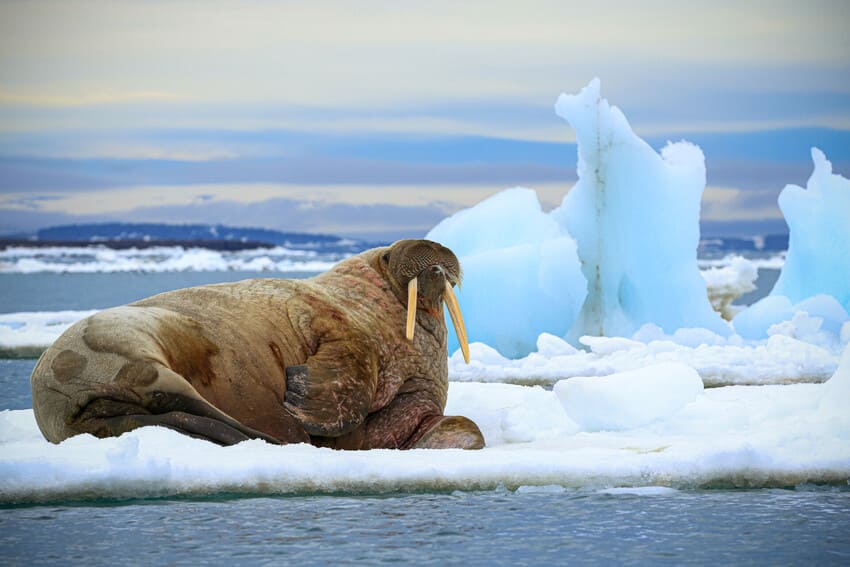
These pinnipeds are true giants of the Arctic! Their enormous bodies feature an up-to-15-centimeter-thick blubber (5.9 inches) and large tusks, which are up to one meter (3.3 feet) in length. Adult male walruses of the Atlantic subspecies reach lengths of 3.1 meters (10.2 feet) and their Pacific counterparts can even be as long as 3.6 meters (11.8 feet). Female walruses are smaller, with lengths of up to 2.6 meters (8.5 feet) for the Atlantic, and up to 3.1 meters (10.2 feet) for the Pacific types. Females weigh on average 30 percent less than males. And it’s not only adults that are so massive, even young calves reach half of their adult size by the age of five.
3 – Their Walrus Tusks Are a Multi-Tool
Their iconic tusks gave walruses their scientific name, Odobenus Rosmarus, which translates to tooth-walking seahorse. Walrus tusks signalize an animal’s gender, age and social status. But these elongated upper canine teeth aren’t just for showing off. Both male and female walruses use them in their daily routines. Arctic life is tough, and walruses use their tusks to fend off polar bears and orcas, fight for mating rights and punch breathing holes through the ice. Walruses need them to haul out of the water, using them like ski poles to drag their gigantic bodies onto the sea ice.
4 – Walruses Are Social Animals
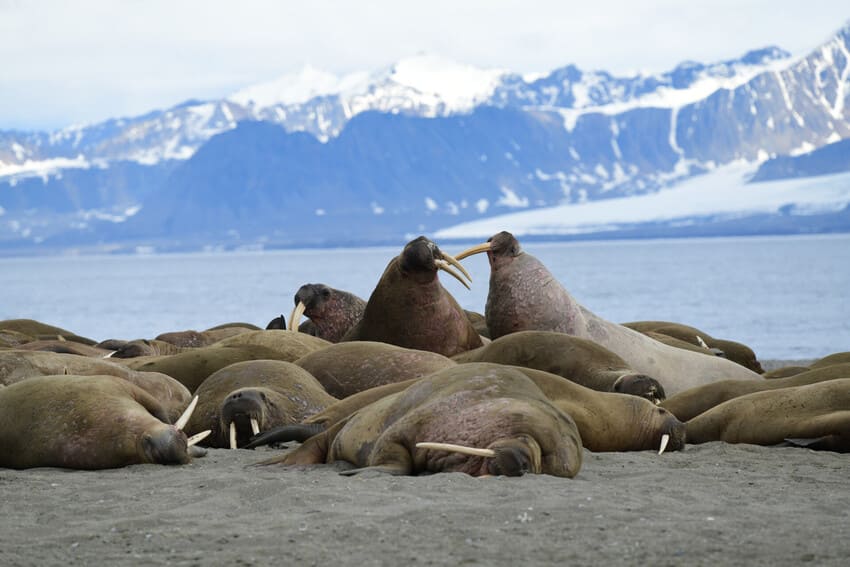
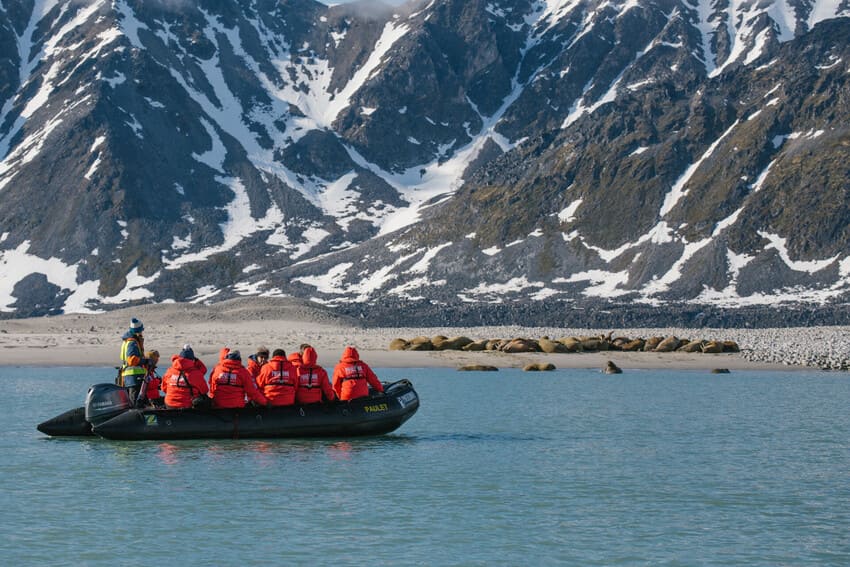
When visiting the Arctic, you’ll notice large groups (haul outs) of walruses with dozens to thousands of individuals on pack ice. When it isn’t breeding season, bulls and cows group up separately with their calves. Mothers and calves share a close bond during nursing time, which can be up to three years. Walruses travel the oceans and haul out in groups for mutual protection. Herds feature a strong community, and when a calf is orphaned, other females of the group adopt the little one.
5 Walruses Are Great Communicators
Walrus language consists of a variety of vocalizations, such as grunts, whistles, roars, growls, barks and clicks. In addition to that, male walruses can produce a bell-like sound while underwater, which originates not from their vocal cords, but air sacs located in their necks. Calves and mothers share a special bond and communication style. Given that large haul outs are a chaotic place to raise your offspring, specific high-pitched vocalizations help mothers to keep track of their young ones.
6 – Walruses Are Born on Ice
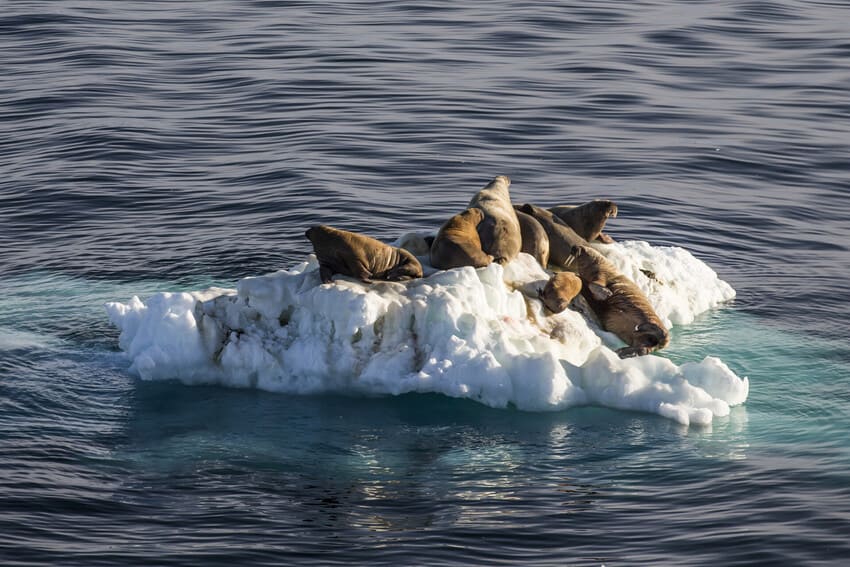
Once the due-date nears, female walruses separate from the group. Walrus moms haul out on ice floes, where they give birth to their calves. Already at birth, walruses measure 125 centimeters (4 feet) in length. During the first few days after birth, females do not feed and rely on their energy storage for sustenance. During the first two weeks of their lives, calves cling to their mother’s back while they swim in the ocean. After around two weeks, young walruses are capable of swimming on their own, but are still nursed for up to three years. They stay with their moms for up to five years.
7 – Walruses Can Live up to 40 Years
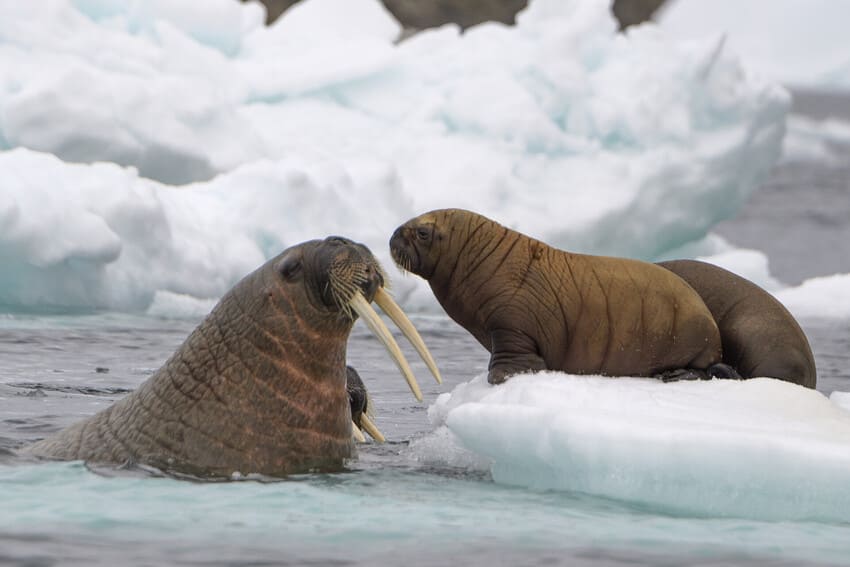
On average, walruses can live up to 40 years in the wild, but some individuals are known to have reached 50 years of age. Bulls usually live around 30 to 40 years, while females live slightly longer at 35 to 40 years. As Natural predators, dwindling sea ice due to climate change (affecting walrus habitats and food availability), commercial hunting and poaching and ocean pollution can reduce their lifespan significantly. Did you know that walruses show signs of aging? Aging walruses usually turn a paler cinnamon-colored brown (in comparison to deep brown hues in their youth) and their tusks show wear and tear. The older a male walrus, the more scars you can see on his skin, telling the life story of many battles from numerous mating seasons.
8 – Walruses Prefer to Feed in Shallow Waters
Even though walruses are master divers, and are able to reach depths of up to 600 meters (1,900 feet), they prefer to feed in waters of around 30 to 80 meters (100 to 260 feet) in depth. Walruses use up to 700 sensitive vibrissae (whiskers) around their snouts to detect their favorite food on the ocean ground. And did you know that they can hold their breath for up to 30 minutes while foraging? Even in dark and muddy ocean conditions, they can locate sea cucumbers, clams, mollusks, worms, snails, shrimp and soft-shell crabs. Walruses create strong vacuums with their mouths to suck the soft flesh out of shells. If their food is buried in the sea floor, they can use their flippers to stir up the mud, or expel jets of water from their mouths to uncover their favorite ocean delicacies.
9 – Walruses Are Extremely Cold-Proof
Temperatures as low as -35C (-31F) can’t harm a walrus! With up to 15-centimeters-thick blubbers (5.9 inches), walruses are perfectly insulated against the cold. Their wrinkly skin contracts in cold water, which reduces circulation and minimizes heat loss. Walruses can also control their blood flow, and reduce blood circulation to their extremities if necessary, to keep their vital organs warm. Whenever it gets too cold in the Arctic waters, walruses haul out on the next available ice floes to conserve their energy.
10 – Walruses Can Sleep on Land and Water
If you’ve ever seen a walrus haul out, you may have spotted them resting on their sides or stomachs on sea ice and beaches. But did you know they can also rest underwater? An inflatable air pouch in their throats (called a pharyngeal sac) lets them float vertically in the water while resting. They can also use their large tusks to hook onto an ice floe, keeping their head out of the water while taking a nap. Walruses don’t have a fixed sleeping schedule. They can go up to 84 hours without sleep if necessary, or rest up to 20 hours straight to recover after energy-consuming activities.
FAQs
How fast can a walrus run?
Despite their giant bodies, these large marine mammals are quite fast on land. They can easily match the average running speeds of humans.
What makes a walrus special?
Walruses are masters of Arctic survival and can withstand freezing temperatures. For wildlife lovers, their unique appearance, including their long tusks, makes them a special sight on any Arctic expedition.
How long can walruses hold their breath?
Walruses can hold their breath underwater for up to 30 minutes.
Are walruses friendly?
Unlike polar bears, walruses do not regard humans as prey, but will attack humans if necessary in self-defense.