Top Facts About Blue Whales
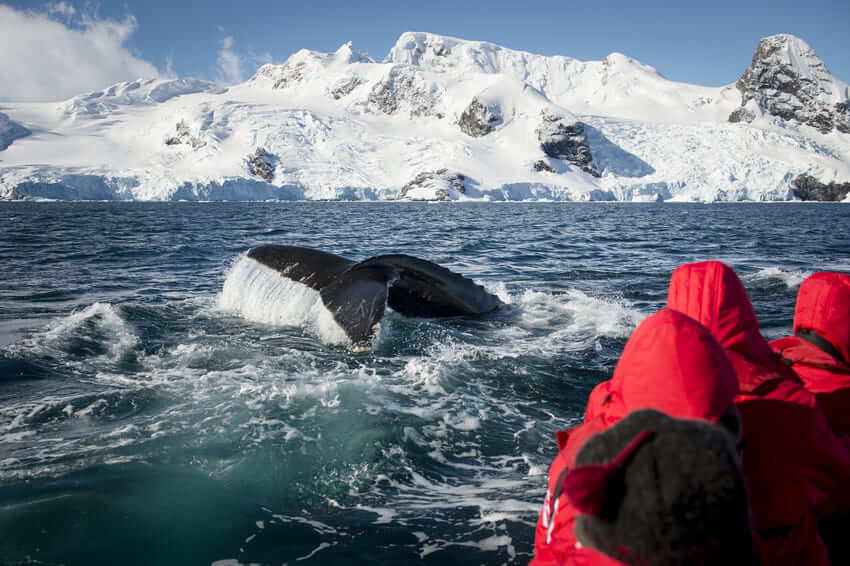
Did you know that the blue whale is the largest animal in the world? Blue whales are bigger than other whales and compare in length to a mid-sized airliner such as the Boeing 737. Its tongue alone weighs as much as an elephant and its heart compares in weight to a small passenger car. Imagine cruising the oceans and suddenly coming across one of these gentle giants! Get up to date on your knowledge about these incredible marine mammals with our top ten blue whale facts.
Blue Whale Facts
-
Name -Blue whale (Balaenoptera musculus)
-
Animal type - Marine mammal (baleen whale)
-
Average life span - 80 to 90 years (in some cases over 100 years)
-
Size - 27-33m (90-110 feet)
-
Weight - Up to 200 metric tons)
-
Size comparison - 3 school buses or a mid-sized airplane
-
Conservation status - Endangered species
-
Diet - Krill
-
Habitat - All oceans, except the Arctic Ocean
1. It’s the Largest Animal in the World
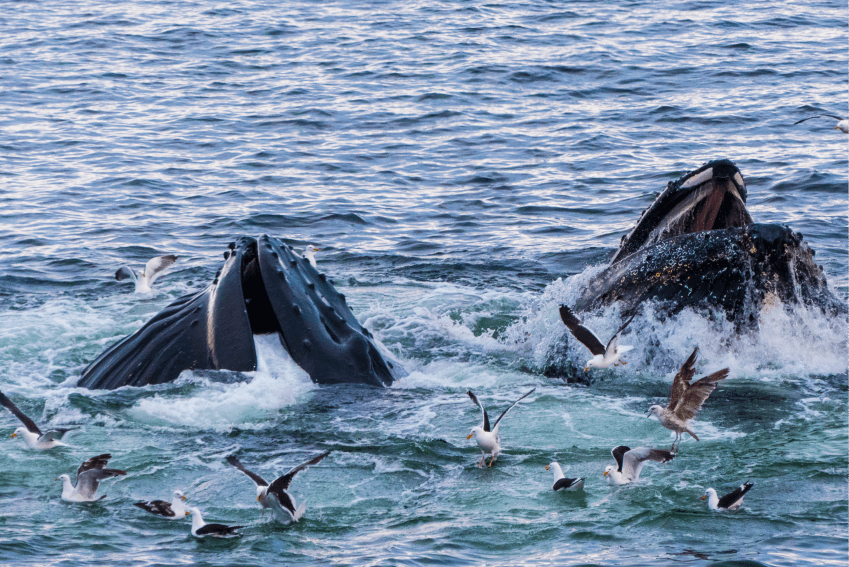
…and not just now, but ever! Blue whales are the largest animal to have ever lived on our planet and are even larger than the dinosaurs that roamed the Earth millions of years ago. At around 30m (100 feet) in length and up to 200 metric tons in weight, they are incredible gentle giants that swim the oceans. To give you an idea of their mass, you can compare a blue whale’s weight to that of around 30 African elephants (its heart alone weighs as much as an elephant). To grasp its size, compare it to the length of three school buses, a mid-sized airplane or a ten-story building.
There are slight differences in sizes among subspecies. Antarctic blue whales are generally larger and pygmy blue whales (living in the Indian and Southern Pacific Ocean) are smaller, reaching around 24m (79 feet) in length.
2. Their Mottling Pattern is Unique
Underwater, their color appears blue (hence their name). But on the surface they actually feature a mottled blue-grey color pattern. Their specific mottling pattern can be used to identify individuals! Blue whales feature a long, slender body with a yellowish underbelly, a wide head, long flippers and a disproportionately small dorsal fin.
3. They Feast on Tons of Krill
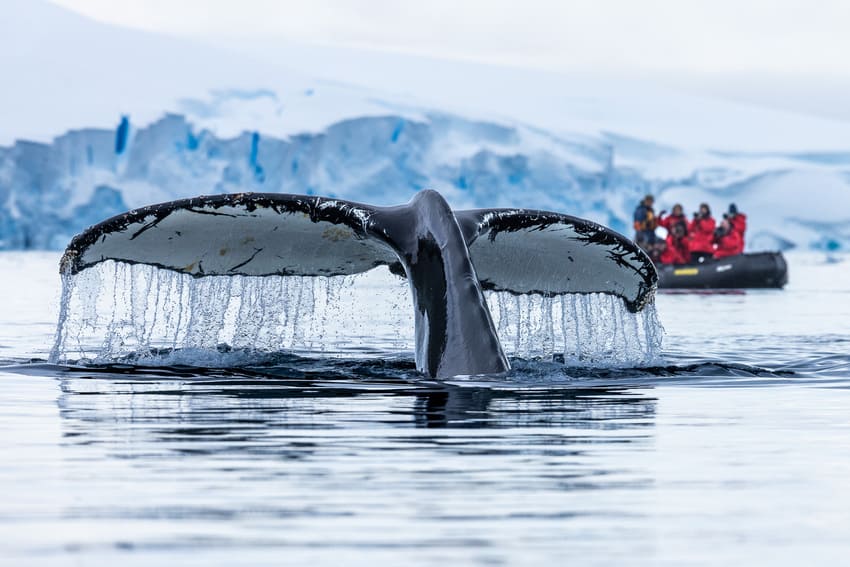
…quite literally! As extremely large whales, they devour up to four metric tons (8,000 lbs.) of krill a day. As baleen whales, they feature keratin plates in their mouths, which they use to filter the tiny crustaceans from the seawater. Taking a large gulp of ocean water, their enormous tongue helps force the water through the baleen plates, leaving a huge serving of delicious krill in the whale’s mouth. The krill blue whales enjoy is not only a very nutritious food source, but also an important part of the ocean’s ecosystem.
4. They Undertake Lengthy Migrations
Travelling thousands of miles, blue whales can migrate the largest distances among mammals. They usually travel in small groups (pods) or alone. While some individuals cover large distances to feed in polar waters during the summer and migrate towards the equator in winter, other blue whale populations are believed to travel only short distances. North Pacific blue whales spend winters around Central America (Mexico) and summers in the waters around the U.S. west coast. Antarctic blue whales in the Southern Hemisphere spend the summer close to the ice edge and, once winter arrives, move to low latitudes.
5. They Are Long-Distance Communicators
They’re not only the largest animals in the world, but also the loudest animals! They produce some of the lowest frequency sounds among animals and their voices travel far through the oceans. And they have excellent hearing! Blue whales can hear each other from up to 1,600km (1,000 miles) away. According to the latest research, these pulsing, groaning and grunting songs aren’t only used for communication, but to sonar-navigate the oceans.
6. Blue Whale Babies are the Largest on Earth
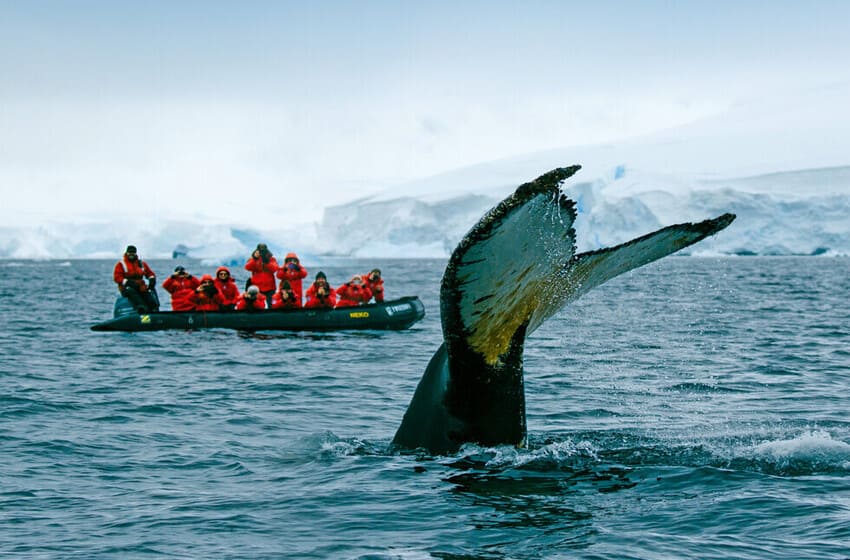
As the largest animal in the world, blue whale calves are born weighing three metric tons (up to 6,000 lbs.) and measuring over seven meters (25 feet) in length. While scientists don’t completely understand the life cycle of blue whales, the gestation period for female blue whales is estimated to last approximately 10 to 12 months. Once born, calves gorge on their mother’s milk for around seven to eight months, gaining around 90kg (200lbs) each day. Blue whales reach their sexual maturity somewhere from around five to 15 years of age.
7. They Can Live to be Over 100 Years Old
They’re not only the biggest animal on Earth, but among the longest living ones, thriving in the world’s oceans for around 80 to 90 years. Did you know that their earwax reveals their age? Scientists look at the layers of wax in their earplugs to determine a blue whale’s age and the oldest individual found so far was around 110 years old. Just imagine, some of the world’s oldest blue whales could have been around during World War I.
8. They Are Endangered
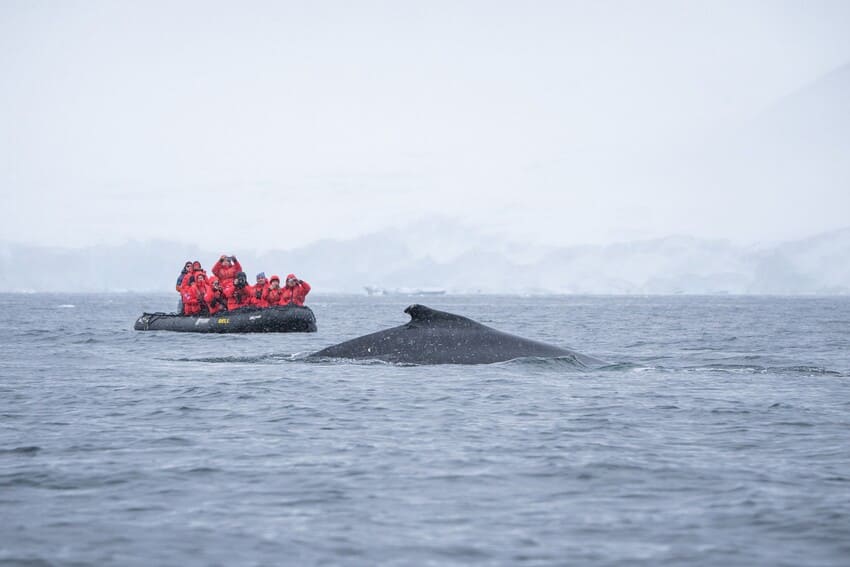
Blue whales feature very few natural predators, but commercial whaling in the 19th and 20th centuries pushed the species to the brink of extinction. Before the heydays of whaling, an estimated 350,000 blue whales roamed the oceans. Nowadays, roughly 10,000 to 25,000 are left. In addition to hunting, vessel strikes and boat collisions can kill blue whales, and climate change impacts their habitats, food availability and feeding season. Since the hunting ban in 1966, blue whale populations have been recovering slowly and they are currently still listed as an endangered species.
9. They Aren’t Easy to Spot
With limited populations around the globe, you need to know where to look for them. We’ve highlighted a few locations where you can spot them:
- Mexico: Los Cabos (around the southern Baja Peninsula)
- U.S.: California (between June and September during migration between the tropical mating and Arctic feeding grounds)
- Sri Lanka: Mirissa (from December to March, during migration)
- Mexico: Los Cabos (around the southern Baja Peninsula)
- Australia: Perth Canyon (western Australia), Bonney Upwelling and Kangaroo Island (southern Australia)
10. There Are Ways to Protect Blue Whale Populations
With an uncertain future, blue whale populations need continuous protection. According to the Marine Mammal Center (the world’s largest marine mammal hospital and rescue) ship strikes, fishing gear entanglement and climate change are major threats to these cetaceans. What can humans do to protect this species for future generations?
- Reduce speed when travelling the ocean
Keep a sharp lookout when travelling by boat through coastal waters. With ship strike being a major danger to blue whales, reducing speed when travelling through their habitats can avoid accidents.
- Change major shipping routes
To avoid disturbing whale populations, scientists have called for a rerouting of some of the world’s busiest shipping lanes to protect blue whales, as well as a reduction in global shipping in general. With the help of satellite tracking, scientists can determine the major habitats and migration routes of blue whales.
- Against entanglement
Support responsible fisheries that actively fight the problem of discarded fishing gear, ropes and chains that pose a threat to whales and other marine mammals.
FAQs
Do blue whales have 32 teeth?
Blue whales do not have teeth but baleen plates, which are made of keratin (a material that hair and nails are made of). These are used to filter krill (tiny shrimp-like crustaceans) from seawater.
How many hearts does a blue whale have?
Blue whales have one heart with four chambers, weighing up to 900kg (1,900lbs.). A blue whale’s heart compares to a small compact car in size.
Can a blue whale live to be 100 years old?
While they usually live to around 80 to 90 years in the wild, they can reach ages of over 100. The oldest blue whale found was around 110 years old.
How big can a blue whale grow?
Blue whales can grow to be around 27 meters (90 feet) long in the North Atlantic and Pacific oceans. Antarctic blue whales can even grow up to 33 meters (110 feet) in length. One blue whale can reach the length of approximately three school buses.
Is a blue whale's tongue bigger than an elephant's?
At around 2.7 metric tons (5,900 lbs.), a blue whale’s tongue weighs as much as an elephant (average Asian elephant).