Southern Rockhopper Penguin: Where to See the Hopping Penguins of the Subantarctic Islands
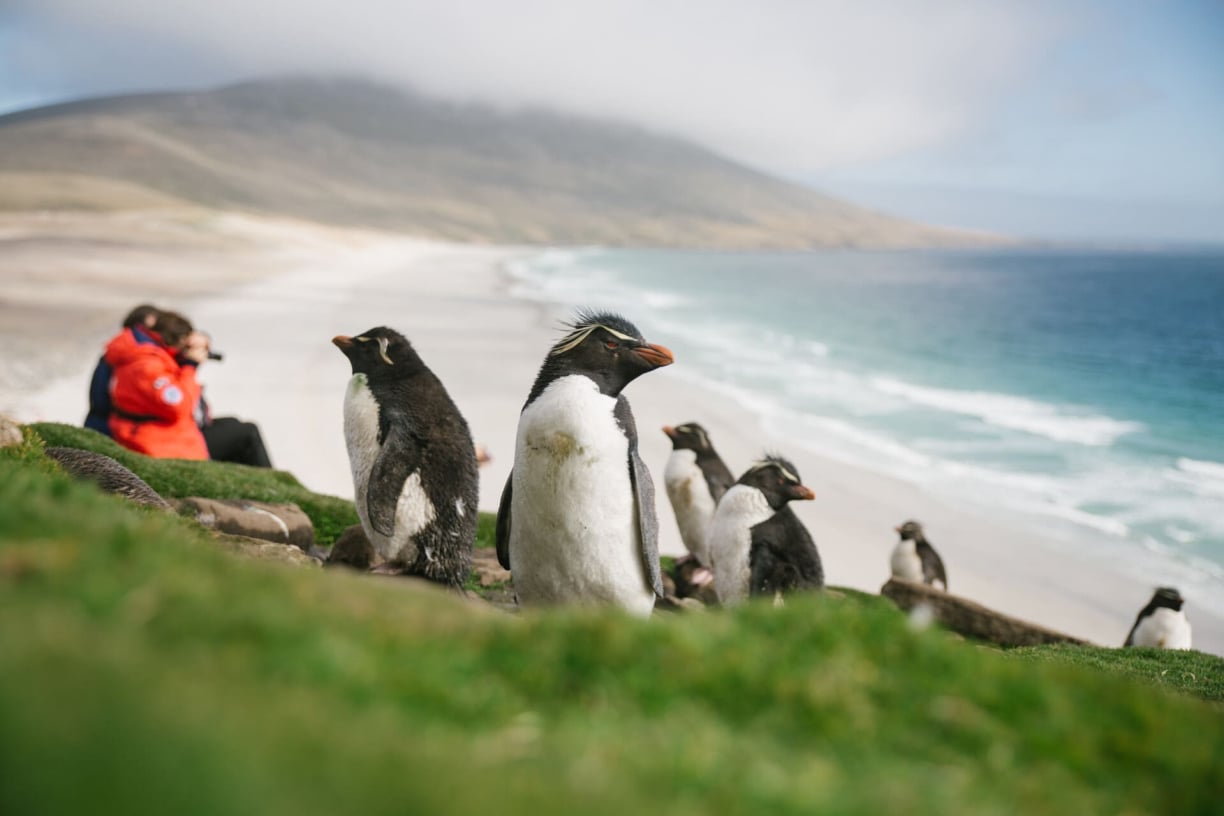
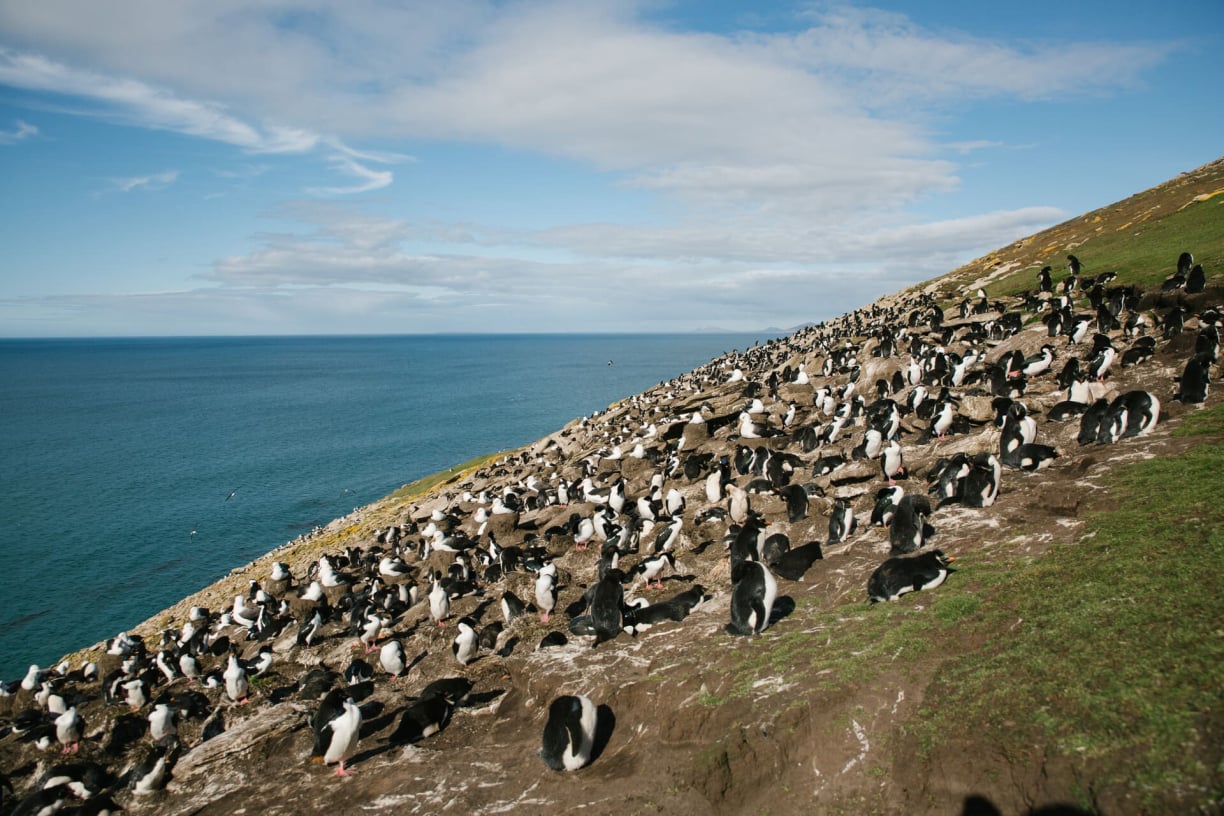
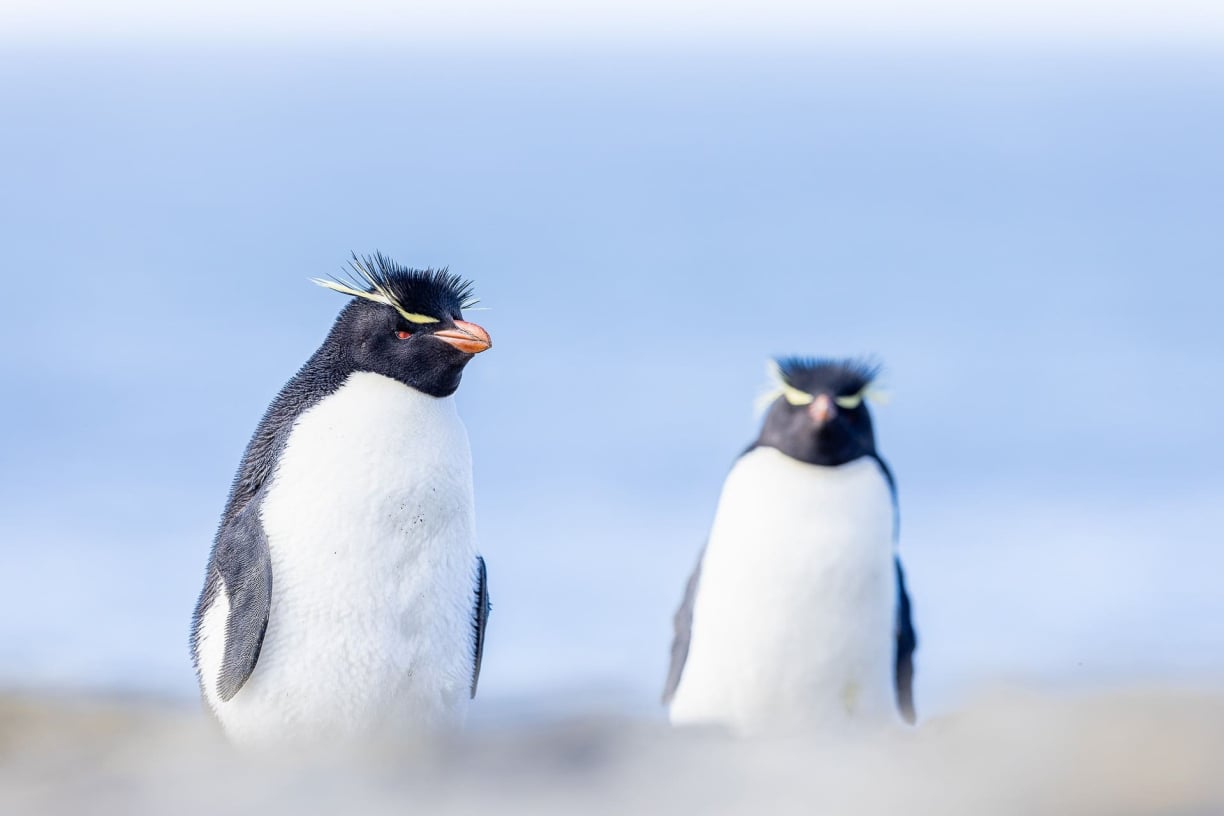
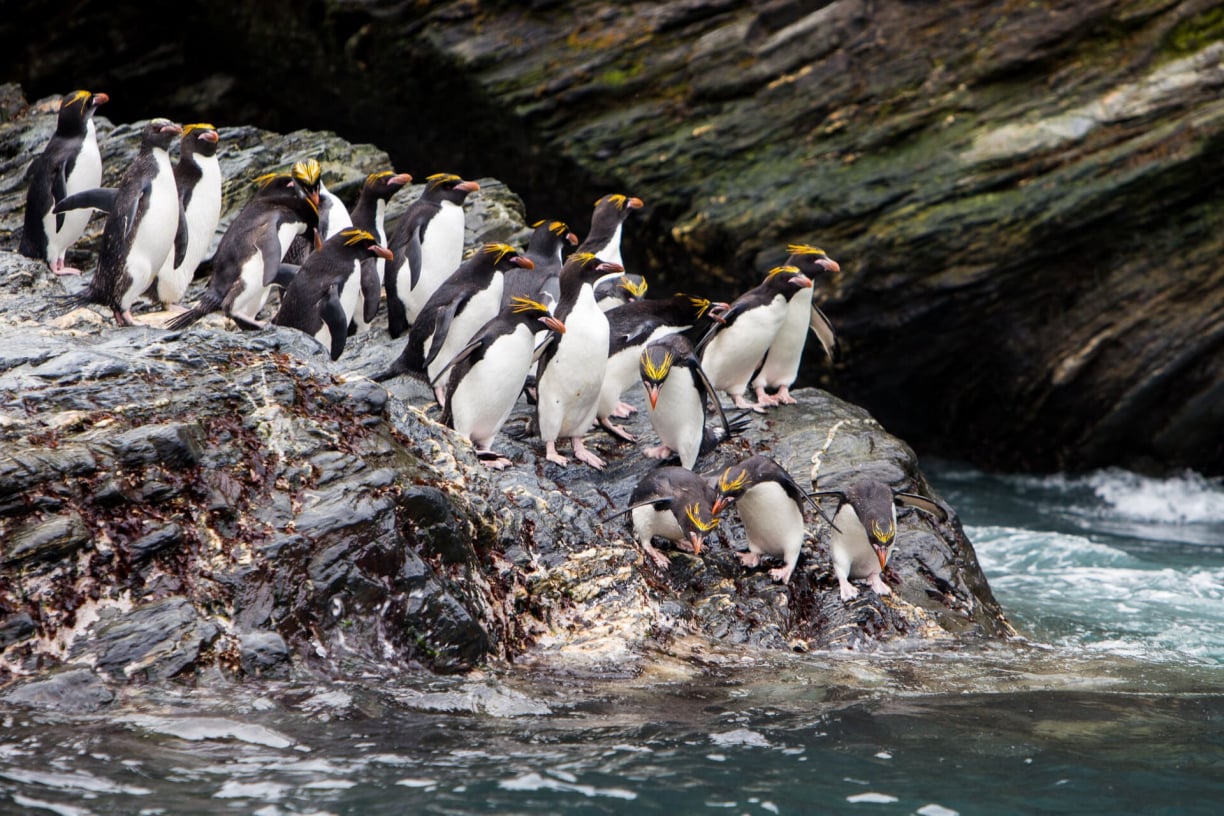
Rockhopper penguins (Eudyptes chrysocome) sport one of the punkiest hairstyles in the penguin world! These iconic subantarctic island dwellers are famous for their unique hopping behavior along rocky shores, and up and down steep cliffs. Measuring around 50 cm (20 inches) in height and weighing approximately 2.5 kg (5.5 lb), southern rockhoppers are the smallest of all crested penguin species on the planet. You can find these red-eyed, orange-beaked, yellow-crested penguins in the Falkland Islands, as well as around islands in the Indian and South Atlantic Oceans. One of the best ways to observe southern rockhoppers in the wild is on an expedition cruise to the Falkland Islands. From October to February, you can see their noisy colonies gather on the archipelago’s rocky slopes. An estimated 320,000 breeding pairs (36 percent of the global southern rockhopper population) inhabit the Falklands, spread across 35 colonies, including Steeple Jason, Beauchene Island, and Grand Jason.
Quick Facts:
Name: Rockhopper penguin (Eudyptes chrysocome)
Name origin: Named for its distinctive hopping locomotion rather than waddling or belly-sliding like other penguins
Weight/size: 50 cm (20 inches) and ca. 2.5 kg (5.5 lb)
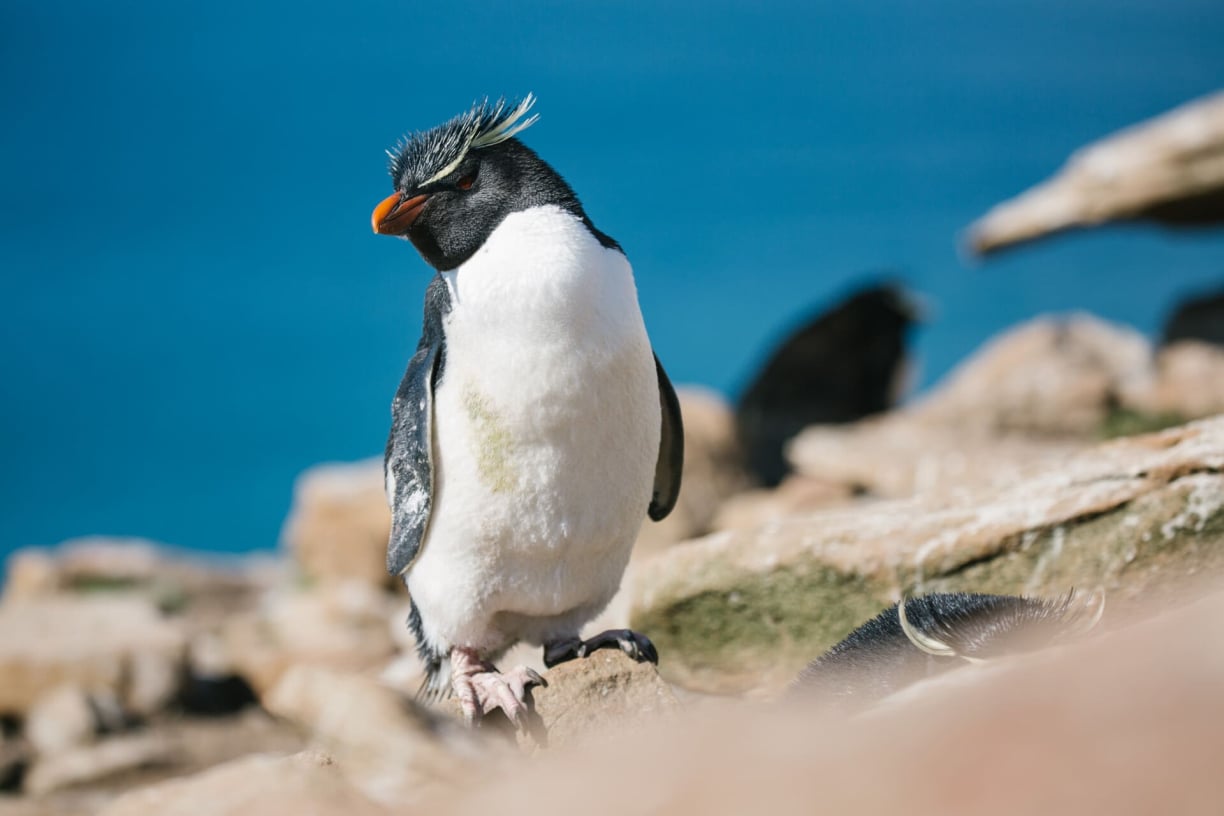
Appearance: Black-and-white plumage with distinctive yellow eyebrow crests, red eyes, and an orange beak
Habitat: Rocky shores on the subantarctic islands, South Atlantic and Indian Oceans
Diet: Krill, squid, and small fish
Lifespan: Around 10 to 15 years in the wild
International Union for Conservation of Nature (IUCN) status: Vulnerable
What Makes Rockhopper Penguins Unique: Three Distinctive Adaptations
It takes only a few minutes of watching a southern rockhopper penguin in the wild to realize that these birds are not quite what you’d expect from a penguin. Their unusual movements and feisty attitude perfectly match their eye-catching looks, and make rockhoppers stand out in the penguin world.
Flashy looks
The rockhopper’s golden feathers above their eyes (also known as superciliary crest or supercilium) play a key role during courtship and social interactions. By shaking their heads to flaunt their long, yellow crests, and calling loudly, mates signalize that they are mature, healthy, and ready to go. These bright crests also help individuals recognize members of their own species within dense, mixed penguin habitats and underwater during hunting.
Fierce and furious
They may be small, but don’t let their size fool you. Rockhopper penguins are highly territorial and aggressive, especially during breeding season. Males defend their nesting sites with loud calls, flipper-slapping, and beak attacks. As they live in tightly packed colonies where suitable nesting space is scarce, this fiery temperament provides a clear competitive advantage and ensures chick survival.
Built to bounce
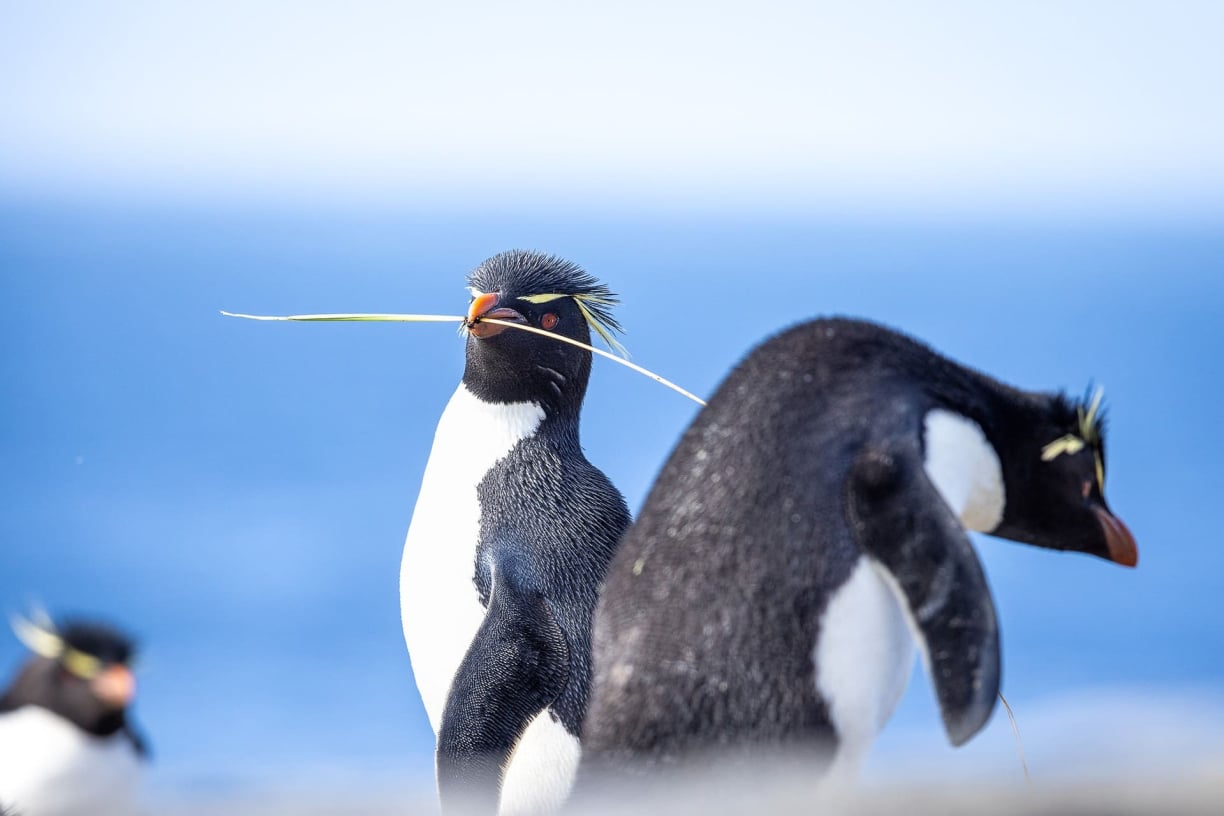
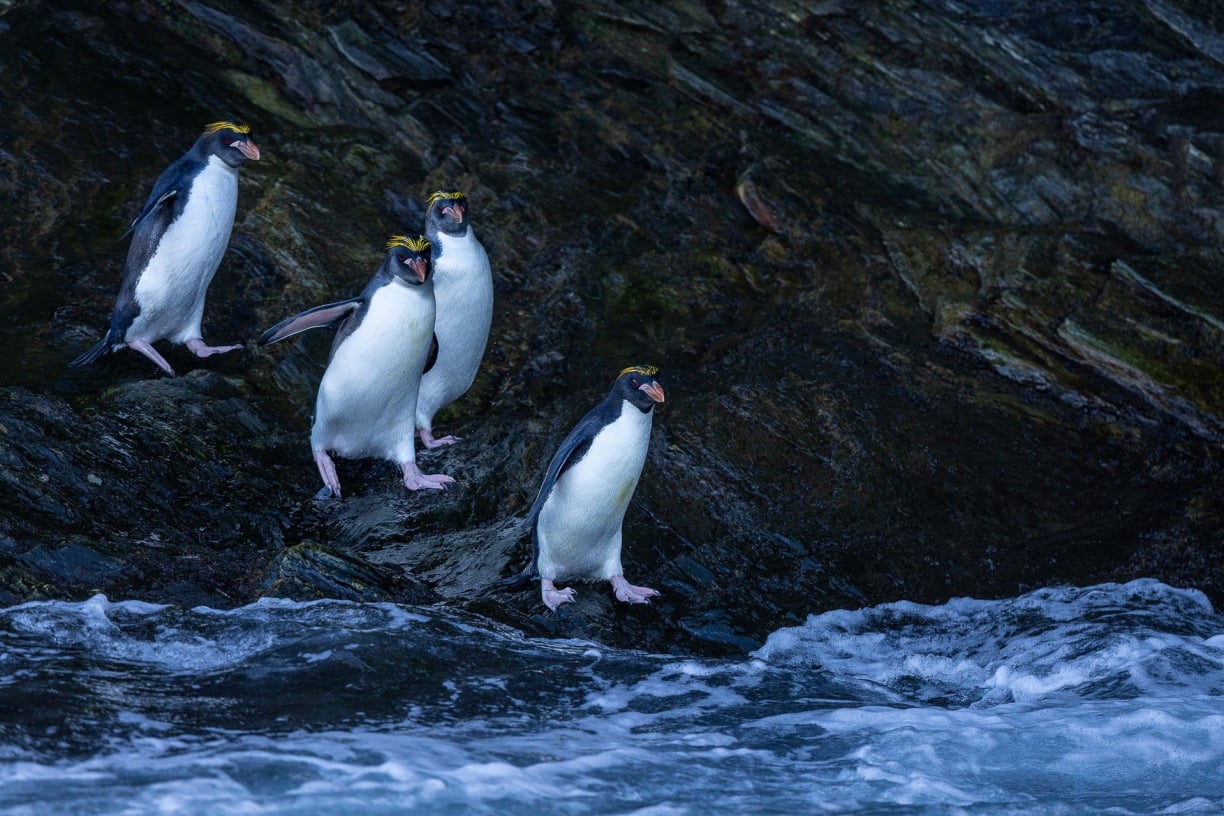
Yes, they really bounce up and down steep cliffs! Instead of sliding across snow and ice like Antarctic species, rockhoppers spring upright across rocky faces, using their strong legs and sharp claws to climb terrain that would stop most other penguins in their tracks. This distinct behavior is a perfect adaptation to the rocky terrain of the subantarctic islands.
Rockhopper vs. other crested penguins
|
Species |
Rockhopper |
Macaroni |
Royal |
Erect-crested |
|
Size |
50 cm (20 in) |
70 cm (27 in) |
70 cm (27 in) |
55-65 cm (22-26 in) |
|
Weight |
2.5 kg (5.5 lb) |
5.5 kg (12 lb) |
6 kg (13 lb) |
3 to 5 kg (7-11 lb) |
|
Crest style |
Golden/yellow |
Orange/yellow |
Pale yellow/white |
Upright spiky |
|
Habitat |
Steep rocky shores |
Mixed rocky & coastal |
Beaches & slopes |
Remote rocky islands |
|
Aggression level |
High |
Medium |
Low to medium |
Medium |
|
IUCN Red List |
Vulnerable |
Least concern |
Near threatened |
Endangered |
The Hop: Adaptive Locomotion for Rocky Terrain
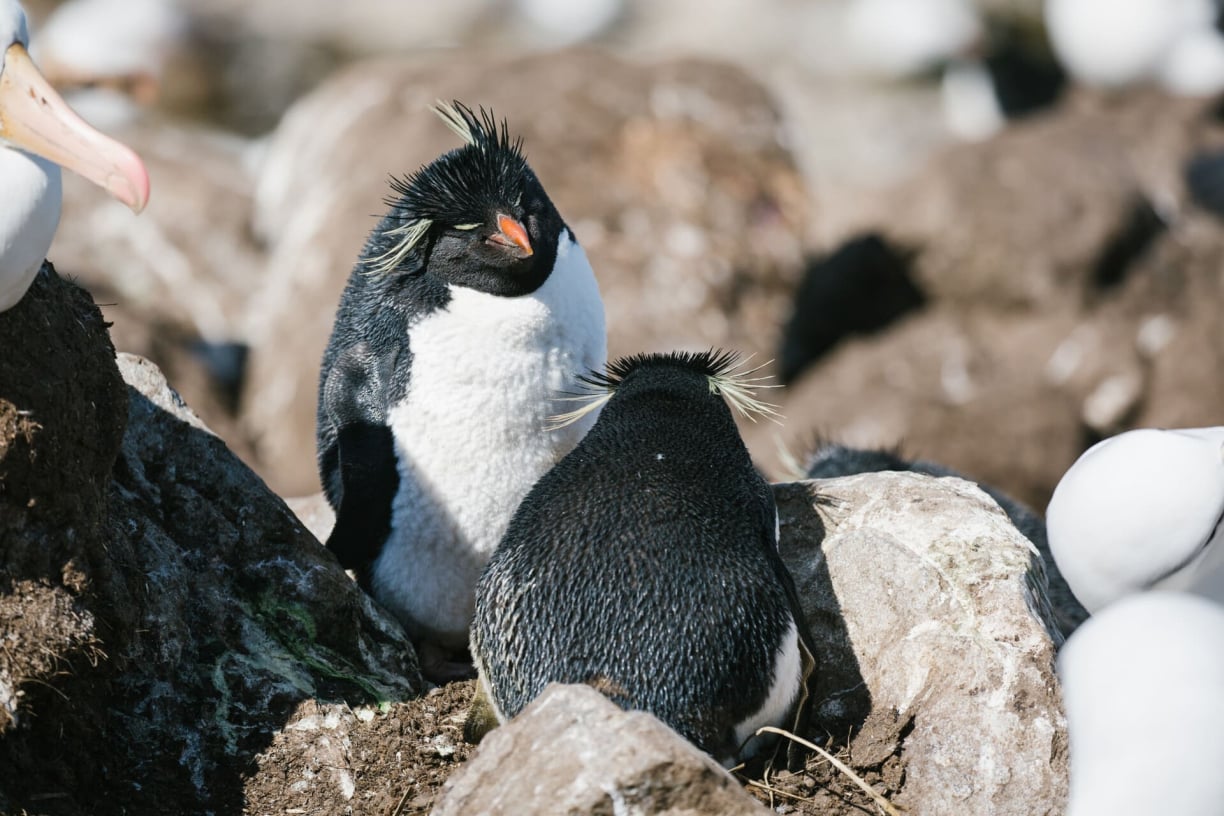
Ever wondered why rockhopper penguins don’t simply waddle or slide across the ice like their Antarctic cousins? Unlike Adélie and emperor penguins, which are true Antarctic penguins, rockhoppers inhabit the subantarctic islands and surrounding waters. To match this environment, rockhoppers evolved to thrive on rugged, rocky, largely snow-free shorelines. Their nesting grounds are typically found on rocky slopes and tussock-grassed areas close to the coast. In this terrain, hopping is the best way to get around. This evolutionarily ingenious hopping motion allows them to occupy breeding sites that are inaccessible to many other penguin species, reducing competition for nesting space. On land, rockhopper penguins use both feet together to jump across boulders, ledges, and crevices, and are remarkably adept at climbing steep, wet, and slippery slopes. So when you spot them, don’t just think of them as clumsy or funny, but as masters of environmental adaptation!
Fun Fact: Did you know that rockhopper penguins are the only species to jump feet first into the water? Most other penguins dive in headfirst instead.
Scientific Classification: The "Good Diver" with Golden Hair
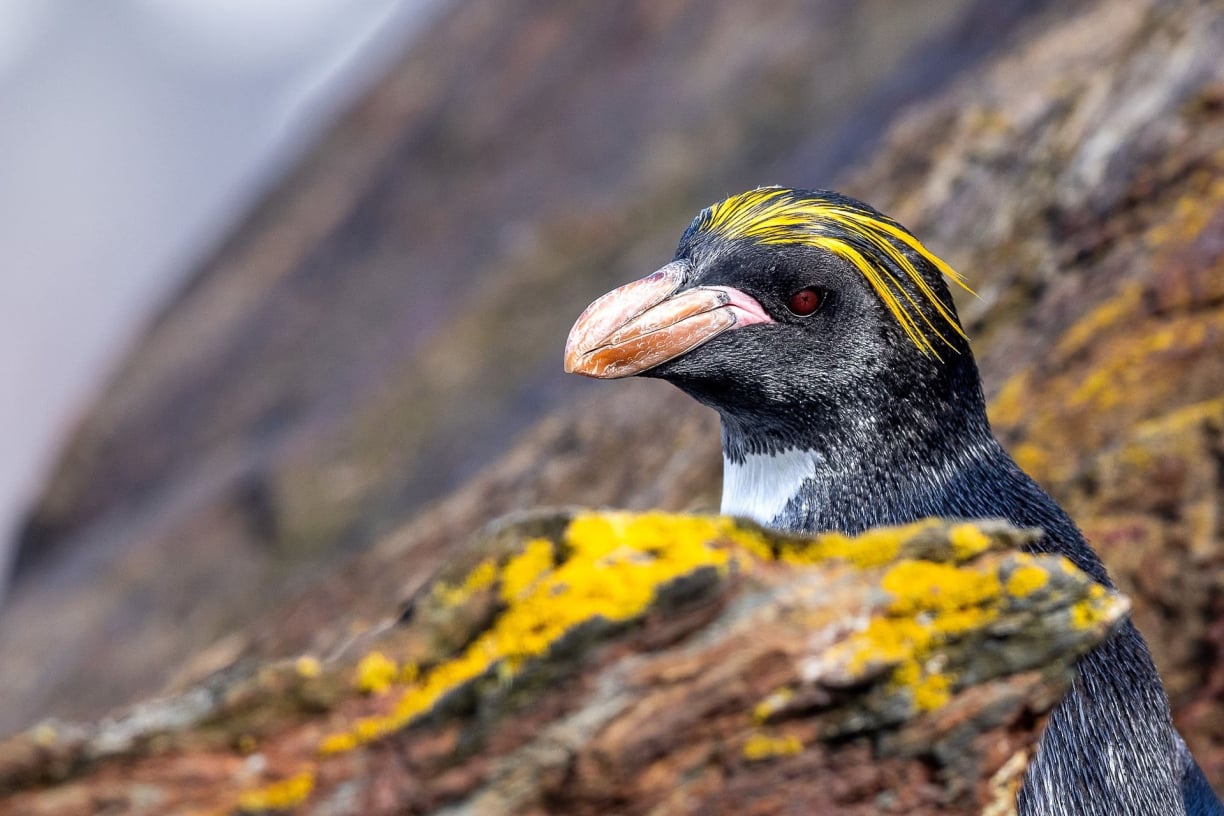
Its scientific name, Eudyptes chrysocome, poetically describes the rockhopper’s incredible abilities and iconic appearance. Eudyptes comes from the Greek word for “good” (eu) and “diver” (dyptes), emphasizing the penguin’s strong underwater abilities, with dives that can exceed 100 meters. The second part of its name, chrysocome, combines the Greek word for golden (chrysos) and hair (kome), an homage to the rockhopper’s distinctive yellow crest sweeping back from each eye. There are three subspecies of rockhopper penguins with varying conservation statuses:
- Southern rockhopper penguins: classified as vulnerable, breeding in subantarctic islands such as the Falklands
- Northern rockhopper penguins: classified as endangered, breeding in Tristan da Cunha, Amsterdam, and St. Paul Islands
- Eastern rockhopper penguins: classified as vulnerable, breeding on the subantarctic Indian Ocean Islands
Surviving Subantarctic Extremes: Physiological Mastery
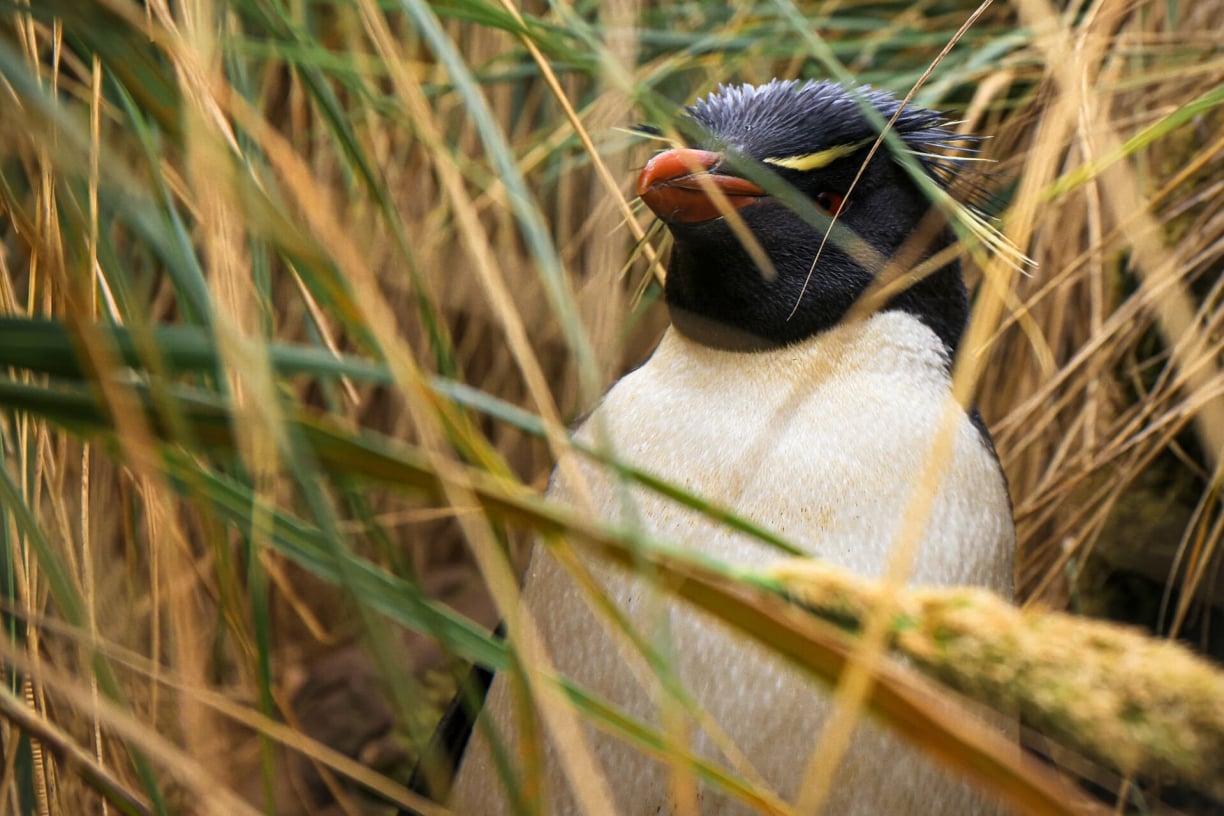
As beautiful as the subantarctic islands are, cold seas and biting winds make it a harsh place for wildlife to survive. Antarctic and subantarctic penguins are naturally built to handle these extremes, having evolved a range of adaptations to this hostile environment. If you’re an avid traveler in the polar regions, you know that layering clothes is the key to staying warm. To keep a stable core body temperature around 38°C (100°F) both in and out of the water, rockhoppers, like all penguins, rely on a multi-layer insulation system.
Subcutaneous fat (blubber)
This layer lies beneath the skin and acts as both a thermal mass and an energy reserve. It not only helps maintain body heat, but also provides buoyancy during dives.
Downy feathers
Afterfeathers are the small, downy structures attached to the base of the main contour feathers, which trap insulating air close to the body, even when the outer plumage is compressed underwater. These fluffy feathers reduce heat loss and stabilize body temperature. Penguins also possess plumules, which attach directly to the skin, and filoplumes, sensory feathers that help maintain feather alignment and waterproofing during preening.
Waterproof outer plumage
Overlapping, tightly packed feathers create a waterproof barrier that protects penguins from the icy waters. These feathers are coated with natural oils spread during preening. Feathers of rockhoppers usually average about 2.9 centimeters (1.1 inches) in length. And while many studies and sources cite penguin feather densities of around 15 per square centimeter (around 100 per square inch), a 2015 study on emperor penguins found significantly lower densities. The authors of the study, Dr. Cassondra Williams and her team, found that their sample birds featured only around nine feathers per square centimeter, and note that insulation in penguins relies on feather structure and underlying down, not feather count alone. While densities likely vary across populations, the findings may be applicable to other penguin species. “They all face the same harsh Antarctic winters and dive into freezing waters, so the insulation requirements are the same.”
Hunting and Feeding: Diving to 100 Meters
On land, a southern rockhopper penguin may look clumsy, but once you get to see one heading out to sea, you’ll see the full potential of this small, spiky –haired bird. In the water, rockhoppers are exceptional divers and skilled foragers, reaching swim speeds of around seven kilometers per hour (4 miles per hour). While rockhoppers usually forage at depths of around 10 to 25 meters (30 to 82 feet), depths of up to 100 meters (330 feet) aren’t a problem for this species. Southern rockhoppers keep their diets flexible, depending on their location and available prey. With krill as their main food source, they will also supplement their diets with small fish, squid, and even small crustaceans.
Hunting in groups usually near the shores, they can also travel up to 160 kilometers (100 miles) from their colonies in search of food. Penguins International reports that studies show GPS tracking data of rockhoppers supporting both near-shore foraging and up to three-week-long trips to far distances, adapting to food availability based on environmental conditions.
Rockhopper penguins are also able to adapt their vision to see perfectly above and below water. A 1984 study shows that their flattened corneas help reduce vision distortion underwater, allowing for clear and unblurred vision in and out of the water.
Penguin Divers/Body Size Comparison
|
Species |
Emperor Penguin |
King Penguin |
Gentoo Penguin |
Rockhopper Penguin |
Little Penguin |
|
Maximum Dive Depth |
565 m |
343 m |
200 m |
100 m |
60 m |
|
Size |
110-130 cm |
85-95 cm |
70-95 cm |
50-55 cm |
30-35 cm |
Breeding Biology: Lifetime Partnerships and Cooperative Parenting
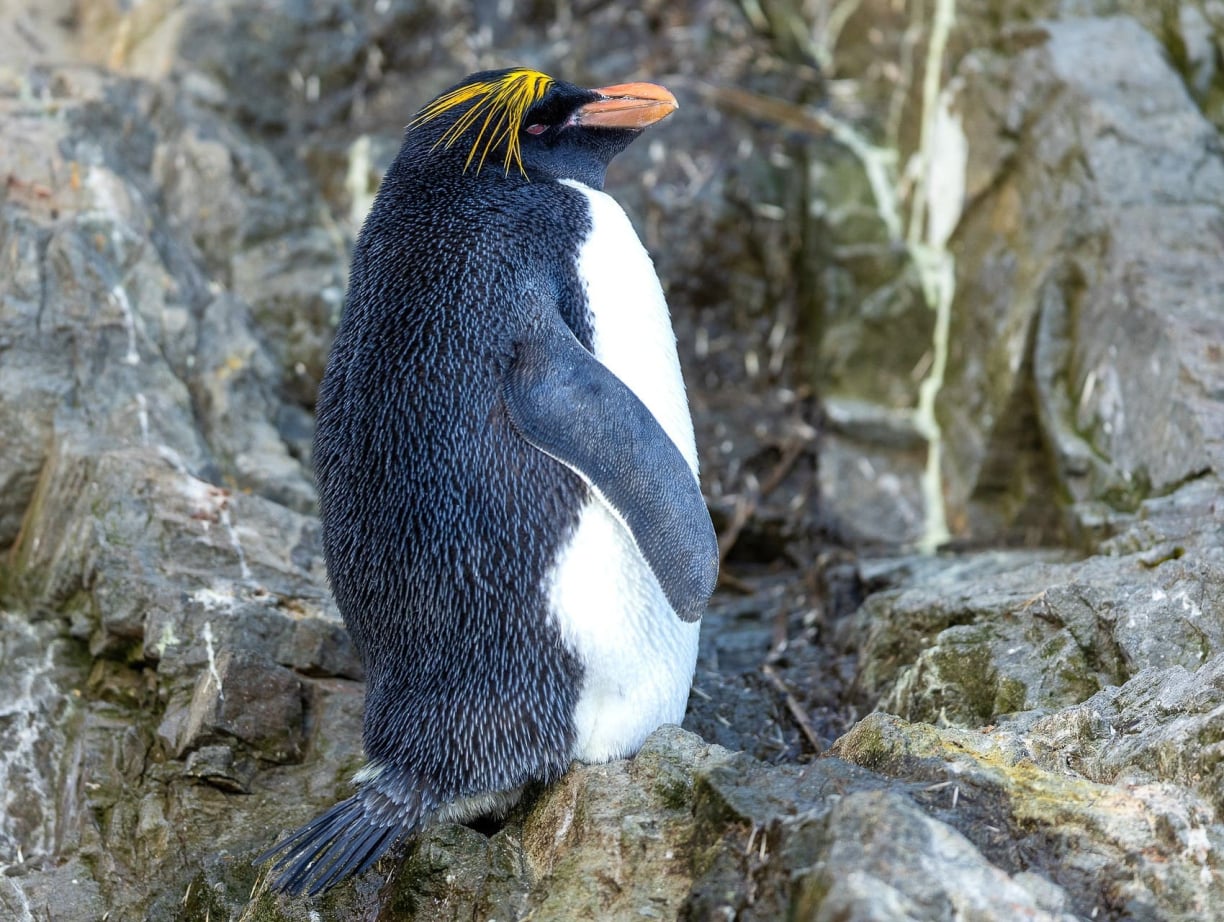
Southern rockhopper penguin colonies are loud and chaotic places, but with strong family values. Like most penguins, rockhoppers are generally socially monogamous, often pairing with the same mate across multiple breeding seasons. Males and females spend most of the year apart, foraging in the open ocean before returning to their breeding grounds. Upon arrival, mates produce distinctive braying calls, allowing pairs to find each other at the bustling breeding sites.
Males arrive around September to October, scrambling up rocky slopes to claim the best nesting spots and defending them with fierce flipper-slapping, aggressive calls, and bill-jabbing. Nests are shallow scrapes in the ground, sometimes lined with pebbles or tussock grass. Colonies are extremely dense and crowded, often leading to territorial squabbles. Once the prime real estate is secured, females return, usually a few weeks later. After months apart, pairs rekindle their bond with synchronized head-bowing, head-shaking, braying duets, and mutual preening. Rockhoppers typically lay two eggs, with the first one smaller and rarely surviving. Rockhoppers share the incubation duties over 30 days, alternating so that one can forage while the other keeps the eggs warm.
Chick Development: From Hatching to Fledging
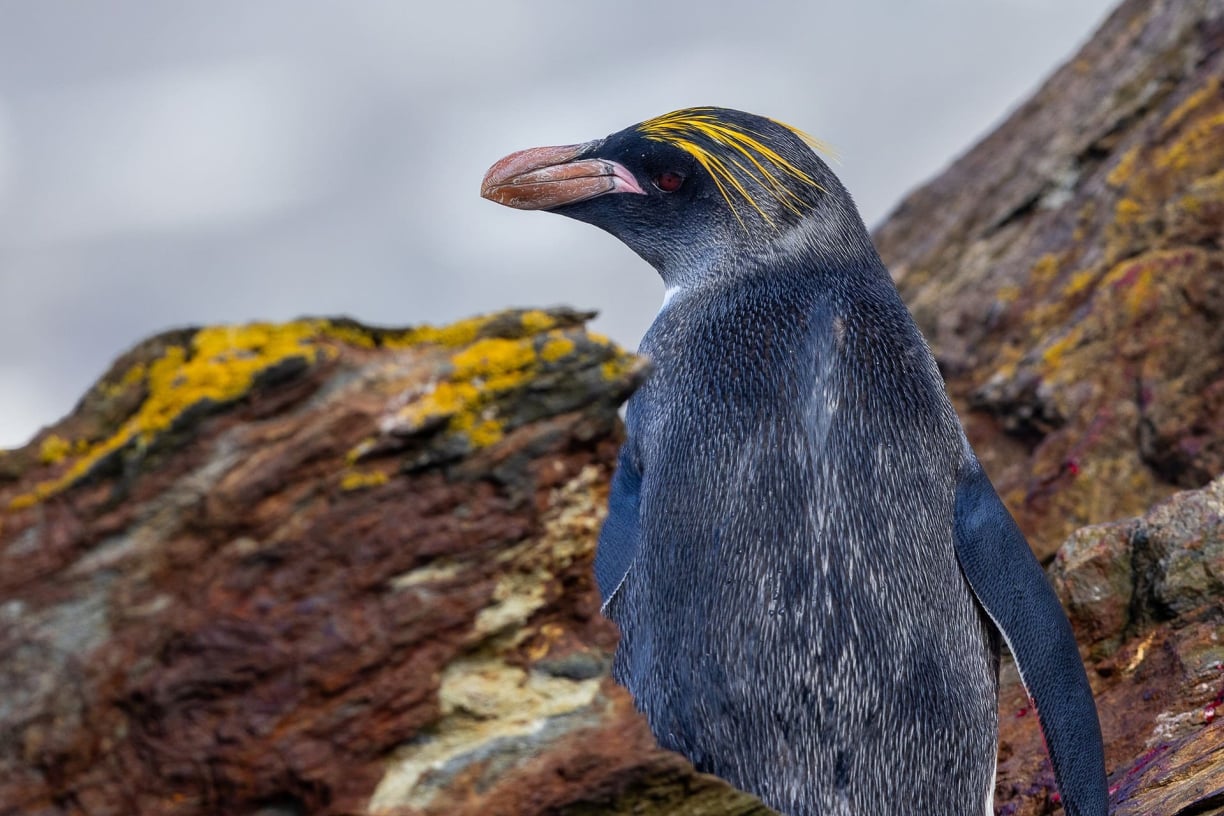
Chicks hatch using a hardened bump on their beaks (also known as “egg tooth”) to break through the shells. Once the chick has hatched, usually around November or December, parents continue their shared care, rotating between guarding the chick and foraging at sea, feeding their chick via regurgitation. Unguarded chicks are vulnerable to predators such as brown skuas, which patrol colonies looking for unattended offspring. When a skua approaches, penguin parents aggressively slap their flippers and use loud vocal warnings to drive intruders away.
At around a month of age (around December to February), chicks join a crèche (the equivalent of a penguin day-care center), while both parents forage. During this time, chicks learn their parents’ unique braying calls to reunite with them after their foraging sprees. Chicks grow rapidly, increasing their weight roughly tenfold, and gradually develop waterproof juvenile plumage, preparing for life at sea.
By around 70 days, chicks fledge and molt into fully waterproof plumage, ready for independent swimming and foraging. According to a 2014 study by Dr. Nina Denhard et al., first-year survival rates of young rockhoppers are around 81 percent, rising to 98 percent for juveniles aged two to four years. Rockhoppers typically reach sexual maturity at around four years of age.
Conservation Status: Threats Driving 30% Population Decline
Currently, southern and eastern rockhopper penguins are listed as vulnerable according to the IUCN Red List, while northern rockhoppers are classified as endangered. According to Bird Life International, southern rockhopper penguins were abundant in the first half of the 20th century, but the population declined by approximately 30 percent between the 1980s and 1990s. Changes in water temperature, marine pollution, and food availability all affect rockhopper populations. Rising sea-surface temperatures can alter krill distribution, one of their primary food sources, forcing feeding parents to travel farther from breeding colonies and spend longer periods foraging at sea.
Currently there are an estimated 1.2 million breeding pairs worldwide, with approximately 320,000 pairs in the Falkland Islands, representing about 36 percent of the global southern rockhopper population. According to Falklands Conservation, around one million birds inhabited the Falklands archipelago in the 1930s. However, following a massive starvation event in 1986 and a harmful algae bloom in 2002-03 that killed many adults, population numbers dropped significantly. Despite signs of recovery, rockhoppers remain highly vulnerable to events like these.
Prime Threats to Southern Rockhopper Populations:
- Marine pollution: Oil spills coat the birds’ feathers, destroying insulation and thermoregulation. Affected penguins often die from drowning or hypothermia.
- Commercial fishing: Industrial fishing competes directly for rockhoppers’ prey base and causes mortality through bycatch.
- Climate change: Warming oceans affect krill abundance and distribution, forcing rockhoppers to travel farther to forage. As a result, chicks may remain unattended for longer periods and become vulnerable to predators such as brown skuas, which prey on unguarded chicks in the colonies. At sea, adults undertaking extended foraging trips fall prey to leopard seals, orcas, and, occasionally, large sharks.
- Human disturbance: Unmanaged tourism can cause nest abandonment, chick trampling, and stress-related breeding failure. That’s why the work of the International Association of Antarctic Tour Operators (IAATO) on issuing guidelines about visiting these delicate ecosystems is crucial! Reputable polar tour operators follow these protocols strictly to allow travelers to experience wildlife while minimizing disturbance.
Where to Encounter Rockhopper Penguins: Subantarctic Expedition Destinations
You can generally find rockhopper penguins in places such as the Falkland Islands (British Overseas Territory), Prince Edward Islands (South Africa), Crozet and Kerguelen Islands (French Southern Territories), Heard, McDonald and Macquarie Islands (Australia), and Campbell and Auckland Islands (New Zealand). Rockhoppers prefer rugged coastlines and steep, rocky cliffs, where they typically build their nests between tussock grasses on windswept islands.
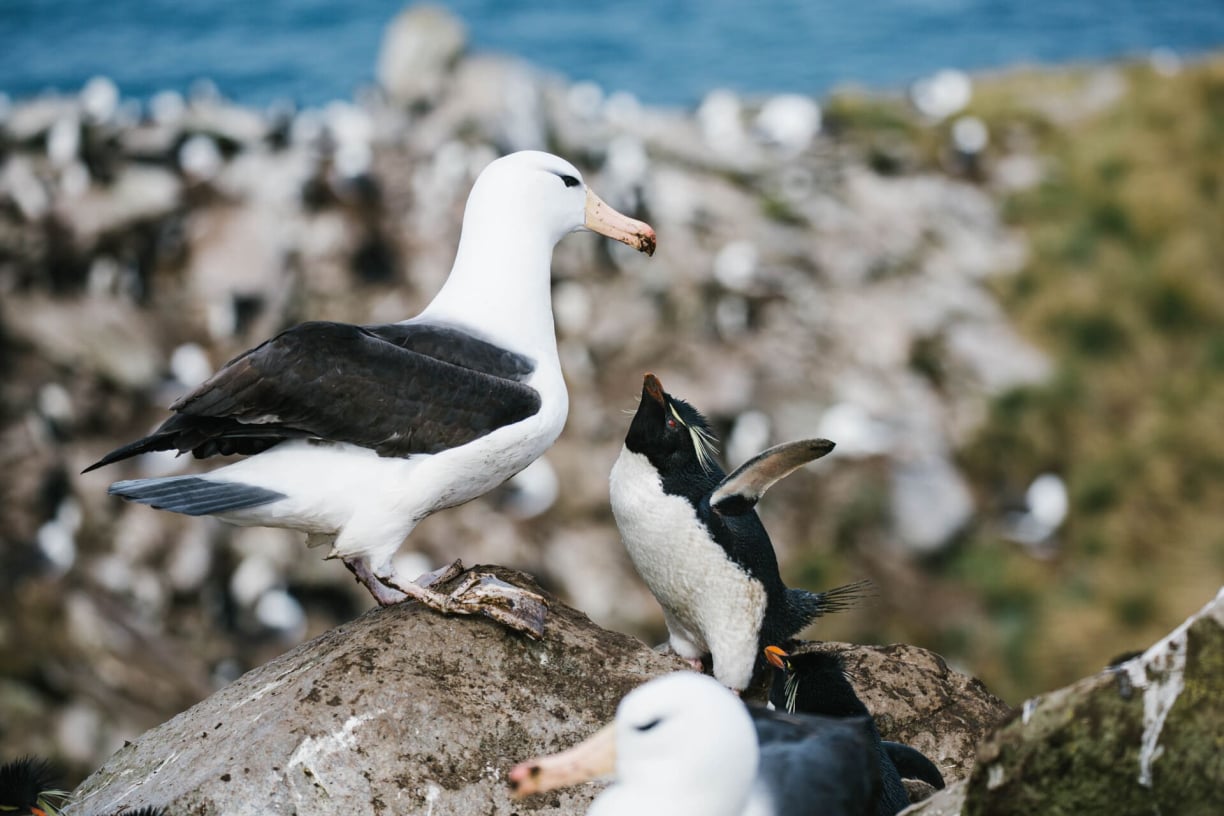
It’s easier than you think to observe rockhopper penguins in the wild, especially when travelling aboard an expedition-style cruise to the subantarctic islands. One of the most accessible destinations is the Falkland Islands, located approximately 480 kilometers (300 miles) east of Argentina. You can reach the Falkland Islands by cruise ship from Ushuaia or by scheduled flights to the capital, Stanley. Within the Falklands, the best way to get close to the colonies is by small expedition cruise ship. Key landing sites include Saunders Islands, where rockhoppers nest alongside black-browed albatrosses. Other easily accessible colonies are on Bleaker Island, Pebble Island, and New Island, featuring dramatic cliff-top nesting sites. Some colonies are accessible via shore landings and short walks, while more remote colonies along rocky coastlines are best observed during Zodiac cruises, which allow close-up but non-intrusive wildlife watching.
Get inspired! Check out our next departures with a stop on the Falklands. Join an authentic expedition cruise and experience these charismatic cliff-hoppers in their natural habitat.
FAQs
What does "Eudyptes chrysocome" mean?
Translated, it means “good diver with golden hair.” Their genus name, Eudyptes, comes from the Greek words “eu” (good) and “dyptes” (diver). The species name chrysocome derives from the words “chryso” (golden) and “come” (hair).
How do rockhopper penguins communicate with each other?
Rockhoppers use vocal communication, especially loud braying calls, which they produce with the head thrown back. Each individual has a unique call, allowing mates, parents, and chicks to recognize each other within vast colonies. Additionally, they use visual signals, such as bowing, head shaking, mutual preening, and aggressive flipper slapping, to reinforce pair bonds, warn rivals or predators, and defend their nesting sites.
Why do rockhopper penguins hop instead of sliding like other penguins?
Rockhoppers, true to their name, have adapted to their unique environment on the subantarctic islands. In contrast to the snowy and icy shores of the Antarctic Peninsula, subantarctic coastlines feature rocky slopes and steep cliffs. Rockhoppers are able to climb surfaces where sliding would be impossible. This distinctive locomotion not only inspired their name but also allows them to master this harsh terrain and escape land predators.
How long do rockhopper penguins live, and how often do they breed?
Rockhopper penguins live around 10 to 15 years in the wild. They reach sexual maturity at around four to five years and typically breed once a year, returning to the same nesting sites. The breeding cycle lasts about five months and starts during the austral spring, around September to October. After 30 days of incubation, penguin parents share chick-rearing duties for another 30 days, after which young rockhoppers form a penguin chick crèche. Fledging occurs at around 70 days.
What conservation efforts are currently being undertaken to protect rockhopper penguins?
Conservation programs such as Falklands Conservation conduct long-term monitoring, protection measures, and population counts, and help limit human activity at colonies. The IUCN Red List conducts international research and funding, while organizations such as the IAATO issue tourism guidelines to minimize disturbance at breeding sites.
Does penguin tourism harm rockhopper populations?
Sustainable tourism following IAATO guidelines causes minimal impact on penguin colonies. These include minimum 5-meter distances, no pursuits of the animals, small group sizes, and designated landing sites. Responsible tourism also raises awareness and generates funding for conservation.
How deep can rockhopper penguins dive, and why does it matter?
Rockhoppers can dive up to 100 meters (328 feet) and stay submerged for several minutes to reach krill swarms and small fish concentrated at mid-water depths. They reach swim speeds of up to seven km/h (four mph). Their multi-layer insulation system keeps their core temperatures stable in the cold waters during multi-day foraging trips.
What's the difference between Subantarctic and Antarctic penguins?
Subantarctic penguins such as rockhoppers live on ice-free, rocky islands in latitudes between 46° and 55° south. These penguins have adapted perfectly to this environment, developing a hopping locomotion to master the terrain on the islands. Temperatures are generally milder than on the Antarctic continent. True Antarctic penguins, such as emperor and Adélie penguins, thrive around the Antarctic Peninsula and are adapted to snow, ice, and harsher conditions.
Why are rockhopper penguins so aggressive compared to other penguins?
Rockhopper penguins are known as highly aggressive, as they compete for limited nesting sites on the rocky coastlines. Males typically engage in flipper-slapping combats and use bills to jab and fend off competitors or intruders. Their aggression level exceeds that of most other penguin species and provides a competitive advantage in the large colonies.
How do parent rockhopper penguins recognize their chicks in massive colonies?
Colonies usually feature thousands of birds, and rockhopper parents rely on unique vocal calls to locate their chicks. Each parent and chick learn to recognize one another’s distinctive braying calls. When parents return from foraging at sea, adults call repeatedly until the chick responds with its own unique call. This ensures accurate recognition and feeding by regurgitation within the bustling colonies.