Total Solar Eclipse 2026: A Complete Guide and the Best Viewing Locations
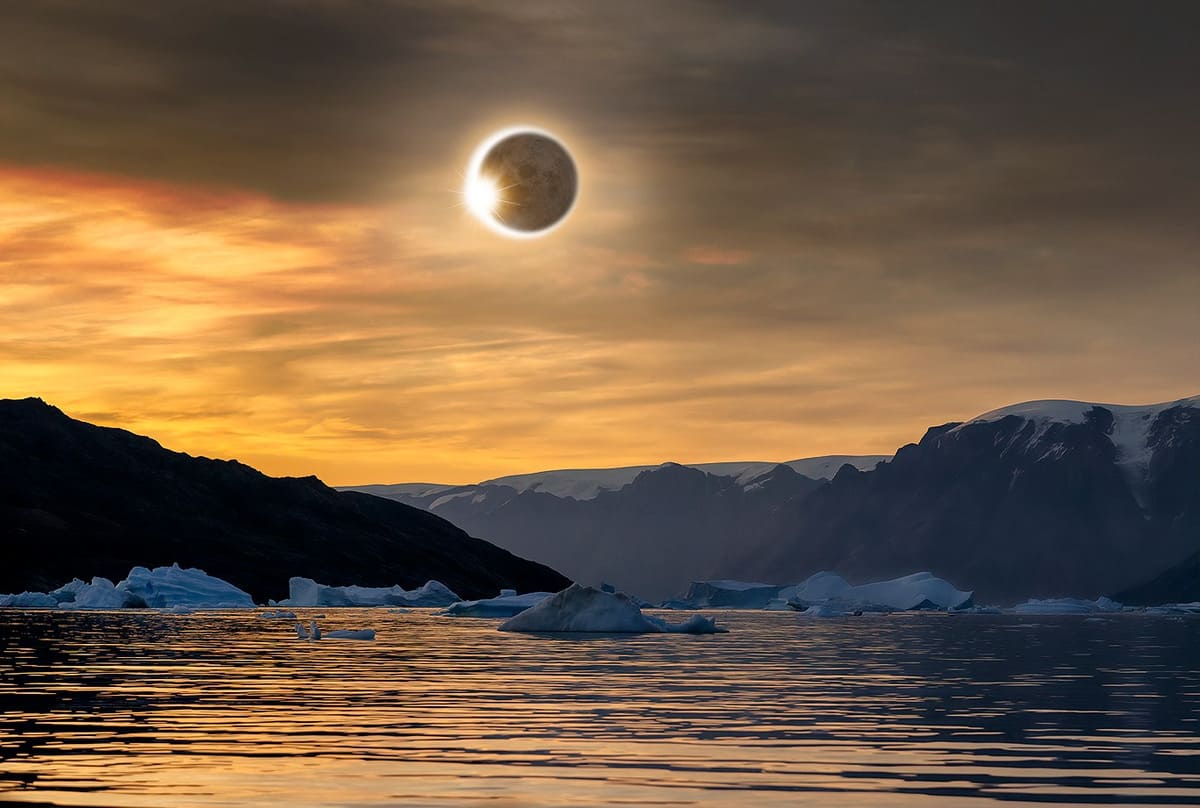
Put a total solar eclipse on your bucket list and mark your calendars for August 12, 2026! After 27 years, Europe will finally see a total solar eclipse and it will traverse over the most incredible spots of the High Arctic. That’s great news for avid polar travelers, as the eclipse will occur above magnificent landscapes and scenery, creating the perfect backdrop for eclipse fans and pristine nature enthusiasts alike. With this once-in-a-lifetime opportunity, we at Poseidon Expeditions created the ultimate eclipse cruise to celebrate the celestial phenomenon. Check out our guide for the 2026 eclipse and find out why we are so excited about our epic eclipse cruise to East Greenland!
Why is the 2026 Total Solar Eclipse Special?
It’s a rare sight and you’re lucky to witness a total solar eclipse once in your lifetime! The total eclipse on August 12, 2026 will be the first visible over Europe in 27 years. As avid polar explorers, we at Poseidon Expeditions are especially excited that the eclipse will be visible from the most beautiful spots in the Arctic region. With the sun visible at 26 degrees above the horizon, the viewing conditions in most spots are unique on this day. And there’s more: the night following the eclipse, the Perseid meteor shower (one of the most plentiful showers with up to 60 meteors per hour) will be active, giving you the opportunity to witness two incredibly rare celestial events on the same day.
Path of Totality
The 2026 total solar eclipse will traverse the globe in 96 minutes and its path of totality will stretch over 293km (182 miles). It will start on the Taymyr Peninsula in Russia, travel over the Arctic Ocean, passing 100km (62 miles) south of the North Pole, before continuing to Greenland’s eastern coast, Iceland (the Snaefellsnes Peninsula, Reykjanes Peninsula and Westfjords), the Iberian Peninsula and the Balearic Islands.

Viewing Locations and Timing
The 2026 eclipse will give intrepid travelers amazing options to see a total eclipse in the most beautiful places in the world. We’ve collected some of the best spots to get you inspired to start planning your 2026 eclipse trip:
|
Location |
Time |
Duration of totality |
Height of sun |
|
Svalbard (Longyearbyen) |
7:24 pm (GTM+2) |
1 hour 51 minutes |
13 degrees above, west |
|
Greenland (Scoresby Sund) |
4:35 pm (CGST) |
1 minute 46 seconds |
24 degrees above, west |
|
Iceland (Reykjavik) |
5:48 pm (GMT) |
1 minute 1 second |
25 degrees above, west |
|
Iceland
(Snaefellsjökull National Park/ |
5:45 pm (GMT) |
2 minutes 10 seconds |
25 degrees above, west |
|
Spain (A Coruña) |
8:27 pm (CEST) |
1 minute 15 seconds |
12 degrees above, west-northwest |
|
Ballearic Islands (Mallorca) |
8:31 (CEST) |
1 minute 36 seconds |
2.7 degrees above, west-northwest |
What Makes Viewing the Eclipse from Svalbard, Greenland and Iceland Special?
It’s a rare event when a total solar eclipse traverses the globe and finding the perfect viewing location is crucial to getting the most out of it. Eclipses attract crowds wanting to see the eclipsed sun and witness that special moment of totality (such as the 2017 and 2024 eclipses over North America). The 2026 total solar eclipse is special because it will be visible in some of the most remote and incredible places in the Arctic such as Greenland, Iceland and Svalbard. The eclipse path covers a scenic route through stunning landscapes with fjords, icebergs and mountains, which is an absolute highlight for photographers. If seeing a total solar eclipse is on your bucket list, this is a unique chance to make it happen!

Detailed Viewing Spots in Svalbard, Greenland and Iceland
Svalbard
If you want to maximize the time of totality, head to Longyearbyen in August 2026! With 1 hour and 51 minutes of near totality (the moon will cover 90.7 percent of the sun), you’ll have plenty of time to enjoy the nearly full eclipse in one of the most spectacular viewing locations on Earth. Get ready at 6:28pm local time when the spectacle will begin and see the maximum phase starting at 7:24:49 exactly. With Longyearbyen being an accessible Arctic location, you may have to book the trip way in advance as it will likely attract eclipse hunters from across the globe.
Greenland
Looking for an unforgettable eclipse experience far away from crowds and populated areas? Scoresby Sund is the place for you! Dramatic landscapes, clear skies and a full eclipse with 1 minute and 46 seconds of totality will give you memories for a lifetime. The immense fjord system in Eastern Greenland is one of the most exciting locations to witness the 2026 total solar eclipse. The best way to reach this place during the total eclipse in August is an expedition cruise aboard a small ship. Check out our epic Arctic Odyssey Under a Solar Eclipse cruise and secure your spot aboard now!
Iceland
The August 12, 2026 eclipse will reach Reykjavik in Iceland at 4:47pm when the moon will start to touch the sun’s edge. You’ll enjoy 1 minute and 1 second of totality, starting at 5:48 pm local time. While weather in Iceland can be tricky, August is usually the best month for clear skies. The eclipse will be visible in other parts of the island as well, such as the Reykjanes Peninsula, the Westfjords and the Snaefellsnes Peninsula.
A prime location for viewing the eclipse outside the capital is Snaefellsjökull National Park with 2 minutes and 10 seconds of totality. The rugged nature of Iceland, with its glaciers, volcanoes, waterfalls and mesmerizing coasts, makes it the perfect backdrop to view the totally eclipsed sun. And while Iceland is remote, it is fairly easy to reach the best locations (e.g. via a 2.5 hour drive with a rental car) to enjoy this event.
Eclipse Cruise: An Unforgettable Experience
You really want to see the 2026 total solar eclipse, but crowds are not your thing? Come aboard our exclusive Arctic Odyssey Under a Solar Eclipse cruise on August 2-15, 2026 and celebrate this incredible celestial event with a small group of like-minded travelers from around the globe. You’ll board the small and comfortable ship Sea Spirit in Longyearbyen (Svalbard) and cruise to the prime viewing spots in Greenland’s waters to see the total solar eclipse on August 12. In addition to that, you’ll get to see the best of the Arctic: Svalbard, Greenland and Iceland (disembarkation).
We’ll anchor in the best location along Greenland’s eastern coast to enjoy the eclipse event to the fullest and we also have a special guest aboard to regale our travelers with interesting insights about this astronomical event.
Special Guest Paul Sutter
Paul Sutter (Astrophysicist and Research Professor of Theoretical Cosmology at Stony Brook University) will cruise aboard this epic expedition to enhance your eclipse experience. He is known for making complex scientific concepts engaging and accessible and will give expert insights, lead discussions and prepare exciting presentations for our travelers.
Don’t miss out on this epic event and book your cabin now!
Preparing for the Eclipse Cruise
Ready to join this once-in-a-lifetime expedition? Get ready with our check-list of essentials:
-
Get your documents ready: Ensure you have passports and visas ready and arrive in Longyearbyen with ample time before the cruise starts (don’t have a flight delay let you miss the cruise).
-
Bring the right clothes: We’ll be sailing the High Arctic, so layering with wind- and water-proofs, warm clothes, a hat, scarf and sturdy footwear is always recommended.
-
Don’t forget your eclipse gear: You’ll need high-quality eclipse glasses to safely witness this event! Additionally, you may want to bring binoculars with solar filters, telescopes, solar filters for your camera and other gadgets to safely observe the stages of the eclipse.
-
Get a health consultation: Consul with your healthcare provider about any necessary vaccinations, medications, etc. prior to the trip. We have a doctor aboard, but recommend bringing your essential medications with you.

The Experience of Totality on the Cruise
What should you expect when you join our total solar eclipse cruise? Imagine standing aboard the Sea Spirit, selecting the perfect spot on the wide, open deck in anticipation of this rare celestial event, eclipse glasses ready, camera ready…and then it begins:
- First contact: The moon starts to pass in front of the sun, the sky begins to darken and temperatures drop slightly.
- Partial phase: The moon further covers the sun; shadows are getting sharper and the diminishing light will create surreal scenery.
- Baily’s beads and diamond ring: Just before the moon completely covers the sun, the last specs of sunlight shine through the craters and valleys of the moon’s surface, creating the Baily’s beads phenomenon. The last flash of light poking through the moon’s rugged terrain is known as the diamond ring effect.
- Totality: Now the moon completely covers the sun, creating a beautiful corona. The sky darkens significantly and you can even see stars in the sky! Anchored in East Greenlandic waters, totality will last around 1 minute and 46 seconds.
- Third contact: Once the first sliver of the sun returns, third contact starts. You’ll again see the diamond ring effect and Baily’s beads as the moon slowly uncovers the sun.
- Partial phase: The moon further retracts from covering the sun and soon the sun is fully visible, which concludes this exceptional event!

The Science Behind an Eclipse
Total solar eclipses happen when the sun, moon and Earth line up partially or fully. This unique constellation causes the moon’s shadow to fall onto the Earth, creating a path of totality in which the sun is entirely covered. The orbits of Earth, sun and moon are elliptical and their positions relative to each other change with time. Eclipses require a specific planetary alignment and the planets only align that way during eclipse season (around two times a year, in rare cases up to five).
Depending on how they align and where you are located, you can see different types of solar eclipses:
- Total solar eclipse (the moon completely blocks the face of the sun)
- Annular solar eclipse (the moon passes between the Earth and sun, but at the farthest point from Earth, making it appear smaller and thus not covering the sun completely)
- Partial solar eclipse (the moon, sun and Earth do not align perfectly, covering only a part of the sun)
- Hybrid solar eclipse (due to the Earth’s surface being curved, occasionally eclipses can shift between annular and total as the moon’s shadow traverses across the globe)
Whether you get to see a partial or total solar eclipse depends on your location in the eclipse’s shadow. If you’re located within the umbra (central part of the moon’s shadow), you’ll see the full eclipse. If you’re in the penumbra (outer part), you’ll only witness a partial eclipse.
Historical and Cultural Significance
While nowadays solar and lunar eclipses are a predictable and often highly anticipated event, ancient civilizations didn’t fully understand why the sun would suddenly disappear in the middle of the day. Fear, superstition and legends surrounded this phenomenon. In ancient China, eclipses were seen as a dragon devouring the sun and people would use drums and loud noises to scare off the dragon and bring back the sun. While this phenomenon may have not been understood at that time, it was certainly recorded. In North American and European petroglyphs, researchers found displays resembling solar eclipses.
Ancient Greek philosopher Anaxagoras (fifth century B.C.E.) may have understood that solar eclipses involved the moon casting shadows onto Earth, replacing the earlier assumption of total solar eclipses being a display of displeasure from the gods. And by 1919, Sir Arthur Eddington tested Einstein’s theory of general relativity thanks to observations made during a solar eclipse.
Future Total Solar Eclipses
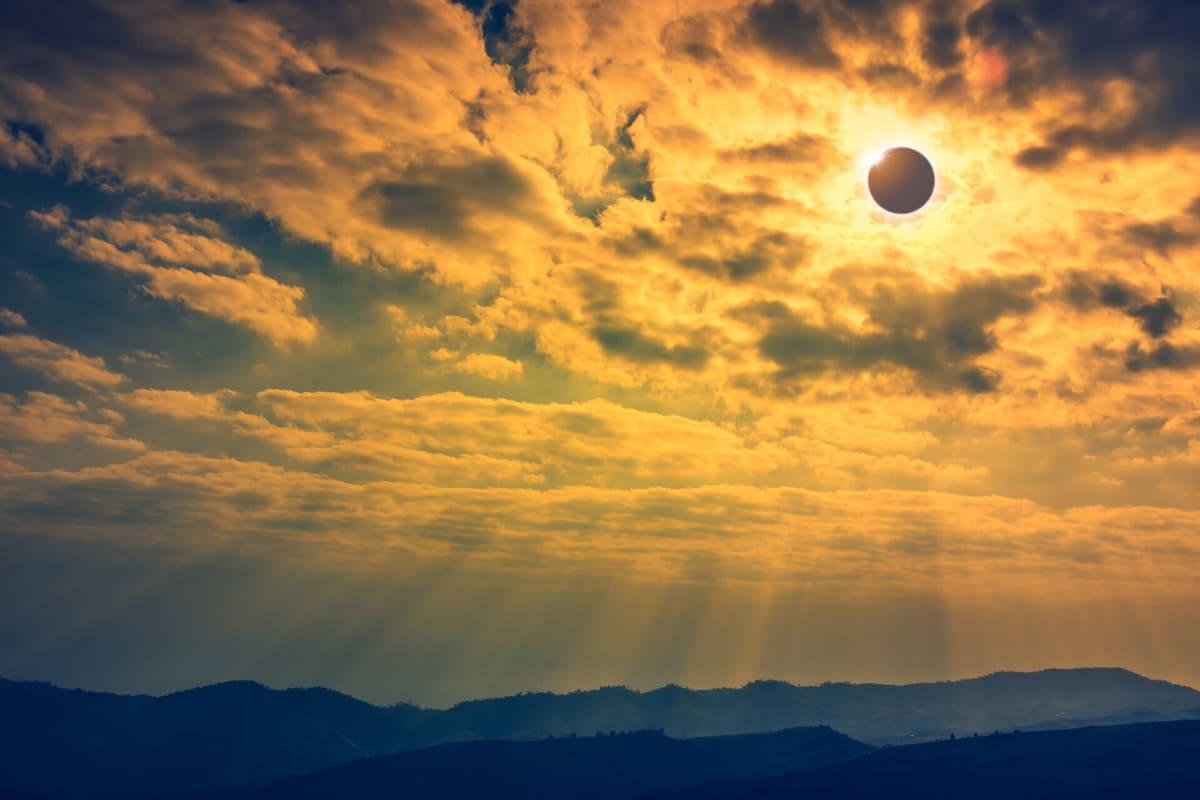
Can’t catch the 2026 solar eclipse? Don’t worry, we’ve put together an eclipse schedule for the upcoming decade to satisfy avid eclipse chasers!
- August 2, 2027 (Spain, Gibraltar, Morocco, Algeria, Tunisia, Libya, Egypt, Sudan, Saudi Arabia, Yemen, Somalia, British Indian Ocean Territory)
- July 22, 2028 (Christmas Island, Cocos Islands, Australia, New Zealand)
- November 25, 2030 (Namibia, Botswana, South Africa, Lesotho, Australia)
- November 14, 2031 (Pacific Ocean)
- March 30, 2033 (Northeastern Russia, Northern U.S. Alaska)
- March 20, 2034 (Benin, Nigeria, Cameroon, Chad, Sudan, Egypt, Saudi Arabia, Kuwait, Iran, Afghanistan, Pakistan, India, China)
- September 2, 2035 (China, North Korea, Japan)
FAQs
Where can you see the eclipse in 2026?
The solar eclipse on August 12, 2026 will be visible in Spain, Iceland, Greenland and the High Arctic Region.
Where can you see the 2027 solar eclipse?
The solar eclipse on August 2, 2027 will be visible in North Africa (Morocco, Algeria, Tunisia, Libya, Egypt, Sudan and Somalia), southern Europe (Spain, Gibraltar) and the Middle East (Saudi Arabia, Yemen).
Where in Iceland can you see the 2026 eclipse?
The eclipse will pass through western Iceland and you can also see it in Iceland’s capital, Reykjavik.