The People of Greenland - Inuit Culture and History
Have you ever wondered how people survived in the cold Arctic before modern housing and equipment were invented? For millennia, different Inuit cultures thrived in the harsh conditions of Greenland, adapting to a relentless environment. We offer a brief history of Greenlandic Inuit culture so you can marvel at these incredibly well-adapted survivors of the far north.
History of Inuit Settlements in Greenland
It took several millennia and waves of migration to permanently inhabit the island Kalaallit Nunaat, as Greenland is called in the Greenlandic language. The Saqqaq were the earliest settlers, originally from Siberia, who migrated via Alaska and Canada to finally reach Greenland around 4,500 years ago. The Dorset culture followed around 2,000 years later. The Thule people, from which modern Greenlanders are direct descendants, arrived around a 1000 years ago. Both of the earlier migrant cultures were considered Paleo-Eskimos and were adapted to tundra life, hunting for reindeer and other wildlife, while the Thule people focused on hunting marine animals.
Throughout history, settlers came not only from the west. Around the time when the Thule people from North America arrived in Greenland, Norse people approached from Iceland, establishing small settlements in South Greenland. While the Norse population only stayed for around 500 years, the Thule indigenous peoples became the foundation of Greenland’s population today. Around the 18th and 19th centuries European whalers, Danish settlers and missionaries arrived in Greenland. As part of Danish colonization, Hans Egede, a Norwegian-Danish missionary, brought Lutheranism to Greenland, which is the official religion in Greenland to this day. This influx of Danish and European culture impacted the traditional ways of Inuit culture, but also brought schools, health centers and churches to the island, contributing to the modern society of Greenland today.

People of Greenland
Around 89% of Greenland’s inhabitants are Inuit or mixed Danish-Inuit, identifying as either Kalaallit (from West Greenland), Tunumiit (from East Greenland) or Inughuit (people from the Thule district in northern Greenland). Around 11% of the population is Danish. While each region features its own distinct language and dialect, most people master Kalaallisut (Greenlandic language) as well as Danish. There are only around 56,500 people living in Greenland, a gigantic island featuring an area of 2.16 million square kilometers (836,330 square miles).
Greenland’s population compares roughly to the population of the small UK town of Canterbury and is around 30,000 people short of Andorra’s population, a tiny country in the Pyrenees Mountains. Since around 80% of the island is covered by the Greenland ice sheet, most people live on the south and west coasts. Only around 10% of the population resides in the remote and harsh regions of the north and east coast area. Greenland’s capital city of Nuuk features a population of 17,500 and is located on the southwestern coast.

Greenlandic Language
In Greenlandic, Greenland is either called Kalaallit Nunaat (which means country of Greenlanders) or Inuit Nunaat (which means country of humans). The official language is Greenlandic, but Danish is used widely in the administration and education sectors. Greenlandic is related to Inuit languages in Alaska and Canada, branching off the Eskimo-Aleut language family. Across Greenland you can find three main dialects related to people of the north (spoken by around 800 people), east (spoken by around 3,000 people) and west (spoken by over 50,000 people). The Greenlandic language also uses loanwords from Danish, Norwegian, Finnish, English and even Faroese, given its history of settlers.
Before the 19th century, Inuit languages were not written, just spoken. Samuel Kleinschmidt, a linguist and missionary, introduced a complex orthography system in 1851, which was then replaced by a new orthography in 1973 to better connect the spoken and written languageы. Fun fact: Greenlandic has very long words and you can often communicate an entire sentence with only one word! Here is an example: Nalunaarasuartaatiliorfissualioqatigiiffissualiulersaarsimagaluaraminngooraasiinngooq. This word has 85 letters and translates to: They have once again considered planning to start up a big consortium to construct a building to make radio stations. (Source youtube: @qsgreenland)
Preparing for a Greenland adventure? We’ve put together a few phrases that may break the ice when talking to locals!
-
Aluu – Hello!
-
Baj – Bye!
-
Aap – Yes
-
Naamik - No
-
Welcome – Tikilluarit!
-
Ajunngik (or short: Ajunngi) – How are you?
-
Qujanaq (or short: Qujan) – Thank you.
-
Ikiulaarsinnaavinga – Can you help me?
-
…and one word to confuse you a bit: Tassa, which means any of the following: Stop!/This is it/Is that it?/That’s why
Inuit Culture and Traditions
Greenlanders have stayed true to their Inuit forefathers! Preserving traditions while adapting to modernity is an integral part of Greenlandic culture. Inuit art and culture feature elements of storytelling, dance, drums, throat singing and elaborate national costumes made from animal skins. While igloos belong to the housing arrangement of the past, hunters still sometimes build them for emergency shelters.
Visit Greenland to experience the unique culture and local traditional events! We’ve put together some of the most iconic local traditions, and some of them you can even experience for yourself.
Drum Dance
Drum dances serve spiritual, social and entertaining purposes, and songs are passed on from generation to generation. They may cover legends of animals and people and often the performer is dressed up in traditional costumes. Got some beef with somebody? Why not dance it out? Historically, drum dances were sometimes performed to resolve conflicts, express dissatisfaction with one another or even to humiliate and ridicule one’s counterpart through songs in front of spectators. Such dance-offs often led to the embarrassed contestants leaving the village. The drum used is called qilaat, a frame drum that is beaten and accompanied by songs and dance.

Mask Dance
Mask dances historically provided for entertainment during the long winter months. Several dancers could perform in such events, which featured painted faces, cords around heads and, sometimes, objects in mouths. Bones, dead animals and animal parts served as accessories. Today, black, white and red are the most popular colors for face painting, symbolizing the spiritual world (black), blood, love and courtship (red) and respect for ancestors (white). These dances can look alienating to the unsuspecting visitor, as dancers may move between onlookers in grotesque, scary, funny or amusing ways. According to Connie Kristoffersen, a Greenlandic mask dancer and actress, the scary aspect of the dance is meant to teach kids to deal with unfamiliar situations, toughening them up for moments in which they should keep calm, such as encounters with polar bears, and other challenges in life. Just like drum dances, mask dances were forbidden when Christianity came to Greenland, but people in western and northern Greenland practiced these traditions in secret, thus preserving this important part of their culture.
First Seal Hunt
It’s an important coming of age ritual for boys. Usually when a boy turns 13 (or in hunting communities at even younger ages), he is expected to catch his first seal. Setting out in a boat, seals are hunted with files and then cleaned, butchered and prepared.
Kaffemik
Kaffemiks are a great way to catch up with the community and, for visitors, a chance to mingle with the locals. Greenlanders find many occasions such as birthdays, first school days, confirmations or other holidays to put together these informal get-togethers. Drop in for a chat and enjoy coffee and tea, cakes, dried fish, whale meat and even polar bear while getting to know Greenlanders. Follow the local etiquette: bring a gift, socialize and make sure you don’t overstay your visit, as many people may drop by throughout the day.
Polar Bear Sharing
Encountering a polar bear out in the wild makes a person a so-called official hunter, even if he doesn’t shoot it. He may call a registered hunter to do the killing instead. The person who saw the polar bear (but did not shoot it) gets the head and pelt (considered the prime parts), while the actual person shooting it will decide on who receives the flesh (usually the first five people who touched the bear are entitled to share the meat).
First Day of School
Like in many other parts of the world, the first day of school is an important occasion for young ones and their families. Wearing their finest national dresses, they begin their education and, afterwards, families often arrange kaffemik events.
The Inuit Economy and Society
Greenland’s economy is largely based on whaling, sealing, fishing and hunting, as well as mining and tourism. Denmark provides financial aid to Greenland’s government and about half of the region’s workforce is employed in the public sector. While many people’s livelihoods up to the 20th century depended on seal hunting, it’s in decline now, with fish canning and seafood freezing as replacements. Greenland’s dependency on the fishing industry is overshadowed by threats of overfishing and price fluctuations for seafood. That’s why investments into tourism and other sectors provide stability to Greenland’s economy. And with so much wild nature and pristine polar beauty on display, it’s not surprising that the tourism sector has grown significantly since the 1990s!
Modern Life
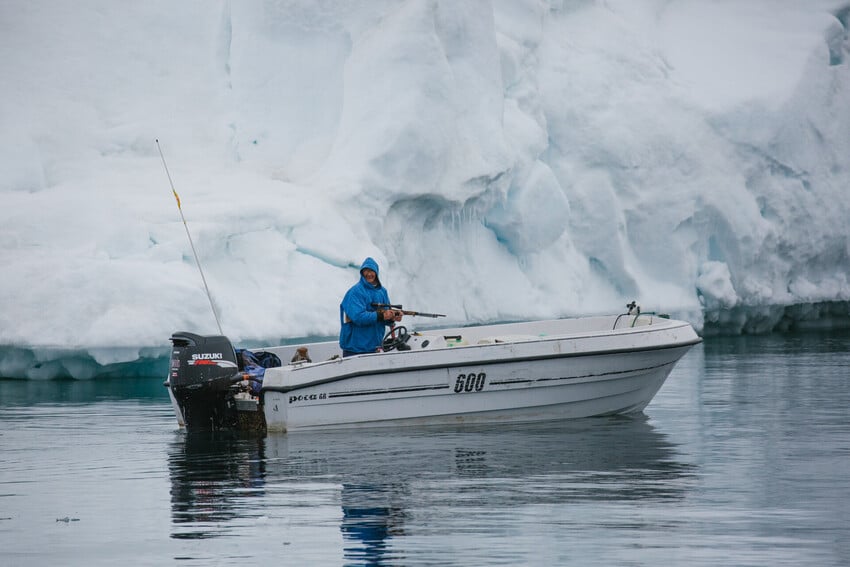
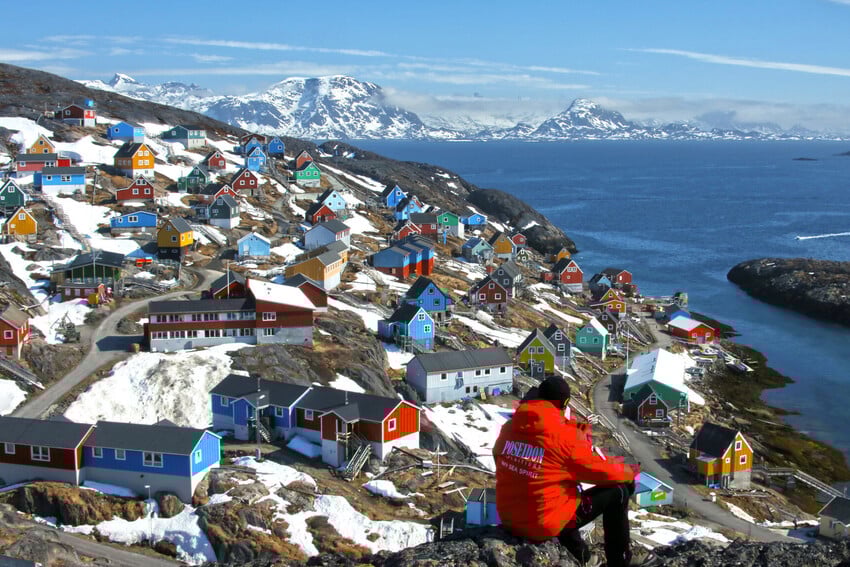
Greenland has enjoyed various cultural influences over the centuries, but communities today build their life around the core values of their ancestors, such as the importance of family units, subsistence hunting, resourcefulness and a strong sense of community. When visiting Greenland, you can observe this blend of tradition and modernity in people’s lifestyles. While children follow a Western curriculum at school, families pass along traditional values to preserve their heritage. Greenlanders may chill in front of TVs in comfortable houses while simultaneously drying freshly caught fish outside their homes, just as they did centuries ago. While up to the 1950s people in some regions still lived in igloos, turf huts and mobile tents from animal hides, nowadays most people live in permanent structures and wooden houses. National costumes are valued possessions and worn at many holidays and special events.

Challenges
Climate change, overfishing, health problems, lower life expectancy, higher suicide rates, unemployment and dependence on Danish economic aid are all problems facing modern Greenlanders.
Providing for a stable economy, while at the same time preserving Greenland’s nature, is a heated topic of discussion among Greenlanders. Traditionally the economy relied on fishing and hunting, with tourism gaining importance since the 1990s. Uranium mining could offer a lucrative opportunity for local communities by creating much-needed jobs, but Greenlanders are split on this topic. Opposing voices highlight the environmental risks for humans and local wildlife, as well as contamination and the need to relocate certain settlements. Additionally, infrastructure may have to be built to guarantee efficient logistics.
FAQs
What nationality are Greenlanders?
Around 89% of the population are Greenlandic Inuit and born on the island. The other 11% are European Danish people, Philippine, Icelandic and Thai. Greenlandic people have Danish citizenship and a Danish passport.
Were there Eskimos in Greenland?
The Saqqaq, who lived from around 2500 BCE to 800 BCE, were of the Paleo-Eskimo culture in South Greenland. They lived before the Thule people, the direct ancestors of the Inuit. Paleo-Eskimos, while remotely related to Inuits, are not direct ancestors of present day Inuit.
Are Greenlandic people friendly?
Visitors often remember Greenlandic people as cheerful and hospitable, with a sense of lightheartedness.