Northern Lights in Greenland: An Expert Guide to When, Where, and How to See Them
Greenland is an exceptional destination for seeing the northern lights, from late August to April. Kangerlussuaq, a settlement in western Greenland, features more than 300 nights of clear skies per year, setting the perfect stage for aurora viewing opportunities during this period. Our aurora borealis viewing guide explores the best season for Greenland travel, top viewing locations, accommodation options, and photography tips for an unforgettable polar adventure.

Key Takeaways
- When to go: Late August to April (when the skies are dark enough to spot them)
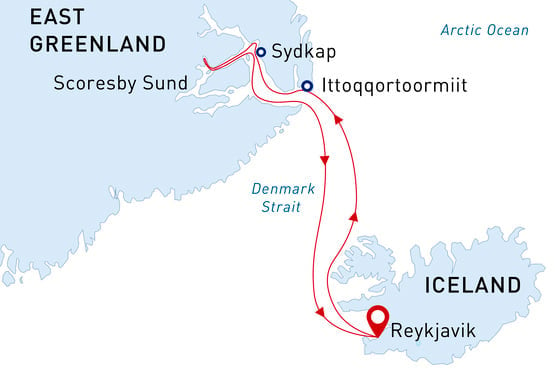
- Where to go: In West Greenland, Kangerlussuaq and Ilulissat offer accessible aurora viewing. In East Greenland, the vast fjords of Scoresby Sund and the remote settlement of Ittoqqortoormiit offer spectacular landscapes with excellent aurora-viewing opportunities.
- Where to stay: Choose from hotels and local accommodations in Greenland’s towns, or experience the northern lights aboard an expedition ship.
- How to photograph them: Use a tripod, a wide-angle lens, and a long exposure to capture both the aurora and Greenland’s dramatic landscape.
Can You See the Northern Lights in Greenland?
Yes, Greenland is a prime location to view the aurora borealis. The world’s largest island lies beneath the auroral oval, the region around Earth’s magnetic poles where auroras occur most frequently. Its mall settlements and low population density mean it has low light pollution in many locations, allowing you to see them even from some of the town centers. This makes Greenland an excellent choice for viewing the northern lights in the Arctic. Greenland’s vast wilderness offers even darker skies, and one of the best ways to spot the aurora is along the remote coastlines away from any artificial light (for example, from aboard a small expedition ship).
Understanding the Colors of the Aurora (Science Explained)
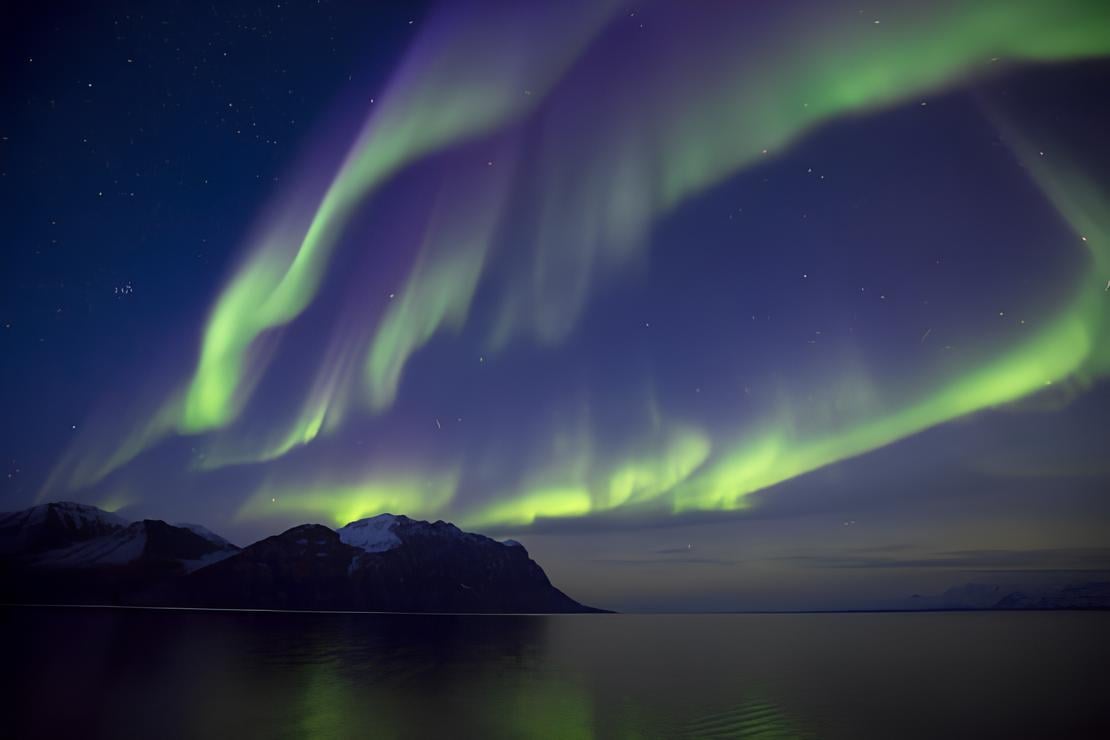
The aurora borealis occurs when charged particles interact with the Earth’s magnetic field and atmosphere. As these particles encounter the Earth’s magnetic field, which guides them toward the polar regions, they then enter the upper atmosphere and collide with gas atoms and molecules, such as oxygen and nitrogen. These collisions excite the gas atoms and molecules to higher energy states. As they return to their normal, lower energy state, they release energy as photons, producing the beautiful light we see known as the aurora borealis.
Different aurora colors appear at different heights, because excited atoms and molecules have different lifetimes. The different colors are formed when different atmospheric gases are excited at varying altitudes. The most common green aurora is produced by excited oxygen and typically occurs at 120-400 km (80-250 miles) above the Earth’s surface. Red aurora, also produced by oxygen, occurs at altitudes above 300 km (180 miles), where the thinner atmosphere allows excited oxygen to emit light before being quenched by collisions. Excited nitrogen gas from 100-200 km (60-120 miles) glows blue, and depending on the type and energy the particle is interacting with, it also may give off pink light. If these nitrogen collisions happen below 100 km (60 miles) altitudes, you’ll see a purple glow.
The Cultural Meaning of the Northern Lights — Arsarnerit and Greenlandic Legends
The Greenlandic name for the northern lights is Arsarnerit, which is commonly translated as “ball games” or “the ones who play ball.” According to Greenlandic tradition, the lights are associated with the dead, who were believed to be playing football with a walrus skull in the sky. The northern lights have long been part of Greenlandic cultural traditions and oral storytelling, rather than just simply a beautiful celestial phenomenon. On our expedition cruises to Greenland, we visit small Inuit communities to learn about the local culture, stories, and legends.
Local Traditions and Ways to Connect with the Aurora
In Inuit culture, the northern lights were traditionally treated with great respect, as they were seen as a messenger between the living and dead. According to one of the Greenlandic traditions, whistling at the aurora borealis was believed to allow people to contact the dead, and the northern lights would answer with crackling sounds when the connection was established. For generations, stories like these have given the northern lights a place in Greenlandic culture that goes far beyond simply observing them as a natural phenomenon. Knowing more about Greenlandic history and traditions can make standing beneath the aurora feel exceptionally special.
When Can You See the Northern Lights in Greenland? (Best Time to Visit)
The northern lights are typically visible in Greenland from late August through April. Whether you travel in late summer, when the skies are just about to get darker, or at the height of the polar night in winter, Greenland offers several months for aurora viewing, though the ideal timing can vary by region and weather conditions. The timing of your visit, the exact location, the equinoxes, and the solar cycle all play a role in the chances of seeing an active aurora.
|
Month |
Darkness Level |
Temperature Range |
Advantages |
Disadvantages |
|
August |
Darkness increased toward the end of the month |
0°C to 10°C (32°F to 50°F) |
Milder temperatures, comfortable outdoor conditions, best time for expedition cruises |
Early August may be too bright for reliable viewing, some locations may still experience midnight sun conditions |
|
September |
Moderate to high darkness |
-2°C to 7°C (28°F to 45°F) |
Longer nights, temperatures are still mild, the autumn equinox can bring increased aurora activity, best time for expedition cruises |
Cloud cover and rain may affect visibility, particularly in coastal areas |
|
October |
Higher darkness |
-8°C to 3°C (18°F to 37°F) |
Longer viewing windows, increasingly colder weather and winter scenery, generally good conditions for aurora viewing |
Colder temperatures and potentially unstable weather conditions |
|
November |
Very high darkness |
-15°C to 0°C (5°F to 32°F) |
Long nights and excellent opportunities for viewing the aurora |
Short daylight hours, colder conditions |
|
December |
Near-maximum darkness in most regions |
-20°C to -3°C (-4°F to 27°F) |
Extended darkness, winter atmosphere, and excellent opportunities for watching the aurora |
Very cold temperatures and limited daylight |
|
January |
Near-maximum darkness, especially in the north |
-25°C to -5°C (-13°F to 23°F) |
Long nights and extended opportunities to see the aurora |
Very cold temperatures and limited daylight |
|
February |
Very high darkness |
-25°C to -5°C (-13°F to 23°F) |
Long, dark nights combined with gradually returning daylight |
Cold temperatures and potentially harsh winter conditions |
|
March |
Darkness, with increasingly longer days |
-20°C to 0°C (-4°F to 32°F) |
Increased aurora activity around the spring equinox, landscapes are still snow-covered |
Nights gradually shorten, and temperatures remain cold |
|
April |
Decreasing darkness |
-15°C to 5°C (5°F to 41°F) |
Milder conditions, snowy landscapes, and opportunities to combine aurora viewing with spring activities |
Shorter nights reduce viewing opportunities, especially toward the end of the month |
Best Months for Aurora Viewing
There are three distinct periods in Greenland’s aurora season to consider if you are keen to see the northern lights:
Early season (August-October): The northern lights return as darkness comes back to Greenland’s sky in late August. September is a prime early-season window and the perfect time to experience the aurora borealis aboard an expedition cruise. According to NOAA and the Space Weather Prediction Center, the best times for aurora viewing are the fall and spring equinoxes, so mid- to end of September is an excellent time for seeing northern lights in Greenland. Waterways are still open, and temperatures are still warm enough to enjoy viewing from deck. Starting from October, weather shifts slowly toward winter, though coastal storms may bring cloud cover that can obstruct views.
Winter (November-February): During winter, the long, dark nights provide ample opportunities to see the northern lights. During this time, most expedition cruises aren’t possible, and aurora viewing shifts toward the mainland. During winter, you’ll need to embrace the cold and be prepared to wait for the sky to put on its show.
Spring (March-April): March brings another excellent opportunity around the spring equinox, when geomagnetic activity can be supportive for aurora viewing. During the fall and spring equinoxes, the geometry of the Earth’s magnetic field relative to the solar wind becomes favorable for transferring energy into the magnetosphere, a phenomenon linked to the Russell-McPherron effect. Nights are still dark enough, while the days are getting longer and warmer.

Best Time of Night to See the Lights
While there is no magic hour for the northern lights to appear, the hours before and around magnetic midnight are a good time to start watching the skies, and the best time to see the northern lights in Greenland. This is the time when the magnetic pole sits directly between the sun and you, and the most active part of the auroral oval is right overhead. For most places on Earth, magnetic midnight is roughly around 11pm to 2am – the viewing window that may give you the highest chances of spotting the northern lights!
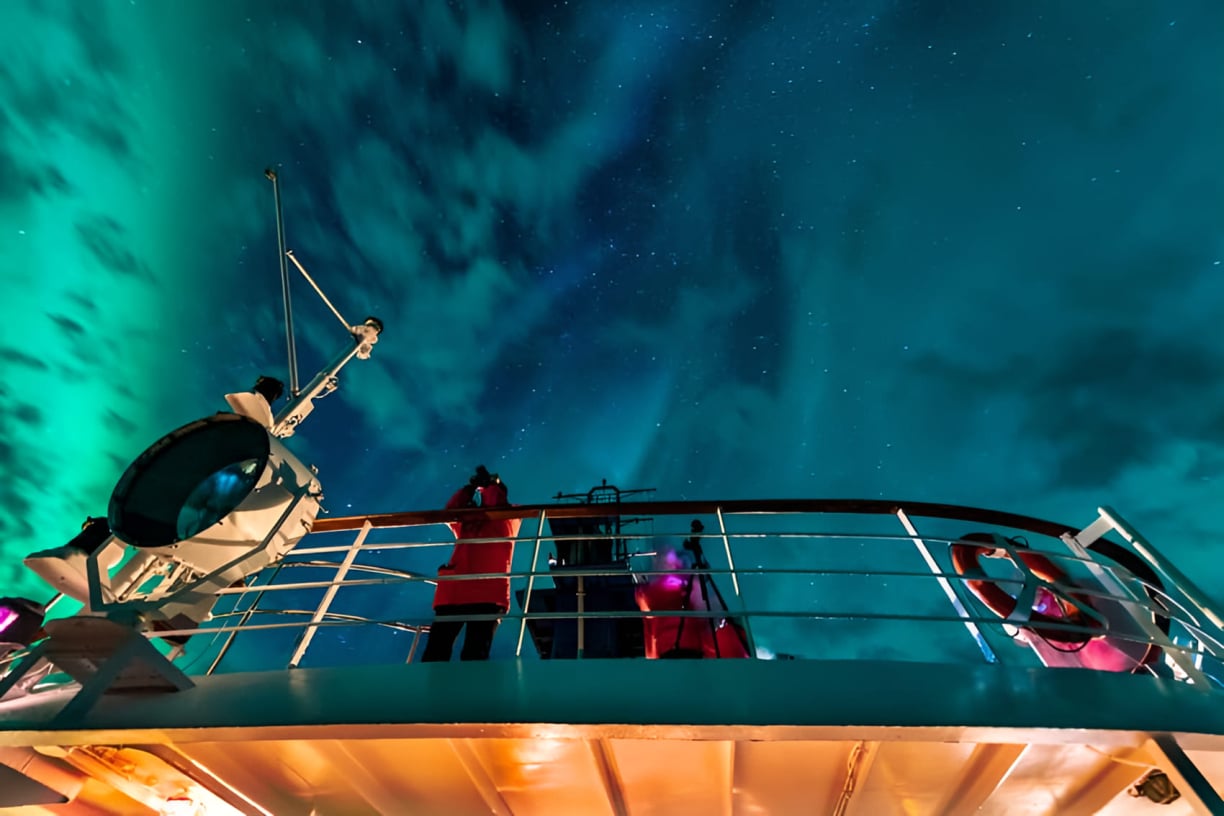
Pro viewing tip: Be patient. Northern lights are unpredictable, and while sometimes visitors wait hours to see them, they can also just suddenly appear in the sky. A great place for aurora watching is aboard an expedition cruise around Greenland. Aboard a small ship, you travel remote coastlines and can hang out on deck or in the lounges and wait for the aurora to appear. Based on our experiences, guests often catch a glimpse of the aurora while casually exploring the region (when the northern lights suddenly appear in the sky).
Solar Cycle and Aurora Activity — What the Current Phase Means for Viewers
Organizations such as NASA and NOAA reported a solar maximum (Solar Cycle 25) in 2024. These natural cycles are a transition of the sun between low and high activity and last approximately 11 years. At the height of the solar cycle, the sun’s magnetic poles flip. During such a pole swap, the sun transitions to the so-called solar maximum, unleashing energy and solar radiation.
The solar wind is a continuous stream of electrically charged particles released by the sun. When these particles interact with Earth’s magnetic field, they can trigger geomagnetic disturbances that energize atmospheric gases and produce the northern lights. During periods of increased solar activity, stronger disturbances can produce more intense auroras.
For northern lights watchers, this is good news: strong geomagnetic storms still occur during the declining phase of a solar cycle, so the aurora does not simply fade away after a solar maximum. The equinox periods can also create favorable conditions for aurora viewing, so visiting around the March and September equinoxes may give you an additional advantage, regardless of where we are in the solar cycle.
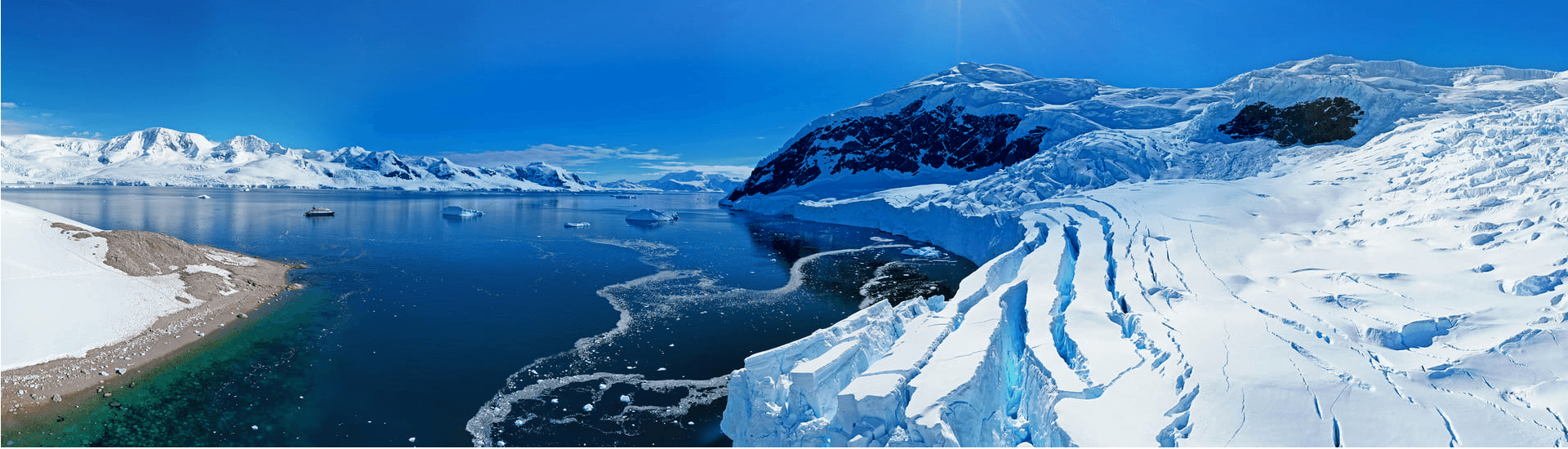
Explore Greenland's majesty
Join us on an unforgettable expedition to discover the wonders you've just read about
or download our free brochure
Best Places to See Northern Lights in Greenland (Region by Region)
As the world’s largest island, Greenland offers a variety of places across an enormous area for northern lights viewing. From remote fjords and iceberg-filled waters to small towns with easy access, there are aurora experiences for every type of traveler. With low light pollution outside Greenland’s small settlements, remote areas are especially attractive for aurora hunters. Your choice will depend not only on the season, but also on your interests, budget, and level of adventure.
East Greenland — Dramatic Fjords and Mountain Backdrops
East Greenland offers some of the most spectacular settings for northern lights. The deep fjords and rugged mountains set the perfect stage for the aurora in the night sky. Tasiilaq and Kulusuk are the region’s main hubs, with Kulusuk serving as a gateway to Tasiilaq by helicopter. The settlements are known for low light pollution, and March and April are good months for aurora viewing.
East Greenland with Poseidon Expeditions
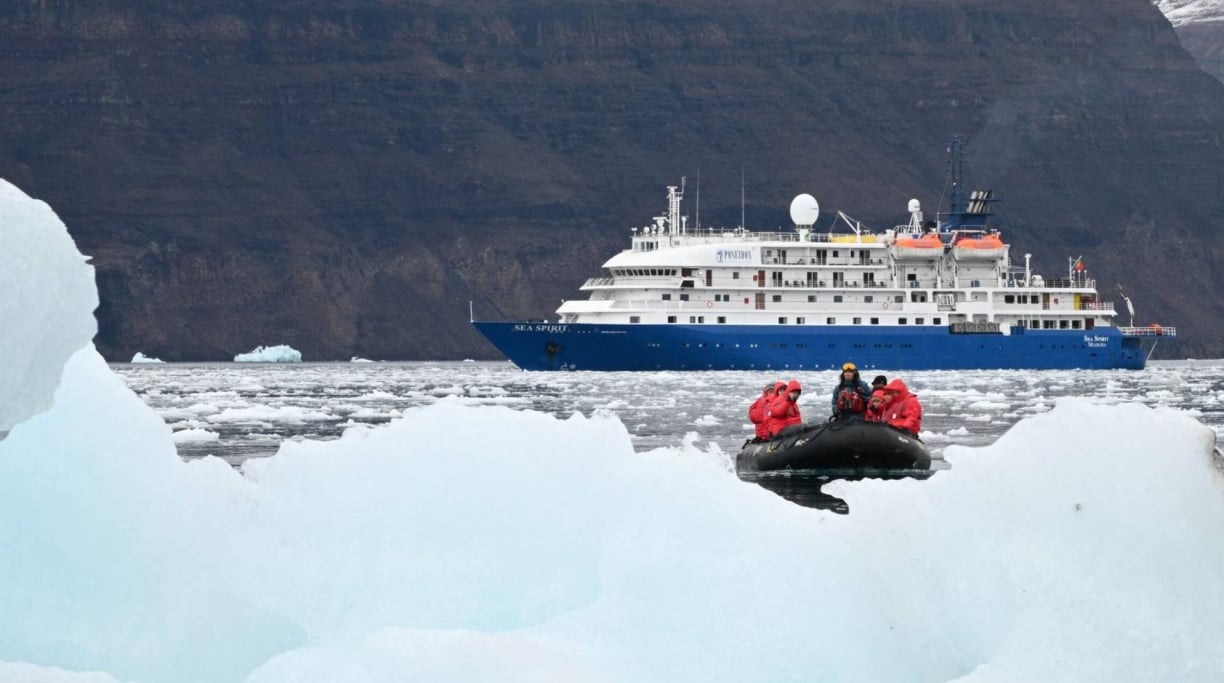
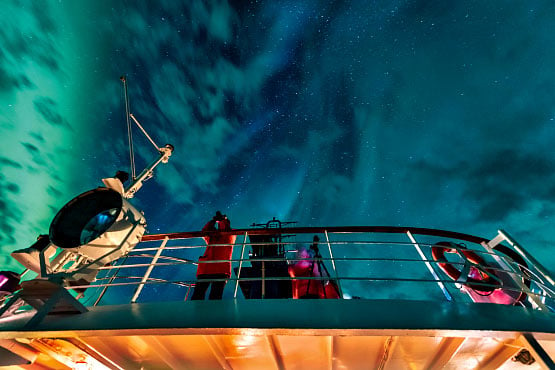
If you’re looking to combine northern lights viewing with an authentic Greenland expedition adventure, our Arctic Sights and Northern Lights voyage offers the perfect way to experience both. Aboard the 114-passenger ship M/V Sea Spirit, you will venture deep into the Scoresby Sund fjord system, surrounded by towering mountains and icebergs, creating an exceptional setting for aurora viewing from the large deck.
Remote Viewing Sites – Northeast Greenland National Park, Ella Island, and King Oscar Fjord
At Northeast Greenland National Park, the world’s largest national park, you’ll be in one of the most remote places in the world for aurora viewing. The iconic wilderness and wildlife will keep you busy while watching out for the aurora borealis. Ella Island and King Oscar Fjord lie within this vast protected landscape. Reaching such remote locations typically requires an expedition cruise or specialized transport, but takes you far away from artificial light.
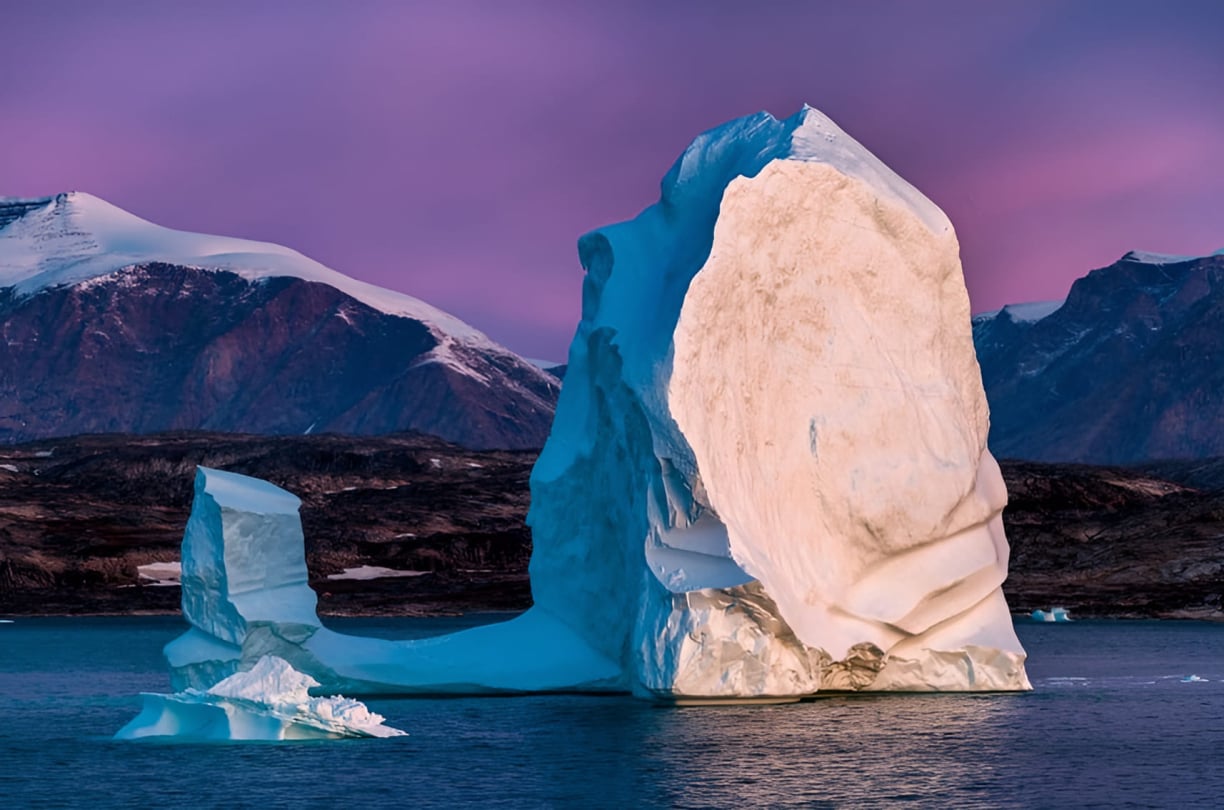
South Greenland — Mild Nights and Early Return of Darkness
South Greenland is an excellent choice for first-time Greenland travelers who want to experience the northern lights without the extreme cold of the far north. Darkness returns earlier in late summer, and the aurora season begins while temperatures remain relatively mild. During the day, you can hike through green valleys, explore fjords, and look for wildlife before keeping an eye out for the northern lights after dark. Popular and accessible towns to visit are Qaqortoq (which has had its own airport since April 2026), Narsarsuaq, and Nanortalik.
Nuuk and the Capital Region — Aurora Viewing from Greenland’s City Centre
Greenland’s capital, Nuuk, offers a convenient way to experience the northern lights without giving up city comforts. With relatively low light pollution for a capital city, the aurora can sometimes be spotted from Nuuk itself – even through hotel windows. Local websites such as Visit Nuuk suggest that while visible right from the capital, venturing a few minutes into the fjord can offer aurora hunters even better views.
West Greenland (Kangerlussuaq and Ilulissat) — Clear Skies and Icebergs
With minimal light pollution and more than 300 clear nights per year, Kangerlussuaq is one of Greenland’s most reliable places for northern lights viewing from late September to early April. Further north, Ilulissat offers spectacular settings for photography. Catch the northern lights above the icebergs of the UNESCO-listed Ilulisat Icefjord, and get some of the best photo ops on the island.
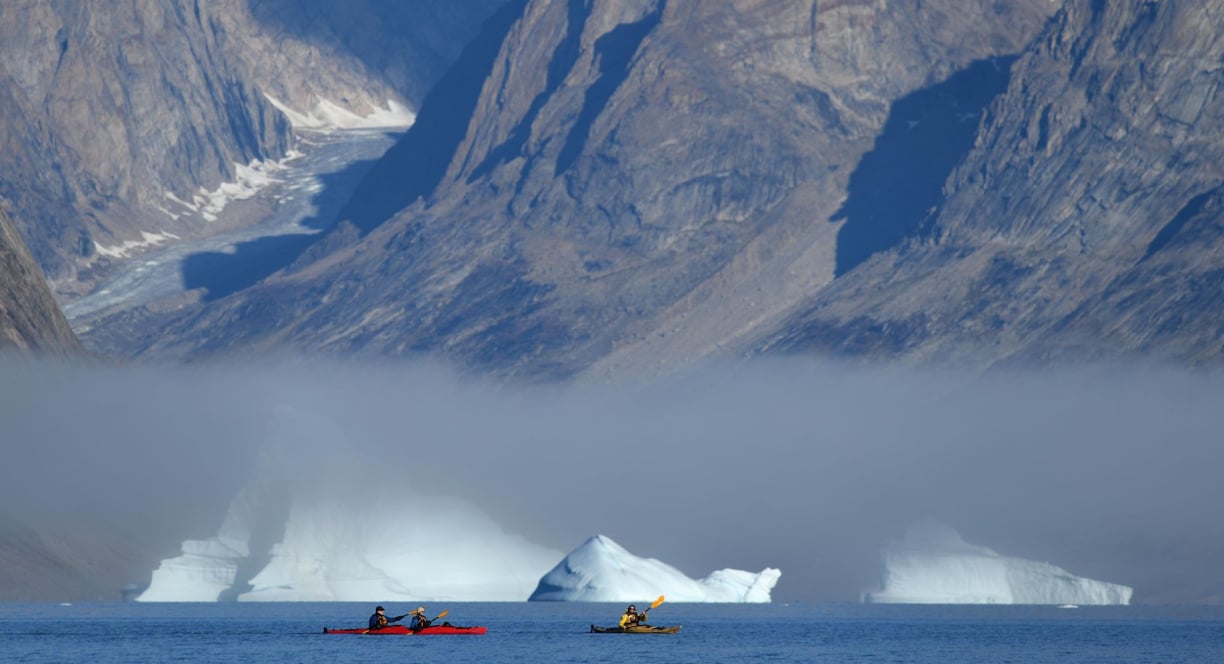
North Greenland — Remote Skies and Intense Displays
For seasoned polar adventurers, northern Greenland offers some of the most remote conditions for viewing the northern lights. Far from major settlements, light pollution is minimal, creating exceptionally dark skies. However, limited infrastructure, difficult logistics, and higher travel costs make it less suitable for first-time travelers. Places like Qaanaaq and Siorapaluk are among the island’s northernmost settlements, where the sun remains below the horizon for around 3.5 months a year. You can reach Qaanaaq by plane and book one of the few available accommodations in town, such as Qaanaaq Hotel & Hostel.
Combining Aurora Viewing with Adventure Activities — Dog Sledding and Snowmobile Safaris
If you’re already travelling so far north for the aurora borealis, the best way to make use of your time in Greenland is to combine northern lights watching with typical Arctic adventure activities. Ilulissat is an excellent base for combining daytime activities, such as dog sledding, with nighttime northern lights viewing. Tour operators like Ilulissat Adventure offer various excursions, including snowshoeing under the northern lights. In Kangerlussuaq, operators such as Albatros Arctic Circle offer dog sledding, glacier excursions, and northern lights hunts. Whether you enjoy dog sledding, snowmobiling, or cross-country skiing, Greenland offers plenty of options to stay active during your visit.
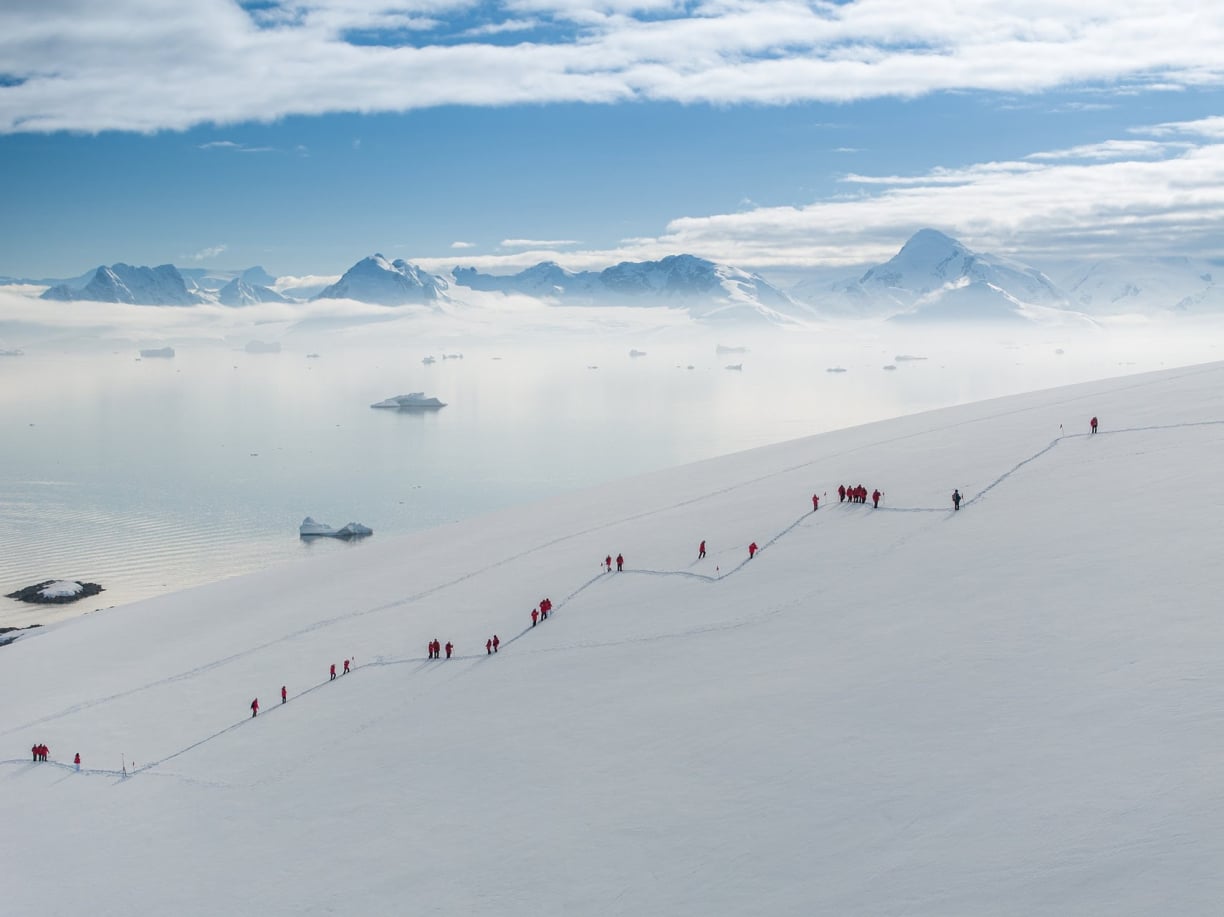
Where to Stay in Greenland to See the Northern Lights
Choosing the right accommodation can make a difference, especially when your main goal is seeing the northern lights. Look for places with open views and as little light pollution as possible. Ilulissat offers dedicated Aurora Cabins, while Kangerlussuaq offers remote accommodation close to the wilderness. In Nuuk, you can even sleep beneath the night sky in an Aurora Glass Igloo. And for those who want an authentic Greenland northern lights adventure, a small expedition ship is a great option for traveling through remote areas with minimal light pollution. We’ve handpicked a few ideas for you on where to stay around Greenland:
Aurora Cabins
Enjoy beautiful views of the night sky and Disko Bay through panoramic windows right from bed. Prices start from around EUR 190 (US$ 213) per night.
Old Camp Lodge
Located around 2 km (1.25 miles) away from the city lights, this lodge offers small double rooms starting from around EUR 88 (USD 99) per night.
Glass Igloo
Watch for the aurora borealis from small, romantic, and cozy glass cabins, with unique views of Sermitsiaq Mountain and the Nuuk Fjord. Prices start from around EUR 340 (USD 381) per night.
Expedition Ship M/V Sea Spirit
Travel aboard the small, 114-passenger expedition ship in comfortable cabins. Enjoy prime views of East Greenland’s remote coastline from the deck, onboard lounges and your cabin. Discover our upcoming expeditions to Greenland and start planning your Arctic adventure.
Guided Tours vs. Independent Travel — Planning the Northern Lights Experience in Greenland
There are many ways to see the northern lights in Greenland, depending on your budget, travel style, and how far off the beaten path you want to go.
Budget-conscious independent traveler: If you’re planning your own trip – book accommodation and local excursions in towns like Kangerlussuaq or Ilulissat. This gives you the flexibility to plan your days as you wish while keeping your evenings free to watch for the aurora.
Travelers who prefer guided tours: Join a guided land tour in Ilulissat or Nuuk with one of the local operators. Your guide will handle the logistics and help you choose suitable viewing spots.
Adventure seeker or aurora photographer: The best way to venture into Greenland’s wilderness is with an authentic expedition. An excellent way to discover Greenland off the beaten path is to book an expedition cruise aboard a small ship, exploring remote East Greenland fjords and coastlines, far away from artificial light pollution.
Field-Tested Tips for Watching and Photographing the Aurora in Greenland
Watching the northern lights in Greenland is an unforgettable experience, but Arctic conditions can make a night outdoors challenging. The right preparation and photography equipment are key to experiencing this spectacle in comfort and taking home captivating photos to remember. We’ve prepared some practical tips to help you prepare for your aurora hunt.
What to Wear and Bring for an Aurora Night in Greenland
Catching the aurora borealis requires patience, and you may be spending a fair amount of time outdoors waiting to see it. For a long night out, dress in warm layers and opt for polar fleece or wool instead of cotton. Bring hand warmers, a headlamp, and a thermos with a hot beverage to keep your body warm and spirits high. Note that batteries drain much faster in cold weather than you expect. Keep spare batteries inside pockets close to your body.

Pro tip if your battery died in the cold: If you tuck a cold, nearly dead battery under your armpit to warm it up, you can temporarily give it a power boost and squeeze out a little more energy!
- Layering system: Thermal base layers, insulating mid-layer, wind- and waterproof outer layer
- Warm accessories: Insulated boots, a warm hat, gloves or mittens, and hand warmers
- Hot drink in an insulated thermos
- Headlamp, ideally with a red-light setting, so you can see where you’re walking without compromising your night vision
- Photography Equipment: Camera, sturdy tripod, suitable lens, and spare batteries
- Extras: A fully-charged phone and power bank
Essential Camera Settings for Beginners Photographing the Aurora
You don’t need to be a professional photographer to capture the northern lights, but understanding a few manual settings on your camera can make a big difference. Use these settings as a starting point, then adjust as the aurora changes in brightness and movement.
- Use a tripod: A stable tripod is crucial for preventing camera shake during long exposures.
- Set your aperture: Choose the widest aperture your camera lens allows. An f-number of f/2.8 is a good starting point because it lets in plenty of light.
- Start at ISO 1600: Adjust the ISO to suit the conditions. You may need a higher setting in darker conditions, although higher ISO can introduce more image noise.
- Set your shutter speed: Start with a 5-10-second exposure. Use shorter exposures for fast-moving auroras to preserve their shape, or try longer ones for fainter displays.
Common Mistakes That Ruin a Northern Lights Trip to Greenland
To make your trip memorable, avoid these common planning errors to improve your chances of seeing the northern lights in Greenland.
Ignoring the moon phase: A full moon can wash out faint auroras. If possible, plan around the new moon for darker skies.
Choosing the wrong season: If you visit in summer, you may find the nights too bright. Plan your trip during the darker season.
Ignoring cloud cover: Even strong aurora activity won’t help if clouds obstruct your view. Check local forecasts. Choose favorable locations such as Kangerlussuaq, which is known for its clear nights.
Expecting certainty: Greenland’s weather and aurora activity are always unpredictable. Download an aurora forecast app or check NOAA’s Aurora Dashboard to stay up to date.
Booking too few nights: One cloudy evening can spoil your plans. Try to plan several nights in one of the top aurora-viewing regions to improve your chances.
Final Thoughts — Planning Your Northern Lights Adventure in Greenland
Watching the Northern Lights dance over Greenland is an unforgettable bucket-list experience that deserves careful preparation. Choosing the right season, location, timing, and adding a little bit of your own patience can improve your chances of seeing the aurora in one of the most beautiful locations in the Arctic. With icebergs, dramatic mountains, and remote Arctic wilderness with low light pollution as your backdrop, you can watch the night sky for a glimpse of the northern lights. Even though the solar maximum was reached in October 2024, auroras remain spectacular as solar activity continues. Plan your trip carefully, allow several nights for viewing, download weather and aurora forecast apps, and get your camera ready. With a little luck, you’ll experience one of the most spectacular natural phenomena on Earth.
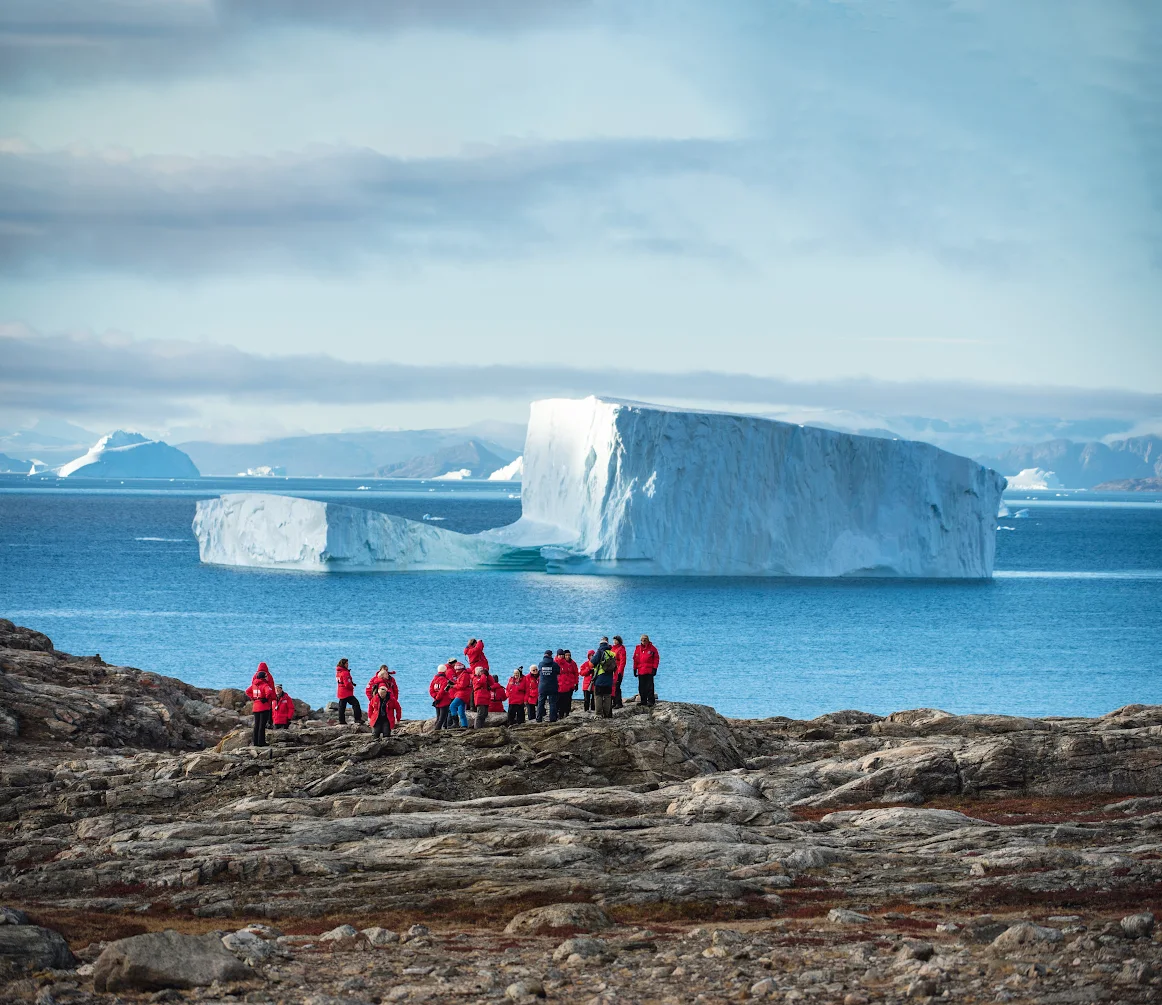
For true adventurers and aurora hunters, our East Greenland expedition cruises are the perfect choice. Aboard a small, 114-passenger expedition ship, we’ll take you into remote fjords along the beautiful coastline. The ship’s wide-open deck gives you plenty of opportunities to look out for the aurora. On our expeditions, you won’t have to wait aboard. All guests can explore together, and we plan up to three shore landings per day, each lasting around 2.5 hours. With over 27 years of polar expertise, our team of naturalists, biologists, geologists, and historians will bring each destination to life, and our expedition team can offer advice on how to capture the aurora. Explore our upcoming Greenland departures, and we’ll see you aboard!
Frequently Asked Questions
When can visitors see the northern lights in Greenland?
The northern lights are visible from late August through April, when the midnight sun sets and darkness returns to the Arctic sky. The long, dark nights in fall and winter offer good viewing opportunities. To improve your chances of seeing the aurora, it’s best to check weather and aurora forecasts before heading out.
Where is the best place in Greenland to see the northern lights?
Kangerlussuaq is one of Greenland’s top destinations for aurora viewing. The low light pollution and relatively dry climate offer prime opportunities. Ilulissat offers spectacular views, and Tasiilaq provides dramatic mountains and fjords – the perfect natural stage for looking out for the northern lights.
Are the northern lights better in Iceland or Greenland?
Both Iceland and Greenland offer great opportunities to see the northern lights, and neither is guaranteed to provide better viewing than the other. Greenland, however, stands out for its remote Arctic landscapes and rugged coastlines, low light pollution, and opportunities to spot the aurora far from major settlements.
What causes the northern lights to appear in different colors?
The northern lights form when energetic particles from solar winds interact with gases in the Earth’s upper atmosphere. Oxygen produces the familiar green glow and can also create red colors, while nitrogen produces blue, pink, and purple hues. The colors depend on the gases involved and the altitude of these interactions.
How long should a trip to Greenland be to maximize aurora viewing chances?
We recommend planning several nights in Greenland during the aurora season. This maximizes your chances of seeing the northern lights in case of cloud cover or low aurora activity. Consider at least three to five nights, though longer trips allow for greater flexibility. Always check regional weather and aurora forecasts when you plan your itinerary.
Related Cruises
Greenland


Iceland and Greenland
East Greenland