Northeast Passage | Arctic Sea Route
Arctic Shipping Routes – The Northeast Passage
The Arctic is open for business! While warmer temperatures and decreasing sea ice keep climate scientists and activists worried about the Arctic’s future, countries and businesses glance at the opportunities the opening of the northern waterways may bring. Cutting the voyage from St. Petersburg to Shanghai by 10-15 days from the previous 28 days via the Suez Canal, the Northern Sea Route is a welcome time and cost saver. The potential shortcut had excited navigators for centuries and, just like the Northwest Passage in the Canadian Arctic, it had cost the lives of many brave explorers. In the end, however, they paved the waterway for commercial shipping. Read on and find out why these passages spark commercial, political and adventurous interest worldwide.
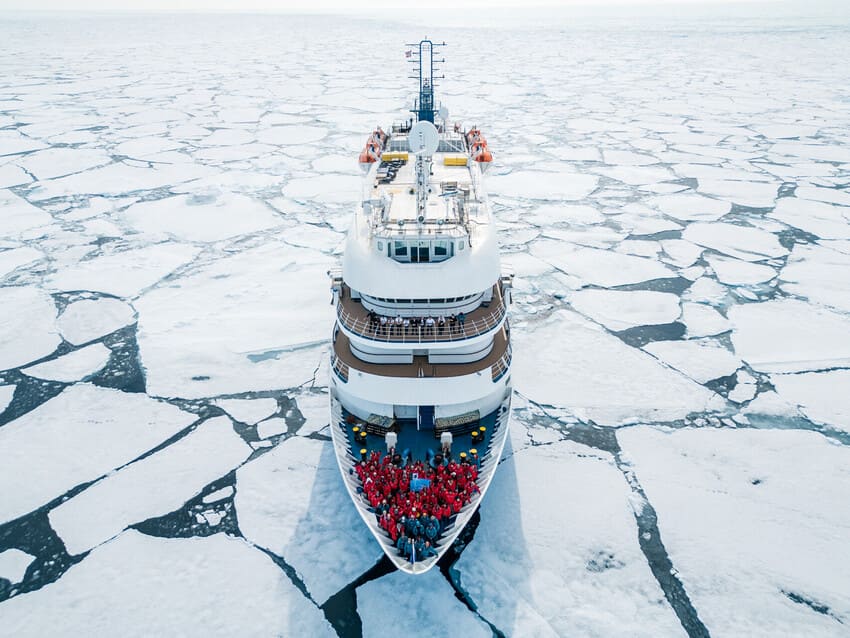
A Brief History of the Northeast Passage
From the 15th century, English, Dutch and Russian explorers were eager to find a northeast route from the Atlantic to the Pacific Ocean, along Russia’s northern coast. Flemish navigator Olivier Brunel capsized and perished while trying to find a sea route from northern Europe to China during several attempts in the 1560-80s.
From 1594 to 1597, Dutch navigator Willem Barentsz wanted to find a direct trade route to Asia, bypassing the shipping route via the Cape of Good Hope. Attempting three voyages north, he was forced to turn back because of dense sea ice. On his last attempt, he discovered Spitsbergen and Bear Island, and ultimately had to abandon ship after becoming trapped in the sea ice. The crew evacuated in two open boats, but Barentsz died at sea on their return voyage.
In 1648, Russian explorer Semyon Dezhnyov successfully rounded Cape Dezhnyov, entering the Bering Strait and thus proved that Asia and North America were not connected by land. His discovery was lost in archives and only finally published in 1758. By then, Vitus Bering had already completed his voyage from the Kamchatka Peninsula through the Bering Strait in 1728, and had been credited with its discovery.
Adolf Erik Nordenskiold was the first explorer to sail through the entire Northeast Passage on his voyage from 1878 to 1879.
In 1991, the Soviet Union opened the Arctic sea route through the Northeast Passage for foreign shipping.
Due to decreasing sea ice since the 2000s, the Northeast Passage has become increasingly passable and easier to navigate, opening up more and more for shipping throughout the summer months. It keeps gaining commercial and strategic importance as a viable shipping route connecting Europe and Asia.
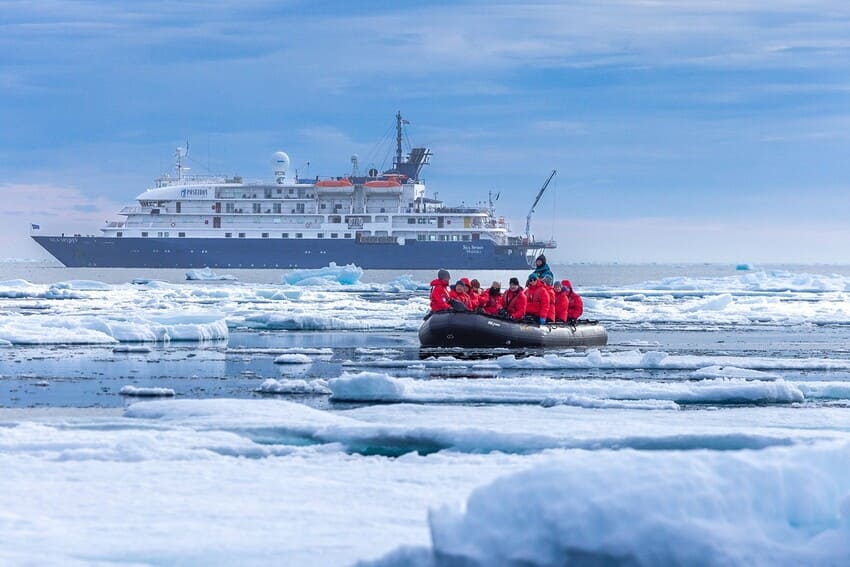
Who owns the Northwest and Northeast Passages?
Given its geographic location, the Northeast Passage is widely recognized as Russian-owned. The UN Convention’s Law of the Sea determines the waters near a coastal nation as an Exclusive Economic Zone, granting them special rights for exploitation, exploration and management of resources. Since the Northern Sea Route runs primarily along the Russian coastline, Russia requires foreign ships to obtain permits, pay fees for transit and may even require an escort for navigation and icebreaking assistance. In recent years, Russia has actively developed the Northern Sea Route, investing in nuclear-powered icebreakers and promoting the waterway as an attractive alternative to the Suez Canal.
Ownership status of the Northwest Passage is trickier. While Canada claims the waterway based on historic usage and control (as well as the fact that the route is running through the Canadian Arctic Archipelago), the United States and other nations dispute this and consider the passage an international strait. The dispute, which started around the middle of the last century, is still ongoing. A compromise was reached in 1988 by Canada and the United States, signing an agreement that the latter would seek permission from Canada before sending ships through the passage. But to this day, the United States refuses to recognize Canada’s claim. Disputes about sovereignty over the Northwest and Northeast Passages do not only affect global shipping, resource access and climate policies, but also dictate the military strategies of both Canada and Russia, as both regard the Arctic routes’ usage as a matter of national security.
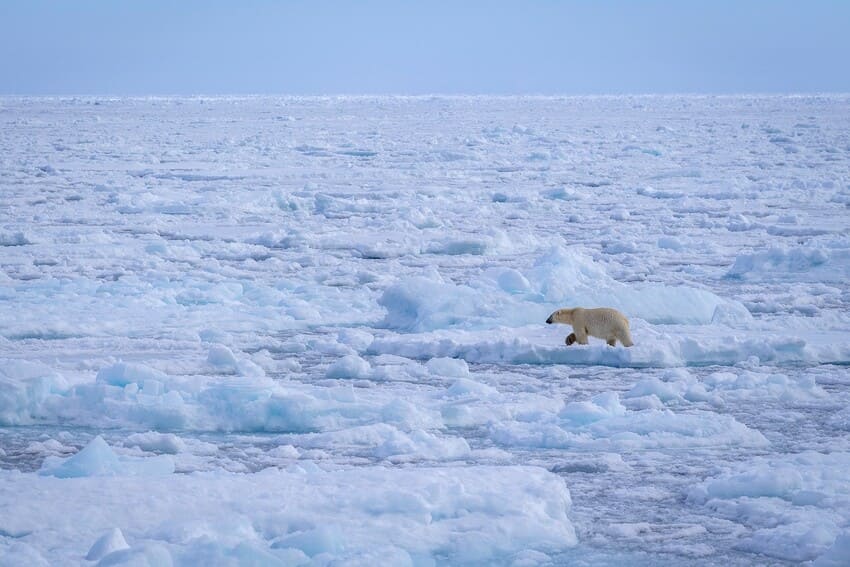
Why are the Arctic Passages so important?
Why sail from Europe to Asia in around 23 days using the Panama Canal when you can cut nearly 7,000 kilometers from your journey and make the trip in merely 15 days via the Northwest Passage? Faring the Northeast Passage instead of traversing the Suez Canal is equally time-saving, cutting the distance by two-thirds. This not only reduces fuel costs but, with regard to the Suez Canal route, reduces the risk of piracy encounters. Another economic perk of the Northern Sea Route is the possibility of increased cargo capacity, making shipping more profitable and efficient, since Arctic routes allow for larger vessel sizes than the Panama and Suez Canals.
Why aren't the Arctic routes used all the time?
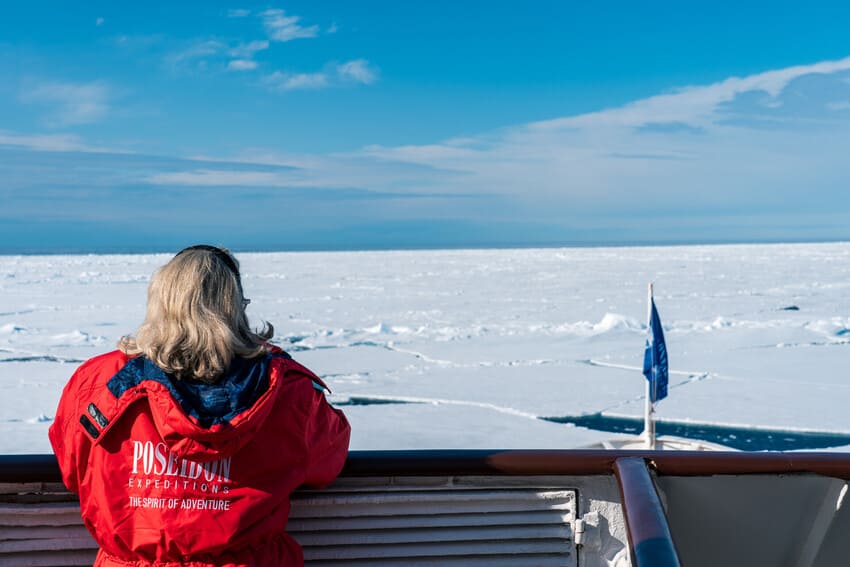
While the Arctic is warming up at rates of almost four times the global average, this gradual reduction of sea ice brings new opportunities for global shipping. Average annual temperatures in the Canadian territories above 60 degrees latitude north have risen by 2.3°C (4°F) over the last 70 years. The Russian Arctic shows a comparable warming of more than 3°C (5.4°F) since the 1970s. Even though Arctic waters are losing their cool, ice-free periods are still limited to three to four months of a year, usually from around July to September. Not all ships are suitable for cruising the unpredictable Arctic. Ships must be ice-strengthened or accompanied by icebreakers, impacting the cost of shipping. Infrastructure such as Arctic ports, facilities, shipyard and emergency services are still not ready to cope with heavy ship traffic. Even during the summer, sea routes are still unpredictable, as sea ice conditions may change quickly.
Opportunities Beyond Shipping
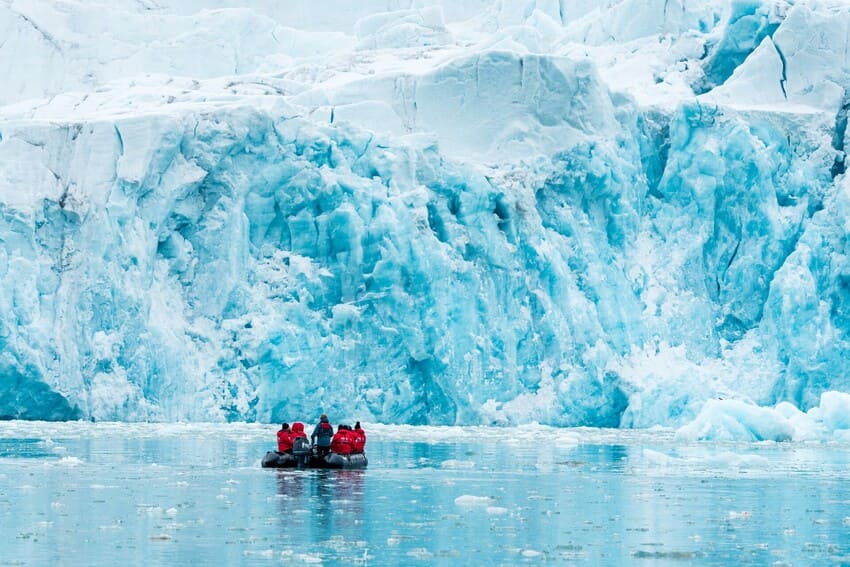
The increasingly ice-free Arctic Ocean isn’t just an appealing option for developing new shipping routes. According to a 2008 study by the U.S. Geological Survey, an estimated 90 billion barrels of undiscovered and recoverable oil and 1,669 trillion cubic feet of natural gas are locked in the Arctic region, with approximately 84 percent offshore. With Arctic ice receding, oil and gas exploration may become increasingly viable in the Arctic Ocean area.
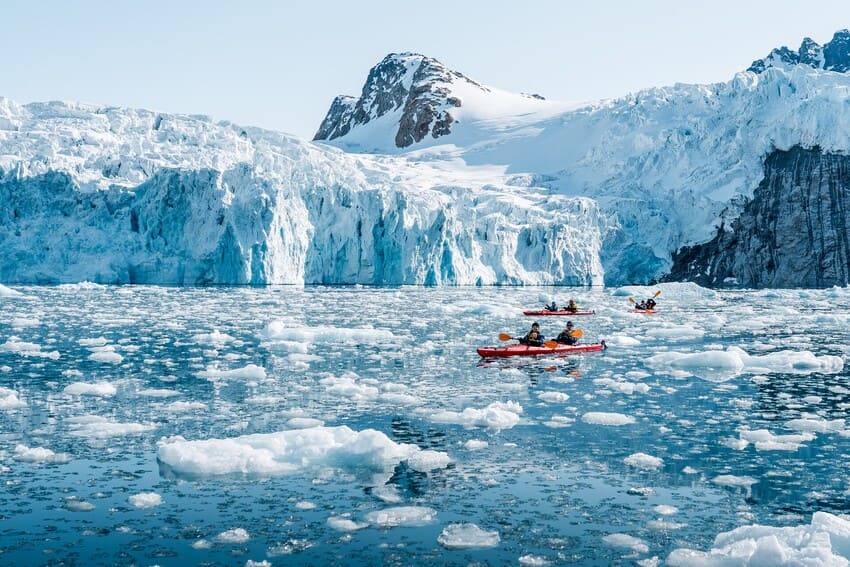
With warmer temperatures and increasingly accessible cruise ship routes, tourists are flocking to Greenland, Svalbard and northern Europe. Greenland’s tourism industry has developed significantly over the last decade, with a 62 percent increase in guest nights between 2013 and 2023. During the same timeframe, Iceland recorded a 156 percent increase in guest nights, and Svalbard’s capital, Longyearbyen, was able to double its guest nights. This not only brings infrastructure and business to previously laid-back Arctic regions, but also presents potential income streams and opportunities for the regions’ native populations.
Conclusion
A look at a Northeast Passage map doesn’t just show a waterway across the top of the world, it tells a story of human exploration spirit, geopolitical power, and a rapidly transforming Arctic. Once a treacherous and deadly adventure for early navigators, the Northeast Passage is now a strategic waterway connecting Europe and Asia, saving time and fuel, and reshaping global trade. But as nations continue to compete for access and influence, the fragile ecosystem of the Arctic Ocean is at risk. As of today, the importance of the Northeast Passage continues to grow, drawing global attention to how it will shape our changing world in the decades ahead.
FAQs
Why is the Northeast Passage important?
The sea route significantly shortens the shipping distance between Europe and Asia, which reduces cost, fuel consumption, emissions and travel time.
What is the difference between the Northwest Passage and the Northeast Passage?
The main difference is their geographical location and countries they traverse. The Northwest Passage is a waterway connecting the Atlantic and Pacific Oceans, running through the Canadian Arctic Archipelago. The Northeast Passage, also known as the Northern Sea Route, connects Erupe and Asia, passing by the northern coast of Russia.
Who successfully completed the Northeast Passage?
The first person to successfully sail the passage’s entire length was Finnish-Swedish explorer Adolf Erik Nordenskiöld in 1878-79 aboard the SS Vega. Nowadays it is frequently used for ships crossing from Europe to Asia. In 2024, around 37.8 million tons of cargo passed through the Northern Sea Route.
How long is the Northeast Passage?
The Northern Sea Route runs for approximately 5,600 kilometers (3,500 miles) along the northern coast of Russia, from the Barents and the Kara Sea, through the Kara Strait and Chukchi Sea to the Bering Strait.