Mountains of Antarctica: Extraordinary Peaks on a Frozen Continent
Antarctica features a diverse terrain with mountains, volcanoes, and valleys. And even beneath the continent’s ice sheets lies hidden an ancient landscape with lakes, rivers, and mountain ranges comparable to the European Alps. If you’re looking to complete the Seven Summits challenge, your journey will inevitably lead you to Mount Vinson, Antarctica’s highest mountain, sooner or later!
Ellsworth Mountains – Home of the Seventh Continent’s Summit
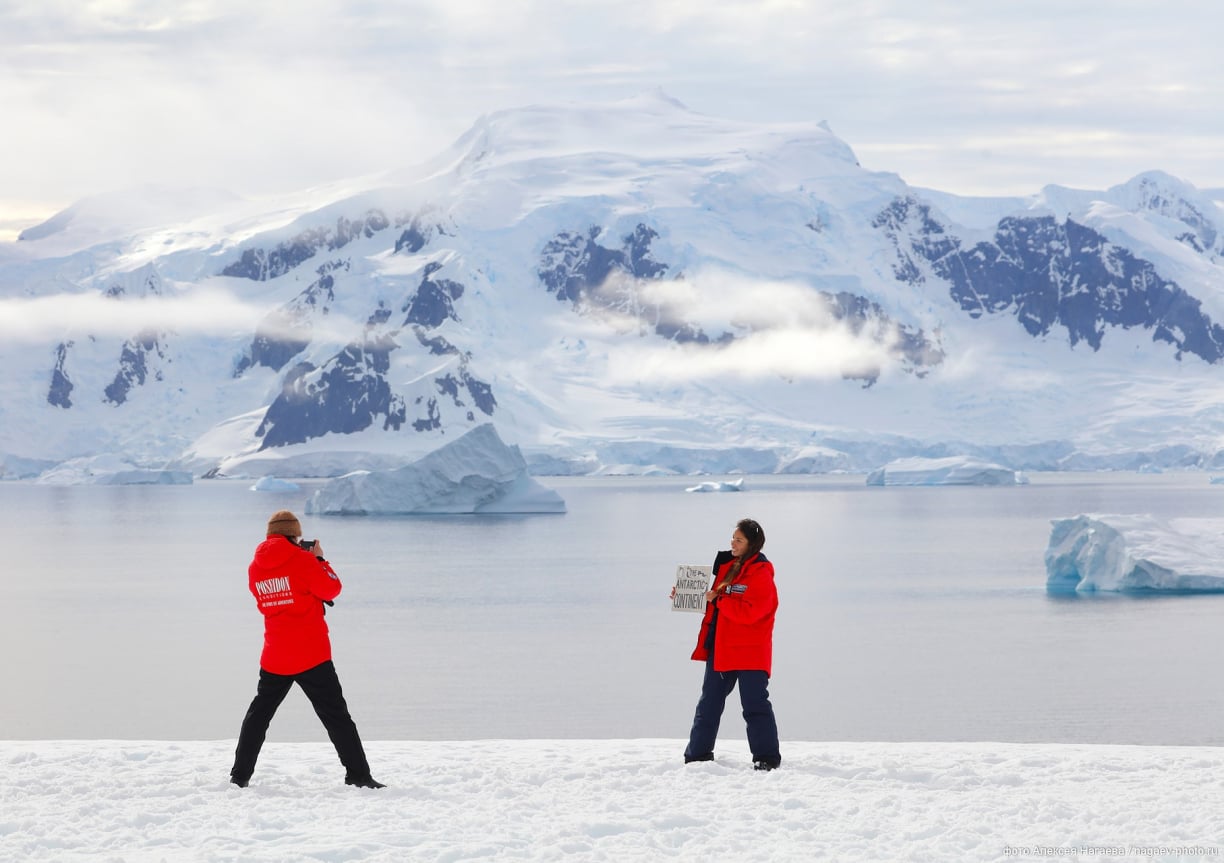
The Ellsworth Mountains, located in West Antarctica, formed shortly after the breakup of the supercontinent Gondwana around 180 million years ago, they consist of folded, metamorphosed marine sediments and volcanic rock. Tectonic uplift and compression formed the mountain range into the shape you can see today.
With an average elevation of 1,800 meters (5,900 feet), stretching roughly 350 kilometers (217 miles) in a north-south direction, the range features the highest peaks on the continent, among them Mount Vinson (Antarctica’s highest mountain) with an elevation of 4,892 meters (16,050 feet). The Minnesota Glacier divides the mountain range into the lofty northern part featuring its highest peaks, including Mount Vinson, known as the Sentinel Range, and the Heritage Range in the south, featuring lower mountains, rugged nunataks, and intricate ice formations.
Interesting fact: Did you know that Mount Vinson has a near 100 percent success rate among climbers? And since the first ascent in 1966 by an American team, there have been no fatalities among climbers up to today. Despite its remote location, Mount Vinson attracts climbers from around the world who master the extremely challenging conditions and temperatures of around -20 to -30°C (-4 to -22°F) during the climb. During the 2024-25 season, 14 climbers reached the summit, and, as of 2025, a total of around 1,200 people have successfully reached Vinson Massif’s summit plateau.
Peaks and Pinnacles of the Sentinel Range
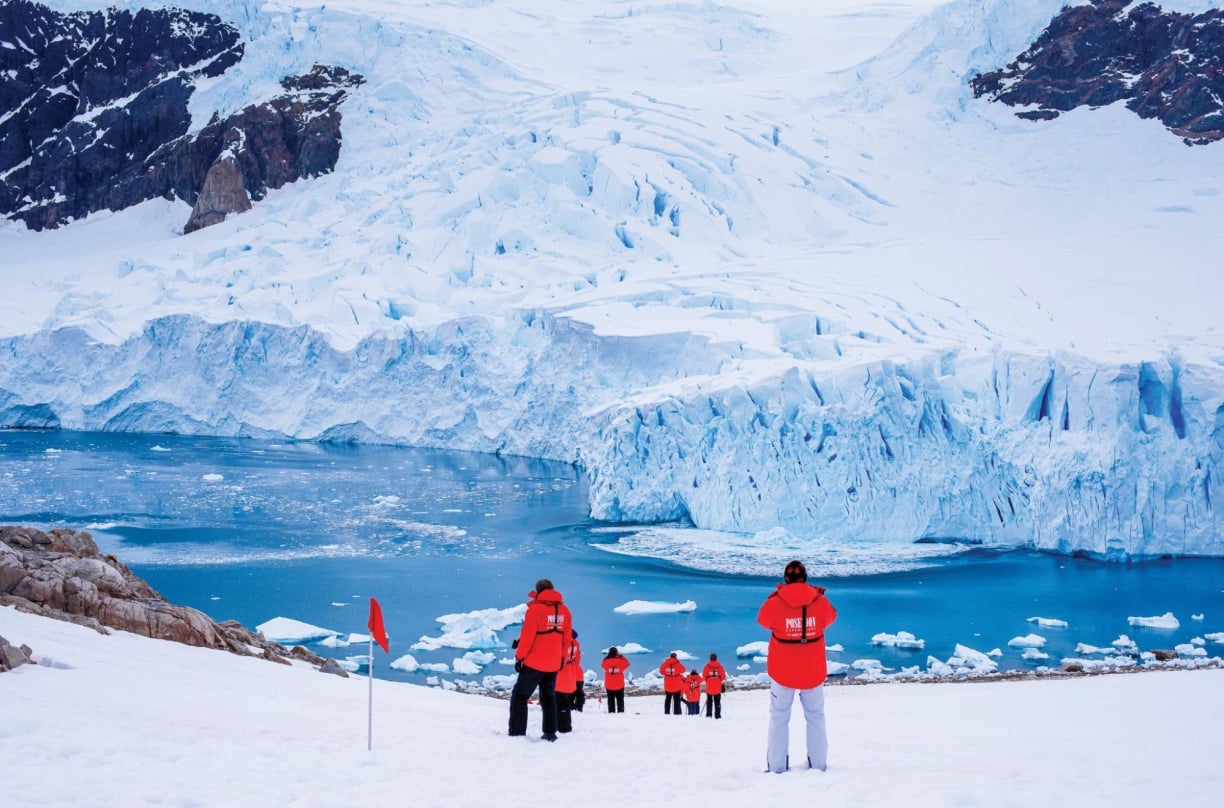
Featuring the highest mountain of the continent, Mount Vinson (4,892 meters/16,050 feet), which is also one of the world’s famed Seven Summits, the northern part of the Ellsworth Mountains is a popular destination for climbers from around the world. The first party to climb Mount Vinson in 1966 was an American Antarctic mountaineering expedition led by Nicholas Clinch, naming the highest peak on the continent after U.S. Congressman Carl Vinson, who was a key supporter of Antarctic exploration at that time.
If you plan to climb Mount Vinson, December to February is the best time, when temperatures climb to around -20°C (-4°F) and the polar day provides 24 hours of daylight. While it’s not technically challenging to climb Mount Vinson (there are no steep ice-climbing sections), it’s physically demanding due to its high altitude, extreme cold, and remote location. But it’s not just Mount Vinson peeking into notable heights. Mount Shinn (4,528 meters), Mount Gardner (4,528 meters), and Mount Epperly (4,480 meters) are considered rather accessible peaks.
Fun Fact: The second highest peak, Mount Tyree (4,852 meters/15,919 feet), stands at just 40 meters (131 feet) below Mount Vinson’s summit, but due to its extreme remoteness and technical difficulty, it’s one of the rarely climbed peaks in Antarctica, and more people have been on the International Space Station than on top of Mount Tyree!
Snowy Hills of the Heritage Range
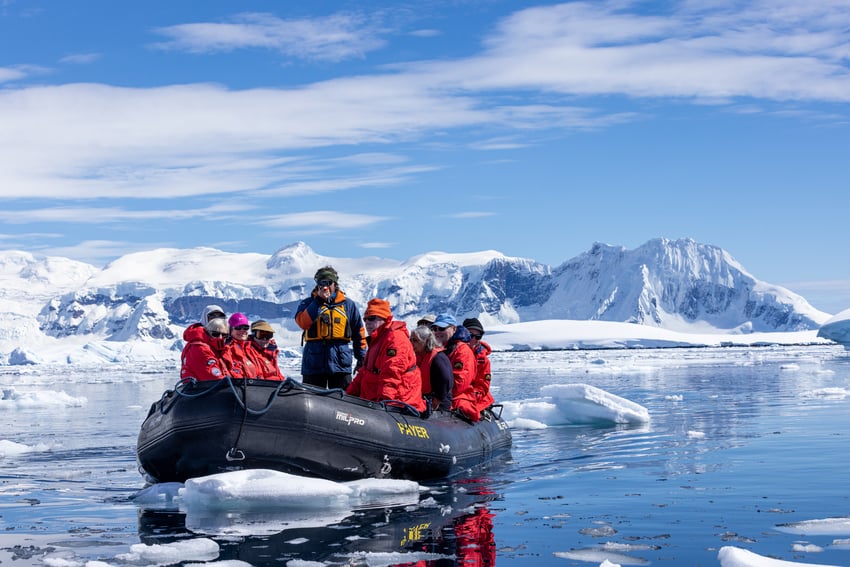
Although at a lower elevation, the Heritage Range’s landscape is equally stunning, featuring rugged hills, such as the Marsh, Patriot, Independence, and Enterprise Hills, as well as extensive ice valleys and glaciers, such as the Horseshoe Glacier and Valley. This lesser-visited southern part of the Ellsworth Mountains is also a significant place connected to aviation in Antarctica (which travelers fearing seasickness wanting to fly the Drake Passage may especially appreciate!). Here at Patriot Hills, the first inland blue-ice airstrip allowed for the first conventional, wheeled aircraft to land in 1987. This not only created a support and transportation system for mountaineers aiming to reach Mount Vinson’s summit but also supported various South Pole and Trans-Antarctic Expeditions over the years.
Dividing the Ice-Sheets – The Transantarctic Mountains
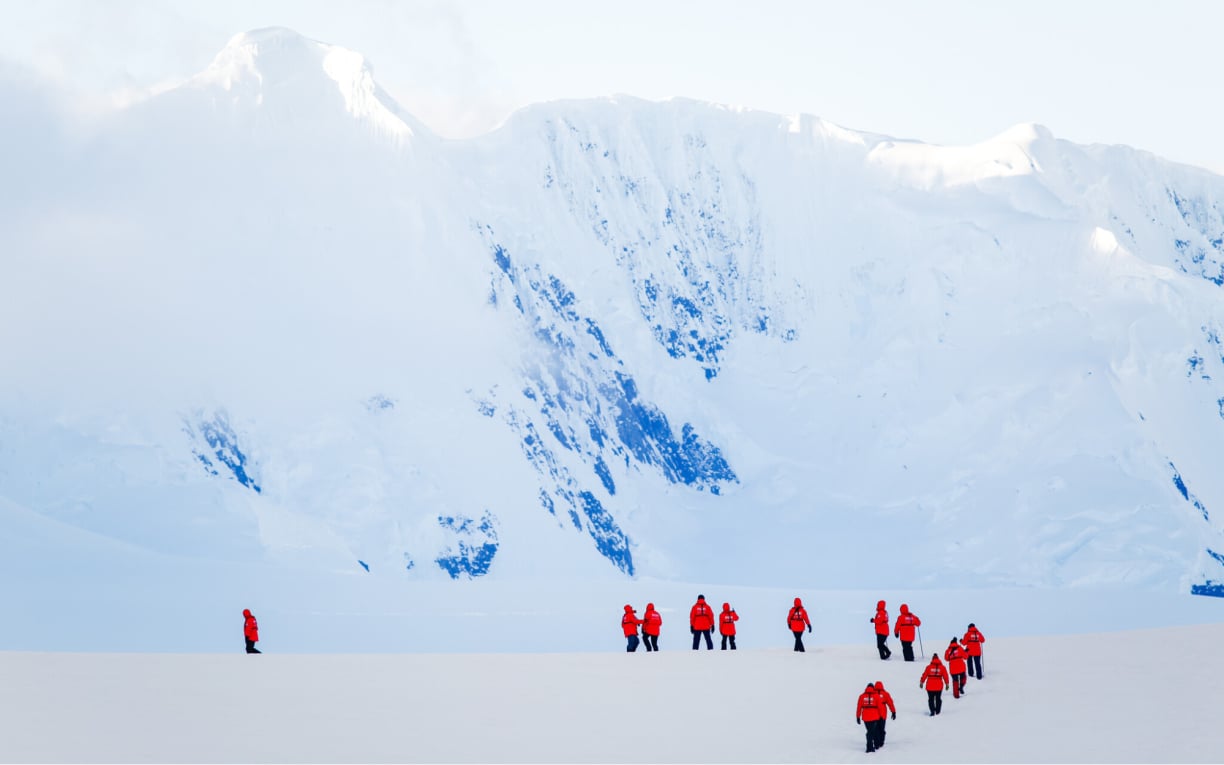
While most of the world’s mountain ranges were formed through tectonic compression or folding, the Transantarctic Mountains originated through thermal buoyancy. This happened when hot earth mantle material beneath the edge of East Antarctica drove the uplift of this range. The mountain range stretches approximately 3,500 kilometers (2,175 miles) from the Weddell Sea to the Ross Sea, dividing the continent into East and West Antarctica. James Clark Ross was the first to sight the mountains in 1841, and it took another 60 years until several expeditions during the 1901-04 British National Antarctic Expedition ventured deeper into its alpine territories.
It’s here that you can find proof that Antarctica was once a lush green fauna and flora paradise! Mount Kirkpatrick, the highest mountain of the range, is located around 700 kilometers (434 miles) from the South Pole and stands at 4,528 meters (14,856 feet). Mount Kirkpatrick features the famous Hanson Formation, a geological rock group where scientists discovered dinosaur fossils among many other specimens, such as fossilized trees and mammal-like reptiles.
Ice-Free Antarctica in the Transantarctics
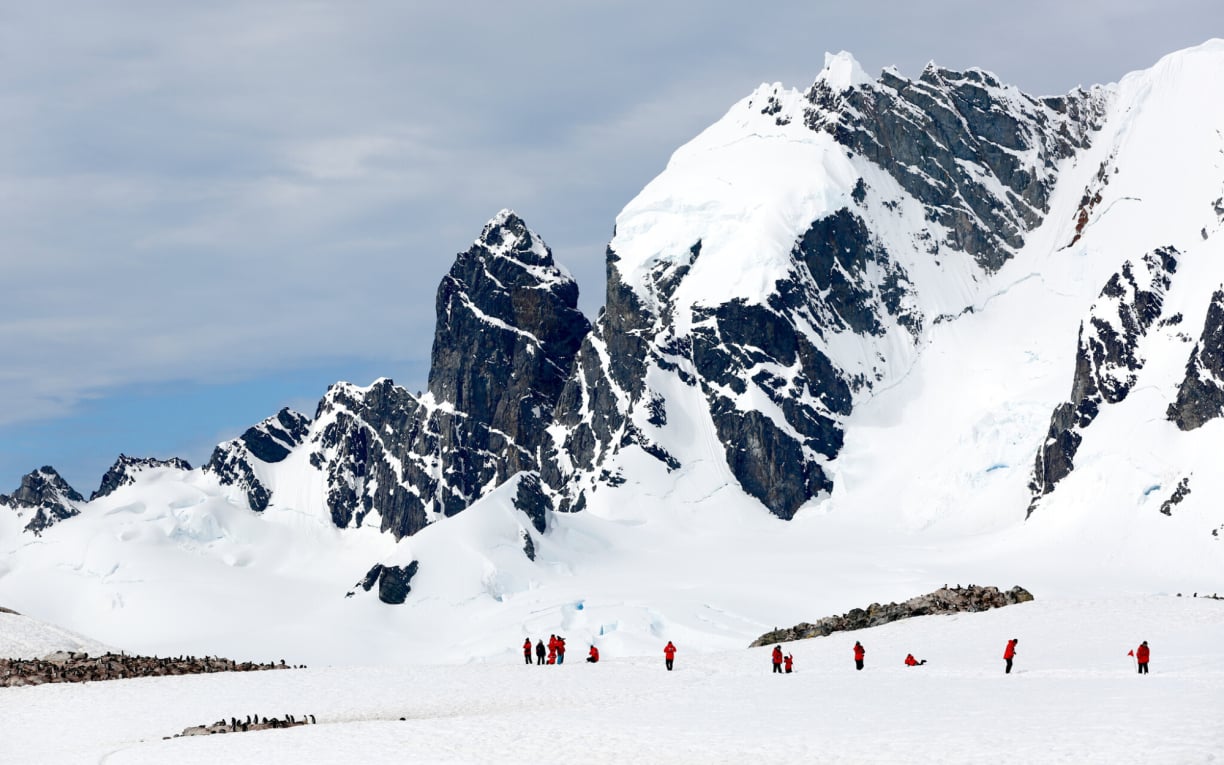
Did you know that Antarctica is not all ice and snow? Nestled within the Transantarctic Mountains, you’ll find the McMurdo Dry Valleys, one of the very rare ice-free spots on the continent and one of the driest places on Earth. These rocky valleys feature saline lakes, a unique ecosystem, and extreme conditions often deemed as the terrestrial analog of the planet Mars. If you ever make it to the valleys, you’ll spot the iconic, eerie mummified seal carcasses scattered across the valleys. These poor souls apparently stumbled into the valleys, which are around 64 kilometers (40 miles) off the coast, after presumably losing orientation. Read more about this incredible place in our blog post about the McMurdo Dry Valleys!
And ice-free places reveal a part of Antarctica’s history! At the mostly ice-free Mount Kirkpatrick in western Antarctica, you can find a renowned dinosaur fossil site!
The Andes of Antarctica
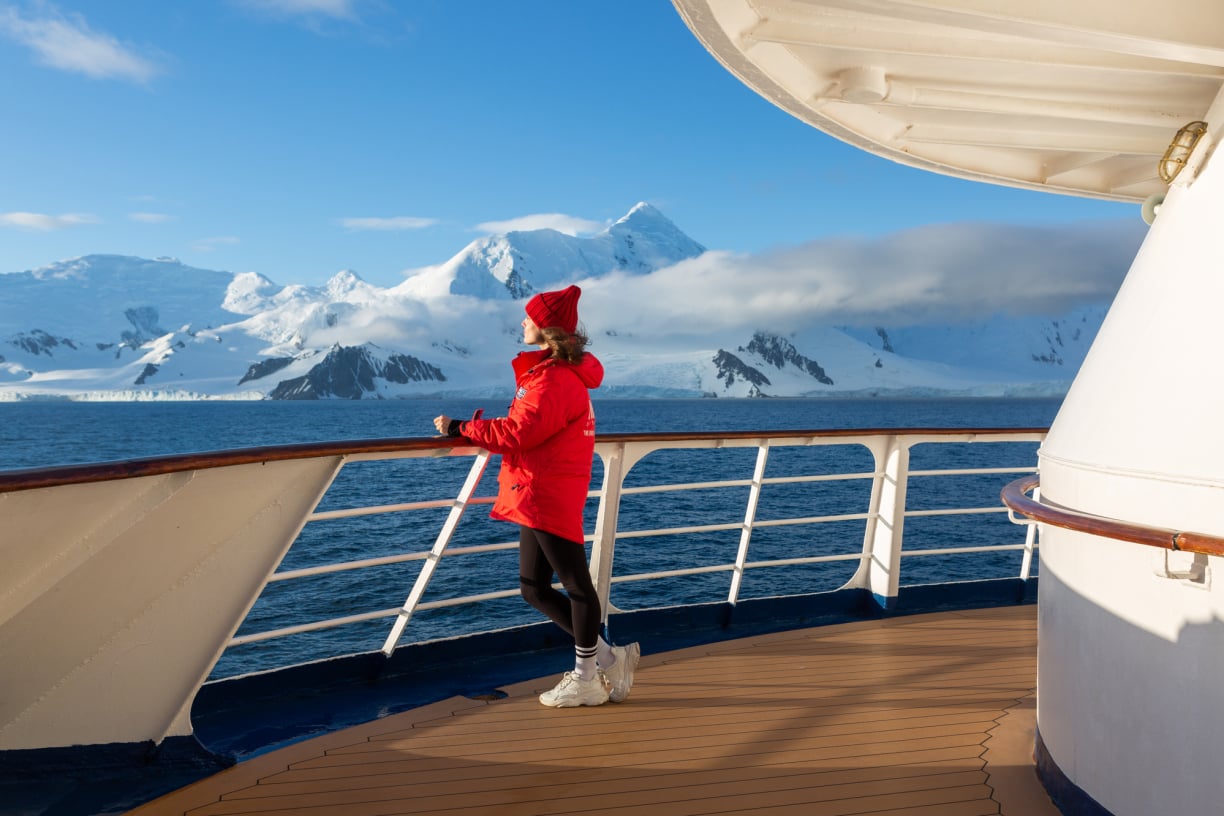
Did you know that the South American Andes may extend all the way to Antarctica? According to geologists, the Antarctic Peninsula Cordillera mountains represent a remote extension of the Andes. They’re often called Antarcandes for that reason and feature a sheer and rugged appearance, with deep glacier valleys and sharp ridgelines, making them technically difficult peaks to climb. Due to the mountain range’s proximity to South America and the moderate climate on the Antarctic Peninsula, the Antarctic Peninsula Cordillera are among the most frequently visited and studied mountains in Antarctica. For decades, Mount Jackson, with a height of 3,181 meters (10,466 feet), was considered the highest in the range, until updated satellite data and aerial surveys conducted by the British Antarctic Survey in 2017 found Mount Hope, at 3,239 meters (10,627 feet), to be the highest.
Of Kings and Queens – East Antarctic Mountain Ranges
Some of the most incredible nunatak formations of Antarctica are scattered around Queen Maud Land, named after the Norwegian queen Maud of Wales during its discovery in 1930. Its visually stunning peaks protruding above the endless ice sheet resemble stone islands in a sea of snow and consist of steep rock spires and sharp ridges. Here you’ll find the Filchner, Drygalski, Orvin, and Mühlig-Hofmann Mountains, as well as the Humboldt Mountains, known for their iconic, towering rock walls. While visitors admire their picturesque appearance, scientists and geologists marvel at the opportunity to look at them as a window through time, studying how these ancient rocks formed during the assembly of the supercontinent Gondwana.
For glaciologists and climate scientists, the Lambert Glacier, which is encircled by the Prince Charles Mountains (one of the largest mountains of East Antarctica), is a major focus for studying climate change. Stretching over 400 kilometers (248 miles), the Prince Charles Mountains include the Athos, Porthos, and Aramis Ranges, named after the characters of The Three Musketeers. This region also harbors Mount Menzies, which, at 3,228 meters high (10,591 feet), is one of the highest mountains of East Antarctica.
A World Beneath the Ice – Subglacial Mountains and Volcanoes
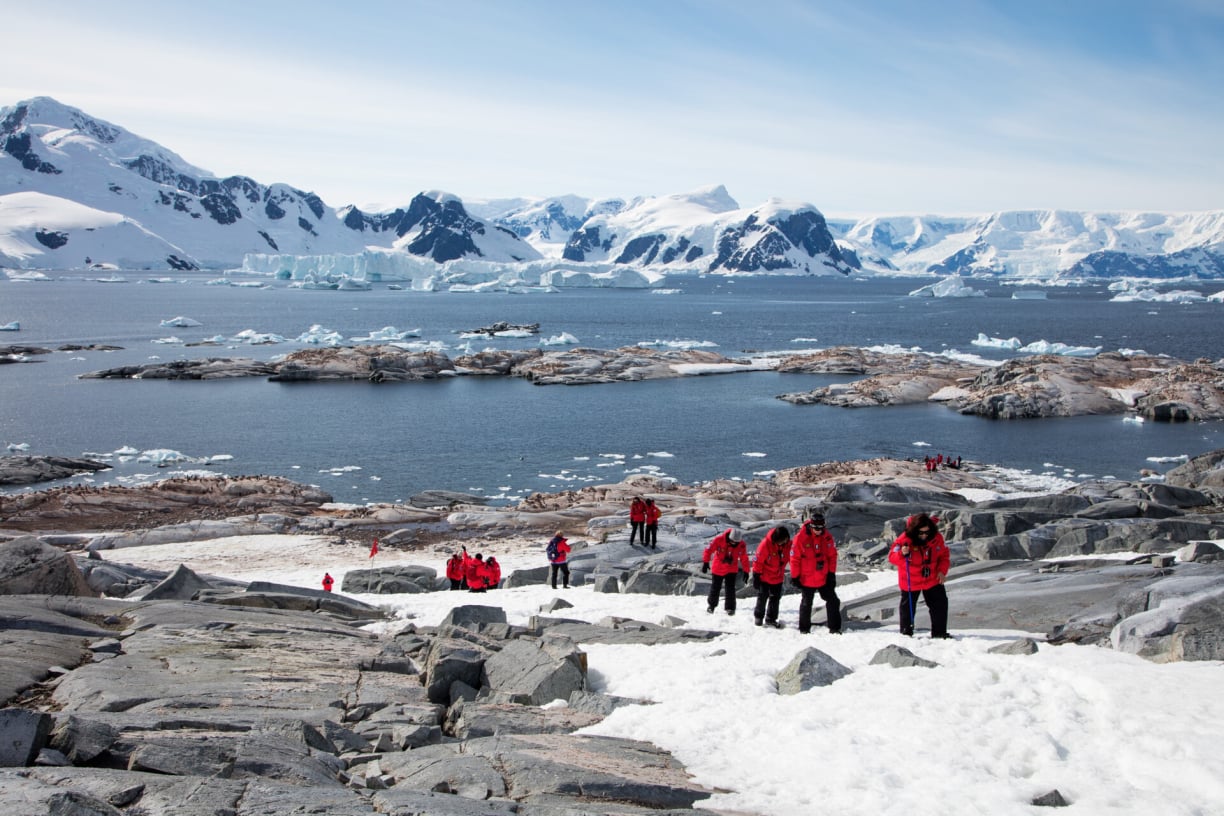
While blindingly white ice sheets stretch as far as the eye can see, a hidden world of towering mountains and active volcanoes hides in a subterranean realm several miles below the surface. Radar and gravity mapping techniques suggest that several dormant and active subglacial volcanoes exist in the Marie Byrd Land region in West Antarctica. And in some cases, such as under the Ronne Ice Shelf in West Antarctica, there is an entire marine ecosystem hidden under the ice shelf! Beneath the Ronne Ice Shelf with its rocky seafloor, you can find a diverse ecosystem of sponges and other thriving filter feeders.
The Gamburtsev Mountains are an alpine range near the polar plateau under the East Antarctic Ice Sheet at the heart of the continent. In 1958, a Soviet geophysical expedition discovered the elusive and entirely ice-covered mountain range using seismic techniques. Comparable to the European Alps, the Gamburtsev range stretches over 1,200 kilometers (750 miles) with peaks as high as 2,700 meters (9,000 feet). Studying Antarctica’s diverse landscape below the ice gives important clues about ice sheet stability, climate history, and how the continent formed around 34 million years ago.
Fun Fact: Nobody to this day has actually ever seen the Gamburtsev Mountains! Although studied via ice-penetrating radar, gravity, and magnetic measurements, the range is completely ice-locked beneath the surface.
Ross Island’s Volcanoes
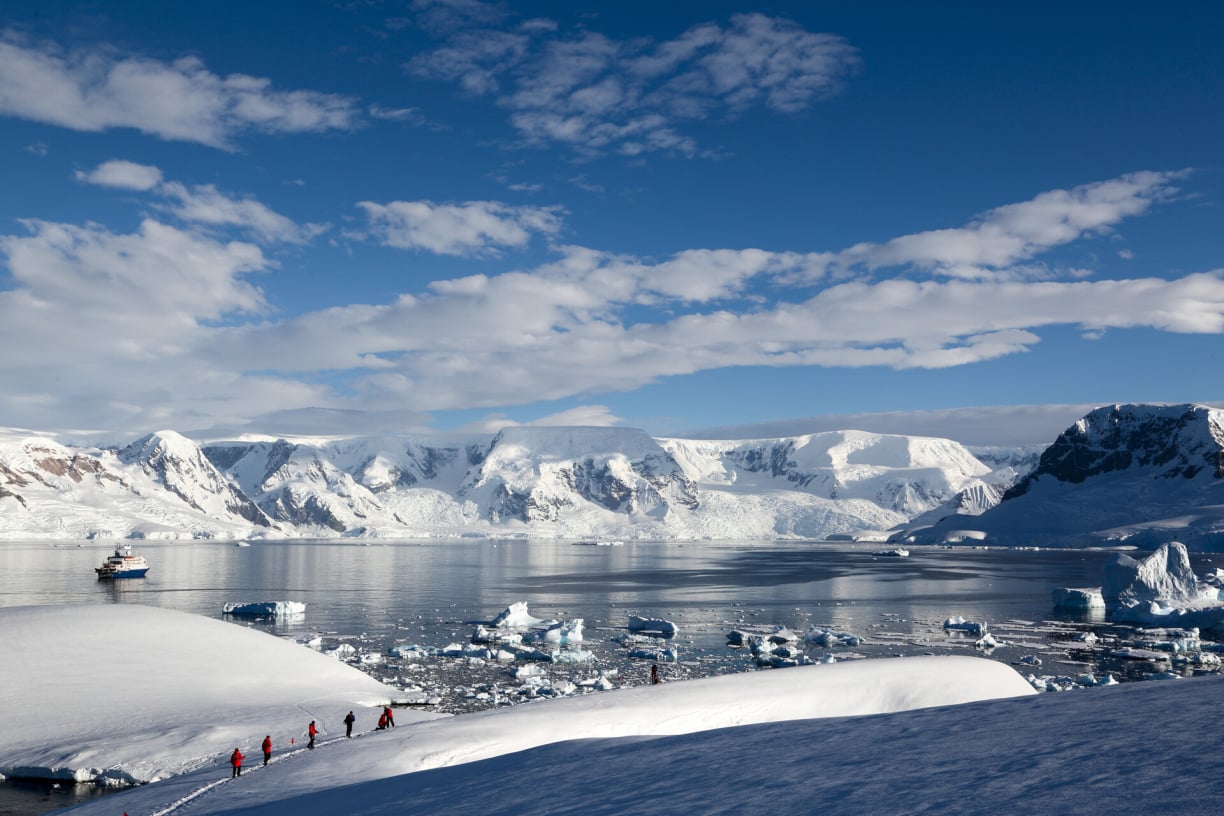
he 2,460-square-kilometer-large (950 square miles) Ross Island features Mount Erebus (3,794 meters/12,448 feet), the southernmost active volcano in the world, as well as its three extinct and slightly lower companions, Mounts Terror, Terra Nova, and Bird. Both volcanoes are located within the West Antarctic Rift System, separating East and West Antarctica, which significantly influenced Antarctica’s tectonic evolution and formation. The McMurdo Station, one of the largest research bases in Antarctica, is located on the southern end of Ross Island, and due to its proximity, it facilitates scientific projects around the island’s volcanic formations. With the island being part of the West Antarctic Rift System, such studies contribute to understanding global plate tectonics and motions between East and West Antarctica.
Interesting fact: Mounts Erebus and Terror were named after Sir James Clark Ross’ expedition ships HMS Erebus and Terror during his Antarctic expedition in 1841.
How to Visit the Mountains of Antarctica
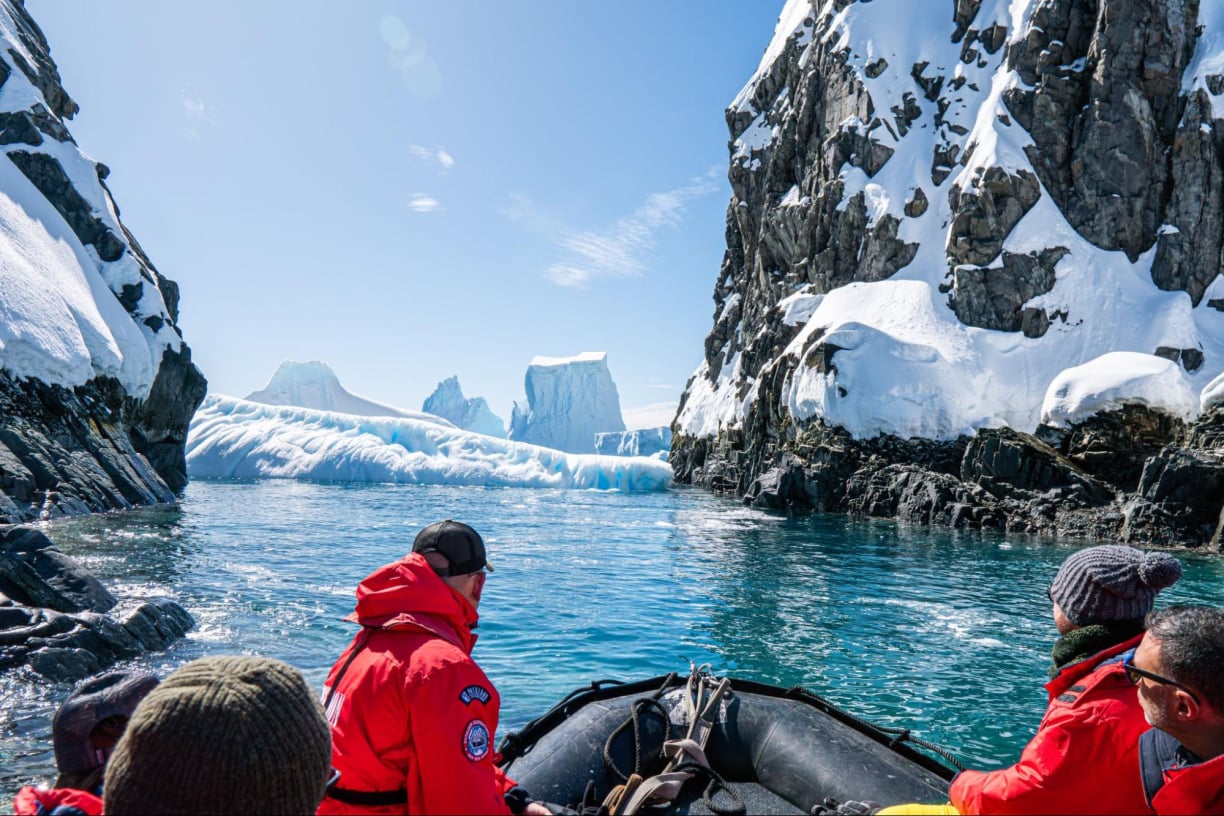
Whether you are an experienced mountain climber or a leisurely adventure traveler, there are various ways to see the incredible mountains in Antarctica. The dramatic peaks of the continent showcase the wild beauty of the natural world at its most extreme. If you’re seeking an extreme journey and are a seasoned high-altitude climber, consider joining a professional climbing expedition. Or fly to Union Glacier Camp for a pricey getaway in the Antarctic interior, enjoying heated tent camps, outdoor activities, and a glimpse of the endlessly bleak white deserts of the continent. If you’re looking for a seasoned adventure expedition, giving you the highlights of Antarctica with incredible landscapes, then an expedition cruise is the best choice! You’ll get to see massive icebergs in crystal-clear waters and unique wildlife, which is mostly present around the shores and not in the continent’s interior.
Check out our cruise schedule for the upcoming 2026-27 Antarctic season and step on the Seventh Continent as part of an authentic polar expedition!
FAQs
Are there mountains in Antarctica beneath the ice sheet?
Antarctica features major mountain ranges such as the Antarctic Peninsula Cordillera, the Queen Maud Mountains, the Ellsworth Mountains, and the Transantarctic Mountains. Buried beneath a thick ice cover, the Gamburtsev Mountain Range is the highest point of the East Antarctic ice sheet. They are completely covered by ice but are estimated to be about the same size as the Alps in Europe.
Which mountain is the highest peak in Antarctica?
Mount Vinson (located on the West Antarctic ice sheet) is, at 4,892 meters (15,050 feet), the highest mountain on the icy continent. Along with other nearby peaks such as Mount Tyree, Mount Shinn, and Mount Gardner, they form the Vinson Massif.
Can tourists visit Antarctica's mountains during expedition cruises?
During most expedition cruises along the Antarctic Peninsula and in the South Shetlands, for example on Livingston Island and Deception Island, you may see rugged mountains, picturesque peaks, and glaciers while making landings and from aboard your ship, but usually climbing them is not part of the regular program. There are specialized expeditions usually departing from South America that include mountaineering, but these usually require prior experience, a good level of fitness, and skills such as skiing, climbing, and trekking through steep terrain.
Are there active volcanoes among Antarctica's mountains?
There are currently two active volcanoes in Antarctica: Mount Erebus and Deception Island. You can visit the caldera of Deception Island on some of our cruises to the Antarctic Peninsula.
How do scientists study mountains hidden under Antarctica's ice sheets?
Cutting-edge technology lets scientists peer under the thick ice cover in Antarctica using ice-penetrating radar, radio-echo sounding, satellite data, gravity and magnetic field measurements. With these methods, researchers have found valleys, high mountain ranges, canyons, rivers, and lakes hidden under the snow and ice. And, at the Ronne Ice Shelf, scientists found an entire marine ecosystem flourishing beneath. In some places, such as the mostly ice-free Mount Kirkpatrick, researchers can study the fossils undisturbed by the ice cover.