Macaroni Penguin: Facts, Diet, Habitat
Macaroni Penguin
Macaronis are fashion icons among penguins! Sprucing up their black and white regular penguin attire, they feature a yellow crest above their reddish eyes. When 18th century English sailors spotted these penguins, they gave them their iconic name, as they resembled macaronis, young men of the time known for their colorful fashion sense and flamboyant hair-dos. Macaroni penguins are the largest among the six species of crested penguins in the world and you can find them on the subantarctic islands in the Indian and South Atlantic oceans.
Appearance and Features
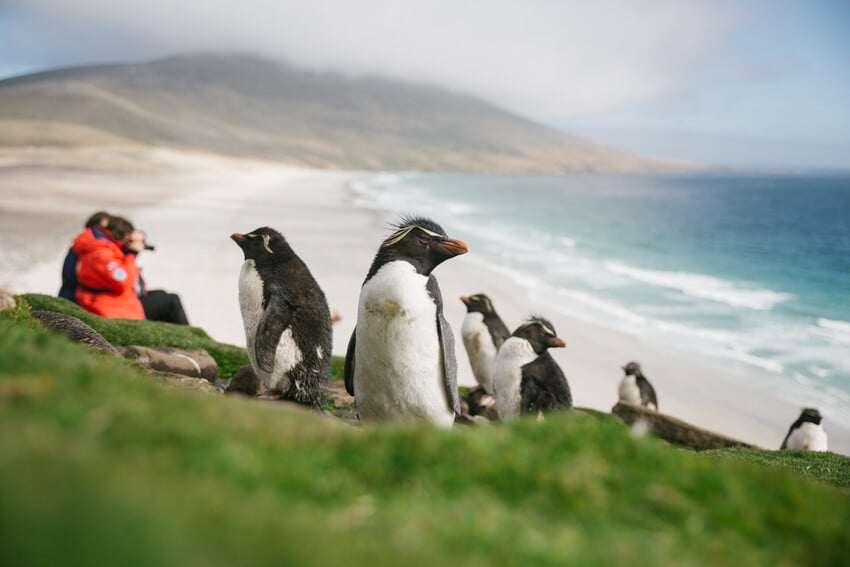
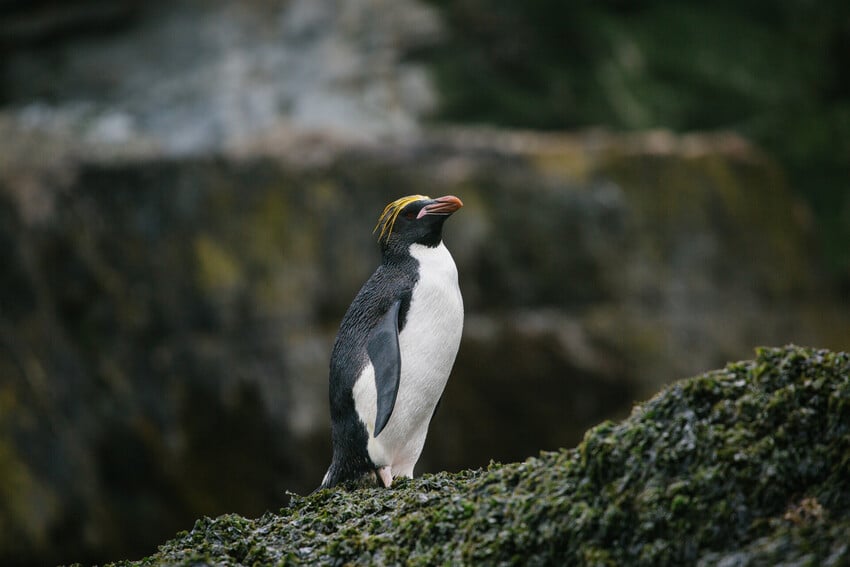
Because of their iconic appearance, macaroni penguins (scientific name: Eudyptes chrysolophus) are easily distinguishable from most other penguins. As the largest of the crested penguin species, adults reach a height of around 50 to 70cm (20-28 inches) and a weight of around 6kg (12 pounds). Male macaroni penguins tend to be slightly larger and heavier than females. Both genders have black bodies with white bellies.
In comparison to other crested penguins, the feathers in the yellow crest of macaronis meet in the middle of their foreheads, looking just like a colorful unibrow. Other penguins of this species, such as the erect-crested penguin native to the New Zealand area, feature a split yellow-orange crest above each eye (similar to extremely long feathery lashes). Little macaroni chicks are grey and white and aren’t born with the signature crest. It fully develops at age three or four, just a year or two before breeding age.
Macaroni Penguin Habitat and Geographic Range
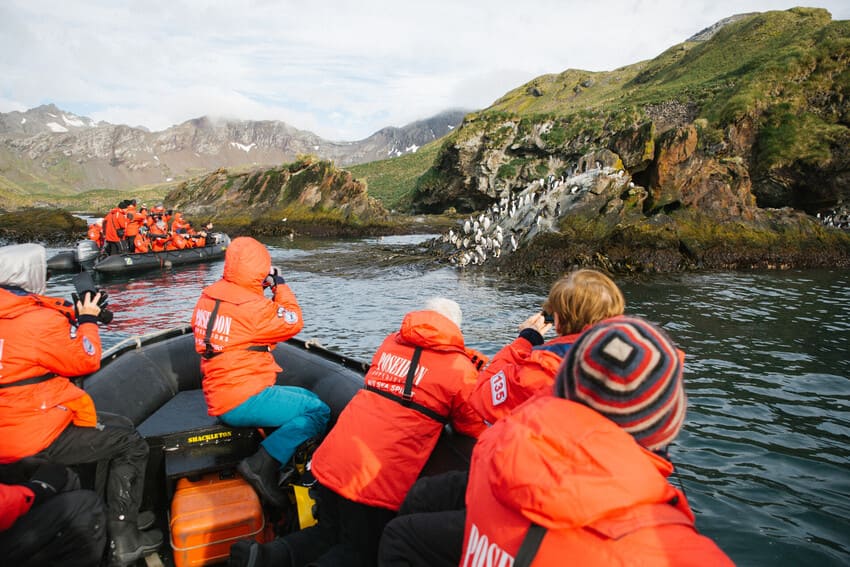
Macaroni penguins live in the Southern Hemisphere and are found around the Antarctic Peninsula, the subantarctic islands (such as South Georgia, South Orkney, South Shetland and the Kerguelen and Falkland Islands), as well as Tierra del Fuego in South America and islands in the Indian Ocean. Nine million breeding pairs are found at over 50 sites, with over 216 colonies worldwide in total. The highly migratory macaroni penguins only come ashore during breeding season, spending most of their life at sea.
Other members of the eudyptes species such as the erect-crested, the fiordland and the snares penguin are endemic to New Zealand, where you can find their breeding colonies on the South Island, Bounty and Antipodes Islands.
Diet and Foraging Behavior
The nutritious krill of the Southern Ocean is the macaroni’s main source of food, supplemented by fish, squid and crustaceans. Like many other penguin species, macaronis swallow small stones, which is believed to aid with digestion of the hard exoskeletons of crustaceans or to help with diving. And the macaroni penguin is an amazing diver! While they find most of their prey at a depth of 15 to 70m (49 to 229 ft.), they are able to dive as deep as 100m (330 ft.). Macaronis are intrepid travelers, covering distances of 400km (250 miles) and more to find suitable foraging sites.
Social Behavior and Mating Rituals
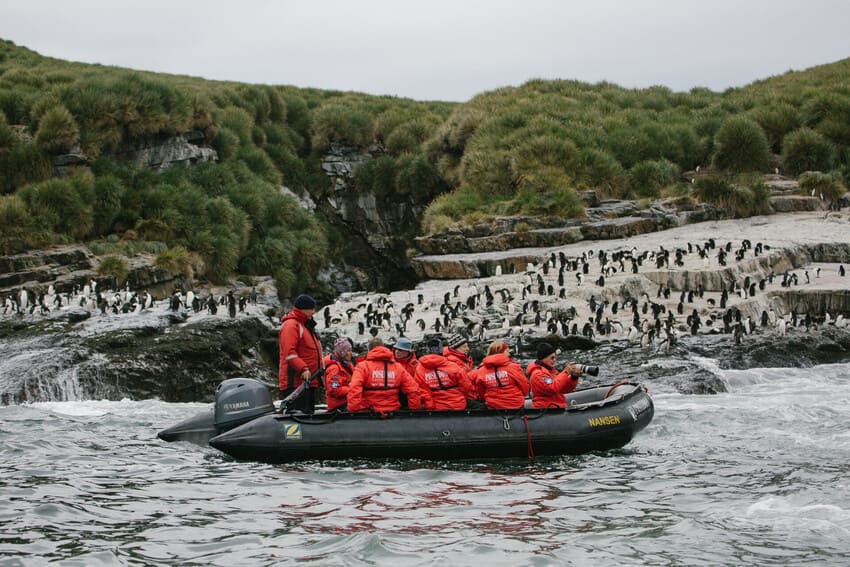
Macaroni penguins prefer rocky coasts and cliffs, as well as tussock grassy areas if available. Breeding in dense and noisy colonies braying loudly, they build nests made of small stones, tussock grass or even just on bare rock. Starting from October, adult macaroni penguins return to shore for breeding season after feeding all winter at sea. While female macaroni penguins lay two eggs, penguin parents often refrain from incubating the first egg, pushing it out of the nest. This first smaller egg is followed by a larger second egg, which is then incubated by both parents in long shifts until it’s ready to hatch after 33 to 39 days. On rare occasions, penguin parents will incubate both eggs.
While penguin dads take the first 3 to 4 week shift after birth to look after the chick, female macaroni penguins forage for food, which they bring back to the nest. After that, both parents leave to feed in the sea and chicks join a so-called crèche. These penguin nurseries are guarded by a few adult penguins staying behind and protecting the young from predators. This works like daycare in the human world. When a chick’s parents return, they find each other by their unique call.
About 11 weeks after hatching, young penguins venture out on their own and become fully independent. Females usually reach sexual maturity at around five years, while males usually mate from around six years of age.

Predators and Threats
Look out for killer whales and fur and leopard seals if you’re an adult macaroni penguin. Chicks are at danger to fall prey to predatory birds such as skuas, giant petrels, gulls and sheathbills.
Conservation Status
Some surveys studying various breeding populations worldwide suggest a rapid decline in numbers since the 1970s. This led to macaronis’ classification on the IUCN (International Union for Conservation of Nature) Red List as vulnerable. This status stands to this day despite a total headcount of around 18 million individuals and macaronis being one of the most abundant penguin species in the world.
Top Facts About Macaronis
Their scientific name (Eudyptes chrysolophus) translates from Latin as “good diver” (eudyptes) “with a golden crest” (chrysolophus)
English explorers gave them the iconic name macaroni, referring to the flamboyant male fashion icons of 18th century Italy
Macaroni penguins hop and bounce while ashore, instead of waddling, like other penguin species
Macaroni penguins are monogamous and mating rituals include the pair swinging their heads from side to side
Macaronis molt once a year to replace their coat with new feathers
Macaronis are the largest of the crested penguins
FAQ
How long do macaroni penguins live?
They live between eight and 15 years in the wild.
How many macaroni penguins are there in the world today?
The global population of Macaroni penguins is estimated at 18 million individuals.
How do macaroni penguins survive in Antarctica?
Most of the macaroni penguin colonies in the region are located on subantarctic islands (with one rookery on the Antarctic Peninsula), where temperatures are milder compared to continental Antarctica.
Do macaroni penguins have any predators?
Predators of adult macaroni penguins are fur and leopard seals, as well as killer whales. Chicks and eggs are easy prey for predatory birds such as skuas, giant petrels and gulls.