Longyearbyen
Longyearbyen
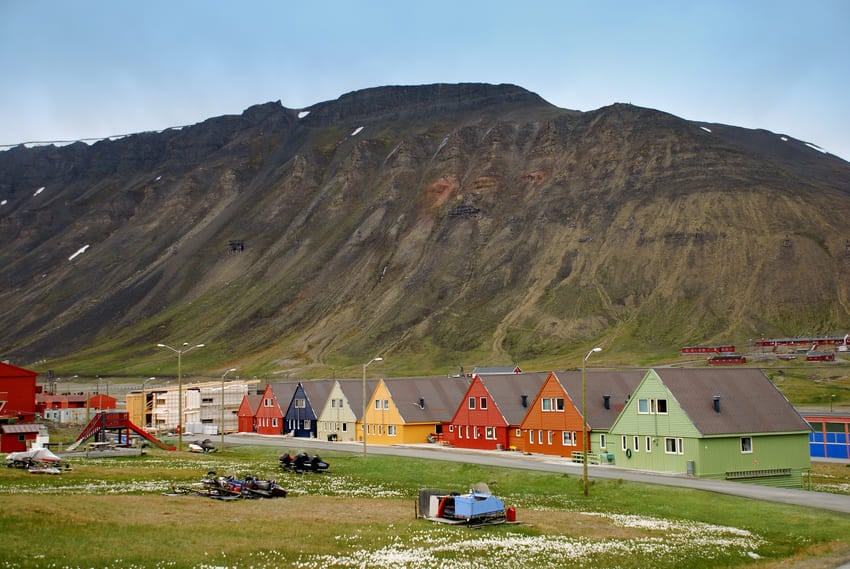
If the labels remote and cold don’t catch your attention, then how about cosmopolitan and exciting? As the northernmost city in the world, Longyearbyen compensates for its remote and isolated location by offering an array of exciting events and things to do. This place is not just for lovers of the extreme, but also for the casual coffee sipping, gourmet meal enjoying, culture chasing and comfort-indulging traveler.
Geography and Location
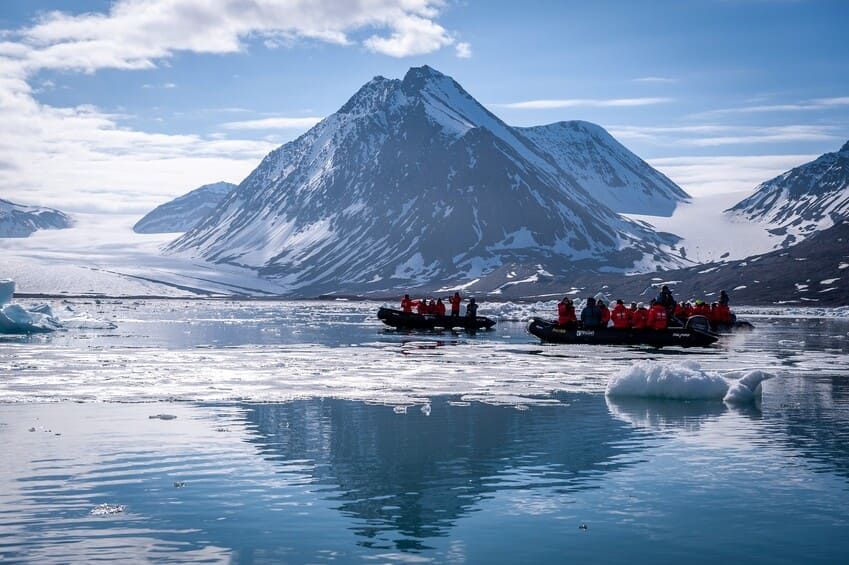
If you’ve ever wanted to visit the North Pole, a visit to Longyearbyen is an easy way to get as close as possible without plunging into a full blown Arctic expedition. It’s the closest city to the North Pole, located only 1,380km (860 miles) south of it, which is roughly the distance between New York and Chicago. Norway’s mainland is 800km (500 miles) and Oslo around 1,900km (1,180 miles) south of Longyearbyen and, if you plan to visit Svalbard by plane, you’re likely transferring in the Norwegian capital. The capital is located on Spitsbergen, the largest island in the Norwegian archipelago. With its remote northerly location, it’s the perfect gateway to the Arctic wilderness.

History of Svalbard
Svalbardi – A Norsemen’s discovery?
Ancient Norsemen may or may not have discovered the archipelago during Viking times around 1194, depending on if you trust the ancient entry about the discovery of Svalbardi (meaning cold shores in Norse language) in Icelandic chronicles. While the Norseman’s sailing and navigation skills would have enabled them to reach the archipelago, they may have landed on the shores of Greenland instead.
Marcos%20Sobral.jpg_compressed%20(1).jpeg "History of Svalbard")
First discovery and the last voyage of Willem Barentsz Dutch explorer Willem Barentsz’
third attempt to find the Northeast Passage led to the discovery of the archipelago’s largest island, Spitsbergen (meaning “pointed mountains” in Dutch), on June 17, 1596. It would be his last expedition. After becoming stuck in sea ice and having to overwinter on Novaya Zemlya, he died at sea roughly a year later, while his scurvy-ridden party attempted to evacuate to the Kola Peninsula.
A century of whaling
After Barentsz’ discovery, Svalbard’s diverse wildlife attracted trappers and whalers. Large stocks of whales, walruses and seals, required to satisfy Europe’s growing oil demands, boosted the whaling industry in Svalbard during 1600-1750. While in the beginning whaling took place near-shore, whales started to leave the coastal areas in the middle of the 17th century, after which whaling moved to the open sea and ice edge. By the end of the 18th century whale stocks were depleted, marking the end to Svalbard’s whaling heydays.
A brief history of Russian and Norwegian trapping
With whaling stocks depleted and whalers departing, the Russian Pomor people migrated toward the archipelago from the early 18th century, trapping precious furs of polar bear and Arctic fox. Originating from Russia’s cold north, they were perfectly adapted to the harsh winters in Svalbard. In the 19th century war in Europe curbed fur prices and the trapping activities of the Pomors subsided by the mid-1800s. While Norwegian trapping started roughly around the 1800s and lasted until the mid-1900s, its economic significance was minor.
Named by and after a U.S. mining tycoon
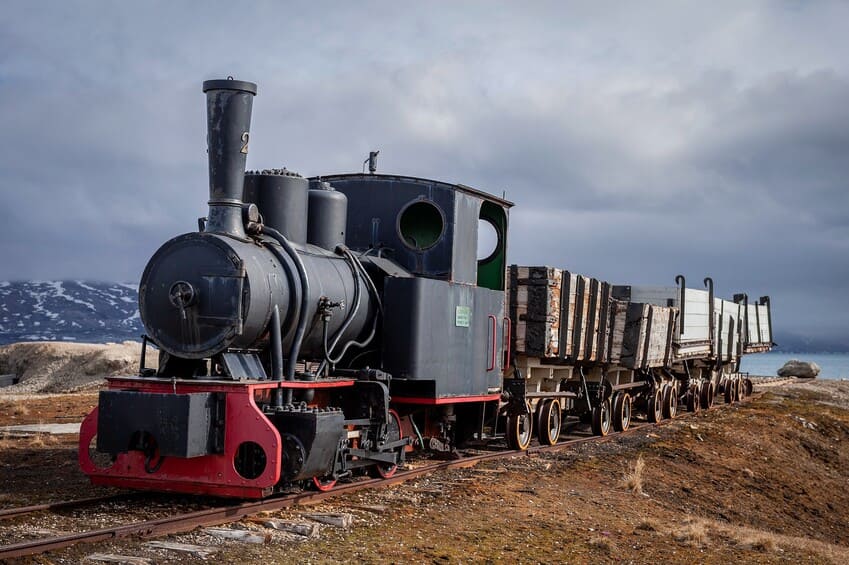
When American businessman Jon Munroe Longyear set up the first mine on the archipelago in 1906, he gave the settlement the iconic name: Longyear City. A decade later it was renamed Longyearbyen, when the Store Norske Spitsbergen Kullkompani took over Longyear’s Arctic Coal Company in 1916.
Toward a treaty
With increasing interest of various nations claiming sovereignty of Svalbard, the need for conflict resolution and jurisdiction grew. In 1907 negotiations toward a joint treaty to govern Svalbard started, initiated by the Norwegian government. Following World War I, which excluded Russia and Germany while benefiting its neutral ally Norway, Norwegian sovereignty to Svalbard and Bear Island was granted on February 9, 1920. All signatory parties received equal economic rights to resources and under the premise to not use the archipelago for purposes of war. The treaty also grants citizens of all nations the right to reside and work on the archipelago.
Svalbard's history in the 20th century
Longyearbyen was organized as a mining community until 1989, when steps toward creating an open town started, including the creation of the Svalbard Council. This later developed into the Longyearbyen Community Council, which took on all duties from the Store Norske Spitsbergen Kullkompani.
Opening to tourism
The isolated city became accessible year-round in 1975, when Svalbard Airport Longyear opened. While Svalbard saw many visitors during the centuries since its discovery, international tourism really took off from the 1990s.
The Local Community and Daily Life
It may be extremely remote, but it isn’t a sleepy town. The permanent population is just below 2,600 (as of 2024) and features people from 53 nationalities. The city’s cosmopolitan flair attracts diverse characters and many of the local residents work in tourism, research and mining. Fun fact: The rules on alcohol consumption on Svalbard date back to its coal mining days. Every resident receives an alcohol card, with which a limited amount of alcoholic beverages per month can be purchased. If you’re a tourist, just show your return ticket and you’ll get served.

Located 1,290 (ca. 800 miles) north of the Arctic Circle, Longyearbyen features the polar night, with around four months of dark season from end-October to mid-February. This is followed by the midnight sun starting at the end of April and lasting until the end of August. Enjoying the short summers with 24 hours of daylight to the fullest, you’ll see locals engaging in outdoor activities at all hours. It isn’t uncommon to see people playing soccer at 3am.
It’s an incredible part of the world and many short-term visitors, bitten by the so-called “Svalbard bug,” end up staying. It may not be for everyone, but if you love the cosmopolitan spirit, the feeling of being surrounded by amazing Arctic wilderness and possess an adventurous pioneer spirit, it may be paradise. While the local income tax rate is lower than on mainland Norway (8-22% depending on your income), there are also no benefits, as no contributions are paid toward social funds. Once you lose your job or run out of money, you’re required to leave.
Did you know that you could pack up right now and go live and work in Svalbard? Anyone can live and work in Svalbard, but you may require a Schengen visa as you’ll transfer through Norway on your way north. You’re required to provide for yourself, having proof of sufficient funds and a roof over your head. Since housing is mostly provided by employers, you should secure a job on the archipelago before moving.
Cultural Scene and Events
It’s not just all about nature and wilderness, Longyearbyen has a vibrant cultural and event scene. We’ve gathered the most iconic events not to miss during your visit:
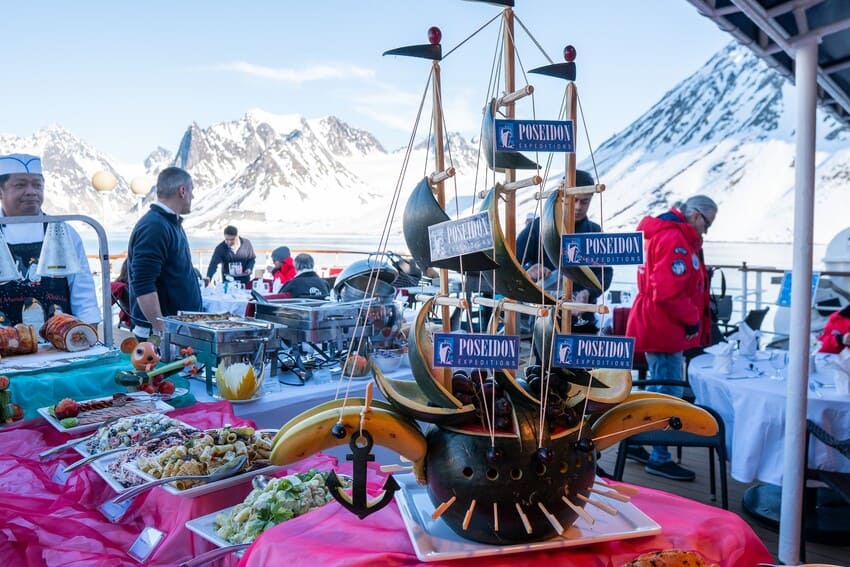
Taste Svalbard (October)
Get a tasty insight into unique local produce and food history. Dive into a culinary adventure with dinners, tastings, courses and lectures.
Dark Season Blues Festival (late October)
Visit the northernmost blues festival in the world. The twilight of autumn provides a unique atmosphere to take in the international and local artists, with many visitors returning year after year.
Christmas in Longyearbyen
It’s gonna be a white one – guaranteed! Take in the magical scene and celebrate the holidays under the northern lights. See the town light up in Christmas decorations and enjoy freshly baked cookies in one of the many cafés. Book a delectable Christmas dinner in one of the restaurants and hotels around town, such as the Polfareren boutique-hotel or Funken Lodge.
Polar Jazz Festival (first weekend in February)
Timed at the end of Svalbard’s polar nights, the polar jazz festival is organized each first weekend in February since 1997.
Sun Festival (first week of March)
After the long winter, locals celebrate the returning of the sun with festivals all around town. The kick-off is held where the sun’s rays hit first: the old hospital stairs. It’s a scenic spot overlooking the mountains near the church (where the old hospital used to be). There are also other locations such as the school building, where you may snatch a sun bun, one of the local delicious pastries.
Norway’s National Day (May 17)
Don’t miss this colorful mid-May event, with cheerful celebrations, locals dressed in Norwegian folk outfits and a parade under the rising midnight sun. The still snow-covered mountains provide a scenic backdrop.
Svalbard Ski Marathon (last weekend in April)
Feeling sportive? Fasten your skis and join the northernmost ski marathon leading you through the Arctic wilderness. And don’t worry about polar bear encounters, armed guards will keep the trails safe!
Interesting Facts about Longyearbyen
Have you ever wondered why Longyearbyen is special? Its unique quirkiness attracts tourists and keeps many visitors returning, being bitten by the “Arctic bug.” Check out our 10 favorite facts about Longyearbyen:
Snowmobiles rule
With 2,873 snowmobiles registered in 2022 (compared to just 2,552 residents on Svalbard that same year), it’s no wonder that there are special roads only for snowmobiles.
No shoes, please
Leave your shoes outside when entering museums, shops, offices, hotels, and yes, even the tourist information center.
Guns ‘n’ students
All students of the Longyearbyen university center have to complete mandatory safety training on use of firearms and snowmobiling.
Where the streets have no names… …only numbers.
Contrary to most European towns, you won’t find any street names.
It features the northernmost nearly everything
School, day-care center, chocolatier, church, university, museum, restaurant airport…since it’s the northernmost town in the world, its fixtures enjoy similar bragging rights.
It’s a city on stilts
To avoid warm insulated houses thawing and collapsing into the permafrost, buildings are built on stilts.
There is only one grocery store
Life in Longyearbyen means shopping at the one and only supermarket in town: Svalbardbutikken. And once a product sells out, it can take up to 10 days until it’s restocked, when new supplies arrive by ship.
No cats allowed
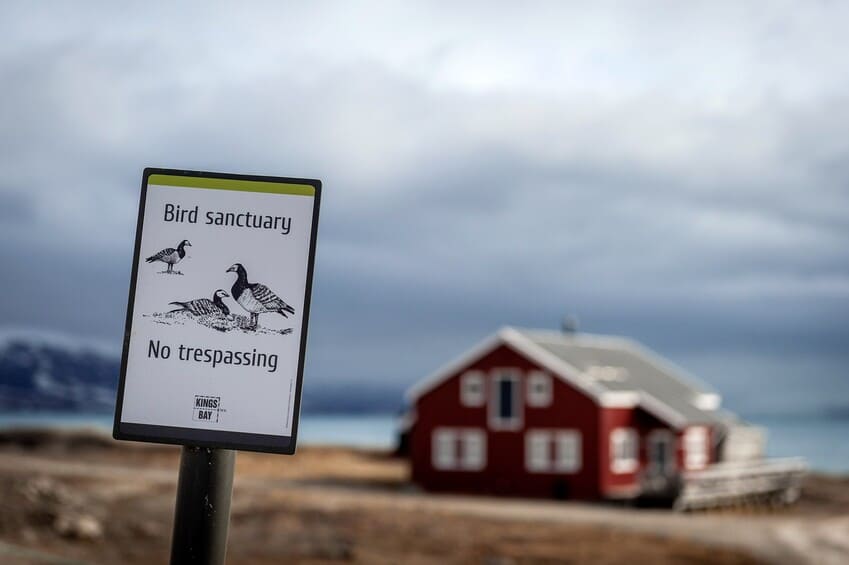
To protect local wildlife and the diverse bird population, you can’t bring your feline friends to the archipelago. Kesha, the last cat born before the governmental ban, died January 2021, at the age of 14.
Don’t clean up… …
for the sake of history! It’s not allowed to remove remnants of historical importance, such as mining remains, a crashed German WW2 plane or the Soviet ghost town Pyramiden.
It’s a renters market
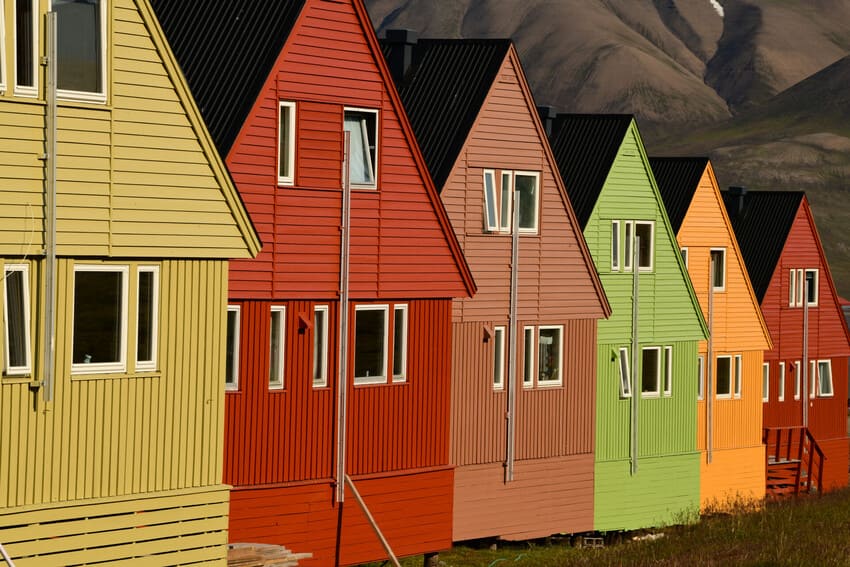
Most of the land is owned by mining companies and the Norwegian government, renting to their workers and residents. It’s difficult to own and build your own home. For those who own, there are restrictions in place to keep the town’s quaint style. These include which color houses can be painted.
And let us debunk the myth that you aren’t allowed to die on Svalbard. While you’re definitely allowed to die, you’ll most likely be shipped back to the mainland for burial. While you can get permission to be laid to rest at Longyearbyen cemetery (especially if you or your family have roots connecting you to the place), only urn burials are permitted (no coffins).
Economy and Industries
Svalbard’s economy is dominated by coal mining, research and tourism. The Svalbard Treaty of 1920 gives 45 countries equal rights for mineral exploitation, but as of today only Norwegian and Russian companies continue their mining operations on Svalbard.
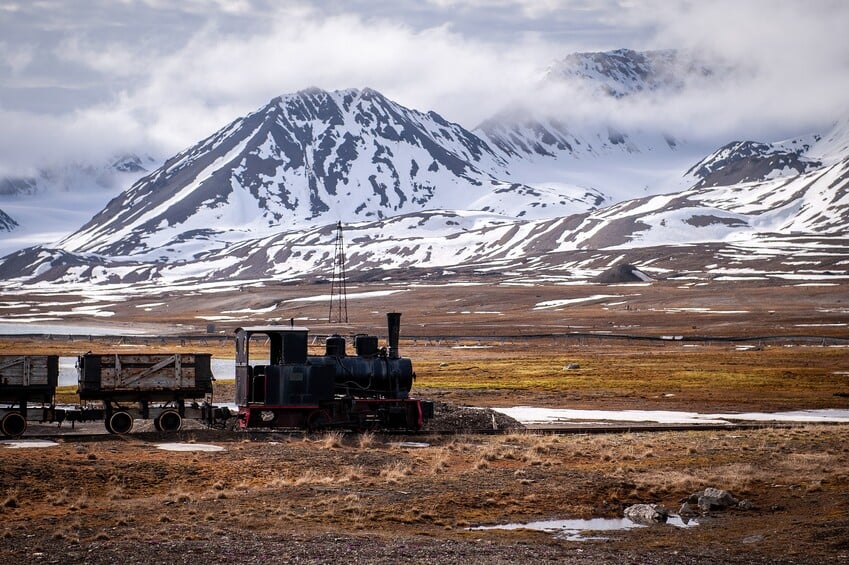
With Norway granting permission to any nation to conduct research on Svalbard, the archipelago (as one of the most accessible places in the high Arctic for research) is a popular place for scientists. The University Center in Svalbard (UNIS), established in 1993, provides undergraduate, graduate and postgraduate studies for up to 250 students.
Around 70,000 guests arrived in Longyearbyen during 2023, compared to around 72,500 guests in 2018 pre Covid-19 pandemic. With no safety network, locals highly depend on regular work and income to continue their lives on Svalbard and the pandemic proved difficult for many. And while the Svalbard Treaty of 1920 guarantees equal rights to all signatories to engage in commercial activities, during the pandemic Norwegian business owners were reportedly favored by the Norwegian government. According to German tour operator Christian Bruttel, only Norwegian-owned companies could claim state assistance, with subsidies of up to 100,000 EUR, disrupting fair competition on the archipelago.
Seasons and Climate
Svalbard features extreme seasons, from complete darkness and polar nights during the winter months to 24 hours of daylight during the summer months. While winters may be long, average winter temperatures are significantly higher than at many other locations in the Arctic. Expect around -14C to -8C (6.8F to 17.6F) during December. The completely dark total polar night runs from mid-November until the end of January, and the months before and after feature twilight. From late September, the prime season to spot aurora borealis starts. In Longyearbyen you can spot the northern lights right from the town center.

Summer season brings locals and tourists out and about, and it’s not unusual to see people pursuing outdoor activities at odd hours around town. The midnight sun stays on the horizon from April 20 until August 22, and with no nighttime at all, the entire summer feels like one very long day. July is the warmest month with temperatures around 5C to 9C (41F to 48F).
Top Activities and Attractions

Svalbard Museum
Learn about Svalbard’s cultural and natural history at this charming downtown museum.
North Pole Expedition Museum
This quaint museum lets you dive into the rich history of polar exploration.
Nybyen Artist Center
Discover art and local collections of maps, books and money.
Svalbard Bryggeri
Take a tour and taste local craft beer in the northernmost brewery in the world.
Snowmobile tours
Book a day trip to visit the ice caves, remote valleys and fjords with chances of polar bear and wildlife sightings (for example, with Svalbard Adventures.

Dog sledding
Meet adorable huskies while exploring incredible landscapes around Longyearbyen. There are various tours to ice caves, aurora borealis night-time tours and even summer dog sledding on wheels tours!
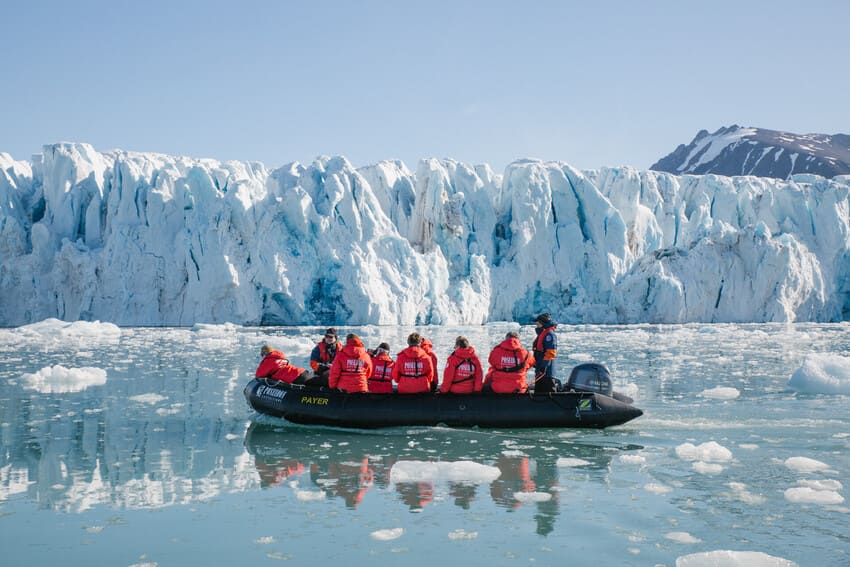
Boat Trips and Cruises
Want to experience Svalbard in depth? Embark on a multi-day expedition cruise. Circumnavigate the largest island, Spitsbergen, reach the ice edge (for polar bear sightings) or cruise to the remote northern islands. Get inspired with our current cruise schedule:
Gastronomy in Longyearbyen
Fruene Café
A charming café and also the northernmost chocolatier in the world. Must try: the bite-sized polar bear chocolate!
Barentz Gastro Pub
(Northernmost pub serving traditional pub food and beer from the local Svalbard Bryggeri)
Huset
(A charming restaurant offering Nordic flavors, local ingredients and one of the largest wine cellars in Scandinavia)
Kroa
(Historic restaurant with seasonal ingredients)
Stationen
(Traditional Norwegian and international food)
Funken Lodge
(A truly unique hotel and restaurant experience with a touch of luxury)
Svalbar
(A charming gastropub with refreshing drinks and snacks such as tapas, steaks and pasta)
Karlsberger Pub
(Simply known as KB by locals, this cozy pub boasts a fine selection of whiskeys and cognac)
Travel Tips and Logistics
You can reach Longyearbyen by plane from mainland Norway, with daily flights from Oslo and Tromsø. If you’re booked on a Svalbard expedition cruise, Longyearbyen may be a stop on your trip, the departure or arrival port. Check out our website for all currently scheduled departures and book ahead of time to get the best cabins:

We’ve put together a basic packing list for your trip to Longyearbyen:
- Warm outdoor clothes (fleece, wool)
- Water- and wind-proofs Down jacket (winter)
- Ski pants/thermal underwear (winter)
- Hat, gloves, warm socks
- Hiking shoes and trainers (boots in winter)
- Slippers Sunglasses/sunscreen
- Sleeping mask (to get some sleep with 24-hours of daylight in summer),
- ski goggles (for outdoor activities in winter)
- European travel adapter
FAQs
What’s special about Longyearbyen?
There are lots of things that make this high Arctic city so special. Visitors come up to experience the midnight sun and the polar night. Another thing that makes this place unique is that, thanks to the Svalbard Treaty, people from 43 countries worldwide have the right to live and work in Svalbard.
Is it safe to walk in Longyearbyen?
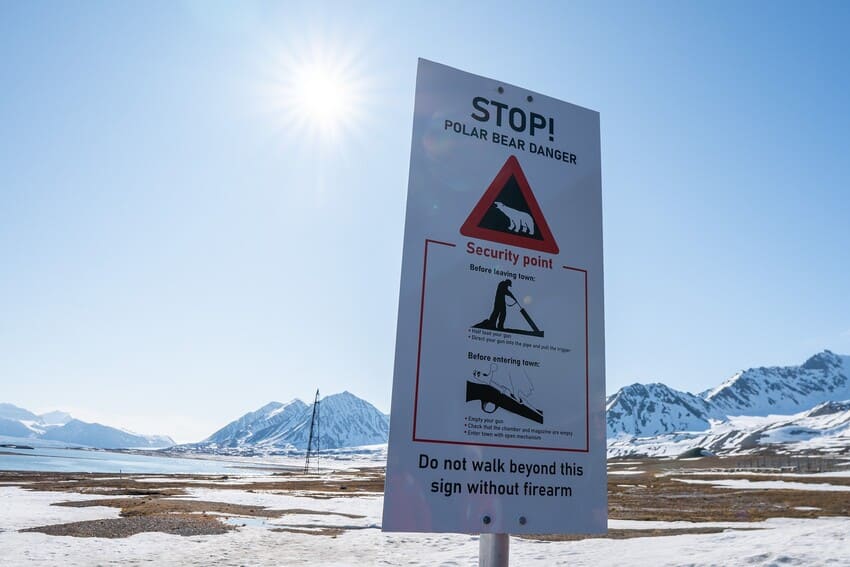
You are safe to roam on your own within the city limits. Polar bears rarely wander into town, but once you reach the city limits, you’re advised not to venture beyond alone. Any trips outside of the settlements require a professional guide carrying a firearm for your safety (just in case).
Is Longyearbyen worth visiting?
Yes, Longyearbyen and the entire Svalbard archipelago is worth a visit, whether you are an intrepid adventurer or a leisurely traveler. While nestled in the most beautiful Arctic landscapes, Longyearbyen offers a vibrant small city life, culture, music, restaurant, bar and event scene.