Facts about the Arctic
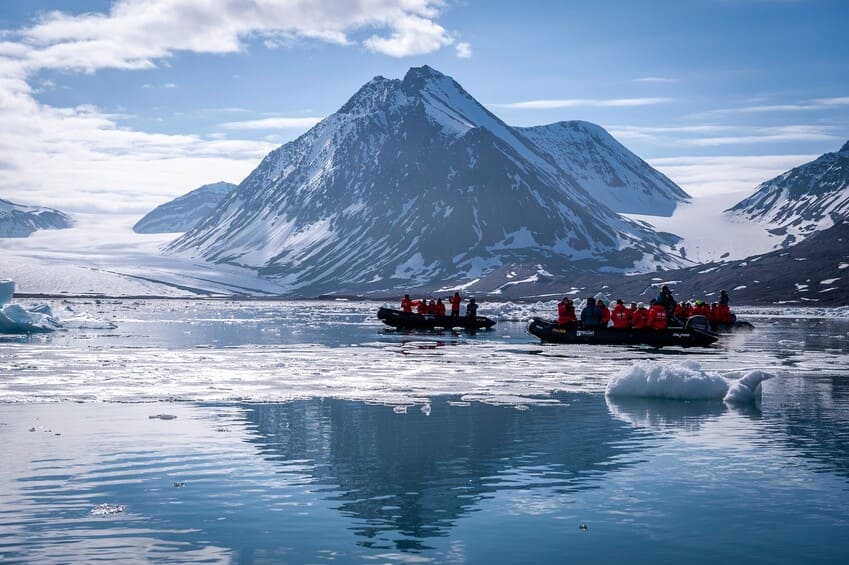
You may know the Arctic as a cold, icy place with gigantic icebergs and polar bears. You’ve heard about the incredible marine life, the historic explorers that paved the path for future travelers, the enormous size of Greenland’s ice sheet and the impact of global warming on Arctic sea ice, but there is much more to this place. Discover ten facts about the Arctic that may surprise you!
The Arctic Region Stretches Over Eight Countries
The Arctic covers roughly 16.5 million square kilometers (6.4 square miles) and there are eight countries known as Arctic states within this region: Canada, Denmark (Greenland), Finland, Iceland, Norway, Russia, Sweden and the United States (Alaska). The Arctic consists of the landmasses of these countries and the Arctic Ocean (the world’s smallest ocean), covering the northernmost part of the planet, which is generally defined as all territories above an imaginary line, called the Arctic Circle.
Around 20% of the world’s freshwater is locked in the glaciers, lakes, streams, ice caps and sheets of the Arctic. Most of the planet’s freshwater reservoirs are frozen and the massive ice sheet of Greenland alone hosts 10% of the world’s water supply. Climate change endangers these reserves as more heat causes glaciers and pack ice to melt. The melted freshwater then finds its way into the ocean, where it mixes with salt water and thus becomes no longer drinkable. In addition, meltwater contributes to rising sea levels. If the entire Greenland ice sheet would melt, sea levels would rise by seven meters (23 feet).

The Arctic Boasts a GDP Higher Than Some EU Countries
The total economic value of the Arctic region was recorded at USD 281 billion (source: Science Direct 2016). Given the extreme climate and conditions of the Arctic region, it tops countries such as Portugal (with a GDP of USD 206 billion in 2016) and Czechia (with USD 196 billion in 2016). The Arctic region is rich in natural resources, featuring mineral reserves (such as coal, iron ore, copper, and zinc), oil and gas (with the majority located in Russian Arctic).

Peary May Have Not Been the First Person to Reach the North Pole
While it's controversial if Peary’s party reached the geographic North Pole at all, experts today argue that even if it did, he may not have been the first standing on top of the world after all. Credit goes to his assistant, Matthew A. Henson, who led the group on the last stretch to the pole, as Peary struggled in the rear. When they came closer to the presumed North Pole location, Peary conducted precise measurements and finally determined they had found the pole, stopping the party. By that time, Henson and two of their Inuit guides were already further ahead, which means that technically Henson may have stepped on the North Pole before Peary.
The Arctic is Not as Cold as You Think
Don’t get us wrong – it’s very cold in the Arctic and if you aren’t prepared to deal with extreme temperatures way below zero, it may not be the place for you. The lowest temperature ever recorded in the Northern Hemisphere was -69.6C (-93.3F) in December 1991 in central Greenland. While the Arctic regions belong to the harshest environments on Earth, Antarctica is much colder (with a record low of -93.2 C / -136 F, measured on the East Antarctic Plateau). The North Pole area is warmer as it is located in the ocean surrounded by land, whereas the South Pole is located on the continent of Antarctica, surrounded by the ocean and exposed to extreme winds. In addition, the higher elevation in Antarctica accounts for lower temperatures.

Svalbard’s Capital May Soon Disappear due to Climate Change
It’s the northernmost inhabited place in the world and it could disappear! Svalbard’s capitalof Longyearbyen (located above the Arctic Circle) features extreme climates, the midnight sun and polar night and is a popular spot for Arctic tourism. The town is built on stilts on permafrost to stabilize the buildings during the seasonal ice melt. Climate change and warming temperatures over the past years are causing permafrost to melt, triggering avalanches off the mountains around town. These have destroyed roads and houses, creating unsafe conditions around the city. The melting of snow and ice may also affect the future of tourism and science in the area.
It’s a Cosmopolitan Place
One of the surprising facts about the Arctic is how diverse its people are! Over four million people live in the Arctic despite the extreme conditions and remoteness. A majority of Arctic residents are Indigenous people whose population belongs to various groups such as the Inuit of Canada, Greenland and Alaska, the Inupiat and Yupik in north Alaska and the Sami in the European parts of the Arctic.
You Can Soak in Hot Springs
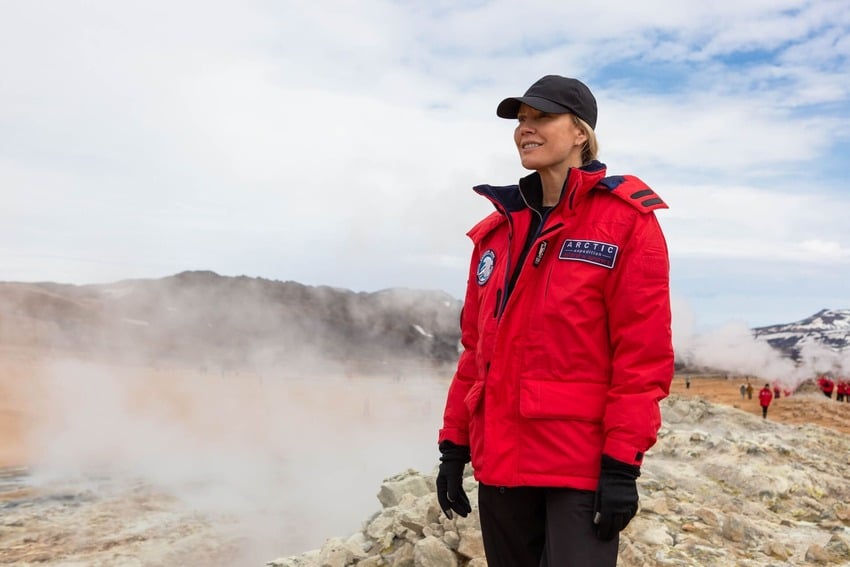
Need to warm up during the cold Arctic winters? Why not dip into one of the many Arctic hot springs! You can find them in various Arctic countries, but one of the most famous is located in Greenland, the Uunartoq Hot Springs. Interestingly, the hot water in the spring does not come from volcanic activity, but geothermal subsoil layers rubbing against each other and thus heating up the pool. The spring is located on an uninhabited island and is accessible year-round.
Santa’s North Pole Home Was the Creation of a 19th-Century Cartoonist
Santa’s Arctic home wasn’t always at the northernmost point in the world. Before the mid-19th century, nobody would look for Santa Claus above the Arctic Circle. Thanks to political cartoonist Thomas Nast the magic of Christmas involves this iconic figure. His drawing for Harper’s Weekly in the 1860s depicted Santa living at the North Pole, a fascinating region that was gaining public interest during the heydays of polar exploration. The North Pole wasn’t yet conquered by humans and made for the perfect spot to place a mythical character such as Santa Claus. The real St. Nicholas, on which Santa Claus’ character is based on, originates from modern-day Turkey.
Compass Readings May Confuse You
One of the interesting facts about the far northern regions is that your compass may become useless for orientation. If you aim to find the geographic North Pole, you can’t just follow your compass north, as it points toward the magnetic north, which is not the same location. The magnetic North Pole location is constantly changing as the Earth’s magnetic field fluctuates. Standing right at the geographic North Pole, your compass will point south to 86 degree north (as of 2024). The difference between true north and magnetic north is called declination or variation, and the further south you go, the less relevant this difference becomes.

The Arctic and Antarctica Are Polar Opposites
Both polar regions are extremely cold, featuring the midnight sun during the summer and polar night during the winter. But did you know that otherwise they’re fundamentally different?
North Pole vs. South Pole location
While the North Pole is located in the Arctic Ocean, the South Pole is located on the continent of Antarctica.
Sea ice in the Arctic vs. Antarctic
While the Arctic Ocean is enclosed by land, the continent of Antarctica is surrounded by ocean. Sea ice in the Arctic forms during the winter months, but its growth is limited by the land surrounding the pole area. Antarctic sea ice surrounds the continent and can freely expand north. As sea ice in Antarctica forms further away from the pole, it is less likely to survive the summer melting season.
Polar bear vs. penguin
You won’t find polar bears in Antarctica and there aren’t any penguins in the Arctic. Each polar region has its own incredible animal life. The Arctic features walruses, seals, Arctic foxes, reindeer and hyper carnivores such as the polar bear. Polar bears belong to the largest land predators in the world! The Antarctic boasts incredible marine mammals such as penguins and seals. Whales can be found in both polar regions (depending on the species).
Aurora borealis vs. aurora australis
Both hemispheres experience the magical lights on the horizon. If you’re located in the Arctic, you can admire the northern lights from early September (when the sky gets dark enough to see them). In the Southern Hemisphere you refer to the lights as aurora australis.

The Arctic Got Its Name from the Greek Word for Bear
It’s not the iconic polar bears that inspired the name for the northern polar regions, but the star constellation Ursa Major (great bear) in the northern sky. The word Arctic originates from the Greek word for bear (arktos). Both the Ursa Major and Ursa Minor (little bear) can be seen throughout the year in the Northern Hemisphere. If you live south of the equator, you may only see parts of this constellation.
Over 10% Of Global Fishing Happens in the Arctic
Even though the heydays of fishing in the 17-19th centuries, when it was a major income source for the Arctic, are over, the region continues to rely on the industry as the second most important contributor to the economy after mining and petroleum. With global warming and the Arctic Sea ice melting, new areas of the northern oceans become accessible, posing an attractive opportunity for the fishing industry. To prevent over-exploitation of the Arctic Ocean, the major fishing nations (Canada, Russia, the US, Japan, Iceland, Denmark and South Korea) and the European Union decided on imposing a moratorium on free-for-all Arctic fishing until 2033. With this agreement concluded in 2017, three million square kilometers (ca. 1.2 million square miles) of the Arctic Ocean are being protected from the threat of unregulated fishing. For scientists this is a fantastic opportunity to study marine life undisturbed in the pristine waters of the Arctic.
There’s a Specialized Forum Just for The Arctic
The eight countries located in the Arctic zone are part of the Arctic Council, an intergovernmental forum coordinating and collaborating on topics such as protection of flora and fauna, sustainable development of the region and various social and environmental issues. The council also ensures active participation of Indigenous Peoples of the region.
Feces Keep the Arctic Cool
One of the fun facts about the Arctic is that seabirds may keep it cool above the Arctic Circle, with their excrements. With millions of migrating seabirds, that’s a lot of poop! A study from 2016 published in Nature Communications (LINK: https://www.nature.com/articles/ncomms13444) suggests that ammonia from seabird guano increases cloud cover in the Arctic. The clouds shield the sun and thus help the Arctic to stay cool, particularly during the summer months during the polar day.

FAQs
What is so special about the Arctic?
It’s remote, incredibly beautiful and features extreme temperatures. During the summer months, you can experience the polar day in regions above the Arctic Circle and during fall/winter you can see the northern lights. The unique people, culture, flora and fauna attract visitors, adventurers, photographers and scientists from around the globe.
Why is the Arctic so beautiful?
Being so remote, landscapes are pristine and untouched. With few people disturbing its wildlife you can see a variety of iconic animals in their natural habitat such as the polar bear, Arctic fox, Arctic hare, reindeer, seabirds, seals and whales.
Was there always so much ice in the Arctic?
Research suggests that around 5,500 years ago, there was less sea ice during the summer months than today and that around 2.6 million years ago the Arctic may have experienced a gap in sea ice formation altogether.
Is the Arctic always dark?
The Arctic features the polar day and polar night, which means that while during the summer months the sun does not set, you may experience only a few hours of daylight during the winter months (depending on how far north you are).
Why is the Arctic always cold?
Both the Arctic and Antarctic are always relatively cold as they don’t get direct sunlight. When you are close to the North Pole, the sun is always low on the horizon, even during the summer months.