Facts about snowy owls

It’s one of the most iconic symbols of the Arctic, the official bird of Quebec in Canada and a favorite among both casual observers and experienced birdwatchers! Snowy owls, with their fluffy white plumage and bright yellow eyes, look like they’ve stepped right out of a winter fairy tale. But they aren’t just beautiful tundra dwellers, but fierce hunters, devoted parents and extreme survival specialists in one of the coldest places on Earth. Discover why this bird is so famous in northern traditions and pop culture with our seven top facts about snowy owls.
Quick Facts
Names: Snowy owl (Bubo scandiacus), great white owl, Arctic owl
Appearance: White plumage (males whiter than females), yellow eyes, feet covered with feathers
Size: 50 cm to 70 cm (20 to 28 inches)
Weight: 1.8 kg (4lb) for males, and 2.3 kg (5lb) for females
Wingspan: 120cm to 145cm (49 to 57 inches)
Snowy owl habitat and breeding range: Circumpolar in the Arctic tundra (summer), and southern Canada, lower 48 (U.S.) and northern Europe during the winter
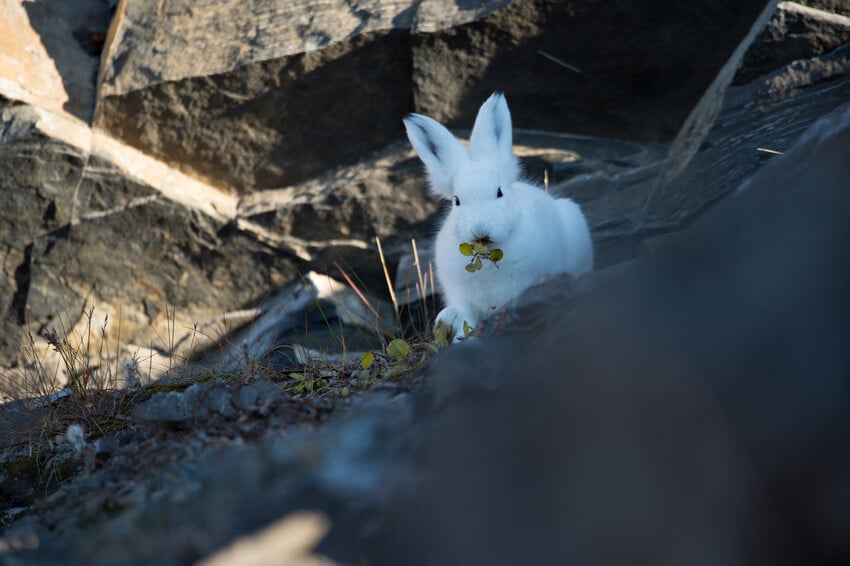
Prey: Snowy owls hunt small mammals, predominantly lemmings, but also voles, mice, Arctic hares and other birds

1. Their Unique Style Is the Perfect Adaptation to Their Northern Habitat
When you’re living in the circumpolar Arctic regions, keeping warm in extremely cold temperatures is a priority! Snowy owls feature round and compact bodies covered by a thick plumage, which helps to conserve heat. Their yellow eyes provide excellent vision during the long daylight hours of the Arctic summer. Their iconic white plumage camouflages them in the snowy Arctic, helping them avoid predators such as Arctic foxes, wolves and predatory birds such as jaegers. Additionally, being nearly invisible in the snow is a great hunting advantage! Adult males are generally whiter, as females retain some darker markings to blend in with the rocky tundra grounds where they build their nests.
Fun fact: Did you know that their feathered feet look like fluffy slippers? The thick feathers act like a snow boot to insulate their legs and toes from the cold, and also provide some protection from bites when they seize prey.

2. They Are Stealthy Predators
Snowy owls thrive in the Arctic tundra. The treeless terrain suits their specific lifestyle and hunting techniques. Snowy owls perch on the ground or sit and wait on elevated structures, as they scan for prey. Their ears are positioned asymmetrically, allowing them to pinpoint the exact location of their prey by sound. Their unique wings, which feature soft, comb-like structures on the edges, allow for nearly silent flight and low cruising above ground to locate prey such as lemmings, Arctic hares, mice and seabirds. They swoop down on prey, which is often moving below the snow cover, and snatch it with their sharp talons. With relatively few natural predators, adult snowy owls are apex predators themselves. However, chicks, eggs and nesting females are vulnerable to Arctic foxes, wolves and birds of prey, such as eagles and jaegers.
Fun fact: While most owls are nocturnal, snowy owls often hunt during the daytime, especially during the Arctic summer when the midnight sun doesn’t set.
3. Their Diet Is Heavy on Lemmings
Snowy owls can devour up to 1,600 lemmings a year (that is up to five lemmings in a day)! Small rodents such as mice and lemmings are swallowed whole, bones and fur included. You can’t be too picky when trying to survive in the harsh northern environment! Snowy owls are very opportunistic hunters and may prey on anything that’s available. During the winter and when they migrate south, the snowy owl diet expands to voles, rabbits, ptarmigans, ducks and even fish. While they may swoop down on land mammals, snowy owls can catch birds in mid-air!
Fun fact: Snowy owls can get creative when it comes to expanding their hunting skills! John James Audubon, a 19th-century French-American ornithologist and artist, observed a snowy owl lying on its belly on a rock above a water hole catching fish!

4. No Breeding Without Lemmings
When lemming populations are low, fewer owls show up to their breeding sites. Some may skip the breeding season altogether, while others may breed, but have fewer chicks. Based on lemming numbers, snowy owls nest and may lay from three to eight eggs on average. When there is plenty of prey, female snowy owls may lay up to 11 eggs! From May to September, the generally monogamous snowy owl parents tend to their offspring in nests scattered across the boulders and windswept hummocks of the tundra. While male snowy owls hunt and cache food, females handle the egg incubation, which lasts up to 32 days. Once the chicks hatch, both parents tend to their young ones.
Creepy fact: Imagine growing up surrounded by corpses! Young owls at nesting sites are raised amid dead lemmings. The male brings food and caches the lemming carcasses around the nests in a wreath. This allows for easy food access for female snowy owls and their chicks.
5. Snowy Owls Have Murky Migration Patterns
Contrary to other birds, snowy owls have unpredictable migration habits, which vary from year to year. While their breeding grounds are the tundra regions around the Arctic Circle, they usually migrate south during the winter months in search of food and better hunting conditions. During the winter months you can spot them in the lower 48 (U.S.), British Isles, Iceland and Scandinavia. Some individuals may not migrate at all, staying year-round in the Arctic tundra regions. Snowy owls are territorial birds, and outside of the breeding seasons, the snowy owl lives mostly in solitude.
Fun fact: Again, it all comes down to lemmings! Snowy owl migration is strongly linked to lemming populations. Years with a decline in Arctic lemming populations usually see higher numbers of owls migrating south, searching for alternative prey.

6. Snowy Owl Populations Are Decreasing
Currently, the snowy owl’s status of conservation is listed as vulnerable by the International Union for Conservation of Nature (IUCN). A recent study published in Bird Conservation International in December 2024 shows global owl populations declining by roughly a third over the past 30 years in North America, as well as northern Europe and Russia. Since a snowy owl diet consists of 90 percent lemmings, the snowy owl’s fate is closely linked to available prey populations. Lemmings stay active during the entire winter, feeding on moss, hiding under the snow cover and digging tunnels in the snow for insulation and protection from predators. An earlier or later seasonal snowmelt may result in lower or higher lemming numbers, which in turn affects owl population numbers.
Interesting fact: While in 2013 the number of snowy owls worldwide was estimated at 200,000 individuals, the current estimate in 2025 is between 14,000 and 28,000 birds. While the overall populations are, in fact, decreasing, these extreme differences in numbers over merely a decade are rather the result of inaccurate estimates in the past than a significant crash in populations. Nowadays, data is collected based on various data sources, including genetic analysis, which gives a more accurate bird count.

7. You Don’t Have to Visit the Arctic to Spot Them…
…but your chances of seeing them are higher! But if you aren’t planning a trip above the Arctic Circle any time soon, you may hope for the rare opportunity of spotting a snowy owl close to home. While this is a rare occurrence, snowy owls have been seen as far south as Florida, California, Texas and even Hawaii. This extreme southward migration (called irruptive migration) usually happens after years of extremely abundant lemming populations, which lead to increased numbers of snowy owl offspring having to disperse to avoid competition for prey. In Europe, you can catch a glimpse of them during their winter migration in places like the United Kingdom, France and the Mediterranean region.
Tip: Want to see snowy owls in their natural habitat? Join us on an epic expedition cruise to Greenland, and with a little bit of luck you can spot them in places like Scoresby Sund, King Oscar Fjord and the Northeast Greenland National Park. Book your adventure now!

FAQ
Why do snowy owls live in the Arctic?
The Arctic tundra is the perfect habitat for snowy owls. The treeless terrain provides excellent hunting grounds with ample prey, and their white plumage provides the perfect camouflage in snowy surroundings.
How rare is it to spot a snowy owl?
It’s not extremely rare to spot a snowy owl, especially during their winter migration from November to April. During this time, snowy owls migrate from their Arctic tundra breeding grounds south, and can even be seen in northern regions of the U.S. and Canada.
Where do snowy owls sleep?
Snowy owls sleep in the open tundra on the ground, on mounds, rocks, fences and buildings. Snowy owl chicks sleep face-down on their stomachs, as their heads are too large for their still-developing neck muscles.