Top 10 Elephant Seals Facts: Complete Guide to the Ocean's Giants
They’re the largest seals on Earth, champion divers, and some of the most extraordinary mammals in the world. Named for the inflatable trunk-like noses of adult males, they come in two species: northern and southern elephant seals. You can find southern elephant seal males hauling out their up-to-6-meter (20 ft) bodies on Antarctic and subantarctic beaches, and engaging in fierce battles for females. Find out what makes these iconic animals so special in our 10 top facts about elephant seals.
1. They Are True Giants of the Ocean
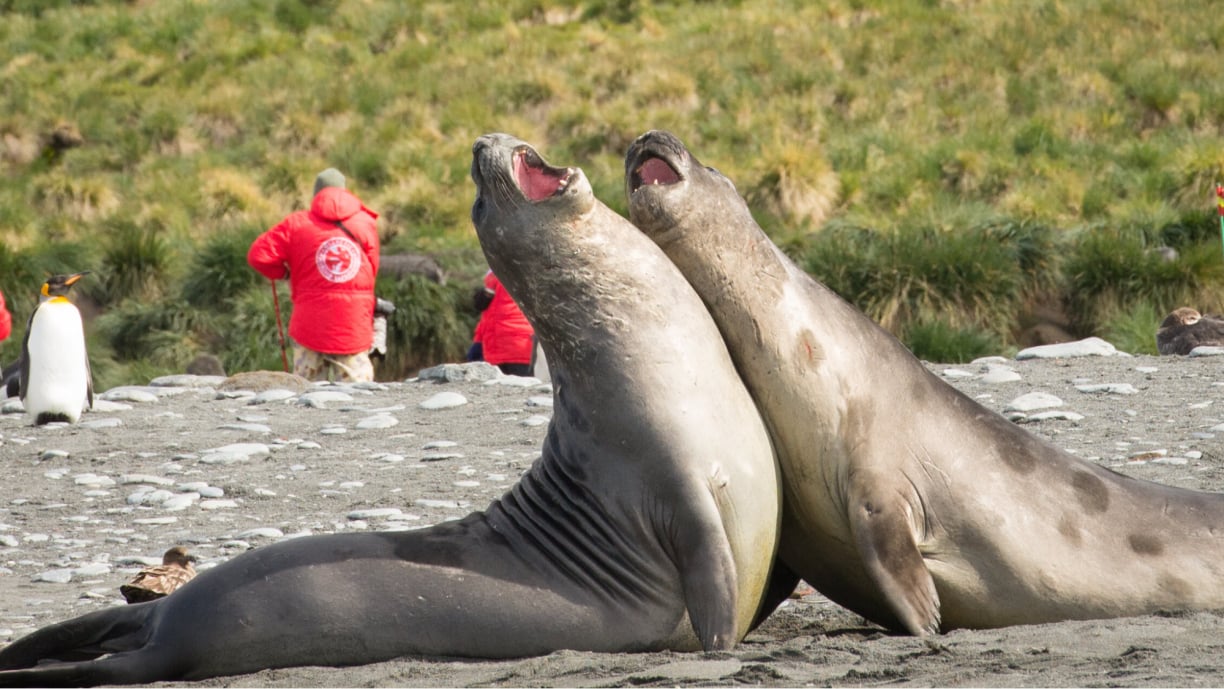
These marine behemoths are as heavy as a pickup truck! Southern elephant seal males can reach up to 6 meters (19.6 ft) in length and reach weights of 2,200 to 4,000 kg (4,900 to 8,800 lb). Around 40 percent of their body weight is insulating blubber. And while elephant seals generally fast for around 3 to 4 months during the mating and molting season, living off these stored fat reserves, a 2018 study suggests that some may still dive and hunt during that time. (Source: https://pmc.ncbi.nlm.nih.gov/articles/PMC3814516) and https://polarjournal.net/when-moulting-do-southern-elephant-seals-really-fast/)
Female southern elephant seals are significantly smaller, typically reaching around 2.6 to 3 meters (8.5 to 9.8 ft) and weighing between 350 and 900 kg (770 to 1,980 lb). In comparison, northern elephant seal bulls are around 20 to 30 percent smaller and around 40 percent lighter than their southern counterparts. Northern elephant seal males reach around 4 to 5 meters (13 to 16 ft) in length and weigh 1,500 to 2,300 kg (3,300 to 5,100 lb).
Cool Fact: Did you know that they are the largest terrestrial carnivores in the world, dwarfing even the mighty polar bears? They are also Guinness World Record champions – Southern elephant seals are the largest of all pinnipeds in the entire world! (Source: https://www.guinnessworldrecords.com/world-records/717572-largest-seal)
2. They Are Marathon Divers and Long-Distance Travelers
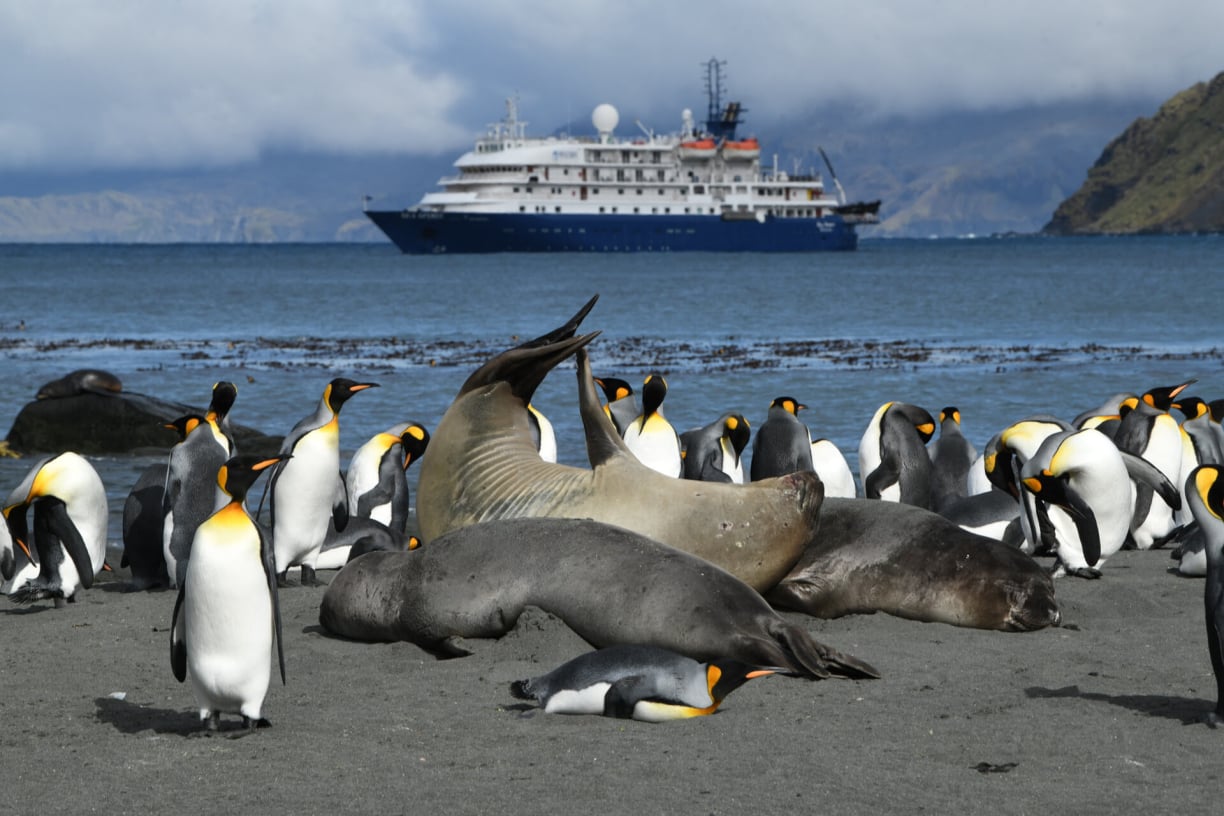
Elephant seals lead an extreme lifestyle. While they generally dive to around 400 to 800 meters (1,300-2,600 ft) and hold their breaths for up to 30 minutes, they can also deep-dive to more than 2,000 meters (6,560 ft) below the surface. (Source: https://www.discoverwildlife.com/animal-facts/marine-animals/southern-elephant-seal) They spend around nine months of the year at sea, covering around 21,000 kilometers (13,000 miles) during their migration. (Source: https://www.fisheries.noaa.gov/species/northern-elephant-seal)
Cool Fact: Did you know that elephant seals have a built-in GPS navigation system? According to a 2022 UC Santa Cruz study using satellite tracking data, elephant seals know how far to travel on foraging sprees and when to head back to their breeding beaches to arrive in time for breeding season. “We found that migrating elephant seals know how far they are from their breeding beach thousands of kilometers away,” notes Roxanne Beltran, assistant professor of ecology and evolutionary biology at UC Santa Cruz. (Source: https://www.universityofcalifornia.edu/news/elephant-seals-map-sense-tells-them-when-head-home)
3. Males Look Like a Completely Different Species
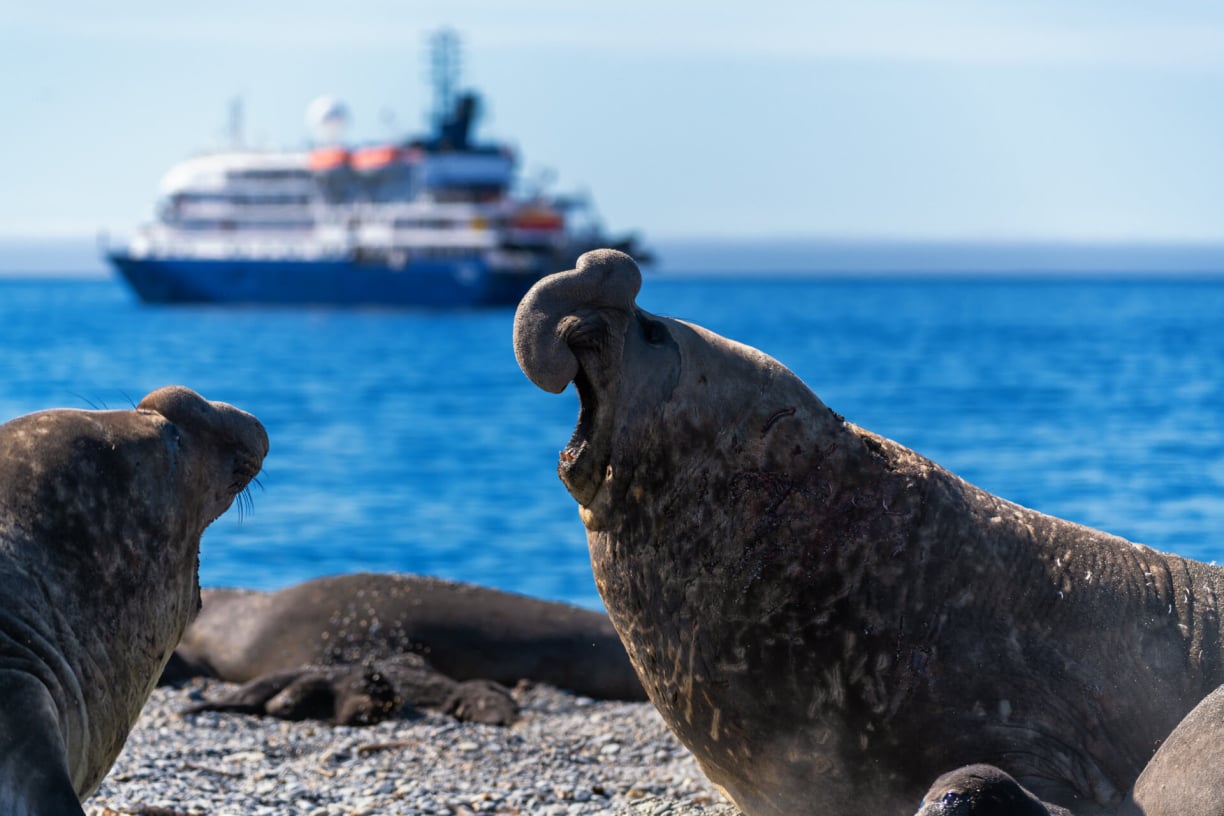
If you saw a male and female elephant seal side by side, you might not recognize them as the same species! It’s not only their size (males are more than double the size of females and much heavier), but also their overall appearance. Males feature the famous inflatable proboscis, a 20-centimeter (8-inch) trunk-like nose that they use to produce loud roaring sounds, especially during the mating season. (Source: https://www.antarctica.gov.au/about-antarctica/animals/seals/elephant-seal/)
Cool Fact: Did you know that males only develop their proboscis when they are about seven years old? At the same time, their necks develop a thick, calloused skin that protects them during fights with other males. (Source: https://www.fisheries.noaa.gov/species/northern-elephant-seal)
4. They Live at Opposite Ends of the World
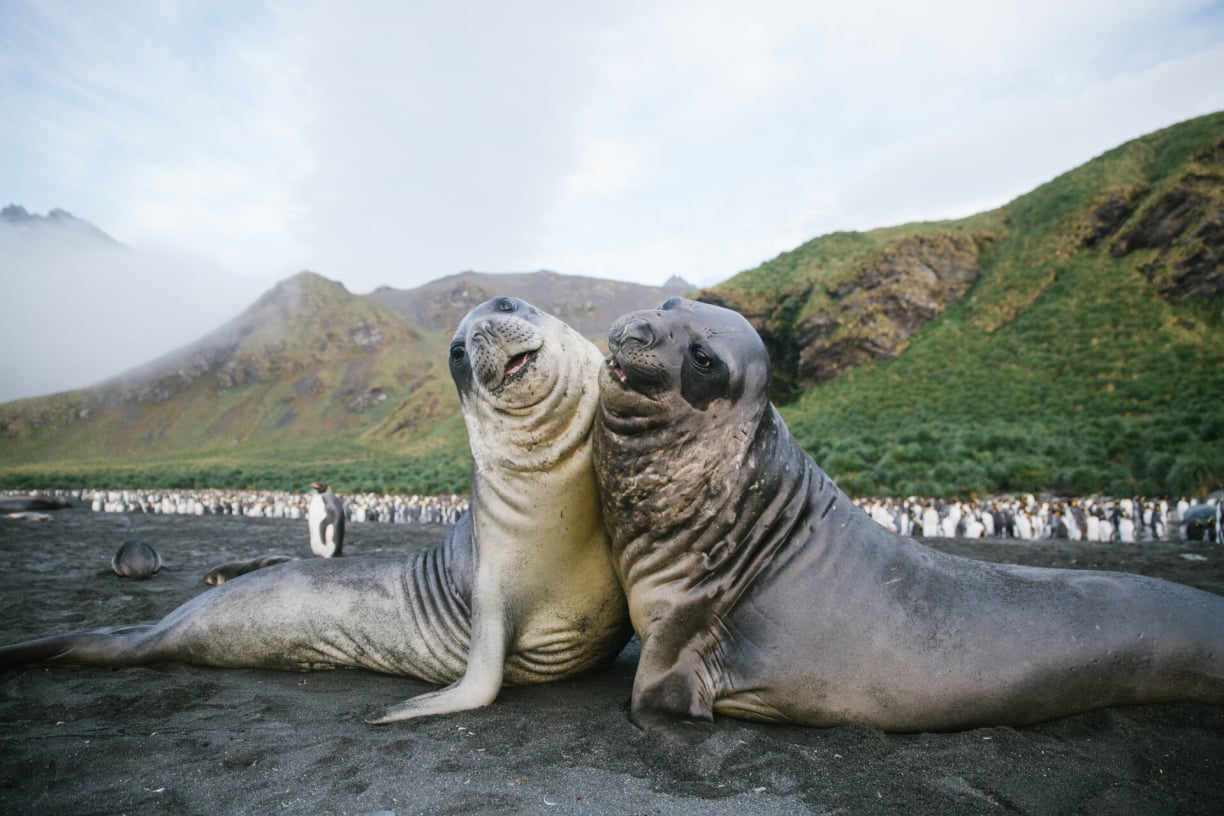
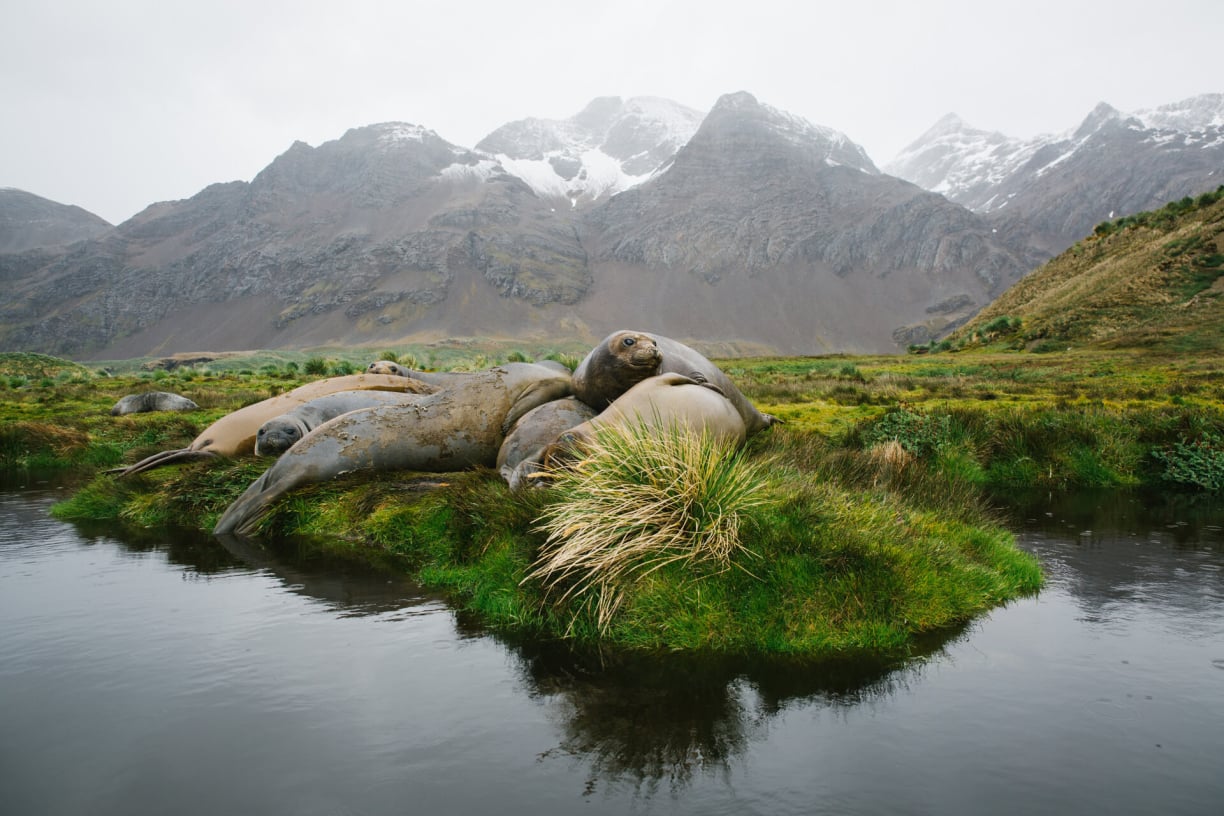
Elephant seals are split into two species living in very different hemispheres. You can find northern elephant seals in the eastern and central North Pacific Ocean, typically breeding from December to March along the coasts of California and Baja California, Mexico. (Source: https://www.fisheries.noaa.gov/species/northern-elephant-seal) Southern elephant seals live in the subantarctic regions, breeding from late-September to early November in places such as South Georgia, the Falkland Islands, and the Antarctic Peninsula. (Source: https://www.asoc.org/learn/southern-elephant-seals/) According to the British Antarctic Survey, the subantarctic island of South Georgia hosts around 54 percent of the global elephant seal population. (Source: https://www.bas.ac.uk/data/our-data/publication/status-of-southern-elephant-seals-at-south-georgia) From November to March, you can see large breeding colonies and territorial battles between males on the island’s beaches. The rest of the year, they feed offshore in the deep ocean waters but return to the same beaches each year to breed and molt.
Cute Fact: From November to December, you can see adorable elephant seal pups on beaches around South Georgia. At roughly four to six weeks old, they’re weaned off their mothers, who then abandon them and return to sea. The pups remain on land for up to six weeks before venturing out to the ocean themselves. Visit the region as part of an expedition cruise and meet these cutesies during landings! Their charming large eyes and funny faces are a highlight for wildlife lovers. (Link: https://poseidonexpeditions.com/antarctica/falklands-south-georgia-antarctica-ultimate-wildlife-expedition)
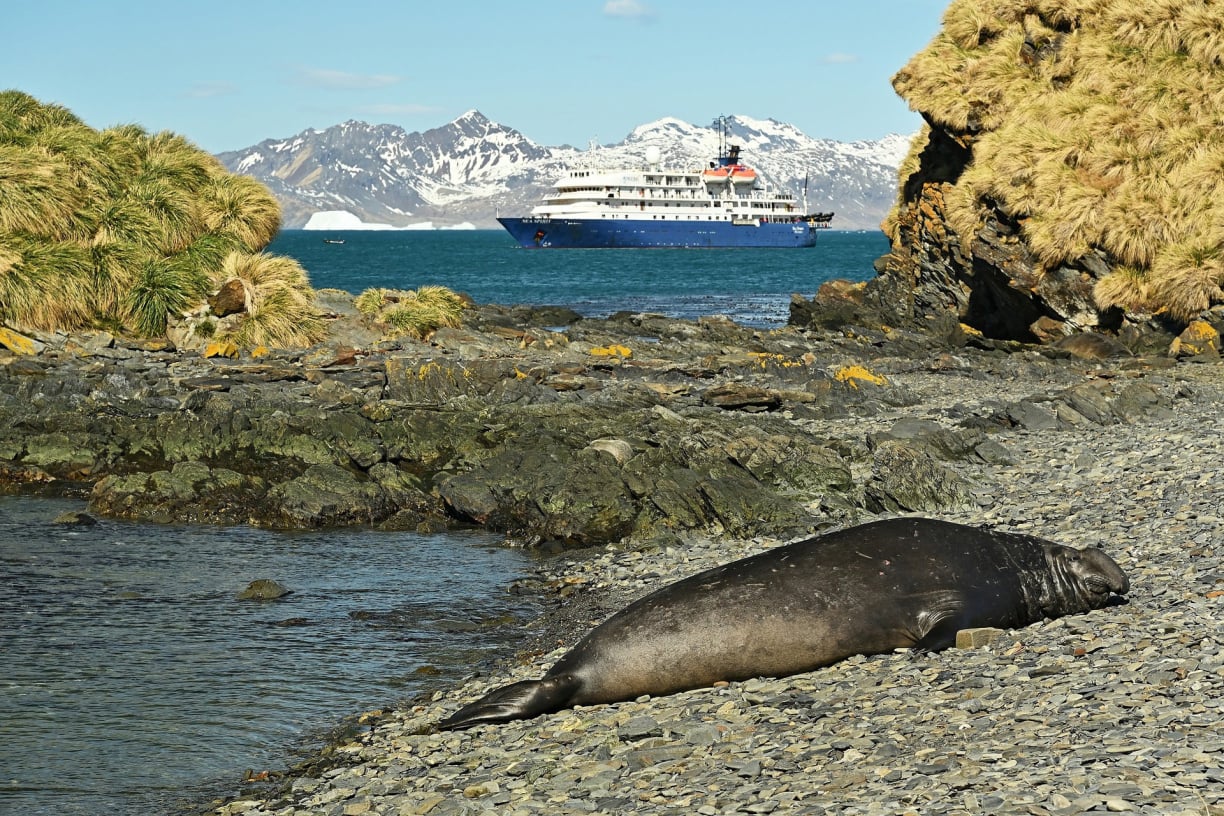
5. They Hunt in the Deep Dark Ocean
Elephant seals are deep-sea hunters feeding offshore on squid, fish, and crustaceans. Researchers attach sensors to the seals’ heads or backs, tracing their movements during foraging and migration, as well as the depths and duration of their dives. With the help of these methods, dives of up to 2,388 meters (7,835 ft) and 120 minutes in length have been recorded. (Source: https://www.scientificamerican.com/blog/tetrapod-zoology/incredible-elephant-seals-part-2) They’re the deepest-diving seals in the world, reaching depths at which typically only cetaceans can be found. (Source: https://www.asoc.org/learn/southern-elephant-seals/)
Cool Fact: Have you ever wondered how researchers attach and recover GPS trackers from the elephant seals, given that they spend most of the year at sea? The tags are attached to the seal’s hair (on their heads, or backs for younger seals) with a special super glue. Seals maintain a single coat of fur for only one year. As they return each breeding and molting season to the same beaches, the tags detach during their molts and researchers collect them from the shores. (Sources: https://www.fisheries.noaa.gov/science-blog/ice-associated-seal-ecology-research-survey-post-6, https://polarjournal.net/tagging-seals-with-sensors-helps-scientists-track-ocean-currents-and-a-changing-climat, and https://polarjournal.net/en-route-to-a-ration-in-the-meanders-of-the-polar-front)
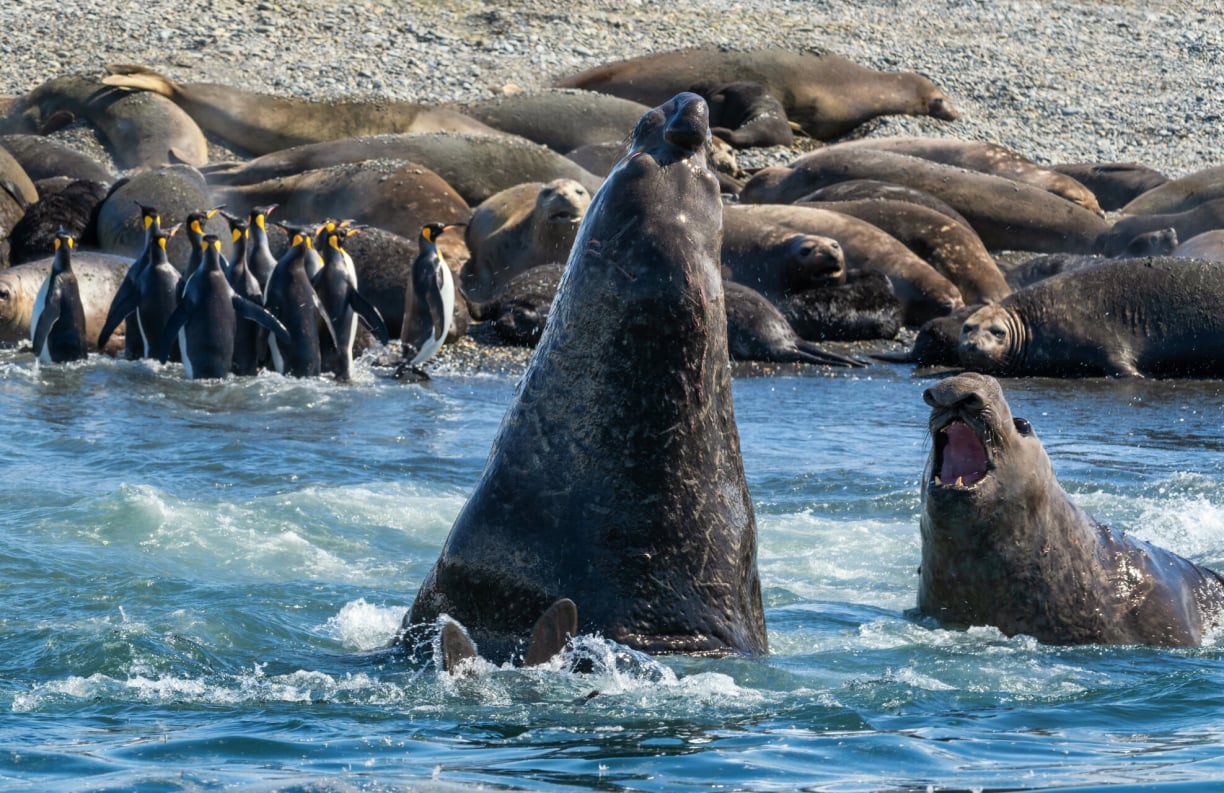
6. Their Breeding Season Features Epic Beach Battles
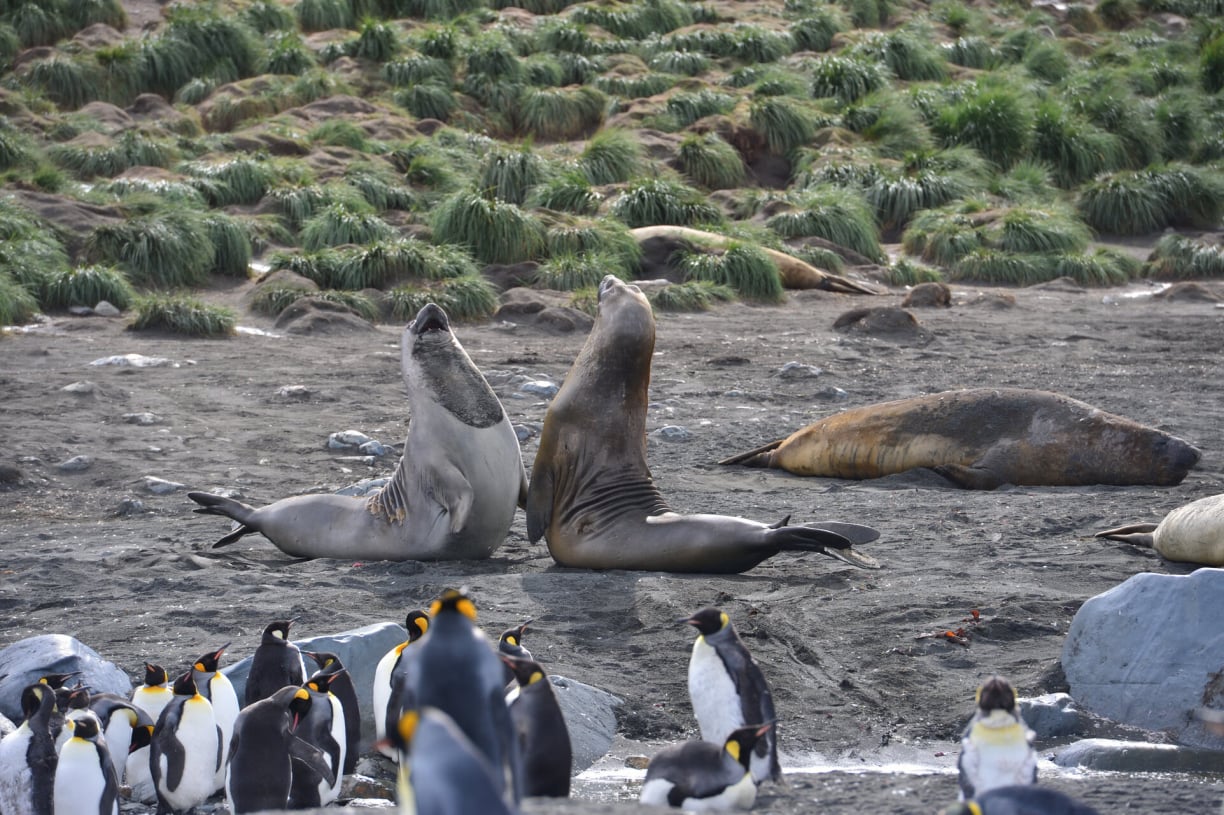
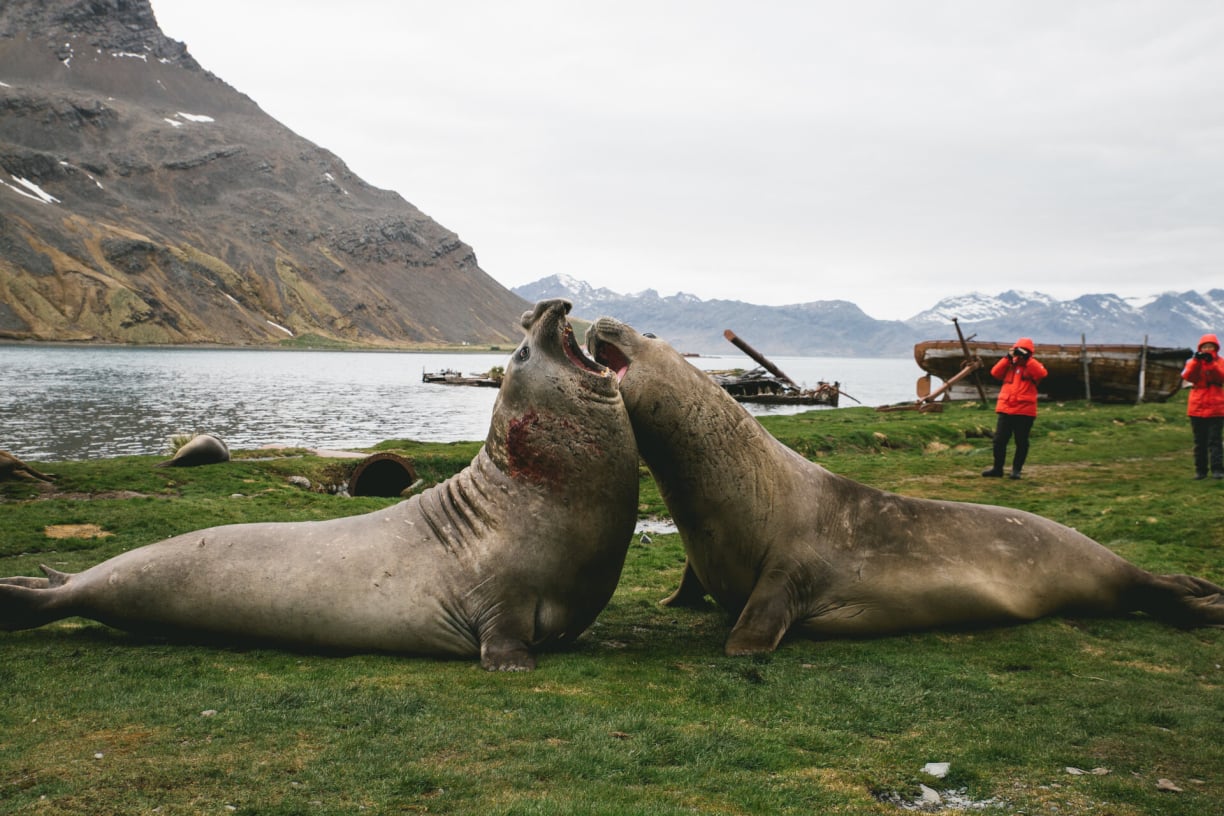
Spending most of the year in the open ocean, southern elephant seals only come ashore once a year – to rest, molt, and breed. The massive males arrive first (as early as late August) and claim their territories on the crowded beaches, fiercely fighting for dominance. Chest-slams, roars, and neck-bites are common in these bloody battles, often leaving winners and losers with deep scars. Elephant seals also pick their battles. They recognize the distinctive vocals of their rivals and then decide whether to attack or flee. (Source: https://www.universityofcalifornia.edu/news/male-elephant-seals-use-voice-recognition-identify-rivals) Southern elephant females arrive in September and aggregate in groups, which the males try to defend. The strongest bulls can acquire harems of 40 to 100 females, fathering the majority of pups born in a colony. (Source: https://www.britannica.com/animal/elephant-seal) Only around 4 percent of males become “beachmasters” and sometimes allow a younger male to help control their harems. (Source: https://www.theguardian.com/science/2023/mar/22/sex-on-the-beach-pressures-of-extreme-polygamy-may-be-driving-southern-elephant-seals-to-early-death)
Cool Fact: Large harems are a headache – males with extremely large harems die younger! A 2023 study found that competitive pressure pushes males to gain weight as quickly as possible, giving them a crucial advantage in their brutal mating battles. This drive for size leads to more reckless foraging in predator-rich waters, exposing them to higher risks of early death. (Sources: https://royalsocietypublishing.org/rsos/article/10/3/221635/92092/Extreme-polygyny-results-in-intersex-differences, https://www.theguardian.com/science/2023/mar/22/sex-on-the-beach-pressures-of-extreme-polygamy-may-be-driving-southern-elephant-seals-to-early-death)
7. They Grow From Tiny Pups to Ocean Giants
At birth, southern elephant seal pups weigh around 45 kilograms (100 lb) and feed on the fat-rich milk of their mothers. (Source: https://www.asoc.org/learn/southern-elephant-seals/) Northern elephant seals are typically born a little lighter at 34 kilograms (75 lb). (Source: https://www.marinemammalcenter.org/animal-care/learn-about-marine-mammals/pinnipeds/northern-elephant-seal) In the first three weeks, they triple or even quadruple in size. Around three to five days before a pup is fully weaned, mothers return to the sea to feed, leaving pups on the beaches for another four to six weeks before venturing into the ocean themselves. Females reach sexual maturity at around four to six years of age, while males mature later, at around seven to ten years old. Most elephant seal lives are cyclical: feed in the oceans, mate, breed and molt – repeat. This continues for an average of 21 years for southern elephant seals and a little shorter (13 to 19 years) for their northern cousins. (Sources: https://www.asoc.org/learn/southern-elephant-seals/, https://www.fisheries.noaa.gov/species/northern-elephant-sea)
Gross Fact: Molting isn’t just growing a new coat of fur. During the “catastrophic molt,” elephant seals shed their top layer of skin along with their annual fur coat. (Sources: https://www.fisheries.noaa.gov/species/northern-elephant-sea, https://www.marinemammalcenter.org/animal-care/learn-about-marine-mammals/pinnipeds/northern-elephant-seal)
8. Even Ocean Giants Have Deadly Predators
Despite their impressive size, elephant seals aren’t completely at the top of the food chain. The biggest threat to adult elephant seals is orcas (killer whales), which hunt them in both the Arctic and Antarctic waters. Large shark species, especially great white sharks, are also known predators. Young pups and juveniles are frequently preyed upon by leopard seals.
Cool Fact: In some cases, their thick blubber acts as protection from smaller predators. Cookie cutter sharks, measuring around 40 centimeters (16 in), usually aren’t life-threatening to elephant seals but behave like parasites, taking circular bites from their skin. Their teeth carve 4-centimeter (1.6-inch) craters into their blubber, leaving elephant seals scared but alive. Elephant seals can have blubber as thick as 15 centimeters (6 in) thick, which helps protect them from these pesky biters. (Sources: https://www.livescience.com/18441-elephant-seals-antarctica-photos.html, https://www.youtube.com/watch?v=I0QU2vV2b6o&t=2s)
9. Getting Too Close to Elephant Seals Can Be Dangerous
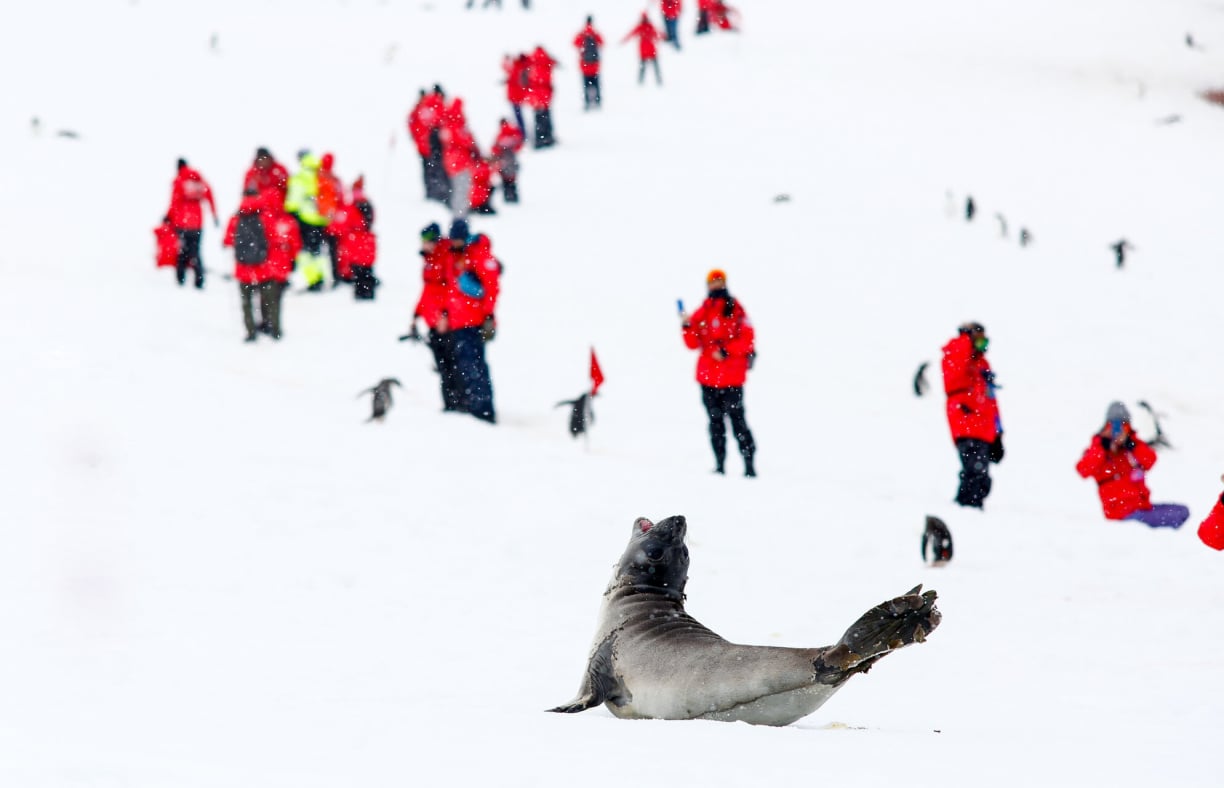
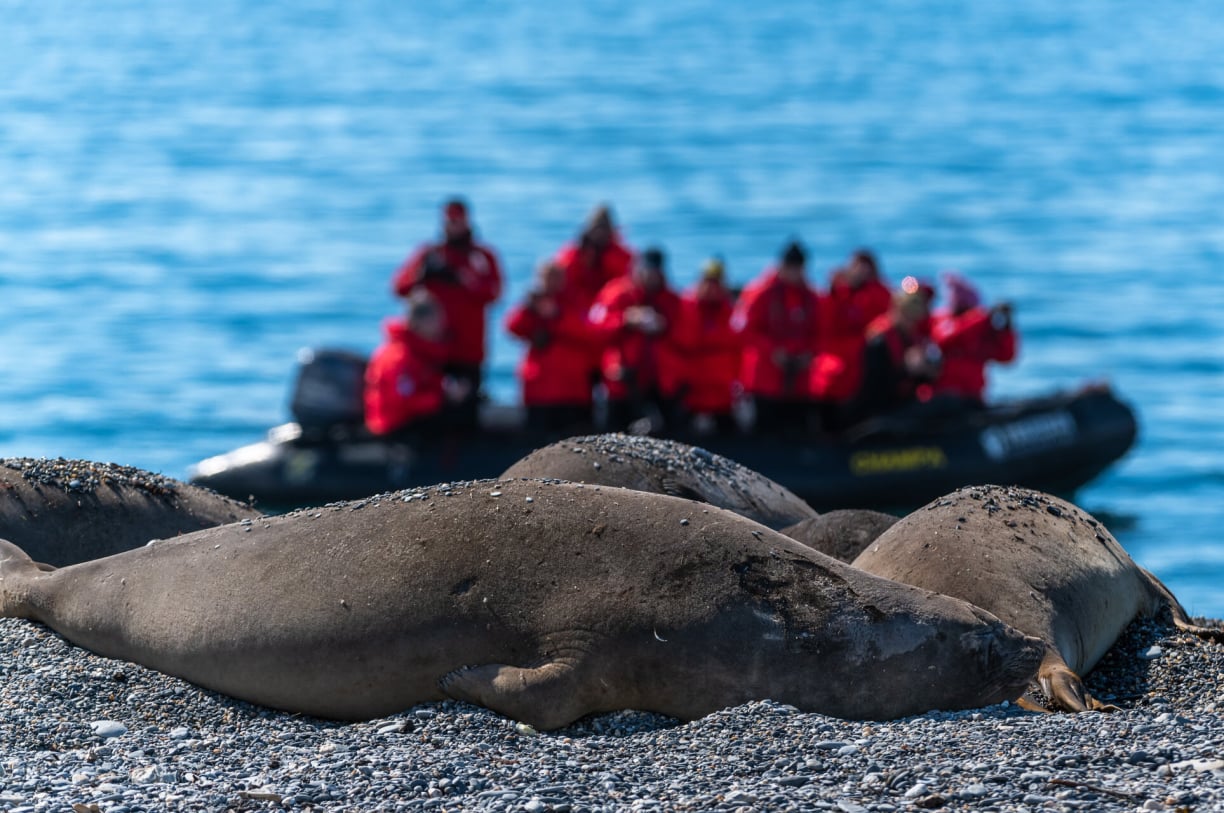
Even though they may look cute and friendly, elephant seals are wild animals and can be dangerous if approached too closely, especially during breeding season. Males aggressively defend their territories and harems. Bulls weigh several tons and, despite their incredible size, can move surprisingly fast on land. Getting in between a mother and pup isn’t a good idea, either. To stay safe, always observe them from a distance and stay at least 20 meters (65 ft) away from the animals. (Source: https://www.doc.govt.nz/nature/native-animals/marine-mammals/seals/elephant-seal)
Cool Fact: On our expedition cruises to the Antarctic Peninsula and South Georgia, you can see southern elephant seals safely (for both you and the animals). Our expedition team will brief you on how to behave while strolling the beaches bustling with elephant seals and ensure you have a magical, yet responsible wildlife encounter.
10. They Once Went Nearly Extinct
In the 18th century, elephant seals were hunted for their blubber and by the 1900s they were at the brink of extinction. A male animal yielded nearly 380 liters (100 gallons) of oil, used as a high-quality machinery lubricant and as fuel for lamps. (Source: https://www.nathab.com/know-before-you-go/antarctica/wildlife-guide/southern-elephant-seal) By 1892, only around 100 northern elephant seals remained in a colony on Guadalupe Island, Mexico. By 1922, the Mexican government granted them protected status, and the U.S. government followed a few years later, helping to repopulate northern elephant seals along the Southern California coast. Southern elephant seals didn’t fare much better, and by 1964 their populations had declined significantly. The Convention for the Conservation of Antarctic Seals (CCAS), enacted in 1978, helped southern elephant seal populations to rebound. Today, northern elephant seal populations are estimated at 239,000 and southern elephant seals at around 650,000 animals. Both species are listed as Least Concern on the IUCN Red List. (Sources: https://www.iucnredlist.org/species/13583/45227247, https://www.iucnredlist.org/species/13581/45227116)
Cool Fact: Did you know that today’s northern elephant seal population descended from only 20 individuals? The small, remote breeding colony on Isla de Guadalupe that survived the late-1800s extinction by humans repopulated northern elephant seals’ historic range along the American west coast. (Source: https://royalsocietypublishing.org/rspb/article/285/1892/20182176/79063/The-rise-and-fall-of-dialects-in-northern-elephant)
FAQs
How long do elephant seals live?
Southern elephant seal females generally live into their early 20s, while males live about 14 to 15 years. Northern elephant seal females can live up to 20 years, while males usually live only 12 to 14 years.
What was the biggest elephant seal ever recorded?
According to Guinness World Records, the largest elephant seal was a male southern elephant seal weighing 4,000 kg (8,818 lb) and measuring 6.85 meters (22 ft 6 in). This record specimen was killed in South Georgia in 1913. (Source: https://www.guinnessworldrecords.com/world-records/717572-largest-seal)
Can you see them in Antarctica?
Yes. Southern elephant seals are abundant on the Antarctic Peninsula and subantarctic islands such as South Georgia. The best time to visit is from November to March via expedition cruises, when you can observe them breeding, resting, and mating on land.