Arctic Hare Facts
Incredibly fluffy and cute, but also a speedy master of survival in the tundra – the Arctic hare isn’t your average scared little rabbit pal. This incredibly well-adapted Arctic bunny knows how to find food in the coldest winter, skillfully escape the most vicious predators, and clandestinely camouflage and blend in with their environment. While most Arctic wildlife travelers look out for iconic polar bears and walruses, we think this fluffy hopper deserves your attention. Read on! Follow us down the Arctic rabbit hole and discover seven amazing facts about Arctic hares.

Fast Facts
- Name: Arctic hare (Lepus arcticus)
- Lifespan: up to 5 years in the wild
- Appearance: White during the winter, gray or brown during the summer
- Habitat: Widespread species in Arctic tundra regions of Greenland, Scandinavia, Northern Europe, Russia (Siberia and the Arctic regions), Northern United States (Alaska), Northern Canada, Ellesmere Island, Labrador, Newfoundland’s south coast, and the Arctic Islands
- Size/length: 43 to 70 cm (17 to 28 in), not counting the tail (Arctic hares are the largest among the lagomorph species)
- Tail length: 4.5 to 10 cm (1.8 to 3.9 in)
- Weight: 2.5 to 5.5 kg (6 to 12 lb), with some reaching up to 7kg (15 lb)
- Diet: Herbivorous (woody plants, lichens, mosses, roots, berries, leaves and bark). Scientists found that occasionally they scavenge on meat and fish during harsh winters!
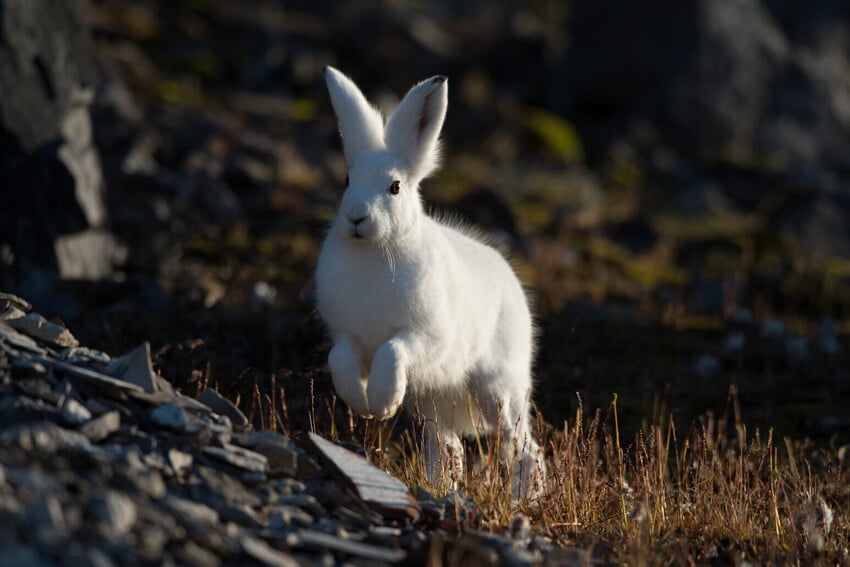
1. Arctic Hares Can Handle Extremely Cold Temperatures
Freezing temperatures as low as minus 40 degrees are no problem for this bunny. The Arctic hare lives in the northern tundra regions, enduring some of the harshest winters on the planet. Just like other Arctic animals, Arctic hares have adapted perfectly to the conditions at high latitudes, featuring cold weather, wind, ice and snow. If you’ve ever seen this cute, fluffy lagomorph in winter, you may have noticed its dense, white, multi-layered fur coat, which provides excellent insulation from the cold. In the cold north, long extremities are a disadvantage and drain body heat. That’s why Arctic hares feature a compact body structure, shortened ears and limbs. In comparison, their hare relatives residing in warmer climates feature longer extremities, which helps with heat dissipation. For Arctic hares, fat reserves are a must-have! Up to 20 percent body fat helps them to retain heat and functions as energy storage when food resources are scarce. If their luxurious fur coats and fat storage seem insufficient against the cold, Arctic hares may huddle in groups or dig burrows beneath the snow to escape the cold.

2. Arctic Hares are Opportunistically Sociable
These aren’t very social animals, unless it benefits them to survive the cold and dark winter months. During the summer, Arctic hares usually spend their time in solitude or small groups of up to three. Since summertime offers an abundance of resources and warmer temperatures, there is no need to gather in large groups. While they may stay in proximity to other hares, individuals usually venture out within their home ranges to forage independently. Come winter, Arctic hares come together in large groups of dozens to hundreds of individuals. This winterly regrouping protects them from predators, such as the Arctic fox, Arctic wolf and snowy owl, as large groups detect them quicker. It also provides thermal benefits through huddling. Unlike many other mammals, which come together in groups during mating season, Arctic hares disperse, pairing off in couples or sometimes groups of three.
3. Nearly Nothing Escapes Their Keen Senses
Life as an Arctic bunny isn’t easy. Being at the bottom of the food chain, predators are abundant, and finding food in the scarce snowscapes of the Arctic tundra requires some elaborate foraging skills. Arctic hares possess an exceptionally keen sense of smell, which allows them to sniff out the most meager vegetation beneath the snow cover. The position of their eyes lets them scan their surroundings with a 360-degree coverage, allowing them to detect potential predators approaching from all directions. Arctic hares also have beautifully black eyelashes, which protect their eyes from the intense glare of the sun, which is reflected by snow and ice. Their short ears move like radar to detect various sources of sounds, and the cute way their noses twitch enhances their olfactory perception to pick up scents from their environment.

4. Sometimes They Eat Meat
In the short Arctic summers, Arctic hares build up their fat storages and dine on the abundant Arctic tundra plants like grasses, berries, shrubs, lichens and mosses. During the winter, Arctic hares mostly feed on woody plants and roots of Arctic willow. But when there isn’t enough during harsh winters, these “otherwise herbivores” can resort to scavenging. When food sources become extremely scarce, Arctic hares may feast on fish remains, deer carcasses and the stomach contents of dead caribou. And, like other lagomorphs, they eat their poop. Practicing coprophagy, they reabsorb their pooplets, making sure to consume all the fibers and nutrients left in their feces after the first round of digestion.
5. Their Offspring is Born Fully Furred
Unlike other lagomorphs, leverets, as Arctic hare babies are called, are born with fur after a 50-day gestation period. Leverets are mobile shortly after birth and independent from around two to three weeks, which is crucial for their survival in the harsh Arctic environment. They stay around their mothers until they wean off at around eight weeks and are ready to mate themselves during the next breeding season. Arctic hares usually breed around April and May, and sometimes a second time later in the year. Males usually seek out multiple females to increase their reproductive success and establish their territories by scent marking. And the choice of territory is crucial to attract the ladies. Females select males based on their display of fitness, as well as quality and size of their chosen territories. After mating, females prepare nests, usually in depressions lined with fur and grass, hidden from predators behind rocks and vegetation.
6. Arctic Hares Are an Important Part of the Arctic Food Web
With their poop, they are amazing fertilizers of the Arctic ecosystem, but also a nutritious staple food for Arctic foxes, Arctic wolves, Canadian Lynx and snowy owls. Being preyed on by many, Arctic hares have developed tailor-made defense strategies to survive at the low end of the food chain. With their white winter fur blending into the frozen tundra, and their gray-brown summer coat matching the rocky terrain in summer, Arctic hares are perfectly camouflaged to stay nearly invisible to predators. They can freeze in place when spotting a predator, making Arctic hares difficult to spot for Arctic foxes, Canadian lynx and snowy owls. If their invisibility skills do not suffice, their speed and evasive maneuvers may save their lives. Arctic hares can hop as fast as 60km per hour (40 mph), taking leaps of 2 to 3 meters (6.5 to 10 feet) in a single bound. Their speed, agility and signature zigzag running pattern make it harder for predators such as wolves to intercept them. In addition to that, there is the benefit of the group. Arctic hares congregate, especially in winter. After all, hundreds of pairs of eyes may spot predators earlier and better than a single individual!
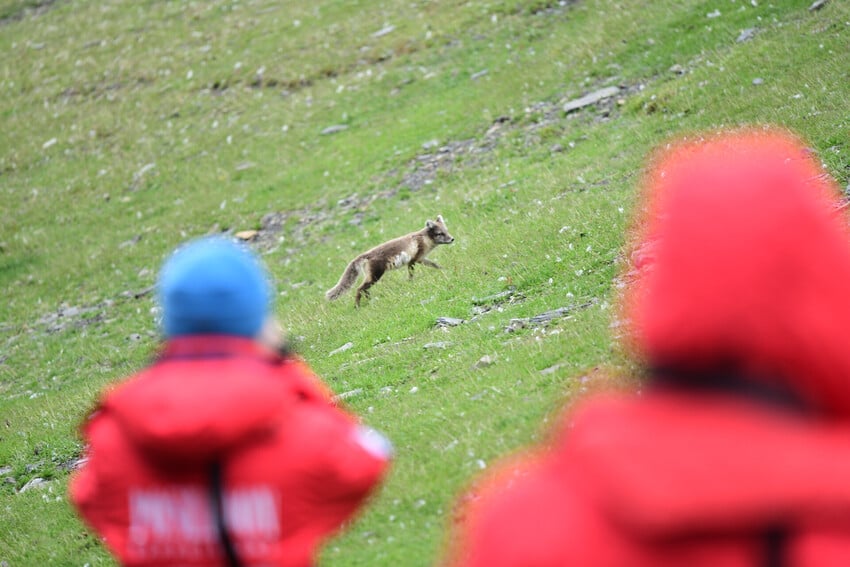
7. Arctic Hares Don’t Make Good Pets
As cute as they are, they aren’t meant to live in captivity. While their life expectancy in the wild is up to five years, captivated animals rarely make it to one and a half years of age. The cold Arctic tundra is where they feel most comfortable, and confinement not only stresses them, but also deprives them of their large running range and foraging habits. Scientists tracked the incredible journey of one female super-traveler hare named BBYY (based on the blue and yellow pair of ear tags she received) on Ellesmere Island in the Canadian Arctic. Equipped with a GPS-responder collar. This record-breaking Arctic hare covered 388 kilometers (241 miles) in 49 days. Currently, Arctic hares aren’t a threatened species, but scientists monitor how their populations react to climate change, their habits and migration patterns.

FAQs
Can Arctic hares swim?
While Arctic hares are not specifically adapted to moving in water, they can swim if needed, though they are not very efficient swimmers. Their hind legs are perfectly designed for running, but not for swimming long distances.
How high can an Arctic hare jump?
With their powerful hind legs, they can manage heights of up to two meters (six feet). This means they could easily jump over most people.
How fast can Arctic hares run?
Arctic hares can reach speeds of up to 60 km per hour (ca. 40 mph)! That’s on average more than cars are allowed to drive within city limits in most countries
Do Arctic hares drink water?
Arctic hares are unique in hydrating by nibbling on snow or ice. Other mammalian species refrain from consuming ice and snow, as the body needs energy to melt it, which decreases the body’s temperature, drains energy and can cause hypothermia. This is also true for people, so if you are lost in the icy polar regions and thirsty, do not attempt to eat snow. Try to melt it in your water bottle first before consuming it.
Do Arctic hares change color?
Yes, Arctic hares change their fur color seasonally. They feature white fur during the winter months and a brown or gray summer coat to blend in with the rocky summer tundra.