10 Amazing Animals That Live in the Arctic
Survival specialists, camouflage experts, masters of migration and hunters – Arctic animals know how to make a comfortable home in the high Arctic. The Arctic ecosystem is fragile, and our top 10 Arctic animals are not only surviving in it, but actively shaping this unique part of the world. They take on important roles in the Arctic biosphere as fertilizers, species population controllers, plant diversity promoters, predators and prey, through pooping, eating and being eaten. Read on and get inspired for your next Arctic wildlife adventure!
1. Polar Bear (Ursus maritimus)
Known as kings of the Arctic, polar bears are among the most iconic Arctic animals. For many Inuit cultures, they are cultural and spiritual symbols of strength, power and wisdom. Polar bears live in the Arctic Circle regions, and about 60 percent of the world’s polar bear population lives in the Canadian Arctic. You can also encounter them in the Russian Arctic, Northern Europe (Greenland and Svalbard) and northern Alaska. They mate, hunt for seals and raise their young ones on sea ice, and they can perfectly manage the freezing temperatures and icy waters of the Arctic! Their thick fur features a dense undercoat, which traps warm air near the skin and prevents heat loss. Their longer outer fur acts as a water-repellent and an up-to-10-centimeter-thick (4 inch) layer of blubber insulates them perfectly against the cold. Did you know that polar bears are actually not white? Their white fur is transparent, while their skin beneath is black, helping to absorb and retain heat from the sun. Even in subzero temperatures, polar bears can keep a core body temperature of around 37C (98F). Fun fact: Polar bears can actually overheat! Even for the coldest regions in the Arctic, they’re a little too well-insulated. To cool down, they can pant like dogs, spread out on ice or just take a cooling dip in the Arctic Ocean.
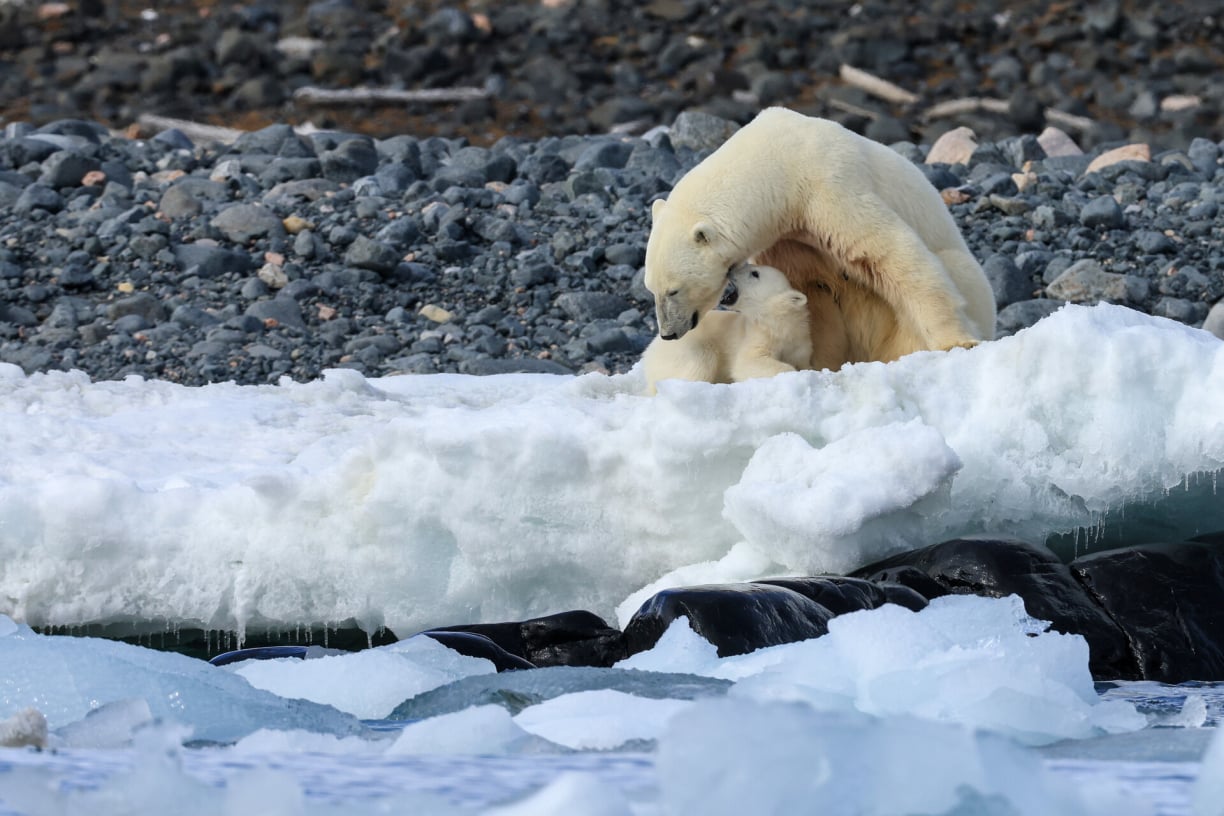
Throughout history, the Inuit hunted polar bears for food, clothing and tools, using every part of the bear for sustenance. Today, polar bears are an international symbol to create awareness about climate change in the Arctic, highlighting that the melting of sea ice endangers their habitats. Furthermore, climate change drives them toward human settlements. With decreasing sea ice, polar bears sometimes venture into coastal regions to forage for food. A safe way to see them in their natural habitat (for you and the bears) is on a Svalbard expedition cruise. Choose a trip to West Svalbard or the polar ice edge for a chance to spot them! Check out our upcoming Svalbard cruise schedule.
2. Arctic Fox (Vulpes lagopus)
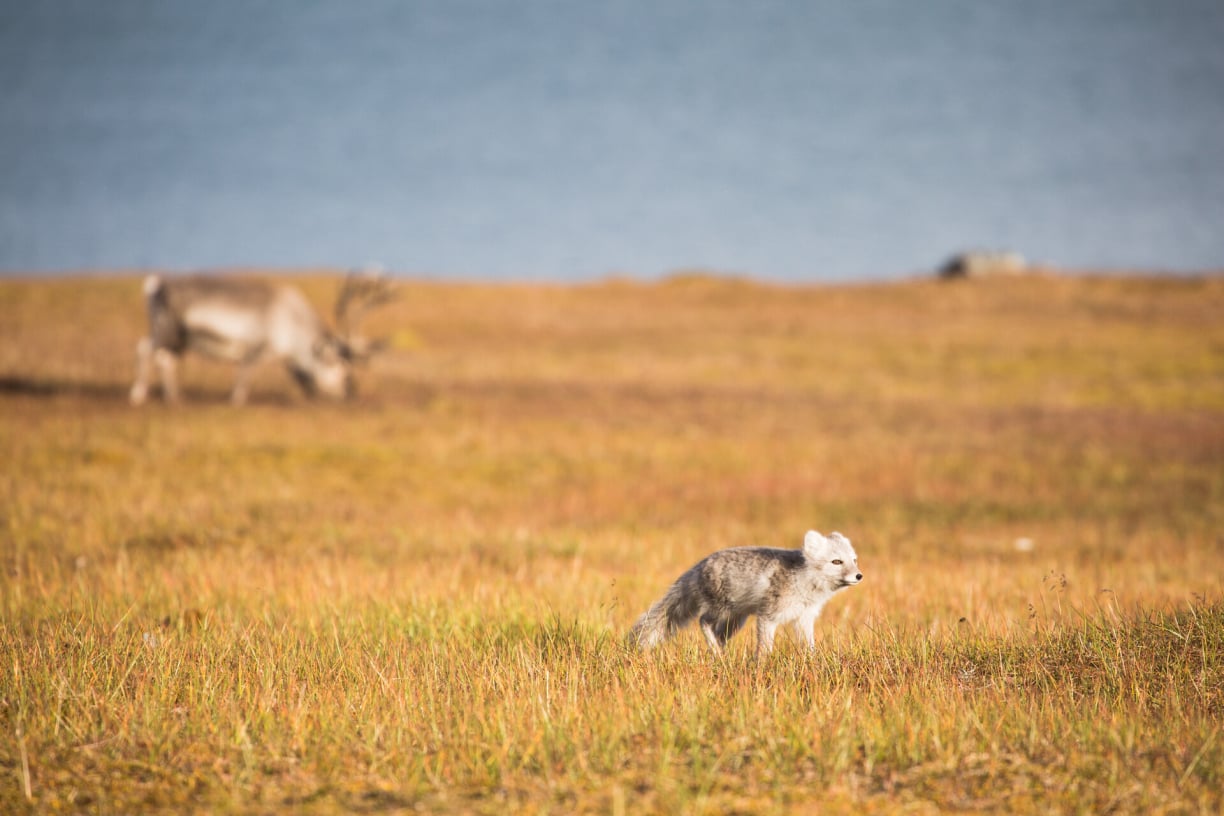
The Arctic fox is an exceptionally skilled hunter, and can be found throughout the Arctic region, from coastal to mountainous areas in the interior. With their keen sense of hearing, Arctic foxes can detect the faintest sounds of prey moving beneath the snow cover, and then pounce headfirst into the snow to catch their meal. This technique works perfectly on small mammals such as lemmings. In coastal areas, Arctic foxes dig up bird eggs and even catch small fish. They also master a much more energy-conserving feeding method: following polar bears and scavenging leftover seal, whale and walrus carcasses. Arctic foxes keep backup supplies in food caches hidden under rocks and snow during harsh winters when food is scarce.
These foxes are one of the many Arctic animals that change their fur coat seasonally. While in summer they feature a brown or grey summer outfit that blends in perfectly with the rocky Arctic tundra, they grow a white winter coat when the days get shorter. This seasonal fur change is triggered by hormones reacting to the dwindling daylight with the onset of winter. While around 99 percent of Arctic foxes belong to the white morph, changing from white in winter to brown-grey in summer, about one percent (blue morph) stay grey-blue year-round. Blue morphs are usually found around coastlines with less snow cover, perfectly blending into the rocky landscapes.
Fun fact: In extremely cold temperatures, Arctic foxes can curl up tightly, tucking their legs and head under their bodies, and covering themselves with their bushy tails. Their fur also covers their paws, which gives them a better grip on ice and snow.
If you want to see them in their natural habitat, Greenland is a great place to catch a glimpse, for example, in the Northeast Greenland National Park. Join one of our next East Greenland cruises this summer.
3. Walrus (Odobenus rosmarus)
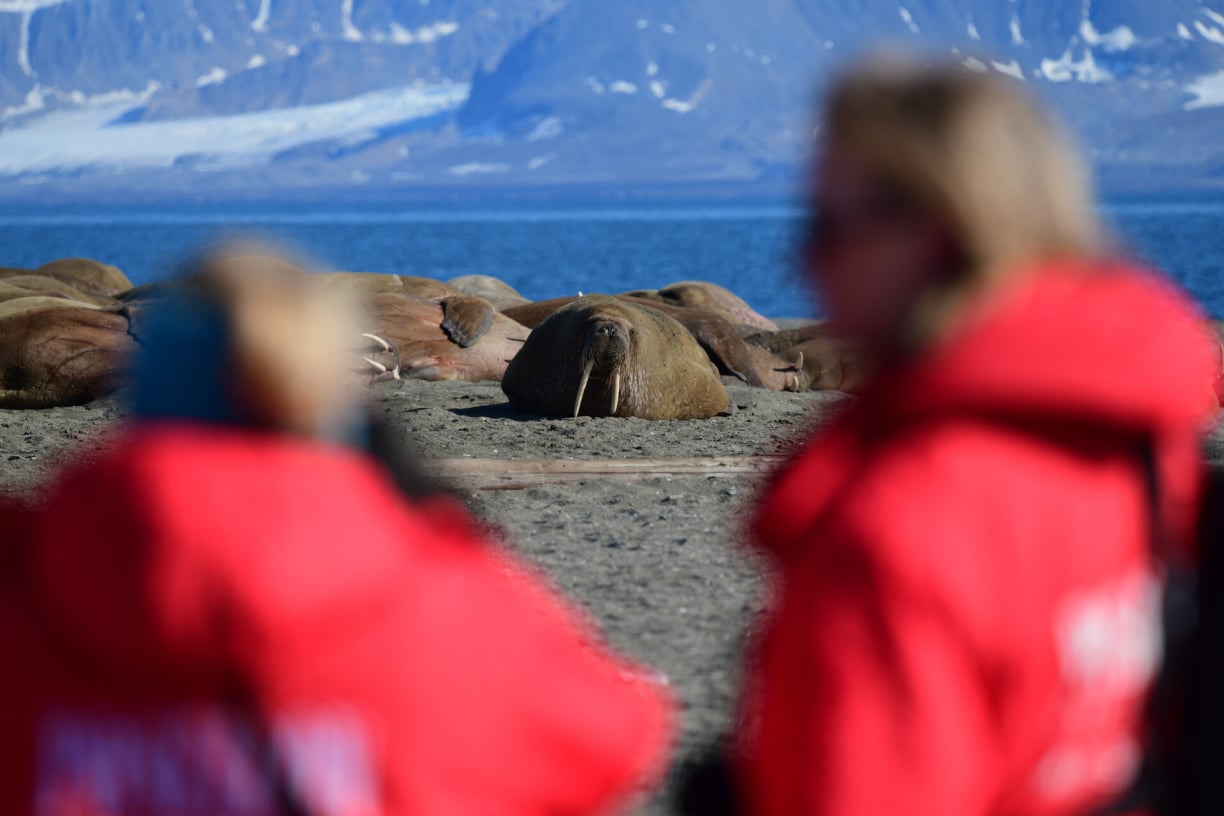
Walruses are the beloved pinnipeds of the Arctic and a must-see on most travelers’ wildlife viewing lists. Both females and males feature tusks, and you can usually see them hauling out on beaches and ice floes in large groups. Their massive bodies can reach weights of up to 1,200 kg (2,600 lbs) for male Atlantic walruses and up to 1,900 kg (4,200 lbs) for their Pacific counterparts. Their blubber can reach a thickness of 15 centimeters (5.9 inches), acting as perfect insulation for the frigid waters of the Arctic. The large tusks (which are elongated canine teeth) function as a multi-purpose tool to poke breathing holes into the ice and aid when hauling out their enormous bodies on ice floes. The tusks can also be used to show off and defend themselves during fights. They are incredibly social animals, and during mating season you can see haul outs with thousands of walruses. Mating fights between males can be brutal, and older animals usually have numerous scars from countless fights throughout their lifetimes. Fun fact: Their adorable whiskers are extremely sensitive and help them to detect food on the often murky and dark seafloor.
A great opportunity to see these blubbery giants is during late summer in Svalbard. Check out our Svalbard cruises and spot walruses in the wild!
4. Whales
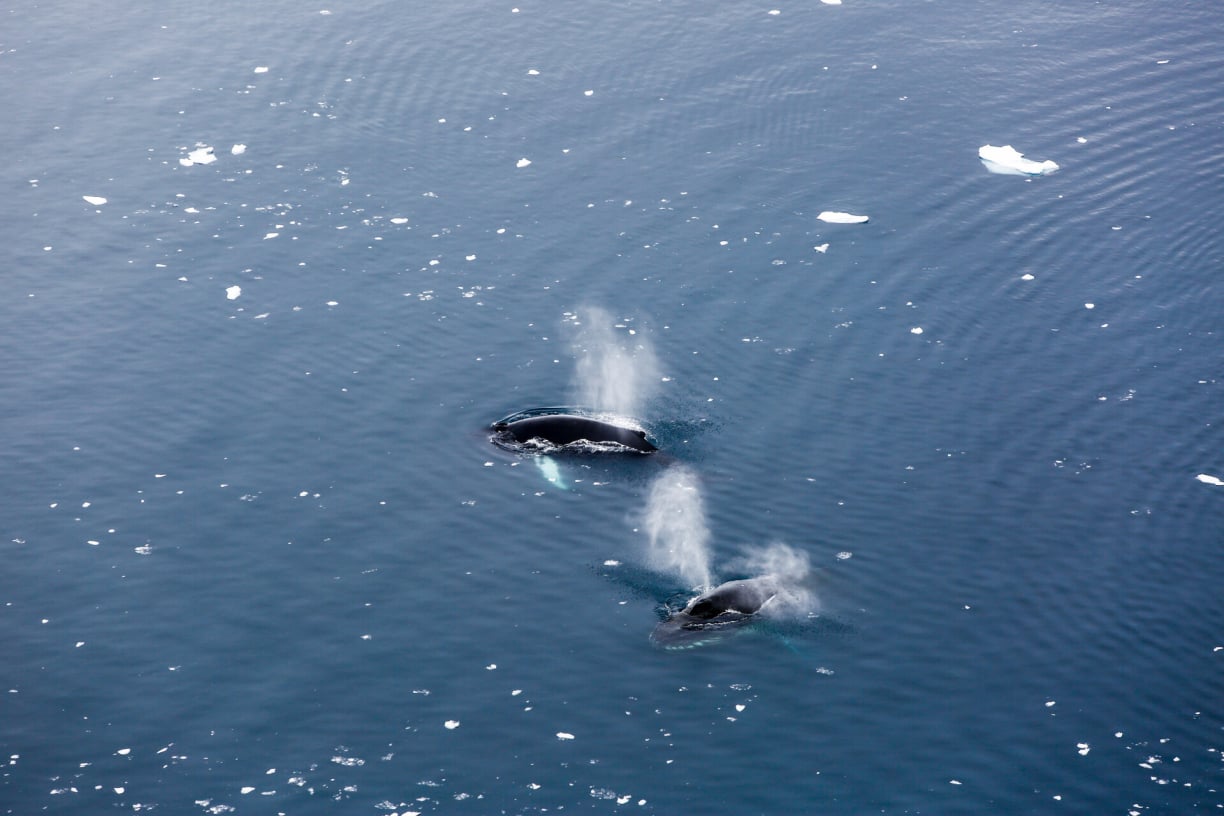
There are only three whale species calling the Arctic home year-round: narwhals, bowhead and beluga whales. We’ve picked our two favorites: the so-called canaries and unicorns of the sea (before you read on, guess which one is which!).
Narwhal (Monodon monoceros)
Regarded as unicorns of the sea, narwhals, unlike other whales, live exclusively in Arctic waters. You can spot this toothed whale species during the summer months in the deep coastal waters and fjord systems around Greenland, the Russian and Canadian Arctic. Narwhals are migratory animals and, while they spend summers in coastal areas, they move to deeper waters in winter. Narwhals can dive as deep as 1,500 meters (4,900 ft) to catch prey, and utilize a specialized kind of echolocation in the form of clicks and buzzing sounds to locate their food in dark waters. Their iconic up-to-three-meter-long (10 ft) tusks are not only highly sensitive to touch, but also feature thousands of nerve endings. Scientists believe that they aid narwhals in detecting temperature changes and water salinity, helping to navigate and locate prey. A long tusk also functions as a strong mating display for males. Fun fact: Did you know that while tusks are usually a male thing for narwhals, around 15 percent of females feature a (somewhat smaller) tusk?
Beluga Whale (Delphinapterus leucas)
Often called the canaries of the sea because of their wide spectrum of vocalizations, beluga whales are a small species of toothed whales. You can find them in Arctic and sub-Arctic waters around Alaska, Canada, Greenland and Russia. Belugas are highly social and live in pods of around 10 animals. Their iconic white color helps them blend in perfectly in areas around the polar ice caps, camouflaging them from predators like polar bears and killer whales. Their large round forehead (called a melon) is filled with wax and oil, which helps to control the frequencies of their sounds, thus improving echolocation. Their squishy heads actually change shape depending on the sounds they make! Fun fact: Their communication transcends species! A captive beluga whale in California tried to imitate human voices, but it turned out sounding rather like your strange neighbor performing his daily shower singing performance. If you haven’t seen the viral video on social media, take a look here: https://www.youtube.com/watch?v=HDDgJPKuSf0

5. Greenland Shark (Somniosus microcephalus)
There is no vertebrate animal in the world mastering longevity like the Greenland shark! Despite its name, this species is not only found in Greenland, but inhabits the Russian high Arctic, North Atlantic and Arctic Oceans. Greenland sharks are the longest-living vertebrates in the world and can live for up to (and beyond) 400 years. Scientists conducted radiocarbon dating of crystals in one Greenland shark specimen’s eye lenses, and estimated the shark to be around 392 years old. Imagine that some of the oldest Greenland sharks may have been contemporaries with Galileo Galilei and Sir Isaac Newton! They may have been around during the French Revolution, George Washington’s birth and the foundation of the United States of America. Greenland sharks know how to stay undercover. They are able to dive to incredible depths of 2,200 meters (7,200 feet), which makes sightings very difficult. The first photo of this species was taken in 1995 and only 18 years later, a video was successfully recorded of a Greenland shark in the wild.
Fun fact: While Greenland shark meat is edible, it can get you intoxicated if not prepared correctly. The old Norwegian expression getting shark drunk (“hai full”) describes the state of intoxication after such a meal, which is caused by trimethylamine oxide (a nerve toxin) in the meat. When it’s fermented correctly, it turns into a strong and smelly delicacy (Hákarl), which you can try in Iceland.
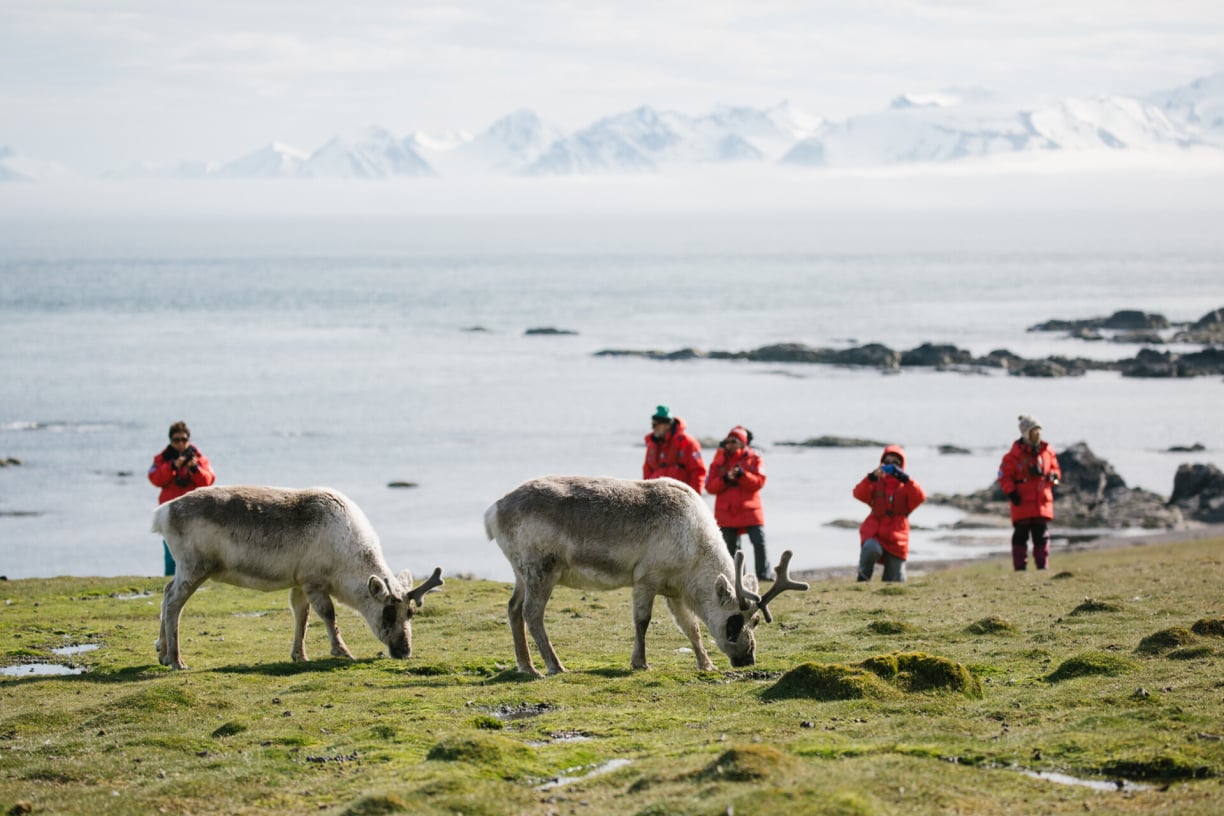
6. Reindeer (Rangifer tarandus)
Did you know that reindeer are sophisticated ecosphere engineers of the Arctic tundra? Living in large herds, they keep the ecosystem in balance through grazing on a variety of shrubs, grasses and lichens, and by trampling and fertilizing the tundra soil. This specific reindeer behavior promotes plant variety and prevents shrubification, the growth of tall and woody plants throughout the tundra. In the Arctic, the growth of larger plants may push out the ancient biodiversity characterizing the Arctic tundra and, as shrubs trap heat, may contribute to the thawing of the permafrost.
In search of food, reindeer can migrate up to 5,000 kilometers (3,100 miles) annually, and their ability to see within the ultraviolet light range improves their vision in the white snowscapes of the Arctic. It also helps them to see better in the long dark polar nights. In addition, the wavelength of light reflected from their eyes changes seasonally. In summer, their eyes reflect golden hues, while in winter they reflect blue wavelengths. If you go wildlife watching, you may encounter reindeer in Northern Europe, while you’ll be looking for caribou in North America and Canada. But don’t worry, they are the same species. And if you want to see the iconic short-legged and stout subspecies of reindeer, head to Svalbard! You can see them pretty much anywhere around the archipelago year-round, and they even roam the streets of the capital, Longyearbyen.
Fun fact: Santa’s famous reindeer (including Rudolf) may actually be females! Both male and female reindeer grow antlers, but males shed them in the fall, not growing a new pair until the following spring. Females, however, keep their antlers throughout the winter (and Christmas), shedding them only after giving birth in the spring!
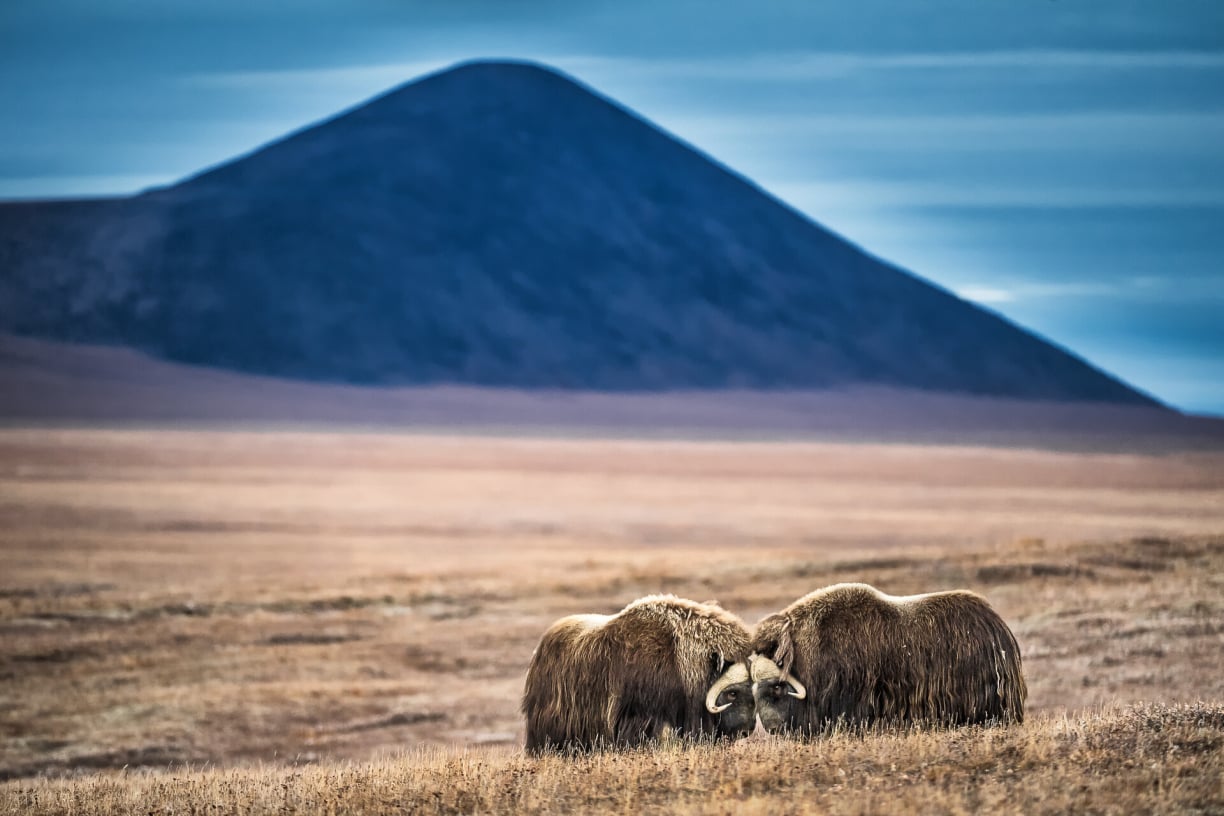
7. Musk Ox (Ovibos moschatus)
Their name is somewhat misleading, as they are not closely related to oxen or cattle, but sheep and goats. Their scientific name, Ovibos moschatus, comes a bit closer to the truth, translating as “sheep-ox.” Roaming the Arctic for millennia, and being contemporaries of the wooly mammoth, musk oxen are shaggy creatures that survived the last ice age, and are able to withstand temperatures as low as -40C (-40F). Unlike reindeer, musk oxen do not migrate. To find food during the harshest winters, musk oxen dig through deep snow with their hooves to access grass and moss. Their soft, dense undercoat (qiviut) traps heat close to the body, and their up-to-60-centimeter-long (24 inch) coarse outer guard hairs are a waterproof shield from snow, wind and rain. Qiviut is collected and spun into one of the warmest and most luxurious wools on the planet. In the wild, animals shed this undercoat naturally from April to May. Consider picking up a pair of warm qiviut socks on your trip to Greenland. You can find shops selling clothes made from qiviut, for example, in Nuuk.
Fun fact: Qiviut fiber is hypoallergenic and does not shrink at any water temperature! This makes it the perfect garment for anyone who tends to forget to cold-wash their wool sweaters and for people who are allergic to sheep wool!
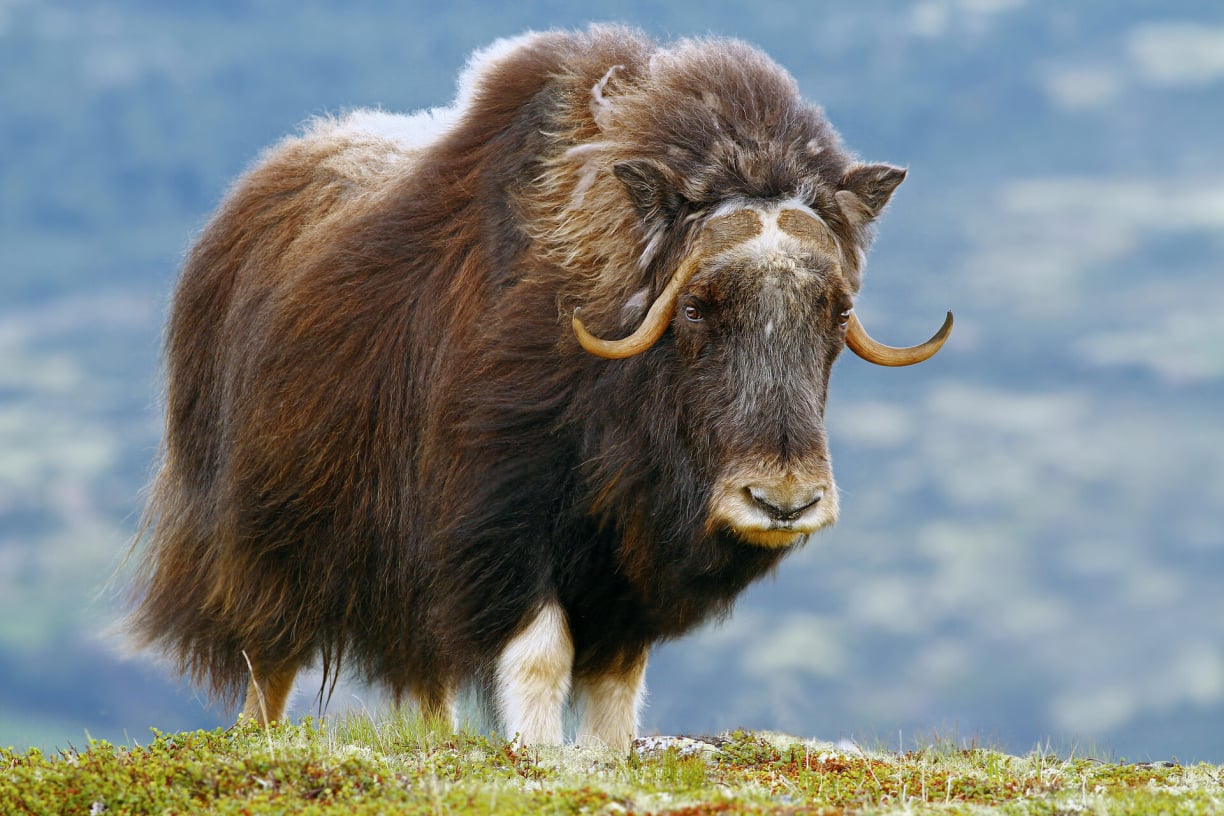
You can spot musk oxen in the wild in East Greenland (Northeast Greenland National Park), Alaska, the Canadian Arctic, Russia (Siberia) and Norway. Note that there are no musk oxen populations in Svalbard!
8. Arctic Wolf (Canis lupus arctos)
As a subspecies of the grey wolf, this Arctic dweller features a smaller muzzle, ears and body size, which helps to retain body heat in subzero temperatures. During the winter, Arctic wolves blend in perfectly with the frozen landscapes, growing a thick white fur coat. During the summer, you’ll see Arctic foxes in hues of grey, brown and bluish colors. In contrast to other wolf species, Arctic wolves feature smaller litters of around two to three pups. Because of the Arctic permafrost, wolves can’t dig dens in the ground, and thus raise their offspring in caves or shallow depressions in the tundra soil. As they inhabit very isolated parts of Greenland, North America and Canada, it’s difficult to spot them in the wild.
Fun fact: Did you know that several animals featured in this list are on the Arctic wolf’s menu? Arctic wolves feed on reindeer (caribou), Arctic hares, Arctic foxes, lemmings, musk oxen and birds.
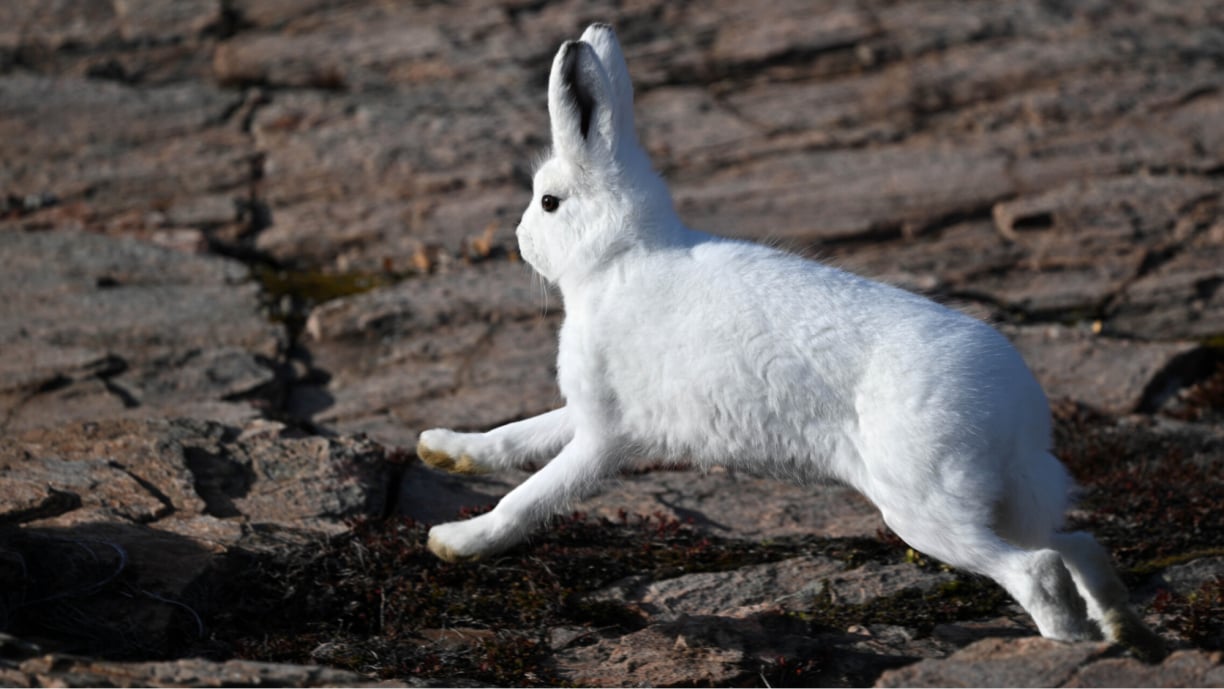
9. Arctic Hare (Lepus arcticus)
With a dense fluffy coat, short ears, tail and nose, the Arctic hare is perfectly equipped to survive the harsh Arctic winters. Arctic hares have adapted to avoid predators and find food in the harshest conditions of the Arctic. Their white winter coat camouflages them against the snow, and the brown or grey summer coat blends in seamlessly with the rocky summer tundra landscapes. Their long claws can dig through thick snow and ice to create shelters and forage for food, and their strong hind legs let Arctic hares reach speeds of up to 60 km/h (37 mph). As these cute fluffy fellows are at the bottom of the Arctic food web, and a welcome food source to many predators of the Arctic tundra, they are a very important part of the northern ecosystems. Additionally, their droppings fertilize the Arctic flora. You can spot Arctic hare in areas above the tree line in northern Canada, America, Asia, Europe and Greenland.
Fun fact: Arctic hares can travel far! According to a study published in Ecology in 2021, a two-year-old adult female Canadian Arctic hare named BBYY, covered an incredible distance of 388 kilometers (241 miles)! Equipped with a GPS collar by ecologist Dominque Berteaux of the Université du Québec à Rimouski, this incredible hare covered the distance in 49 days on Ellesmere Island in the Canadian Arctic. Other GPS-equipped hares showed hops from 113 to 310 kilometers (70 to 192 miles), equally impressive numbers for a species that was so far considered sedentary.
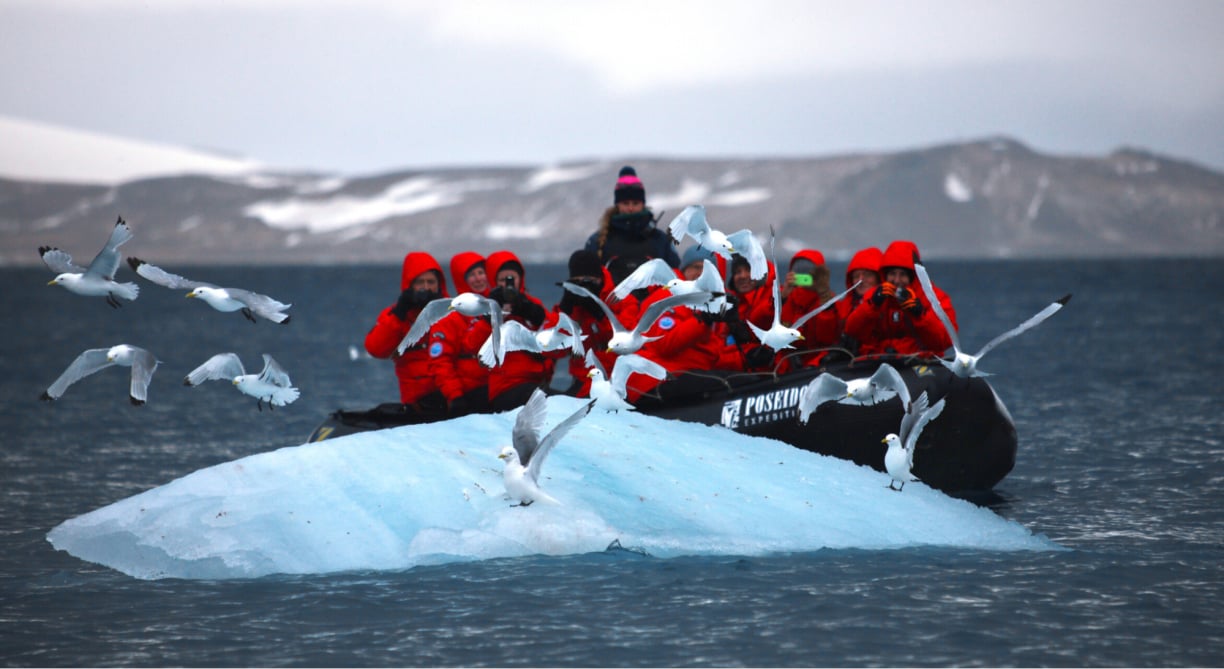
10. Arctic Birds
While there are over 280 Arctic bird species, we’ve selected our top three feathered favorites! Read on and find out what makes puffins, snowy owls and Arctic terns so special.
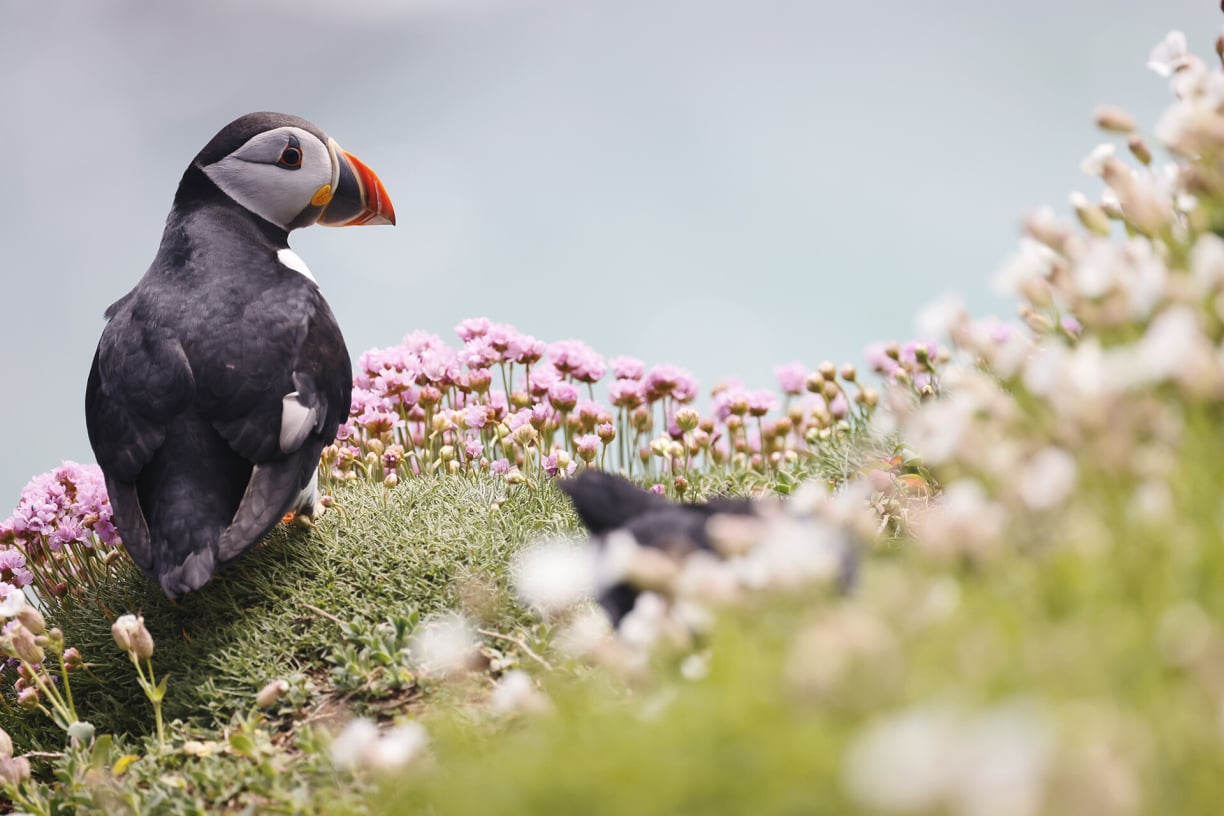
Puffin (Fratercula arctica)
Their colorful beaks got them their nickname: parrots of the sea. But did you know that their beaks only feature these bright colors during the breeding season? If you visit the famous puffin colonies in Iceland during the summer months, you’ll see these colorful birds clumsily stumbling on land, but during the winter, their grey beaks are much less impressive. While their movements outside the water are rather awkward, they are great at flying and diving. When foraging, depths of up to 60 meters (200 feet) below the water surface aren’t a problem for these birds. The best place to see them is in Iceland, though there are some small colonies in Greenland as well. We recommend an expedition cruise to Iceland and Greenland! Check out our upcoming expeditions.
Fun fact: Puffins can hold up to 10 fish at a time in their beaks. By pressing their spiny tongues against the roofs of their mouths, they can hold several fish at once, without losing them while continuing to forage!
Snowy Owl (Bubo scandiacus)
While most other types of owls are nocturnal, snowy owls hunt during the daytime. This species adapted to the long Arctic summers with 24 hours of daylight. These diurnal hunters feed on lemmings, Arctic hares, mice and seabirds, often swallowing smaller prey whole. A snowy owl can gorge on up to five lemmings a day (that’s more than 1,600 lemmings a year)! Their dense plumage provides perfect insulation from freezing temperatures, and their feathers cover their legs and feet. Males are completely white, while females are white, with black or brown markings, aiding with camouflage during nesting in the open tundra.
Fun fact: While snowy owls usually inhabit the Arctic tundra, there are occasional sightings at lower latitudes! In rare instances, they’ve been seen around the British Isles, and in places in the United States as low as Kansas, North Carolina and Washington D.C.
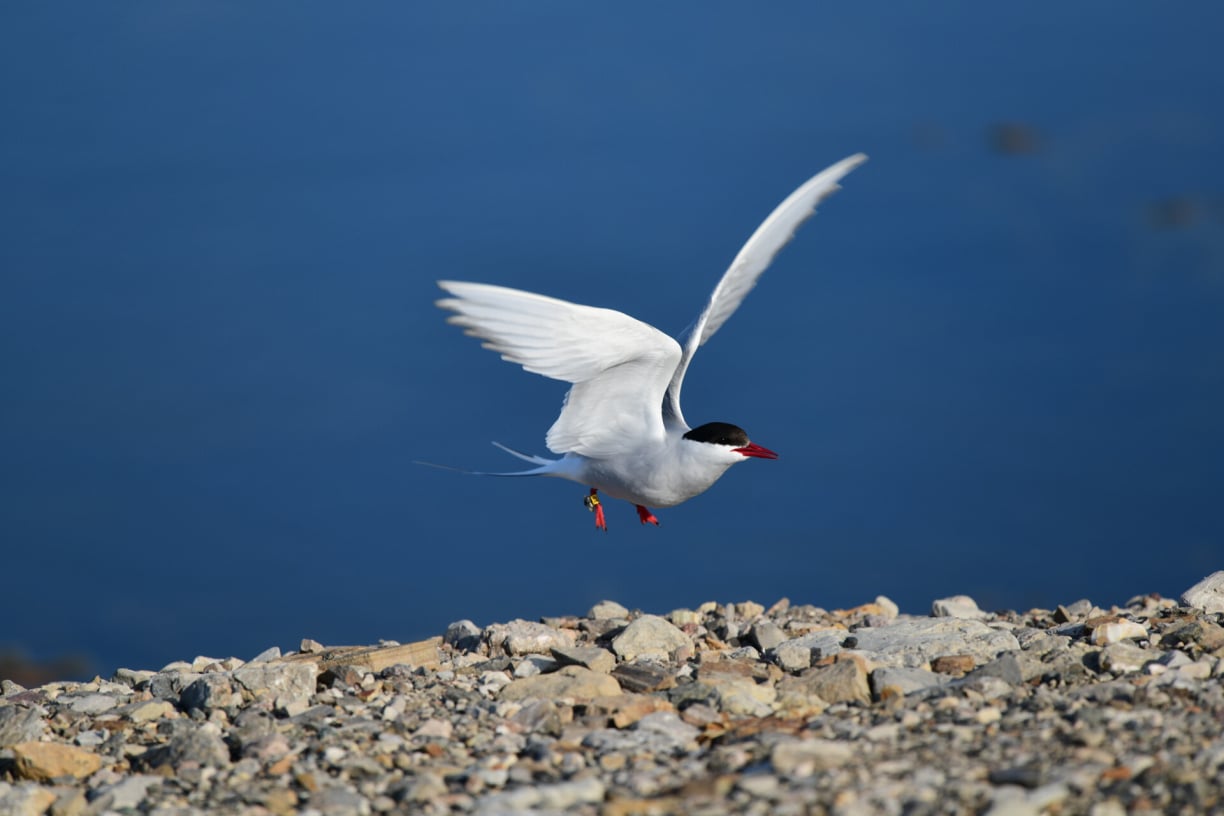
Arctic Tern (Sterna paradisaea)
Arctic terns are true polar travelers, migrating from their Arctic breeding grounds all the way to Antarctica. Covering over 25,000 miles each year, they enjoy the Antarctic summer before returning to the Arctic just in time for the breeding season. During summer in the Northern Hemisphere, you can see them around the British Isles, Svalbard, Greenland, Iceland, as well as coastal areas in North America and northern Canada. During the austral summer, you can spot them feeding on fish and krill in Antarctic waters.
Fun fact: Regardless of whether you choose a trip to the Arctic or Antarctic, you can spot Arctic terns! A great opportunity for bird watching is with a polar expedition cruise aboard a small ship. Where will you spot this incredible little traveler: in the Arctic or Antarctica? And why not become a real polar traveler just like the Arctic tern and visit both polar regions! Choose your cruise.
FAQs
Which animal is called the king of the Arctic?
The polar bear is known as the king of the Arctic. Polar bears, with their iconic white fur, are the apex predators, and are one of the world’s largest carnivores.
What is the biggest Arctic animal?
The largest animals you can see in Arctic waters are whales. On land, polar bears and walruses are the biggest Arctic animals you can encounter.
Is a penguin an Arctic animal?
The Arctic animal list does not include penguins! Their natural habitat is the Southern Hemisphere. In 1936, a Norwegian polar explorer brought a group of nine king penguins to the Lofoten Islands in Norway, but after the last penguin of this group was spotted in 1949, it is unclear what happened to them afterwards.
Which is the smartest animal in the Arctic?
All Arctic wildlife is perfectly adapted to the harsh conditions of the far north, and all Arctic animals feature incredible survival techniques. Some animals show exceptional skills, such as killer whales, known for their complex social behavior and their sophisticated teamwork skills. Polar bears use clever ice-hunting techniques and strategic thinking when hunting seals, and Arctic foxes are known for their advanced hunting and problem-solving skills.