Famous Antarctic and Arctic Explorers of Polar Expeditions
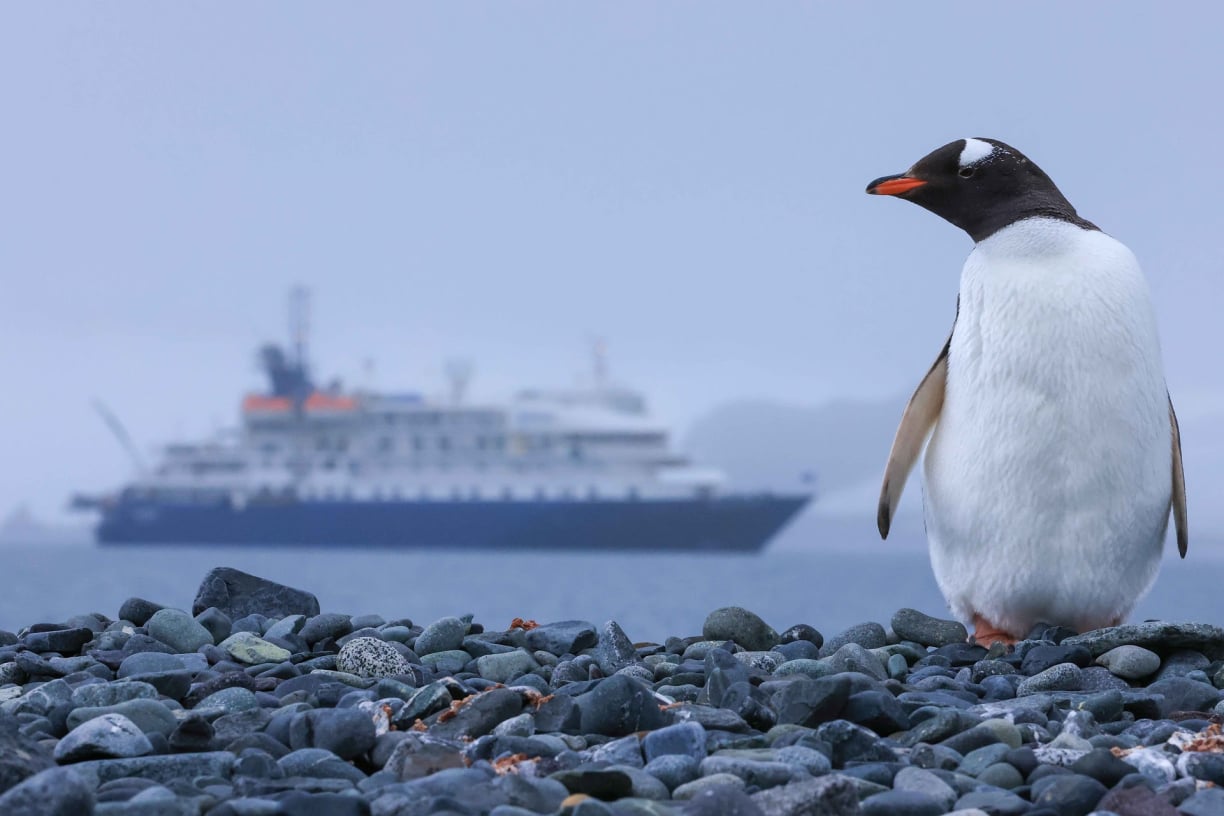
What does it take to venture out into the unknown to find terra incognita? Bravery, ambition and the right amount of craziness may just be what sets you apart from regular travelers. The brave historic explorers who risked their lives in the past led the way for modern-day scientists, photographers and aspiring polar adventurers.
Today’s polar travelers cruise in comfortable ships and return with amazing memories and pictures to remember their adventure, a luxury that the polar pioneers could only dream of. Their safe return was doubtful and many perished in the unknown. Travel back in time and learn about the polar heroes of the past!
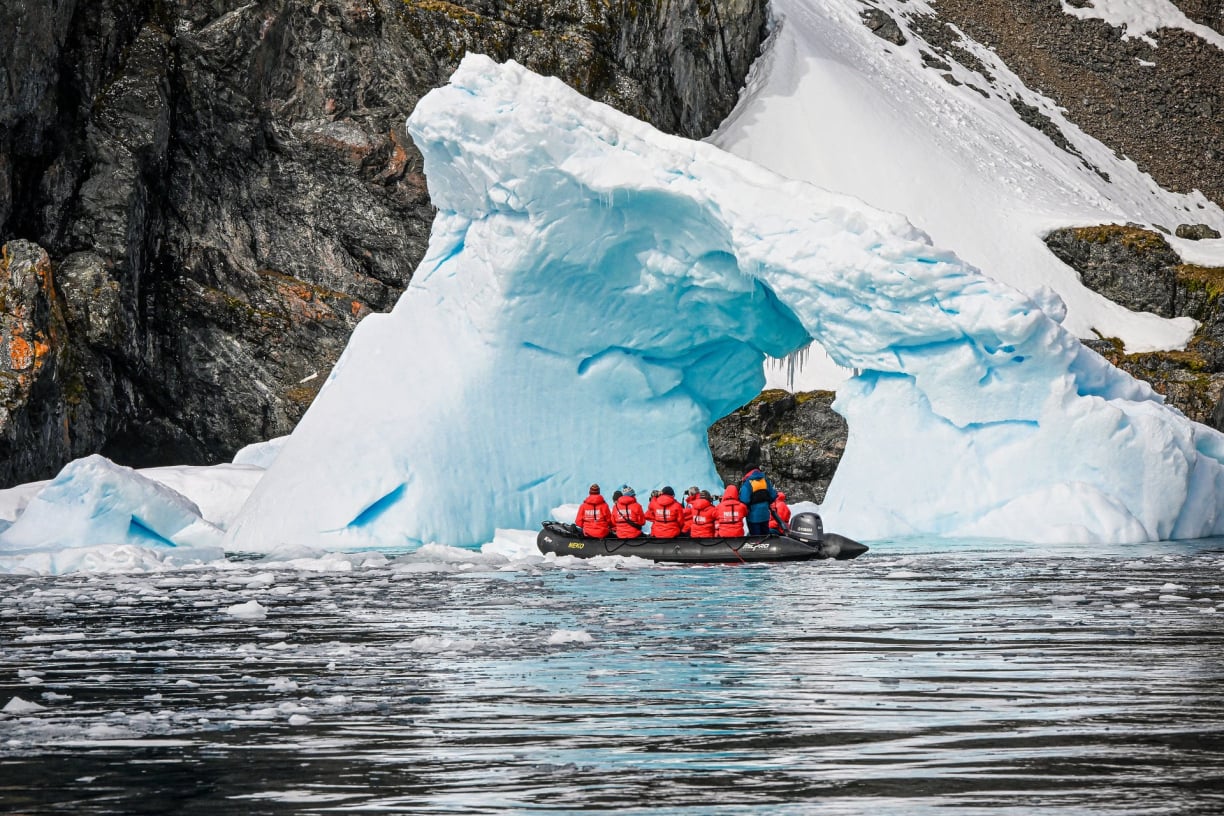
Sir James Clark Ross
What is the best age to start a career in polar exploration? At the age of eighteen in 1818, James Ross embarked on his first expeditions together with his uncle John Ross in search of the Northwest Passage and later with Edward Parry in 1819-1827 to explore the Arctic. After discovering the north magnetic pole on June 1, 1831, Ross went on to plan his own Antarctic expedition (1839-43) to locate the south magnetic pole.
Venturing south with the ships HMS Erebus and HMS Terror (which, a few years later, would be part of Sir John Franklin’s ill-fated attempt to find the Northwest Passage), he discovered the Ross Sea in 1841. After realizing that the south magnetic pole would lie on land, the Ross party mapped the coastal territory of Graham Land and discovered Victoria Land. His expedition also discovered two volcanoes in Antarctica, naming them after their ships: Mount Erebus and Mount Terror. Ross did not quite make it to the south magnetic pole but came close, within 800km (500 miles). It would take nearly seven decades to finally reach the magnetic pole, when Douglas Mawson, Edgeworth David and Alistair Mackay claimed to have found it in 1909.
Sir Ernest Shackleton
Men wanted for hazardous journey. Low wages, bitter cold, long hours of complete darkness. Safe return doubtful.
If this job ad got your attention, you’d be a great expedition companion to Sir Ernest Shackleton. With these words he recruited the men for his probably most famous and heroic voyage aboard the Endurance.
You can’t talk about Antarctic exploration history without mentioning Shackleton, one of the most famous polar explorers in the world. While his 1907-09 British Antarctic Expedition aboard the Nimrod brought him within 180km (112 miles) of the South Pole, his ill-fated Imperial Trans-Antarctic Expedition in 1914-16 made him famous for his bravery. Originally planning to cross the Antarctic continent, his ship Endurance got trapped in ice in the Weddell Sea. While the crew held out for ten months on the ice before their ship got crushed, they eventually evacuated to Elephant Island.
Sustaining on penguin and seal meat on the small island under extreme conditions, Shackleton and five of his men set out in a small life boat and sailed 1,300km (900 miles) through treacherous waters to South Georgia Island. He left behind his second in command, Frank Wild, with the Elephant Island party. Their only chance of survival was to reach the Norwegian whaling station Stromness on the northern shore of South Georgia. After a grueling 16 days aboard the small lifeboat, Shackleton and his men arrived on the southwestern shore of South Georgia from where Shackleton and two of his crew members attempted the last stretch of the journey: a 30-hour push over alpine terrain to reach Stromness.
The rescue of his men at Elephant Island took four attempts because of dense sea ice. Even though he started his first rescue mission three days after arriving in Stromness, it took him more than three months to finally approach the small island and recover his men. While Shackleton’s actual mission failed, the daring rescue mission was a success. Shackleton brought back every single crew member alive.
Robert Falcon Scott
With two major expeditions to the Antarctic regions, Scott is most famous for his participation in the race to the South Pole. Having discovered the Antarctic Plateau (the location of the South Pole) on his first Antarctic expedition in 1901-04, he set out again in 1910 aboard the Terra Nova in an attempt to become the first person to reach the South Pole. Coming in second after Amundsen, he reached the pole just 33 days after his rival. Relying on mixed equipment consisting of motor sleds, dogs and ponies, Scott’s expedition progress was problematic. Motor sleds were still experimental technology and the ponies turned out not to cope well with the Antarctic environment.
While Scott and his party of five did reach the pole on January 17, 1912, they found Amundsen’s abandoned camp and a letter addressed to them. After their defeat, Scott’s polar party set out to return to their base camp (Cape Evans) on Ross Island, but perished en route. A search party discovered the bodies on November 12, 1912. A wooden memorial cross on Observation Hill on the southern tip of Ross Island reminds of their bravery with an inscription with a line from Tennyson’s poem Ulysses: To strive, to seek, to find, and not to yield.
Fridtjof Nansen
Can a creative and novel idea bring you to the North Pole? If you’re Fridtjof Nansen, it can at least make for a great adventure. Gaining experience with oceanographic expeditions in the North Atlantic and the Arctic, and being inspired by Henrik Mohn’s theory about the transpolar drift, Norwegian explorer Fridtjof Nansen created his unique expedition plan. Understanding that sea ice drifts from Siberia via the North Pole to Spitsbergen, he would get his ship Fram deliberately stuck in the ice, calculating that pack ice would carry it to the pole.
Setting out in June 1893, the ship was trapped in ice in September and began its drift. When the ship passed 80 degrees north on March 22, 1894, Nansen calculated that at this speed it would take five years to reach the pole and decided to launch a dog team and kayak expedition instead. Reaching 84 degrees 14 minutes north (the highest latitude ever reached at the time) on April 8th, 1895, the team turned back and had to winter on the northern tip of Franz Josef Island, before returning to Norway in June 1986. Meanwhile the Fram had drifted onwards and emerged from the sea ice near Spitsbergen, returning to Norway the same summer.
Robert Peary
Who actually reached the North Pole first? While the South Pole is located on land and thus can be firmly marked by its discoverer, the North Pole is on ice drifting in the ocean. The only way to determine that you have found it is by fixing your position at 90 degrees north. And you won’t be able to mark it for the next time you or another adventurer comes along.
While Arctic explorer Robert Peary is widely credited with being the first person to reach the North Pole, Frederick A. Cook claimed to have reached it a year before Peary. This claim was printed in textbooks until 1988, when the National Geographic Society re-examined Peary’s records, recognizing the shortcomings of his expedition journals.
During Peary’s expeditions to Greenland, where he proved that the landmass was in fact an island, he took a keen interest in Inuit culture and their survival techniques. He later used skills such as building igloos, hunting and driving dog teams on his final Arctic expedition in 1908-09, where he claimed to have reached the North Pole. Starting his expedition in July 1908 with a crew of 23 and wintering at Ellesmere Island in the Arctic Ocean, he set out with dog sleds on February 28, 1909. On his final push to the pole he, Matthew Henson and four Inuits established their camp (Camp Jesup) presumably within five miles of the North Pole on April 6, 1909.
Lincoln Ellsworth
Not all adventurers explore on foot or by ship; some prefer discovering the gems of the world from a bird’s-eye view. Lincoln Ellsworth, an American explorer and scientist, became the first person to cross both the Arctic and Antarctic by air. Training as an aviator during World War I and gaining field exploration experience during his topographical survey expeditions in the Andes (Peru), he teamed up with Norwegian explorer Roald Amundsen to attempt the first air expedition to the North Pole in 1925. After their airplane lost power, the team had to make an emergency landing. While their first expedition failed, Ellsworth and Amundsen succeeded in their second expedition in 1926, flying aboard the airship Norge across the North Pole. In 1931 Lincoln Ellsworth backed Sir Hubert Wilkins’ unsuccessful Nautilus expedition, attempting to reach the North Pole by submarine.
His Antarctic adventures included the discovery of the Ellsworth Mountains (named after him). After running out of fuel while crossing the Antarctic continent in 1935, Ellsworth and Canadian pilot Herbert Hollick-Kenyon made an emergency landing on the ice and evacuated to the abandoned Little America Base on the Ross Ice Shelf after a harrowing 11-day journey through Antarctica.
Edmund Hillary
You may know Sir Edmund Hillary as first explorer to climb Mount Everest in 1953 together with Tenzing Norgay. But did you know that Hillary was part of the New Zealand Ross Sea support team of the 1955-1958 Commonwealth Trans-Antarctic Expedition? Headed by British explorer Vivian Fuchs, the expedition attempted to cross the Antarctic continent via the South Pole starting at Shackleton’s base. Hillary and his team were in charge of laying depots and finding routes on the opposite side of the continent for Fuchs’ last leg of the journey .
End of story? Not quite. Just as with the Amundsen-Scott race, the temptation to add the South Pole to one’s discovery list prompted an informal competition between the polar explorers. After preparing the depots, Hillary launched a dash to the pole in motorized vehicles, reaching it 16 days before Fuchs. Following Scott’s route, Hillary’s successful expedition caused controversy: while some praised his dare-devil approach to exploration, others viewed his daring pole conquer as an arrogant move to outplay Fuchs (especially since he did not obtain permission from the organizers).
Is one pole ever enough? Not likely for ambitious explorers like Hillary. In 1985 he accompanied Neil Armstrong (first man on the moon) on a ski plane tour over the Arctic Ocean, landing on the North Pole and making him the first person to stand on both poles and the highest peak on the planet.
Edmund Hillary
Not all polar explorers live to tell their story. Sir John Franklin became famous for his ill-fated attempt to charter the Northwest Passage. Leaving England in May 1845 with a crew of 128 aboard two ships, the HMS Terror and HMS Erebus, the expedition set off to Northern Canada, where they were last seen in late June 1845 by whalers north of Baffin Island. With no sign of life after that, search parties set out in 1847 to find the explorers. After twelve years of searching, their remains were discovered in 1859 at King William Island. A written account revealed that after becoming trapped in pack ice in 1846, Franklin and 23 of his men perished. The remaining party tried to head south to the mainland and perished one by one in the extreme conditions (apparently resorting to cannibalism).
Roald Amundsen
As an avid polar exploration fan, you’ve likely heard about the story of the exciting race to the South Pole by famous explorers Amundsen and Scott. But did you know that Norwegian explorer Roald Amundsen actually planned to reach the North Pole? While preparing for the voyage north, news of Peary and Cook having reached the North Pole made Amundsen change plans and pursue the South Pole instead. He was so secretive about his plans that even his crew did not know their true destination until they left the last port of call in Madeira. Setting up his Antarctic base Framheim in the Bay of Whales, he and his party set out in October 1911 with sled dogs on cross country skis. Beating Scott to the pole by 33 days, he arrived at the geographic South Pole at around 3pm on December 14, 1911. Leaving a letter to Scott behind, Amundsen and his team would return to base camp on January 25, 1912, having ultimately completed their South Pole journey in 99 days.
In 1926 Amundsen became the first explorer to reach both poles, when he, Lincoln Ellsworth, Umberto Nobile and 13 other explorers flew over the North Pole in an air expedition aboard the airship Norge.
Sir Ranulph Fiennes
Ranulph Fiennes isn’t a stranger to the world’s polar regions, having reached both the North Pole and the South Pole. His famous 1979-82 Transglobe Expedition took him around the world on its polar axis following the Greenwich meridian (over land and water), only using surface transport. As part of this expedition the team also crossed the Northwest Passage in a motorboat. You’d think reaching the poles once is an accomplishment, but Ranulph took it further when he tried to walk solo (without a gear team, crew or any assistance) to the North Pole in 2000. This attempt failed when his sled fell through the ice and eventually cost him the fingers on his left hand when he tried to recover his gear from the frigid waters.
In 2012 at the age of 68 Ranulph attempted to cross Antarctica in a team of six during the austral winter, but ultimately had to abandon this mission due to frostbite. Often Ranulph pushed himself to the limit for charitable causes, like when he climbed Eiger Mountain’s treacherous North Face and attempted to climb Mount Everest.
Women in Antarctica
Did you know that Antarctica was visited many centuries before the Heroic Age of Antarctic Exploration (1897-1922)? The Maori people of New Zealand made the journey as early as 650 AD, and in contrast to the explorers of the 19th and 20th century, these pioneers weren’t just men. According to orally passed down stories, these early Antarctic expeditions already included women, but few details are known about their personas to this day.
From Bellingshausen’s first glimpse of Antarctica to the mid-1930s, Antarctic tales of discovery were exclusively written by men. The treacherous journey down south, extreme climate and difficult conditions were considered too dangerous for women (expedition ships were nothing like our modern-day comfortable cruise ships). Ironically, a 1995 study by Jane Mocellin suggests the complete opposite: women apparently may cope better with the harsh Antarctic environment than men. Over time, brave explorers were followed by their adventurous wives, opening Antarctica to female exploration. The mid 1930s marked the beginning of girl power on the continent with adventurers, scientists and eventually travelers making the journey. While many only spotted the White Continent from the deck of their ship, Caroline Mikkelsen became the first woman to set foot on Antarctica.
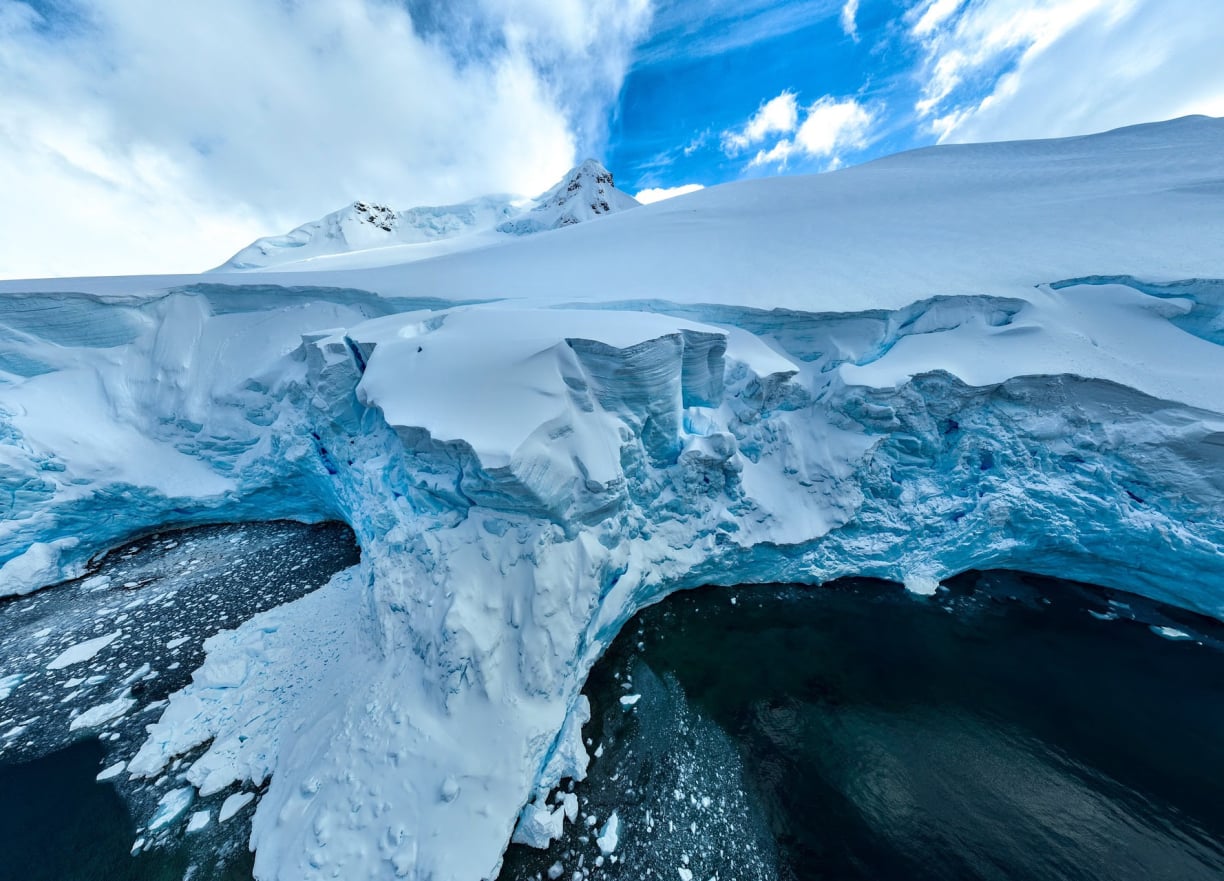
Read on and find out about three famous Antarctic heroines!
Caroline Mikkelsen
As the wife of Captain Klarius Mikkelsen, she landed on an island off the Antarctic continent in February 1935. As part of an exploration expedition, she, her husband and seven other sailors set foot on an Antarctic island and raised the Norwegian flag.
Ingrid Christensen
Accompanying her husband on four Antarctic expeditions, she became the first woman to see Antarctica from a ship, as well as the first woman to set foot on the actual continent. And she wasn’t just a guest to the ship, but an integral part of the expedition. For her fearlessness and scientific contributions, she received Norway’s top knighthood in 1946.
Jackie Ronne
Jackie made history as the first female working member of an Antarctic expedition in 1947-48, led by her husband Finn Ronne. She was the first American woman to step on the White Continent and the Ronne Ice Shelf was named in her honor.
FAQ
Who is the greatest polar explorer?
There are many famous explorers with heroic tales to tell of polar exploration. Roald Amundsen and Robert Falcon Scott became household names after their fierce competition to reach the South Pole. Robert Peary entered history as the first person to reach the geographic North Pole. And then there are heroes proving that the road is the goal and even though an expedition may fail, bravery and good leadership will save your crew members. Sir Ernest Shackleton became famous for his two expeditions to Antarctica and his heroic tale of survival after their ship became stuck in pack ice. Shackleton set out on a rescue mission and he and a small crew sailed the Southern Ocean to reach South Georgia Island. Arriving on the island’s west coast, he and his small crew had to cross the treacherous mountain ranges of South Georgia.
Who visited the Arctic?
Famous Arctic explorers include Sir James Clark Ross, Robert Peary, Frederick Cook and Roald Amundsen. But there are many other brave explorers who visited the northern polar regions.
When was the Arctic first explored?
Scientific finds and historic records suggest that humans started to voyage to the Arctic as early as 325 BC. The Greek explorer Pytheas may have been the first to sail from the Mediterranean to the Arctic region, passing by modern-day Great Britain.
Which Arctic explorer died 1912?
Robert Scott (full name: Robert Falcon Scott) died March 29, 1912. He’s famous for attempting to become the first person to reach the South Pole in Antarctica, but ultimately Roald Amundsen arrived 33 days earlier at the pole.
Who was the most famous Antarctic explorer?
Many heroic explorers contributed to our knowledge of the southern and Antarctic regions. Some of the most famous ones were Sir Ernest Shackleton, Douglas Mawson, Robert Falcon Scott, Sir James Clark Ross,Sir Edmund Hillary and Roald Amundsen.
Modern-day explorers sometimes go for Guinness World Records. Matthieu Tordeur became the youngest person to reach the South Pole unsupported in 51 days from Hercules Inlet at the age of 27. Preet Chandi holds the current record of longest female solo unsupported one-way ski trip from Hercules Inlet to the pole.
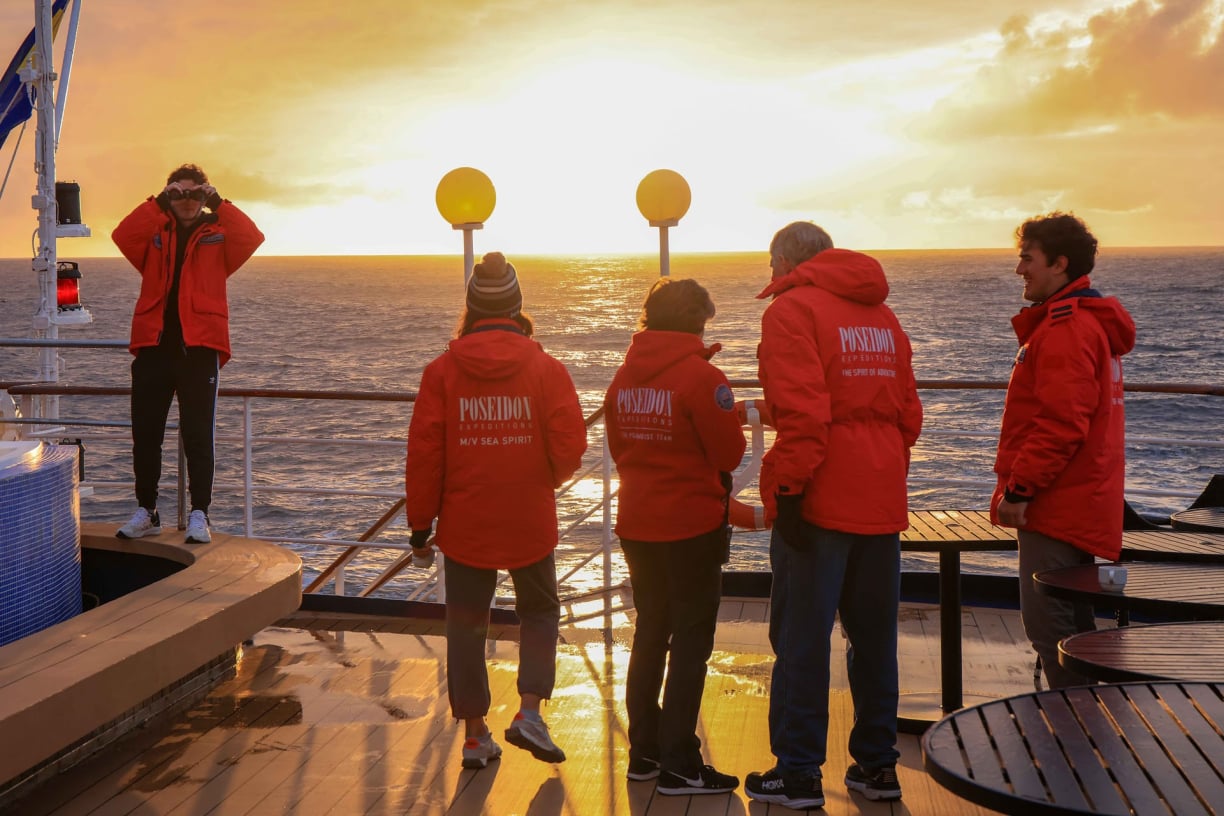
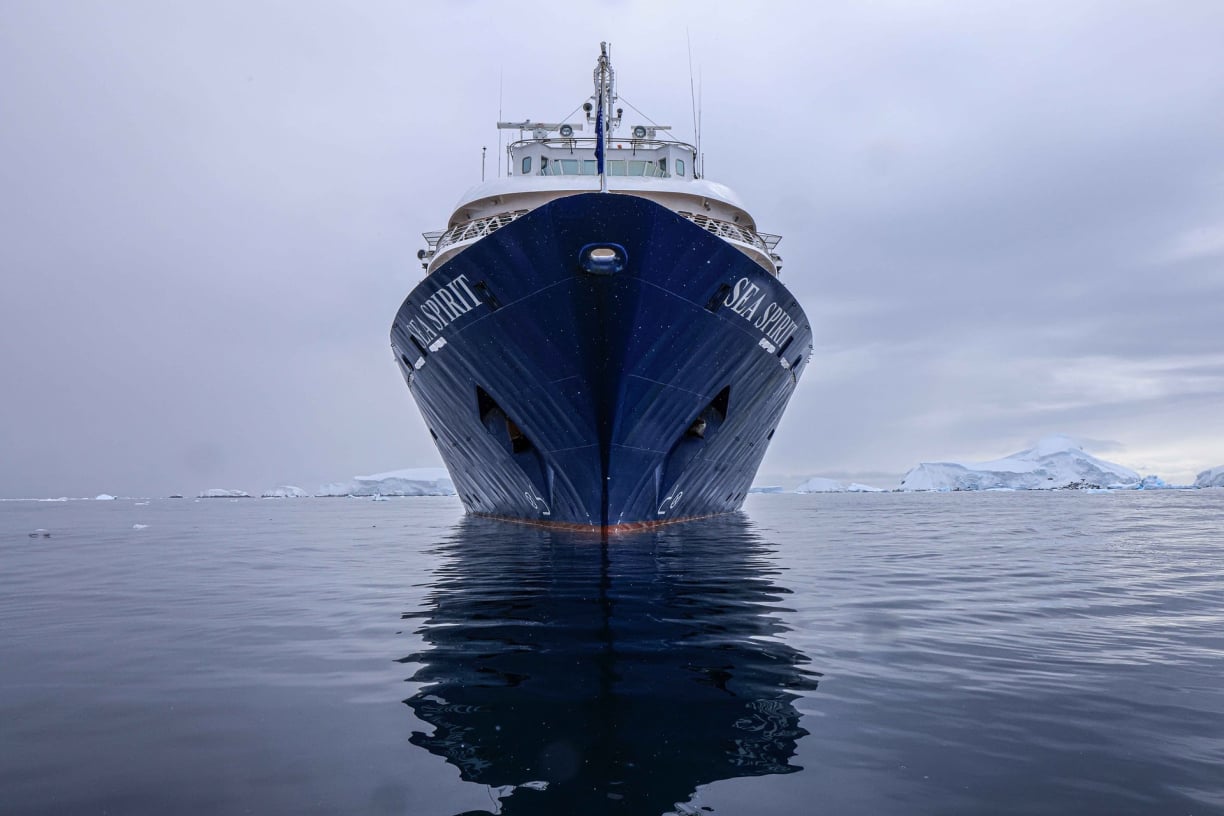
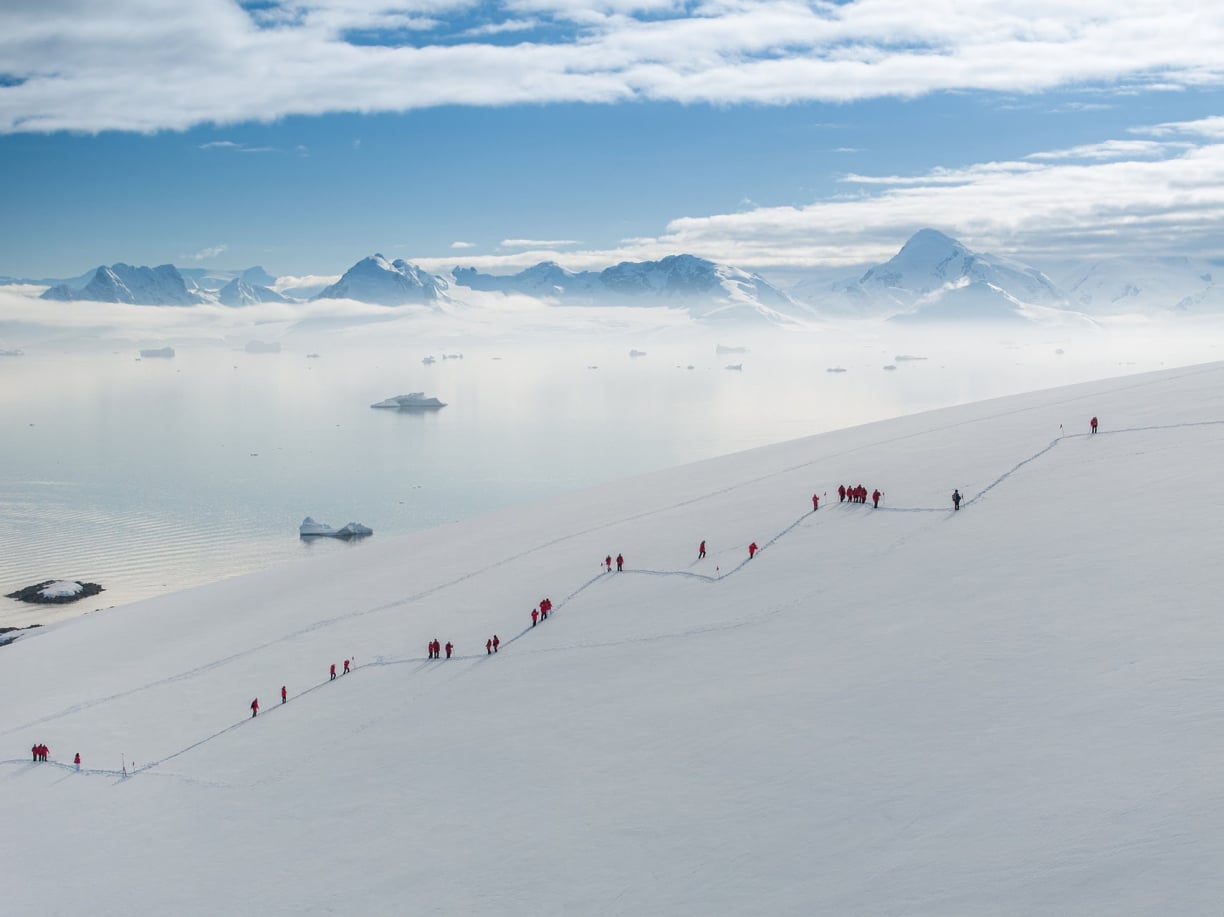
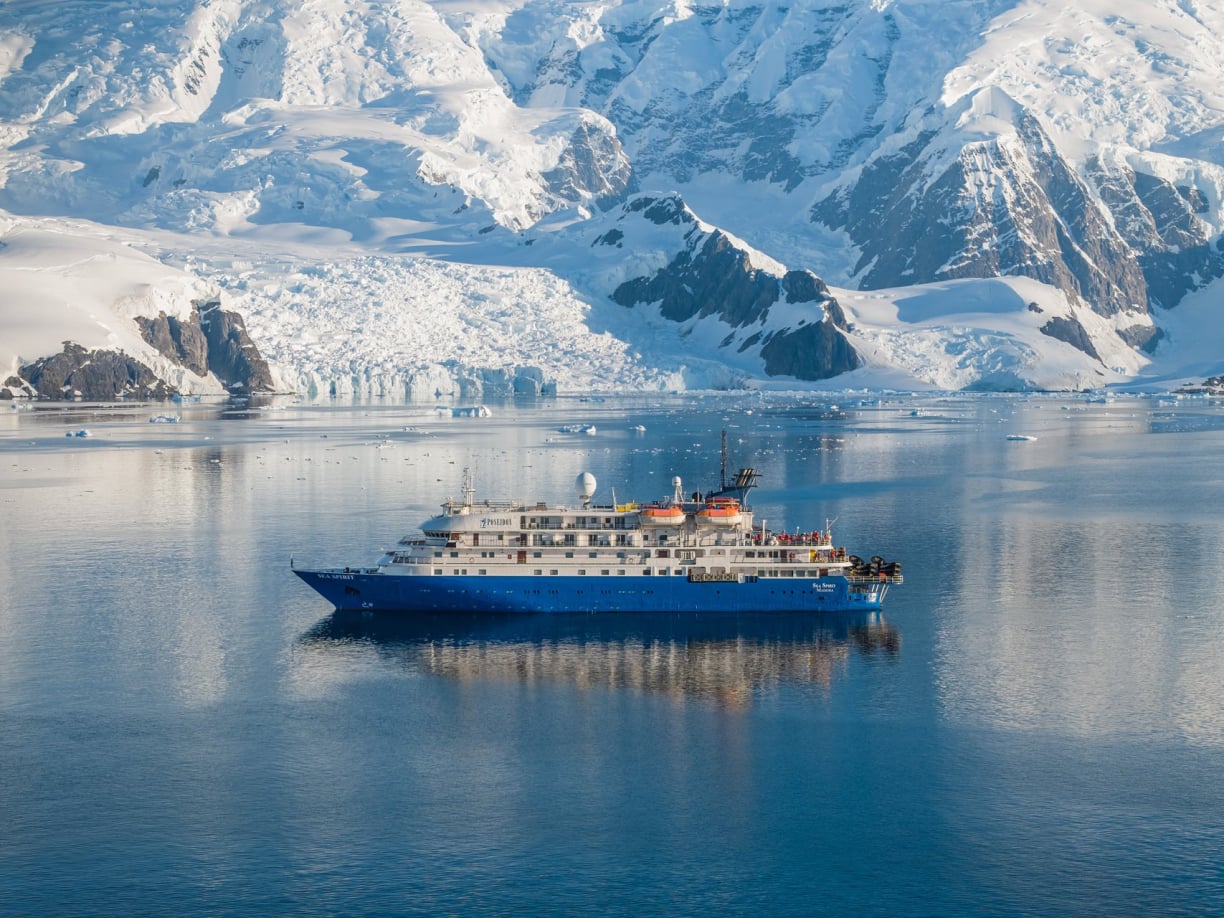
The spirit of polar exploration lives on. Today, Poseidon Expeditions has been leading small-ship expeditions to Antarctica and the Arctic since 1999 — following in the footsteps of the very explorers described in this article. Aboard the 114-passenger M/V Sea Spirit, all guests go ashore simultaneously with no group rotations, averaging 2.5 hours of off-ship activity per day. Expert expedition team of naturalists, biologists, geologists and historians — rated top-notch by guests — guides every landing. Explore upcoming Antarctic and Arctic departures.