Antarctica Without Ice
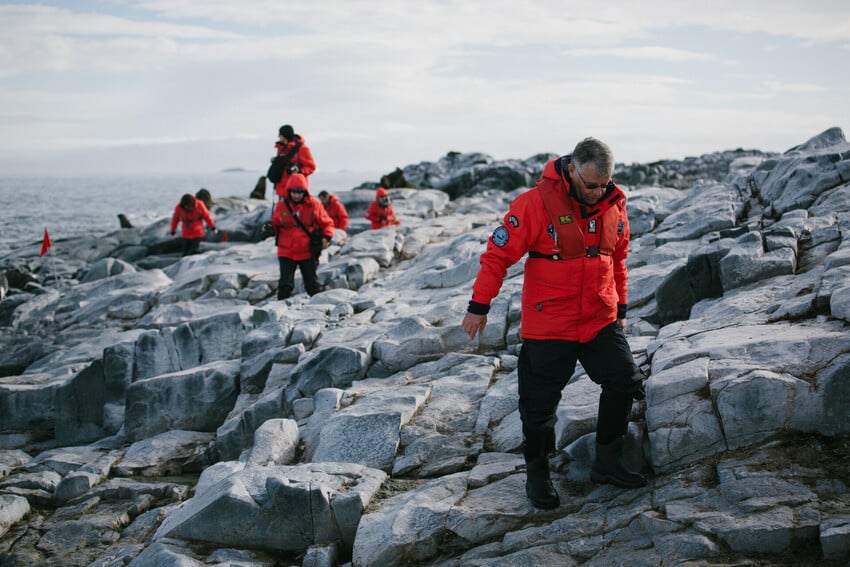
What would the white continent look like if its entire ice sheet would melt? The up-to-three-kilometer-thick ice cover is around 34 million years old, represents 90 percent of the Earth’s freshwater reserves and keeps the planet’s climate cool. If it would melt entirely, ocean levels would rise by approximately 58 meters (190 feet), swallowing entire coastal regions worldwide. But what lies beneath the ice? Read on and find out how cutting-edge science reveals the hidden parts of Terra Australis Incognita.

Antarctica’s History
Around 250 million years ago, Antarctica was neither frozen, nor the southernmost continent in the world. Today’s white continent was once part of the supercontinent Pangaea, which started to break apart around 200 million years ago into Laurasia and Gondwanaland. While Laurasia (featuring future North America, Greenland, Europe and Asia) drifted north, Gondwanaland (or Gondwana) started its southward drift to eventually become Antarctica, Australia and South America.
Around 180 million years ago, Gondwana split again. One part would later become the modern-day African and South American continents, while the other landmass contained future Madagascar, India, Australia and Antarctica. India separated from this blob of continents around 130 million years ago. Then, around 53 million years ago, Antarctica split from the Australian continent. It was only 60 to 45 million years ago that the continent started to progressively cool, due to climate change (atmospheric carbon dioxide levels were dropping), and began its drift to the pole.
Around 34 million years ago, East Antarctica started to freeze. At this point, scientists believe, West Antarctica was still covered by dense forests. West Antarctica’s ice sheet formed only seven million years later. These findings are supported by large amounts of pollen found in a western Antarctic seafloor drilling sample dated 34 million years ago, conducted by the Marine Research Institute MARUM in Bremen (Germany). These findings suggest that while East Antarctica started to freeze, West Antarctica still featured lush vegetation.

Antarctica Without Ice - The Topography of Antarctica
It’s the highest continent above sea level on Earth, with an average elevation of 2,500 meters (8,200 feet). You may rather consider the South Pole a South Peak! Standing right at the pole, you’d be 2,835 meters (9,300 feet) above sea level. But what would Antarctica look like without its ice cover? Research tools such as BedMachine and Bedmap2, used by the British Antarctic Survey to create a subglacial topographic 3D model, give a glimpse of the continent’s terrain if all ice melted. Under the thick Antarctic ice sheet lies a diverse landscape featuring mountains, valleys, canyons, countless lakes and a vast ancient river system. Without the ice sheets, the western part of the continent would consist of a large landmass comparable to the size of Australia (Greater Antarctica) and West Antarctica (Lesser Antarctica) would consist of an archipelago of mountainous islands.
The East Antarctic ice sheet hosts a mountain range, the Gamburtsev Mountains, comparable in size and appearance to the European Alps. But while the sharp peaks of the Alps are characteristic for a young mountain range of around 44 million years of age, the 100-million-year-old Gamburtsev Mountains should by now have withered away, resembling the rolling hills of the Appalachians. As scientists estimate, the thick ice cover of Antarctica functions as an anti-aging mechanism, keeping the Gamburtsev Mountains’ ridgelines and peaks sharp, similar to younger ranges. And did you know that the deepest continental point on the planet is located in East Antarctica? Under the Denman Glacier lies an ice-filled canyon reaching 3,500 meters (11,500 feet) below sea level!

Map of Antarctica Without Ice & Significance in Climate-Change Modeling
Over the last decades, scientists were able to get a much more detailed look at the landmass that hides under the Antarctic ice sheet. With research data from the now-retired NASA ICESat satellite, BedMachine and Bedmap2, more accurate data on ice thickness, terrain surface and subglacial bed elevation can be obtained. According to Bedmap2 results, the Antarctic ice sheet’s volume is measured at 27 million square kilometers (around 10.5 million square miles). If all the ice melted, it would contribute to a 58-meter (190 feet) sea level rise.
With these modern and more accurate researching tools, scientists can better estimate the effects of climate change and global warming. The Thwaites Glacier in West Antarctica, sometimes called Doomsday Glacier, holds enough water to raise sea levels by around 0.6 meters (2 feet). Since the Thwaites Glacier acts like a huge plug to the rest of the ice sheet, its melt could ultimately release enough water to raise the sea level by 3 meters (10 feet), affecting coastal areas around the world.
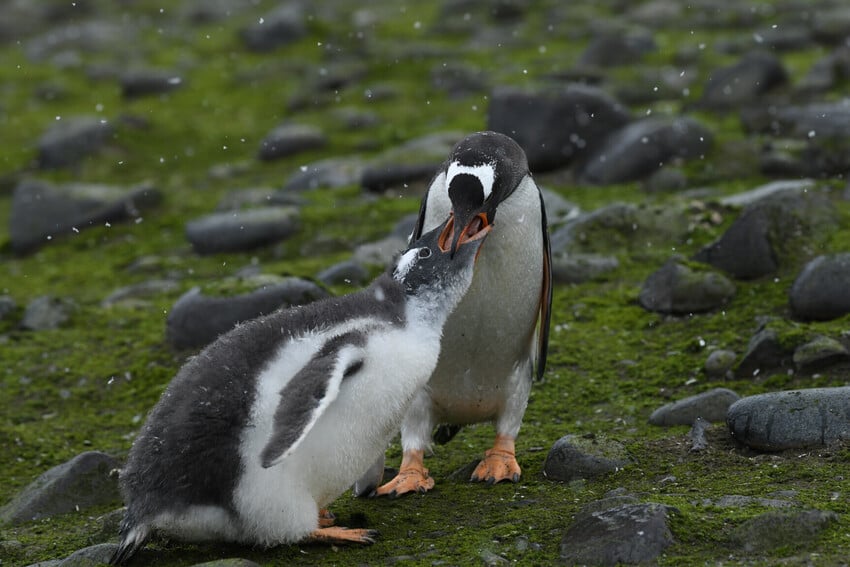
Effects of Ice Sheet Melting in Antarctica
With the Greenland and Antarctic ice sheet melting at record speed, the National Oceanic and Atmospheric Administration (NOAA) predicts that sea levels will rise around 0.25 to 0.3 meters (10 to 12 inches) between 2020 and 2050. However, taking into consideration that the massive ice sheet currently weighs down the Antarctic continent’s landmass, a decrease in ice cover will prompt the landmass below to rebound. Imagine putting a heavy book on a pillow and lifting it after some time: the pillow will readjust to its usual size and fluffiness.
The process, called isostatic rebound, allows the landmass to bounce back after the ice melts. According to a 2024 study by the Ohio State University, the isostatic rebound of Antarctica may decrease the amount of previously expected sea level rise by 40 percent in the coming centuries. This landmass uplift could already start in the coming decades. It would elevate the grounding line of the ice sheet, stabilizing it and reducing the flow of ice toward the sea. When trying to predict sea level rise, gravitational pull will cause higher ocean levels in certain areas around the planet. A study linked to ice sheet loss and sea level rise by the European Geoscience Union in 2010 suggests that Oceania and Southeast Asia could be hit the hardest. Due to the sheer size of the Antarctic ice sheet, sea levels around it would actually drop, as the ice sheet is massive enough to exert a gravitational pull and push nearby water toward other parts of the world.
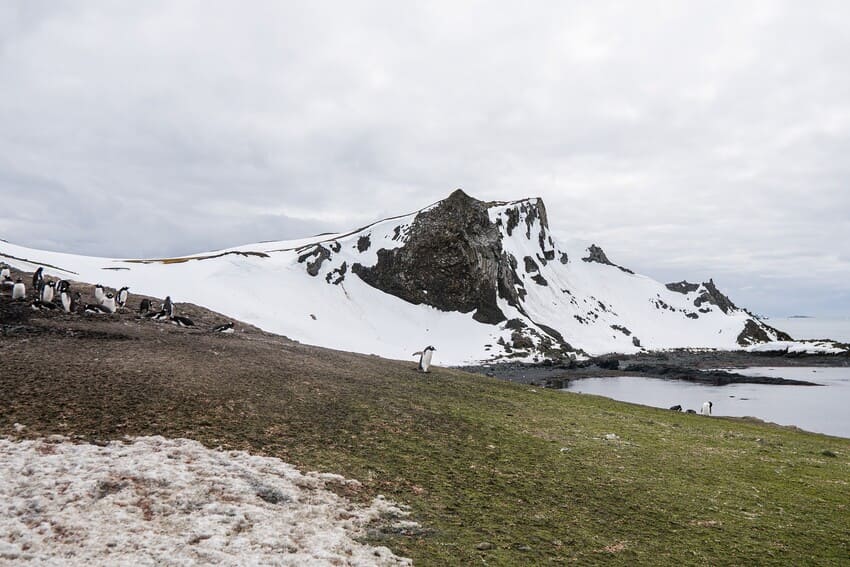
The Ice Sheet and Its Dynamics
The Antarctic ice sheet is the largest in the world and, in some places, the ice cover is over three kilometers thick. It is moving constantly toward the sea, pushed on by its own weight. It contains 90 percent of the world’s fresh water in frozen form. It’s the Earth’s natural cooling system, playing a major part in regulating the planet’s climate by reflecting sunlight back into the atmosphere (called the Albedo effect). Meanwhile, the Southern Ocean around Antarctica absorbs carbon dioxide from the atmosphere. Cold ocean water, as found around Antarctica, dissolves CO2 gases better than warmer water. In addition to that, phytoplankton living in the Southern Ocean around Antarctica absorb carbon dioxide through photosynthesis.
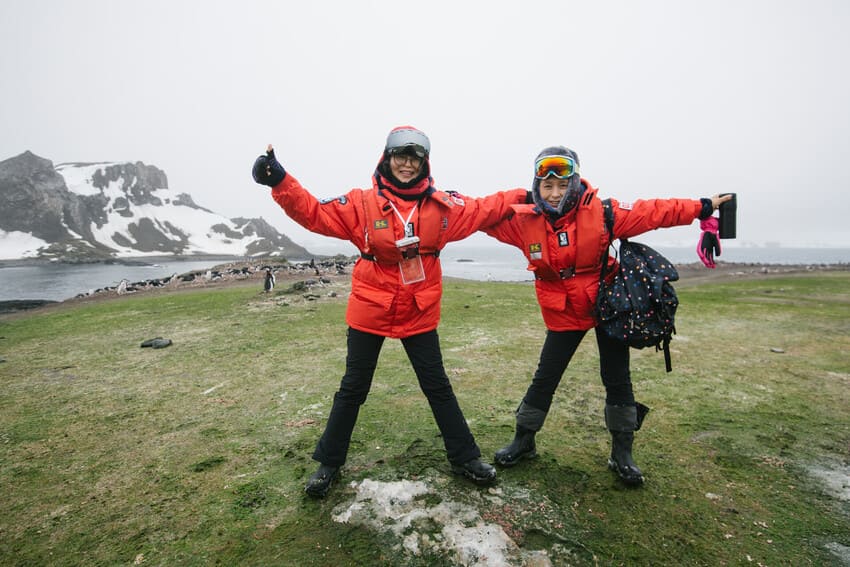
Climate Change and Future Predictions
The datasets of Bedmap2 and BedMachine currently provide the most detailed and complete estimates for ice volume and flow in Antarctica. The 3D Antarctica without ice map gives details about the underlying bedrock and thickness of the ice, making it possible to predict future sea level rise more accurately. A study published in Nature Climate Change suggests that, according to ice core samples, Antarctica is warming much faster than the global average. Understanding the severity of global warming and adjusting previous predictions with newly obtained research data from sources such as Bedmap2 are key for scientists to be able to project future scenarios of climate change more accurately. A 2024 study by a team at Dartmouth College published in Earth’s Future Journal integrates data from 16 ice sheet models and, at current carbon emission trends, predicts a global sea level rise of up to 1.7 meters (5.5 feet) by 2200.
FAQs
Has Antarctica ever been without ice?
The Antarctic continent only started to cool 60 to 45 million years ago. From around 34 million years ago, the cooling escalated and the Antarctic ice sheet formed. Before that, the continent was ice-free and part of the supercontinent Pangaea and Gondwana.
Are there any parts of Antarctica with no ice?
Yes, the McMurdo Dry Valleys in East Antarctica near the Ross Sea are too dry to feature snow or ice. Through strong katabatic winds, any precipitation in the valleys is eliminated by the process of sublimation. Only around 0.4 percent of Antarctica is free of ice and snow.
What is hidden under the ice in Antarctica?
According to scientists, valleys, canyons, lakes and ancient river systems exist under the Antarctic ice.
How big is Antarctica without ice?
Excluding the volumes of Antarctica’s ice sheets, the actual continent would be around 12.3 million square kilometers (4.8 million square miles).
What if Antarctica had no ice?
Antarctica without snow or ice would be an archipelago consisting of a larger landmass approximately the size of Australia surrounded by smaller mountainous islands.