Antarctica Population
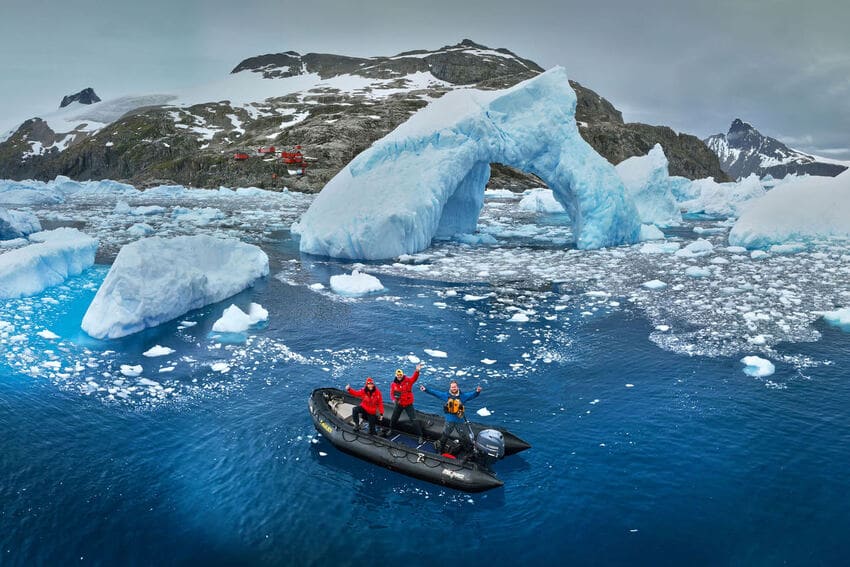
Antarctica is the fifth largest continent in the world, but its population rarely exceeds 5,000 people at any given time. And all of these aren’t permanent residents. With no indigenous population of Antarctica, the only way to live and work on the White Continent (at least temporarily) is to land a job deploying you to one of the international research bases. Why haven’t there ever been any native “Antarcticans” and how do temporary residents live on the continent?
Indigenous Population of Antarctica
Antarctica is the only continent in the world that never featured an indigenous population. When the supercontinent Gondwana started to split apart around 180 million years ago, the parts that eventually became Australia and Antarctica drifted far to the south. With no land bridges, the continent became inaccessible for human populations to reach it. When the Antarctic ice sheets (the West and East Antarctic Ice Sheets) formed around 35 million years ago (humans hadn’t evolved yet), the continent became not only incredibly remote, but uninhabitable due to its harsh conditions. And it’s not only the cold that makes it so difficult to live there, but also the incredible dryness. Did you hear about the McMurdo Dry Valleys in Antarctica?
While there was never a local population, Antarctica started to attract polar explorers for the last couple of centuries. The first records of a landing on the Antarctic mainland date back to 1821 (by Captain John Davis), but the Maori people of New Zealand may have explored the waters around Antarctica as early as the 7th century A.D. According to a study of the University of Otago (New Zealand), oral records state Polynesian explorer Hui Te Rangiora as the first Antarctic traveler.
Who Lives in Antarctica and How People are There?
There isn’t such a thing as being a citizen of Antarctica and no country in the world owns the continent. With no permanent settlements or cities, the only people who (temporarily) live on the continent are those sent there for work. The Antarctic Treaty designates the continent to be used jointly by the world’s nations for peaceful projects and science – that’s why you can find over 70 international research stations there. You can find up to 5,000 people in Antarctica during the austral summer and around 1,000 staying throughout the relentlessly cold winter, with prolonged darkness during polar nights within the Antarctic Circle. The McMurdo Station located on Ross Island (near the Ross Sea) features a staff of 1,000 people at peak times.
Curious how people live in Antarctica and what life at a research base looks like? Check out the Instagram of @Sarahinthesnow, or see how overwintering at the Amundsen-Scott South Pole Station looks like for blogger Amy Lowitz on her Instagram @weblogarithmsl.

Tourists in Antarctica
Tourists outnumber the research base population of Antarctica. While scientific staff stay on for months at a time, visitors usually spend around two weeks exploring the highlights of the continent on cruise ships. If you board one of the flights to Antarctica, you can also visit camps in the interior and engage in extreme outdoor activities like cross-country skiing to the South Pole, hiking or ice climbing. And with so much polar beauty to explore, tourism is growing steadily. While the 2014-15 Antarctic summer season recorded 36,702 visitors, now, a decade later, over 100,000 visitors explore the region during the summer season.
To preserve the beautiful regions of Antarctica, tour operators follow the Antarctic Treaty’s environmental protocols throughout the trip. Environmental protection covers measures such as waste management, wildlife protection and limiting tourist numbers during landings. Poseidon Expeditions is a proud and committed member of the International Association of Antarctica Tour Operators (IAATO), striving to actively contribute to preservation and creating awareness of the importance of keeping the polar regions pristine for future generations.
Environmental preservation can be exciting! Learn about it through onboard lectures, excursions, nature walks and citizen science projects, and expand your horizon and awareness.
Check out our current project, operated in partnership with the South Georgia Heritage Trust, to protect the incredible subantarctic island of South Georgia!

Are There Any Antarctic Cities?
If you’re looking for city tourism, Antarctica is not the place to go. The continent features harsh, remote wilderness, with the occasional research station nestled in between incredible snowscapes. The only settlements on the continent are bases (permanent and temporary). One of the largest, with the highest turnover of personnel, is the McMurdo station in West Antarctica. Some stations are located on the islands surrounding Antarctica and the Antarctic Peninsula, such as the Bellingshausen station on King George Island.
Life on the stations features all the creature comforts and some of them even have shops and bars. Did you know that you can actually visit some of them? For example, the Brown (Argentina), Gonzalez Videla (Chile) and Vernadsky (Ukraine) bases welcome visitors of organized cruises and tours. And for those wanting to enjoy a cold one at the bottom of the world, the Vernadsky station features a bar! According to a review on Tripadvisor, you can only choose between beer and vodka and payment is accepted in USD or by handing over your bra (well….in case you’re wearing one).
Huts, Houses and Permanent Structures
Harsh and hostile climates require sturdy constructions to shield you from the elements. In the heydays of Antarctic exploration, shelters were made of wood (such as Scott’s hut during the Terra Nova expedition (1910-13)). The hut is still standing today and you can visit it if you make it out to McMurdo Station. Did you know that there are several churches in Antarctica? These range from simple constructions such as the San Francisco de Asis Chapel at the Esperanza Base to elaborate wooden artworks such as the Trinity Church on King George Island.
Modern construction design includes materials such as aluminum, wood, fiberglass, woolen felt and kraft paper, which is layered for minimal energy loss in the buildings. In addition to design and materials used, logistics is a key challenge when building a research base. After all, materials need to be shipped to the coast of Antarctica and then hauled into the interior (in case your base is not set up in the proximity of the ocean).
Field Camps
You don’t always require a firm roof over your head, even when working in Antarctica. If you’re researching marine mammals such as fur seals or whales, the ocean may be your work space and research ships may be your home for the duration of your expedition. For other scientific projects on land, a temporary camp will suffice. While people who live in Antarctica on research bases enjoy all the normal comforts, temporary field camps offer frugal accommodations. If you ever get the chance to spend a night at a field camp on the White Continent, you’ll get a glimpse of how famous explorers like Roald Amundsen (a Norwegian explorer and the first person to reach the South Pole), Ernest Shackleton and Robert Falcon Scott spent cold nights during their pioneering days in Antarctica.
Can I Live in Antarctica Permanently?
If you’re tired of living in a boring suburb, Antarctica may sound like an adventurous change of pace. But note, you can’t just move to Antarctica and, for most people, life at the South Pole will remain just a dream. There are no cities on the continent and the only way to (at least temporarily) live in Antarctica is to get a job at one of the research stations. While there are various openings, from scientific positions to base maintenance, you’ll have to go through a strict application process and be in near-perfect health. And that doesn’t mean you’ll be moving permanently. Most jobs offer seasonal placements (summer/winter) with one deployment lasting for around 4-6 months at a time.
Become a short time expeditioner in Antarctica aboard an expedition cruise. Participate in excursions, onboard research and lectures and see the best of the region with like-minded people from around the globe. Check out our expedition cruise schedule and come aboard!

Born on the Ice Sheet
While Antarctica is not the prime spot expecting mothers choose for delivering their babies, some women over the years took the icy challenge. As of 2024, eleven children have been born on the White Continent, mainly to strengthen the territorial claims of their respective nations. The race between Argentina and Chile was put to an end when Argentinian Emilio Marcos Palma was born on January 7, 1978 at the Esperanza base. His mother Silvia Morella Palma, wife of the station’s captain Jorge Emilio, was flown to Antarctica while six months pregnant. Interesting fact: since all eleven children survived, Antarctica has 0% infant mortality!
FAQs
Has anyone given birth in Antarctica?
Yes, eleven babies have been born in Antarctica. The first child born in on the White Continent was Emilio Marcos Palma, born January 7, 1978 at the research station Esperanza on the Antarctic Peninsula.
How many humans live in Antarctica?
During the austral summer the Antarctic population is around 5,000 people, while during the winter it drops significantly to only around 1,000 people (mostly those working at the year-round research stations). Antarctica’s population consists mainly of the staff at research stations.
Are there any towns in Antarctica?
There are no towns, cities or villages on the White Continent. The only settlements you’ll find are Antarctic research stations.
What is the longest someone has lived in Antarctica?
Ken Blaiklock cumulatively spent the most time living in Antarctica. His time on the continent amounts to around 14 years spread over several decades of his life.