The Ultimate Antarctica Islands Guide
Are you looking for the ultimate island-hopping adventure in one of the most remote parts of the Earth? The Antarctic islands may just be the adventure you’ve been looking for! Nestled in the Southern Ocean, the islands feature a diverse terrain, extraordinary wildlife, and stunning landscapes. Antarctic islands include subantarctic territories north of the Antarctic Convergence, islands nearthe Antarctic Peninsula, and remote landmasses within the Antarctic Circle. The Antarctic Convergence functions as a barrier between the cold Antarctic waters and warmer waters to the north. These nutrient-rich waters teem with marine mammals and rare seabirds, making polar expeditions to this part of the world a real treat for wildlife enthusiasts. Board a small expedition ship and discover the untouched beauty of the subantarctic islands, with destinations such as South Georgia Island, the Falkland Islands, and the South Shetland Islands. Let our ultimate island guide help you choose the perfect itinerary for your expedition cruise!
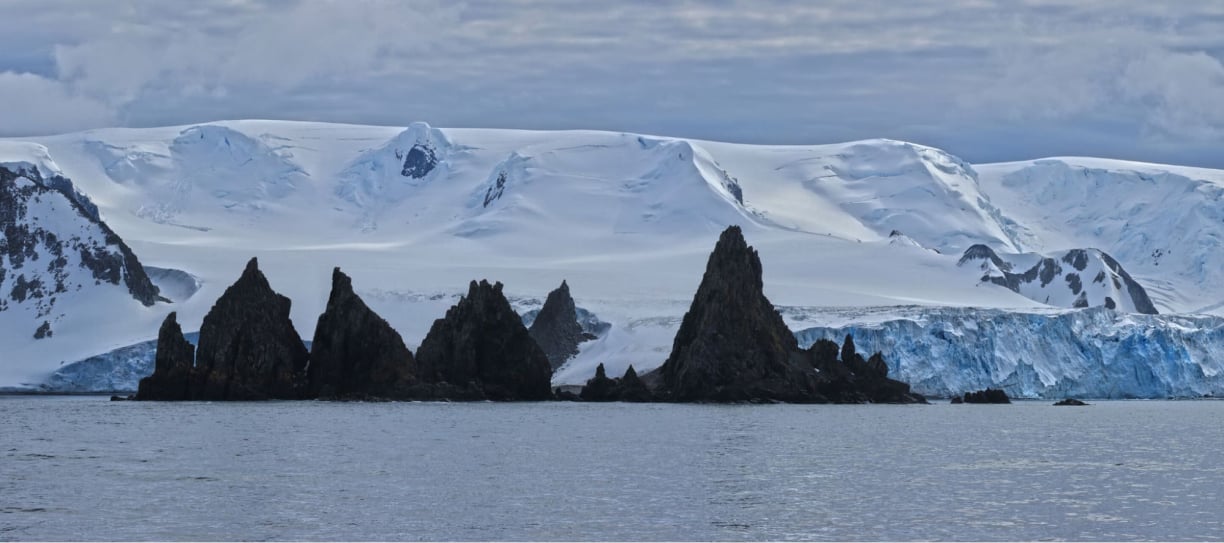
Islands Around Antarctica: Remote Expedition Routes
While Antarctic expeditions already travel off the beaten path, some islands lie even farther beyond standard expedition routes. From the volcanic Ross Island, home to Mount Erebus (the southernmost active volcano on Earth), to the mostly glacier-covered Bouvet Island, considered one of the most remote islands in the world, these destinations demand longer voyages and favorable conditions.
- Ross Island: Discover active and extinct volcanoes and the historic huts of polar explorers Robert Falcon Scott and Ernest Shackleton.
- Peter I Island: Difficult to access due to its sheer cliffs and persistent sea ice, it shelters wildlife such as penguins, seals, and seabirds.
- Scott Island: A remote site for climate and wildlife research and a crucial feeding ground for whales. The island also features the Haggitt’s Pillar, a 54-meter-high (177-foot) rock stack rising from the Ross Sea.
- Balleny Islands: Featuring dramatic cliffs, abundant seabirds and marine life, they’re rarely visited by travelers.
- Bouvet Island: Extremely remote, this island features unspoiled wilderness, a unique volcanic geology, sheer cliffs, and a permanent ice cap.
Did you know that you don’t have to go quite this remote to experience the best of Antarctica’s unique flora and fauna? Read on and find out which islands are more accessible yet still offer the same unique Antarctic wildlife encounters.
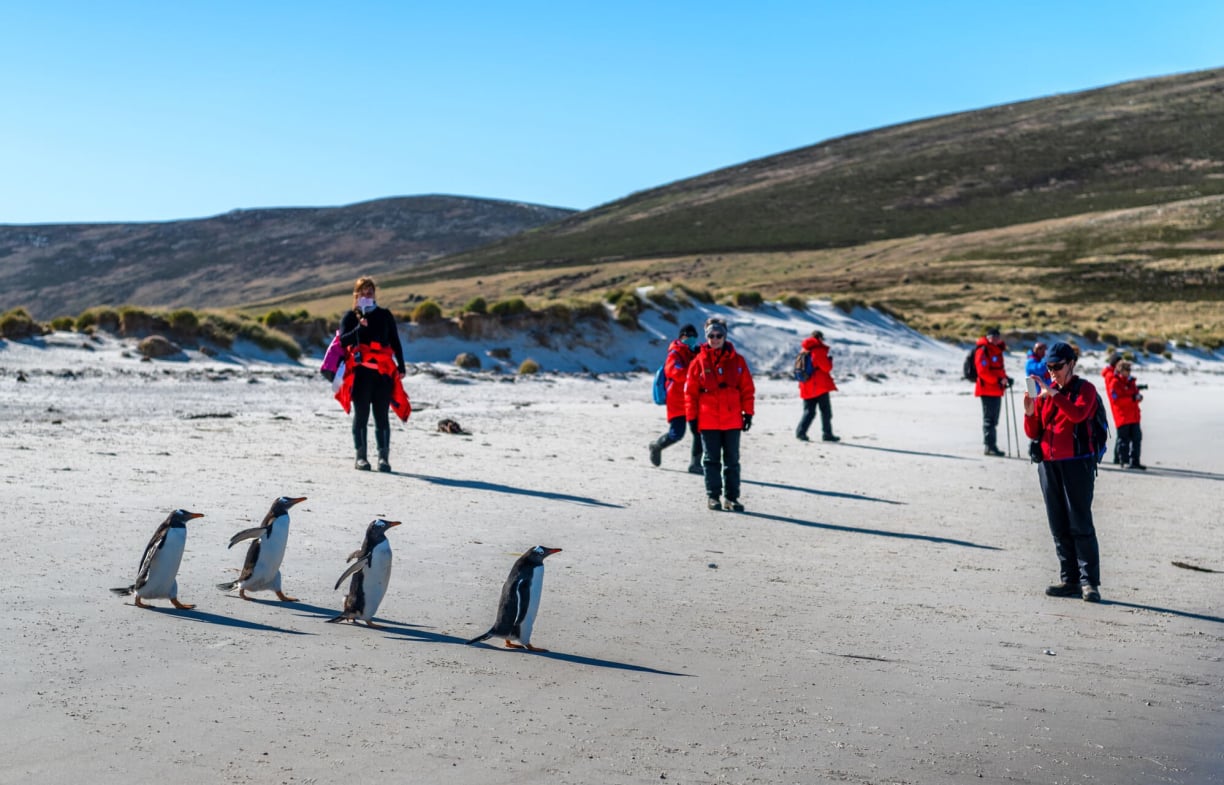
The Falkland Islands (Islas Malvinas)
The charming Falklands are often the first stop on many Antarctic cruises, offering quaint British small-town flair in Port Stanley and abundant wildlife across the grassy landscapes of the islands. With a human population of around 3,500 people, the Falklands are a true wildlife paradise. Located approximately 480 kilometers (300 miles) east of Argentina, the archipelago features the world’s largest black-browed albatross colony at Steeple Jason Island, where you can find 70 percent of the global population. In the dense tussock grass and on the sandy beaches, you can spot various penguin species, including gentoos and rockhoppers. From October to November, you can see dramatic battles of elephant seals on the archipelago’s shores, while December and January are the best months to see cute penguin chicks. Following the guidelines of the International Association of Antarctica Tour Operators (IAATO), we maintain strict protocols to minimize wildlife disturbance during peak breeding seasons. This archipelago is a must-visit destination for birders and wildlife photographers alike!
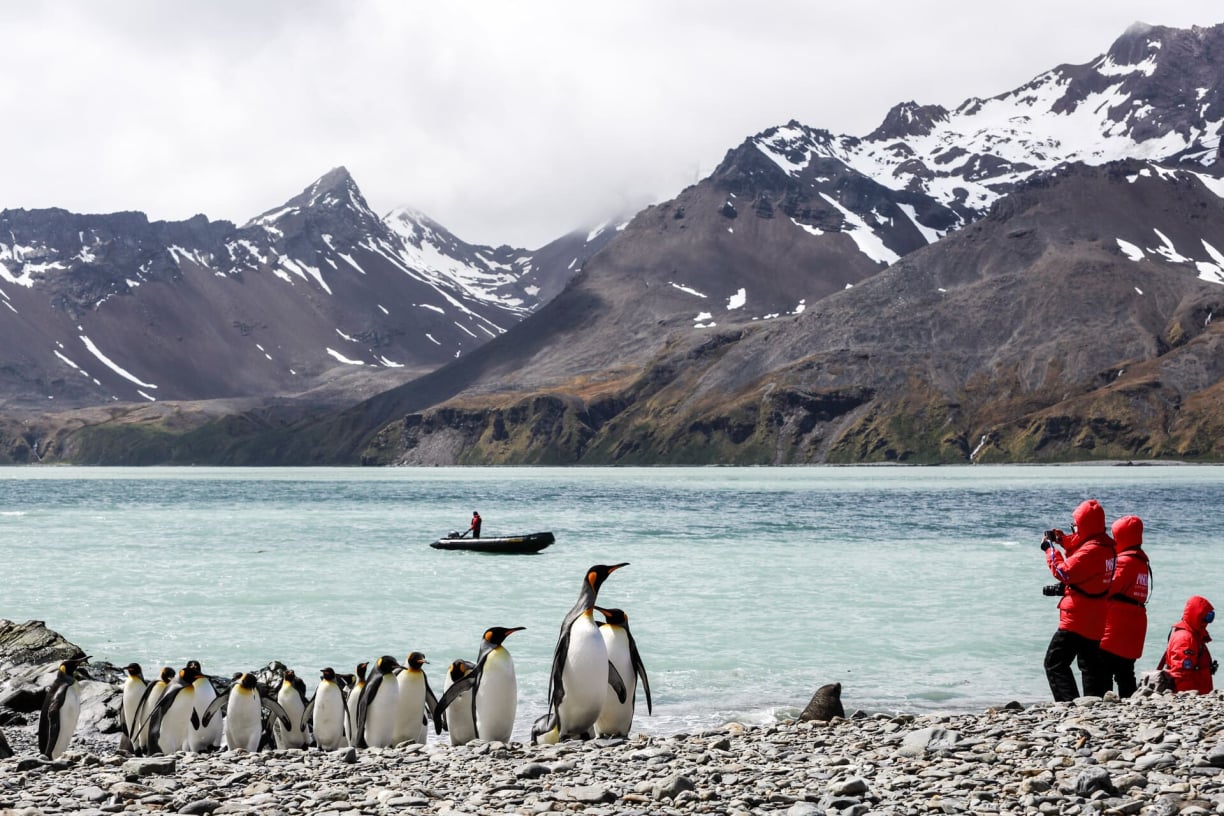
South Georgia Island
This gem of the Southern Ocean is often called the “Galapagos of the South Seas.” Dr. Norman Ratcliff, a bird ecologist from the British Antarctic Survey (BAS), compares South Georgia Island to the Alps, with Serengeti-style wildlife around it. “The wildlife concentrations around the coast are just phenomenal – multiple species of penguins, albatrosses, and seals,” he wrote in 2024. Imagine snow-capped mountains, sapphire-blue bays, and an abundance of Antarctic wildlife straight out of a nature documentary. According to data from the BAS, the island and surrounding waters host around 450,000 breeding pairs of king penguins. Organizations such as the Commission for the Conservation of Antarctic Marine Living Resources (CCAMLR), the Government of South Georgia and the South Sandwich Islands (GSGSSI), the British Antarctic Survey (BAS), and the International Association of Antarctic Tour Operators (IAATO) ensure the protection of this unique wildlife refuge.
Visit St. Andrews Bay on South Georgia’s north coast to see one of the largest king penguin rookeries in the world. History buffs can explore the abandoned whaling stations Grytviken, Leith, and Stromness, and follow the legacy of Sir Ernest Shackleton’s legendary adventure during the Imperial Trans-Antarctic Expedition of 1914-17. Check out our Antarctica and South Georgia Island departures and find the perfect cruise!
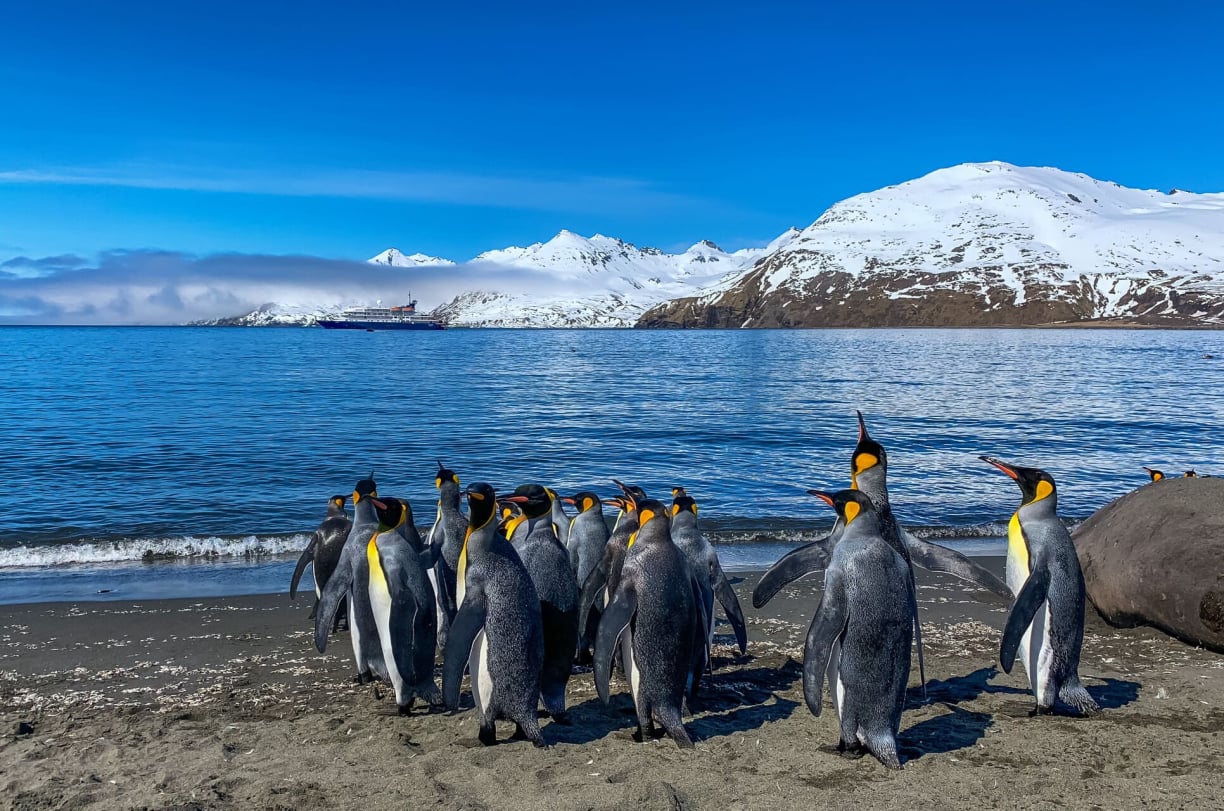
South Sandwich Islands
Travel roughly 750 kilometers (470 miles) southeast from South Georgia Island, and you’ll reach the South Sandwich Islands, a remote chain of 11 main islands. Several active volcanoes shape the dramatic landscape, including Mount Michael on Saunders Island and Mount Curry on Zavodovski Island, which last erupted in 2016. If you’re looking for inspiration or want to get a sense of whether the journey is worth the effort, David Attenborough’s BBC nature documentary series Planet Earth II (2016) offers a rare glimpse into the extreme environments. The documentary also includes footage of Zavodovski Island, famous for its vast colonies of chinstrap penguins. Only a handful of people ever get to see the islands up close, as challenging weather, heavy seas, and shifting pack ice make visits exceptionally difficult.
South Orkney Islands
Imagine colonies of gentoo, Adélie, and chinstrap penguins sharing the glacier-carved coastlines of the South Orkneys with fur seals and rare seabirds such as snow petrels. This island group is roughly 600 kilometers (375 miles) northeast of the northern tip of the Antarctic Peninsula and around 1,500 kilometers (930 miles) by cruise ship from the southern tip of South America. These remote subantarctic islands form part of the Scotia Sea Islands tundra ecoregion, representing some of the harshest ecosystems south of the Antarctic Convergence. Only the toughest organisms, such as grasses, algae, mosses and lichens, thrive in these cold, wet, and windy conditions. The islands are an important hub for scientific research, and on some cruises, you can visit Argentina’s Orcadas Base at Laurie Island. If birding is your passion, Signy Island, a designated bird research area and key breeding site, may be a highlight of your expedition! The Scientific Committee on Antarctic Research (SCAR) supports and coordinates long-term research across the region, contributing to understanding local penguin and seabird populations. Don’t forget your cameras and binoculars!
South Shetland Islands
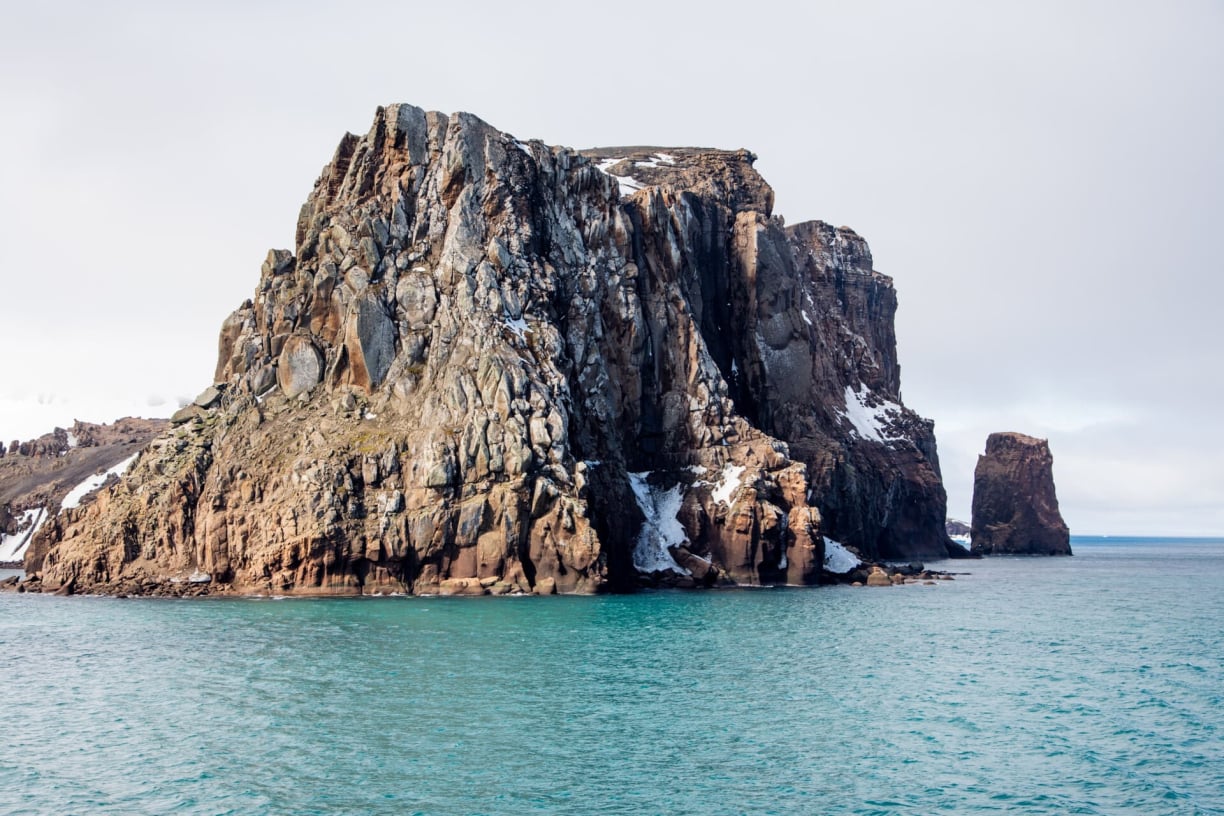
Once you reach the South Shetland Islands, you’ve nearly reached Antarctica itself! From here, it’s only about 120 kilometers (75 miles) to the Antarctic Peninsula, and for most cruise ships it’s the first landfall after crossing the infamous Drake Passage. This archipelago packs history, wildlife, and specks of civilization into roughly 3,687 square kilometers (1,424 square miles). Though geographically remote, the islands are actually reachable by airplane. On King George Island, you’ll find an airstrip used for direct flights from Punta Arenas in Chile, as well as numerous research stations. Discover the historic place on Elephant Island where Shackleton’s crew took refuge after their ship, the Endurance, was crushed by pack ice. Seeing the bleak, rocky shores battered by fierce winds and waves makes their survival story even more remarkable. The South Shetlands are also an excellent place to spot gentoo and chinstrap penguins, along with whales feeding in the surrounding icy waters. Read on and discover our top three spots in the South Shetlands!
Deception Island
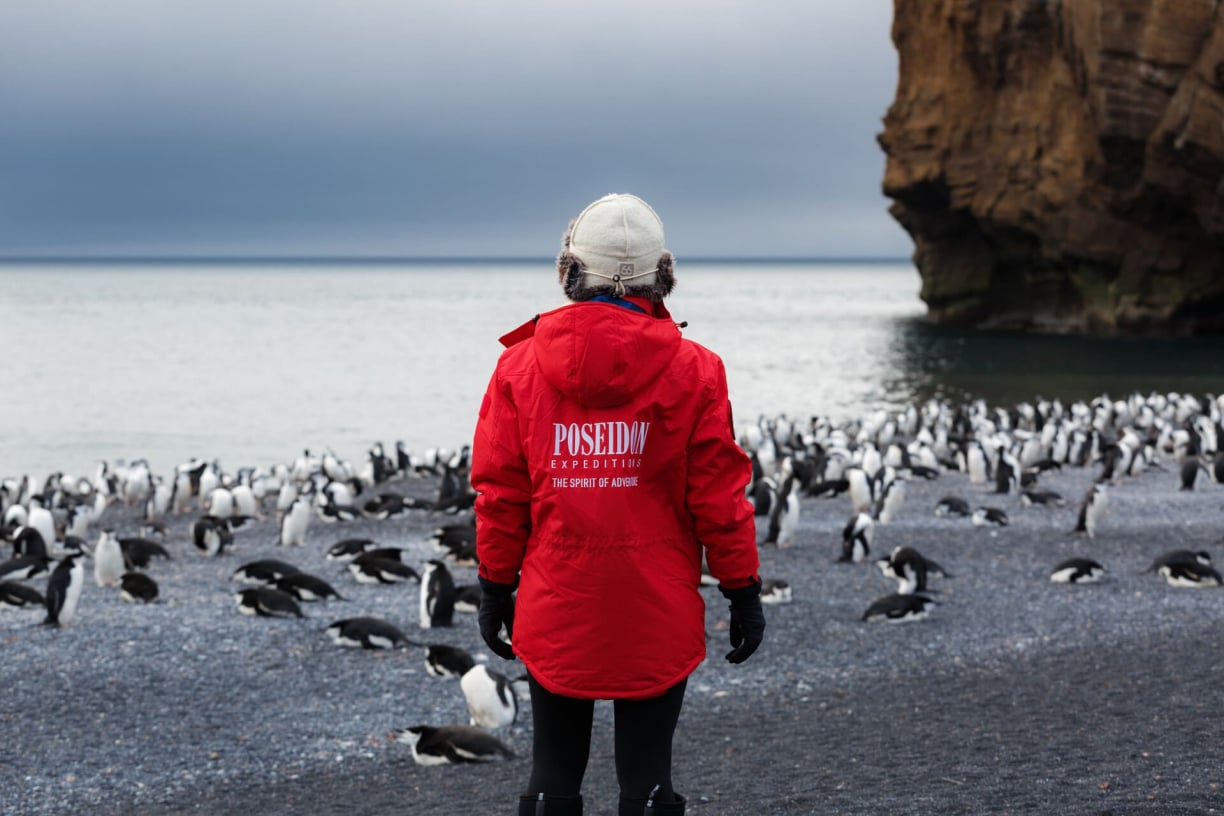
Did you know that this distinctive horseshoe-shaped landmass in the South Shetland Islands is actually a vast flooded caldera? The island is a volcanic crater filled with seawater, creating a natural harbor that was once used as a whaling station. The crater’s southeast rim collapsed, creating a narrow passage called Neptune’s Bellows, through which small expedition cruise ships can access the island. Deception Island is an active volcano, and eruptions in the late 1960s destroyed several scientific research stations in the area. Visit the abandoned structures, walk the volcanic beaches, and take in the island’s eerie atmosphere. If Deception Island is on your route, be sure you pack a bathing suit! When conditions permit a landing, you’re in for a treat. The volcanic beaches offer a once-in-a-lifetime hot spring experience. Soak in the shallow, naturally warm seawater pockets along the black sand beaches, enjoying spectacular vistas of the snow-capped landscape.
King George Island
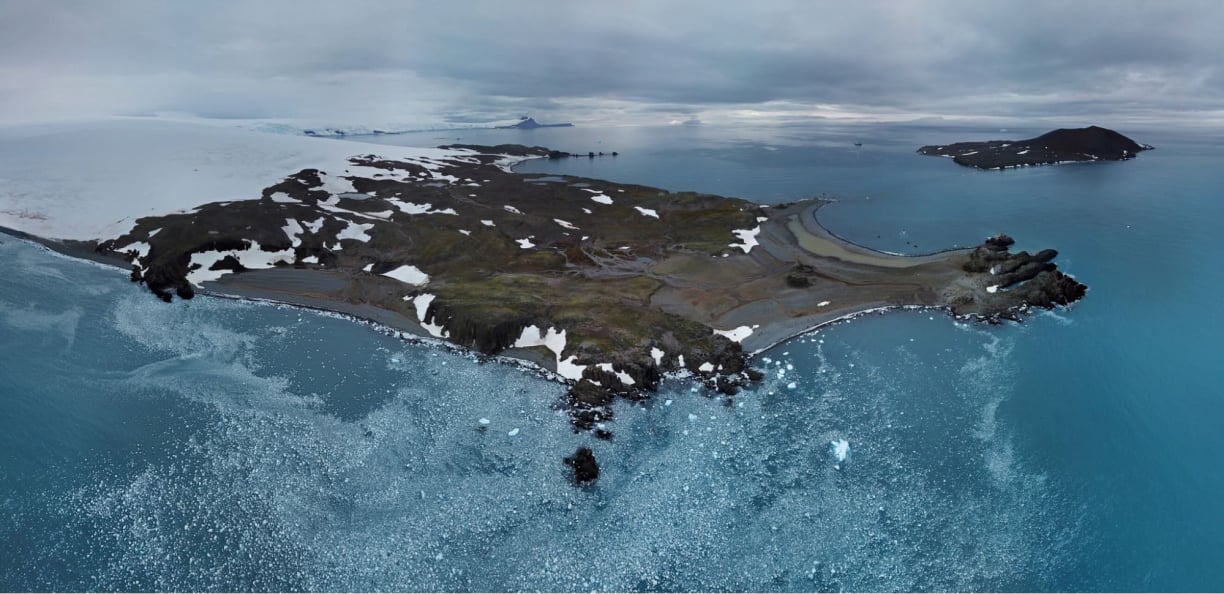
Are you worried about crossing the infamous Drake Passage, dreading seasickness, or do you simply want to save a few days of travel time? Consider a polar expedition that offers charter flights from Punta Arenas, Chile, reaching King George Island in just around three hours. Fly/Cruise itineraries offer you the chance to board a cruise ship from the island, allowing you to enjoy the best of the Antarctic Peninsula and surrounding islands while avoiding the rough seas of the Drake Passage.
Half Moon Island
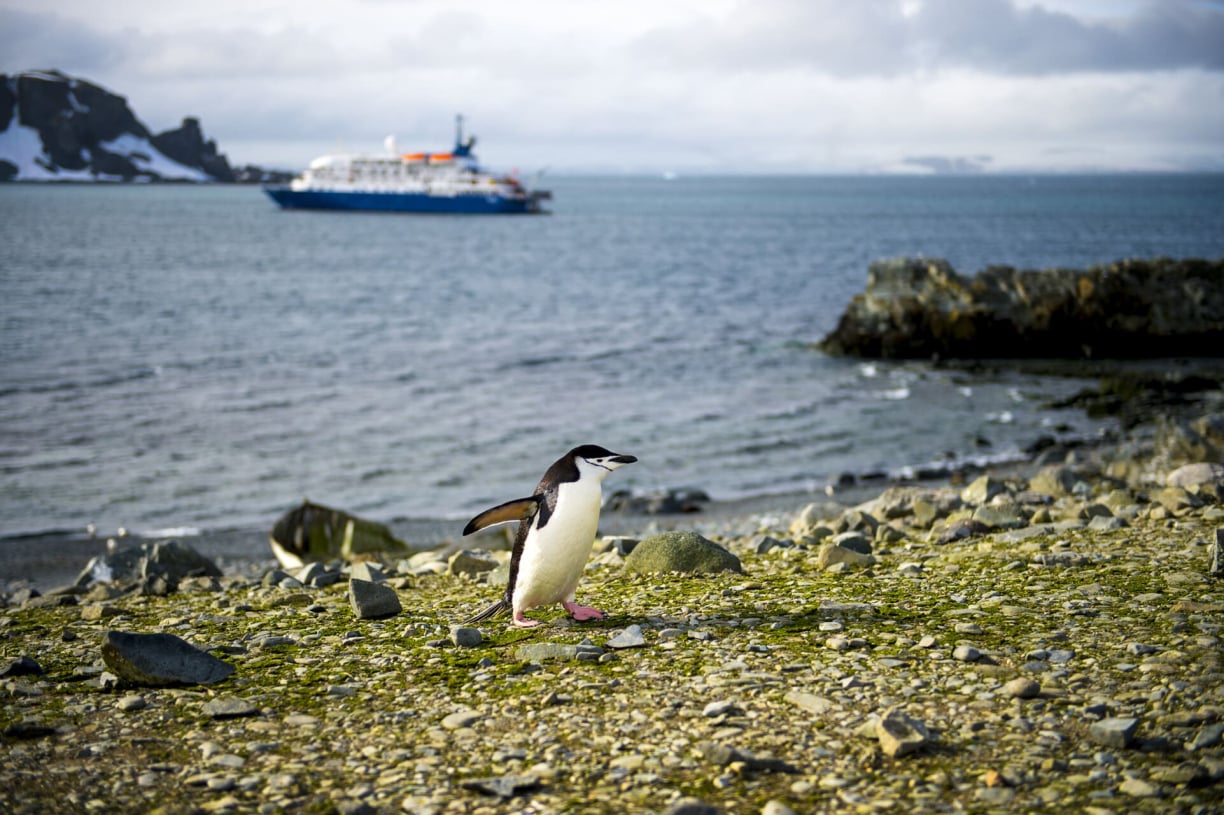
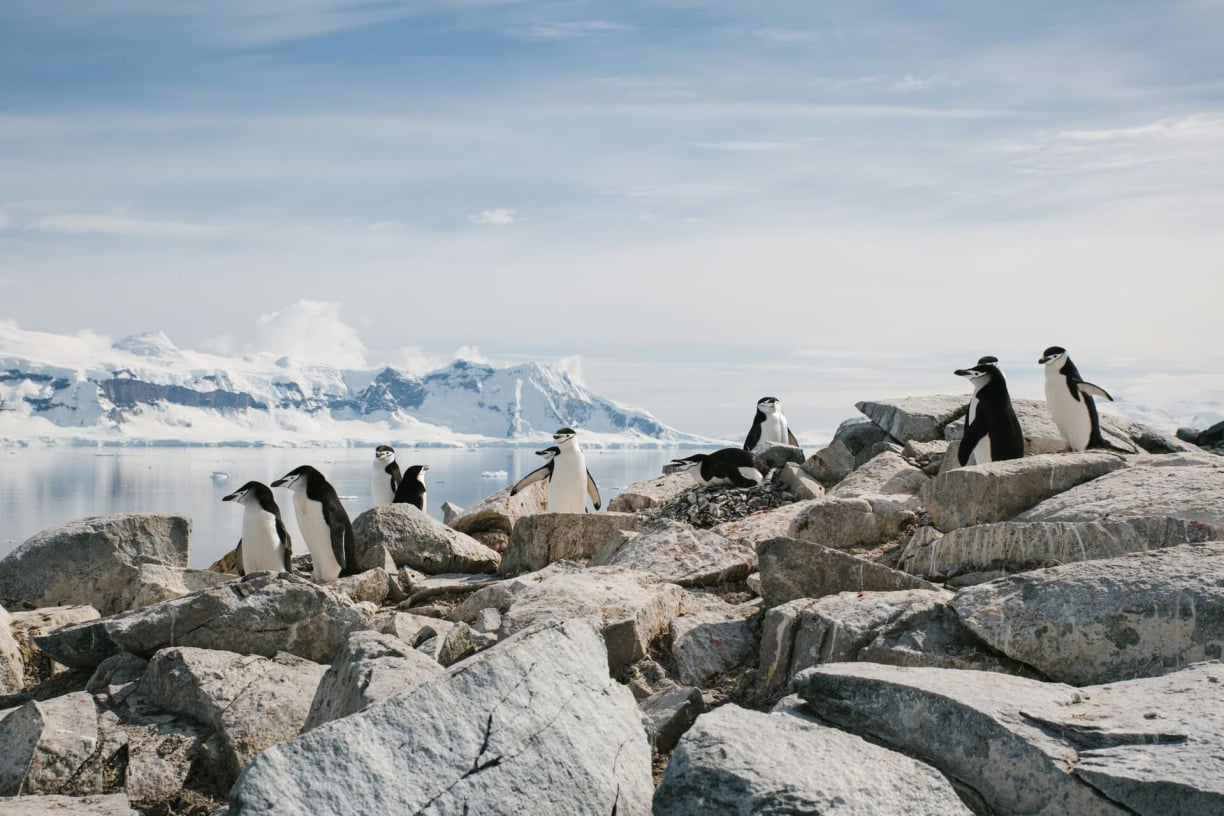
The small, crescent-shaped Half Moon Island sits in the heart of the South Shetland Island Group and is a hotspot for wildlife enthusiasts. Expect lively penguin colonies, particularly chinstraps, fur seals, Weddell seals, and an abundance of seabirds, including Antarctic terns, skuas, gulls, petrels, and blue-eyed shags. Despite its small size, you’ll find a concentrated biodiversity of Antarctic flora and fauna. If you’re an avid birder, this place is well worth adding to your Antarctic islands travel list!
Antarctic Peninsula Islands
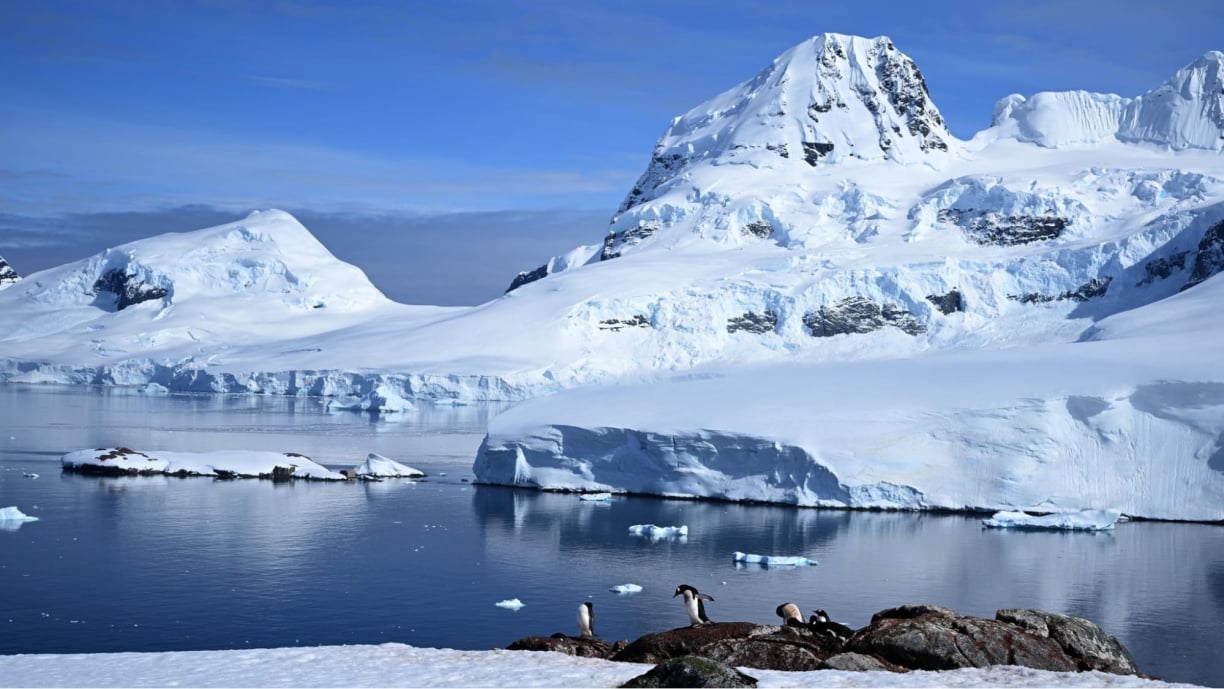
Unlike the subantarctic islands north of the Antarctic Convergence, such as South Georgia, the Falklands, and Macquarie Island, the islands around the peninsula will give you the full Antarctic experience! This is where glaciers thunder into the sea, icebergs drift past your Zodiac, and wildlife appears at nearly every landing. Expect close encounters with penguins, seals, and whales, often all in the same day. Visit Paulet Island, home to a massive Adélie penguin colony, with an estimated 100,000 breeding pairs, and discover Adélies, gentoos, and chinstraps cohabitating at Gourdin Island. Explore Port Lockroy, a former British military base established in 1944 that now functions as a museum, gift shop, and the world’s southernmost post office, operated by the UK Antarctic Heritage Trust (UKAHT). The post office delivers around 70,000 postcards each year to more than 100 countries worldwide.
And there’s more to explore. Some expeditions visit Anvers Island, a mountainous island hosting the U.S. Palmer Station research base, named after explorer Nathaniel Palmer, recognized as the first American to sight Antarctica in 1820. On Adelaide Island, you’ll find the Rothera Research Station, the primary research and field support hub of the British Antarctic Survey (BAS).
Snow Hill Island
If you want to see the largest penguin species in the world without venturing deep into the Antarctic interior, book an expedition to Snow Hill Island. It’s the northernmost breeding site for emperor penguins, locked in by thick pack ice in the Weddell Sea for most of the year. When conditions allow, expedition operators deploy helicopters to access this remote penguin colony, home to an estimated 4,000 breeding pairs. See how emperor penguin fathers care for their fluffy chicks in one of the harshest climates on Earth, while females travel up to 120 kilometers (75 miles) across sea ice to feed.
The British Antarctic Survey (BAS) studies how thinning pack ice affects penguin populations using satellite imagery, tracking data, and genetic sampling. Following severe sea ice loss in 2022, BAS researchers observed that some affected colonies relocated to more stable breeding areas the following year. “The fact that we are seeing these adaptations in the worst affected colonies gives us some hope that the birds can react to their changing environment and move to find more stable ice,” explained Dr. Peter Fretwell, Geographic Information Officer at BAS in April 2024.
Danger Islands
True to their name, the Danger Islands are among the most inaccessible places along the Antarctic Peninsula. British explorer James Clark Ross gave them their ominous name in the 1840s after encountering dense, hazardous sea ice surrounding and concealing the island even at the height of summer. Rarely reached by expedition ships and virtually impossible to land on, the islands have remained remarkably pristine and undisturbed. That isolation provides the perfect refuge for wildlife, and in 2018, scientists discovered a colony of 1.5 million Adélie penguins using satellite and drone footage. It’s a powerful reminder of how Antarctica’s most inaccessible corner can still hold extraordinary wildlife surprises.