Antarctic Penguins: Complete Species Guide
Antarctica’s penguins are the ultimate survivors of the polar world: seven incredible species of flightless seabirds that mastered life in one of Earth’s harshest environments. Only two, the emperor and Adélie, exclusively breed on the Antarctic continent. Curious gentoos and feisty chinstraps live in both Antarctica and the subantarctic islands, while the elegant kings, flamboyant rockhoppers, and macaroni penguins inhabit only the nearby subantarctic islands. Penguins are not just incredibly cute, but their cold-water adaptations are remarkable! In 26 years of polar cruising, we at Poseidon Expeditions have enjoyed countless encounters with these remarkable birds and gotten to know their unique way of life and peculiar personalities. Keep on reading and join us on a mini-expedition through the fascinating world of Antarctic penguins!
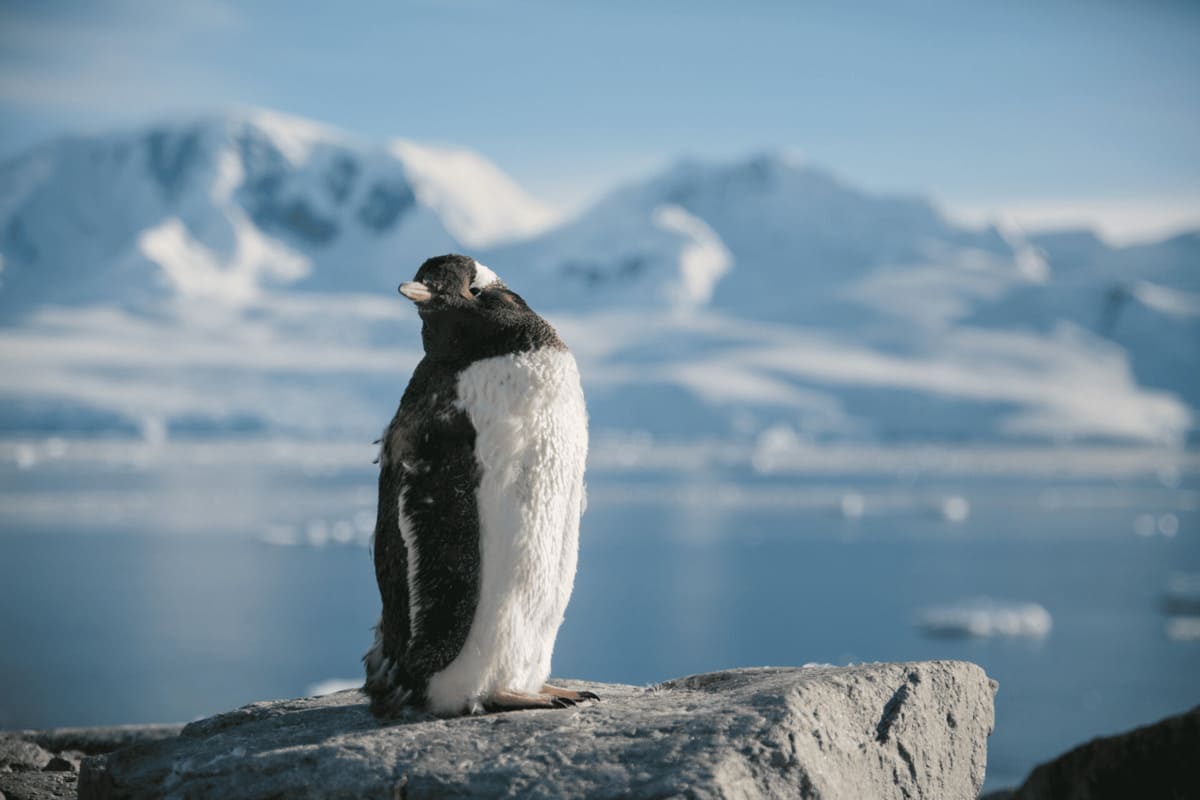
Do Penguins Live in Antarctica?
While there are penguins in Antarctica and you can see them on one of our epic Antarctic cruises, not all species call the icy continent their home. The true hardcore Antarctic residents are the emperor, Adélie, chinstrap, and gentoo penguins. Emperors typically breed around 50 to 120 kilometers (31 to 75 miles) off the coasts, which makes them difficult to spot when exploring on a cruise ship. Chinstraps and gentoos are plentiful around the shores of the Antarctic Peninsula, and we can almost guarantee that you’ll see them on our Antarctica cruises!
As of today, according to the British Antarctic Survey (BAS), around 20 million breeding pairs are found in Antarctica across all seven species. With the help of satellite imagery and on-the-ground counting, scientists study population numbers and trends over decades. According to a 2025 study published in Nature, the fully Antarctica-based emperor penguin populations decreased by 22% from 2009 to 2023.
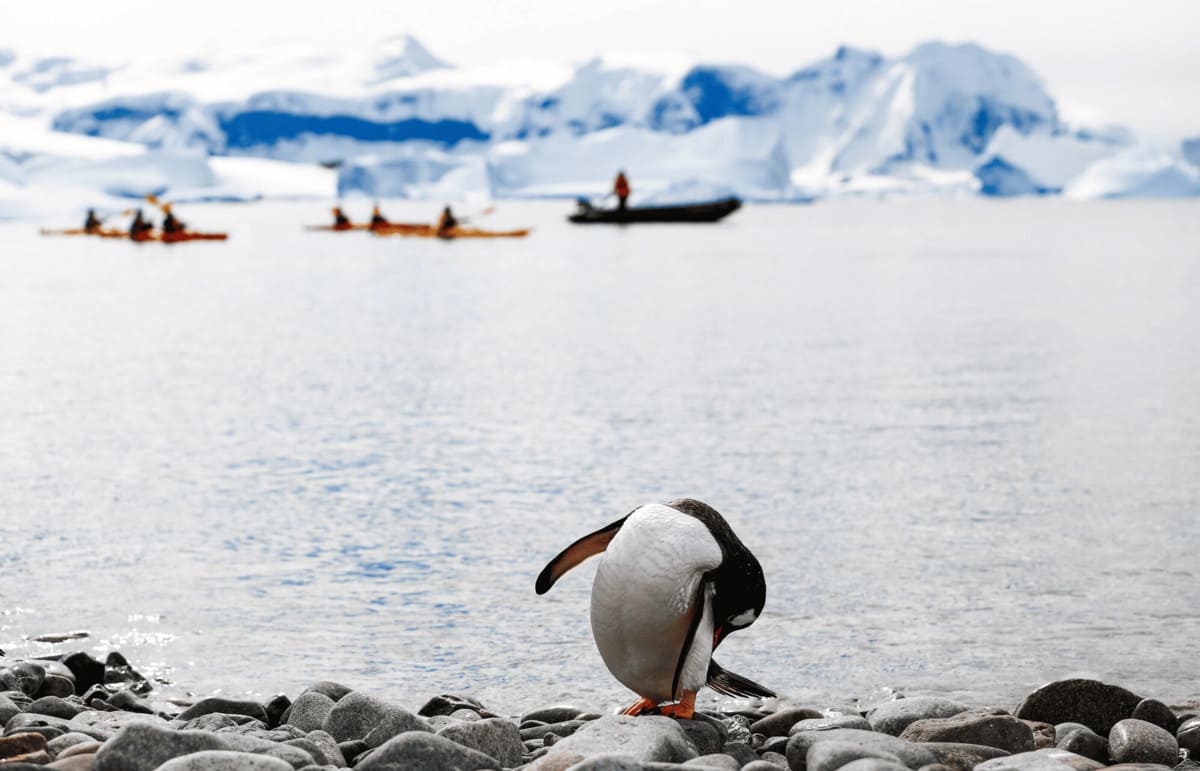
Antarctica vs. Arctic:
Are There Any Penguins Up North?
We’ve been to the Arctic countless times on our expeditions to Greenland, Svalbard, and even the North Pole, and we haven’t seen any penguins there yet. Penguins are strictly dwellers of the Southern Hemisphere, and you’ll find them waddling along pristine Antarctic beaches, nesting on rocky shores, and even belly-sliding down snowy slopes. But did you know that there actually was a short period in history when a small group of king penguins resided in Lofoten in northern Norway? In 1936, Lars Christensen, a whaling magnate and Antarctic explorer, brought nine king penguins from South Georgia Island to northern Norway. Later, macaroni and African penguins followed, but by the late 1940s, no penguins were left in the area. The Arctic, with its abundant land predators such as Arctic foxes, wolves, and polar bears, isn’t the best place for flightless birds like penguins to thrive. That’s why the only way to see them in their natural habitat is to visit Antarctica or the surrounding islands in the subantarctic.
The 7 Penguin Species of Antarctica
|
Name |
Size and Weight |
Distinctive Features |
Primary Habitat |
|
Emperor Penguin (Aptenodytes forsteri) |
Up to 1.3m (51 inches) and between 22 to 45 kg (49 to 99 lb) |
Largest and heaviest penguin, significant orange-yellow patches on the neck |
Antarctica's interior, breeding on ice far from the coast |
|
Adélie Penguin (Pygoscelis adeliae) |
Up to 70cm (28 inches) and between 3 and 6 kg (6.6 to 13 lb) |
Classic black tuxedo look and white eye-ring |
Antarctic coastlines |
|
Chinstrap Penguin (Pygoscelis antarcticus) |
Up to 75cm (30 inches) and between 3.5 to 5.5 kg (7.7 to 12 lb) |
Classic black tuxedo look and thin strap on the chin under the beak |
Antarctic Peninsula, South Shetland Islands |
|
Gentoo Penguin (Pygoscelis papua) |
Up to 90cm (35 inches) and from 5 to 8.5 kg (10 to 19 lb) |
Bright orange beak, white head stripe |
Antarctic Peninsula, subantarctic islands (South Georgia, Falklands) |
|
King Penguin (Aptenodytes patagonicus) |
Up to 100cm (39 inches) and from 9.3 to 18 kg (21 to 40 lb) |
Second-largest penguin, vivid orange on head and chest |
Subantarctic islands, South Georgia, Falklands |
|
Macaroni Penguin (Eudyptes chrysolophus) |
Up to 70cm (28 inches) and approximately 6 kg (12 lb) |
Yellow-orange crest feathers, red eyes |
Subantarctic islands, northern Antarctic Peninsula |
|
Rockhopper Penguin (Eudyptes chrysocome)> |
Up to 60cm (23 inches) and from 2.5 to 4kg (5.5. to 9 lb) |
Yellow-orange crest, red yes |
Subantarctdic islands, South Georgia, Falklands |
Join our Antarctica cruises for the ultimate penguin safari! Contact us and we’ll advise you on the best cruise to see your favorite penguins!
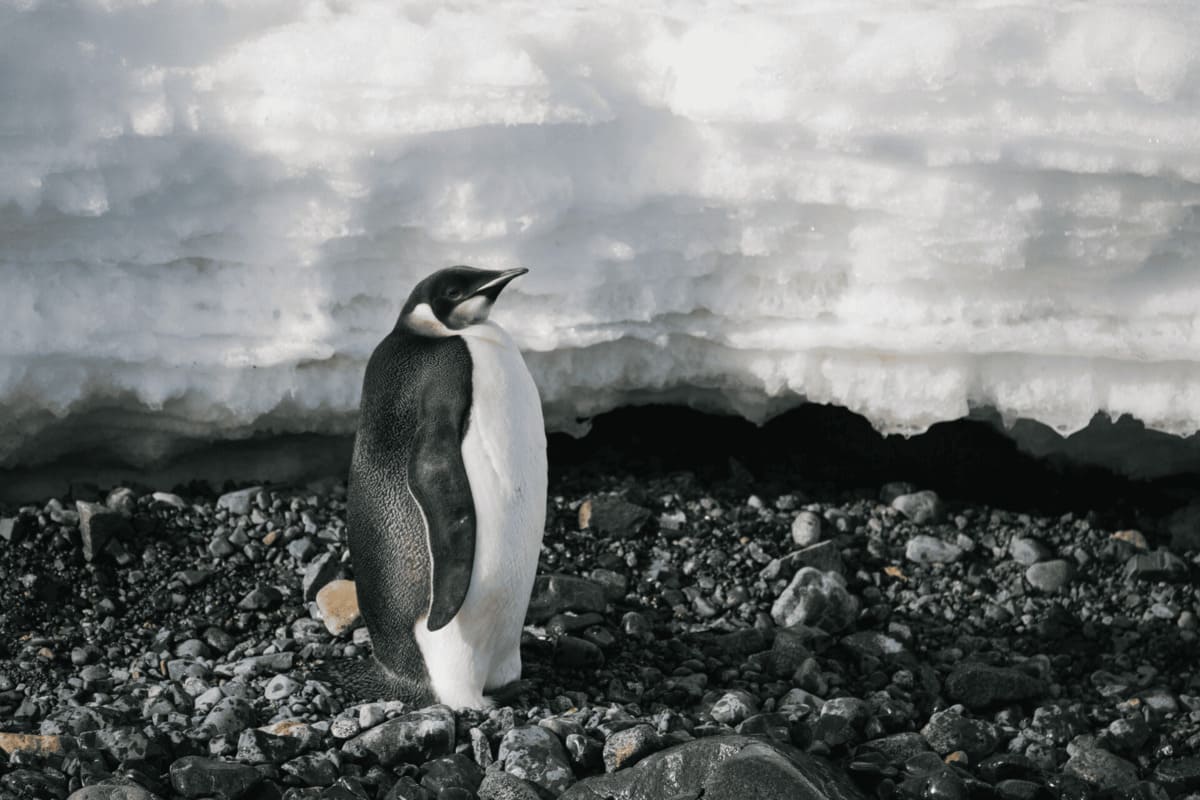
Emperor Penguins:
The Iconic Winter Warriors of Antarctica
They’re the true royalty of Antarctica, enduring fierce storms and the extreme cold of the icy continent. Temperatures of -60°C (–76°F) and blizzards of up to 200 km/h (120 mph) aren’t a problem for them. The life of an emperor penguin begins on bare ice, with no nest to protect the egg. Females lay a single egg and carefully transfer it to their mate before heading back to the ocean to feed. These food runs take around two months, and females have to travel from 50 to 120 kilometers (21 to 75 miles) to reach the ocean.
Meanwhile, the males are left behind to incubate the egg in their brood pouch, a warm fold of their skin, balancing it on their feet. Thousands of penguin dads then huddle together to shield each other from icy storms and freezing temperatures, waiting for the chick to hatch. That’s when females finally return, fully gorged on fish, and ready to relieve their exhausted partners. And while it was previously assumed that these penguins return each year to the same nesting spots, satellite imagery from a study led by the University of Minnesota suggests that emperors keep it flexible. “Our research showing that colonies seem to appear and disappear throughout the years challenges behaviors we thought we understood about emperor penguins,” the study’s lead author Michelle LaRue, research ecologist at the University of Minnesota, reported in 2014.
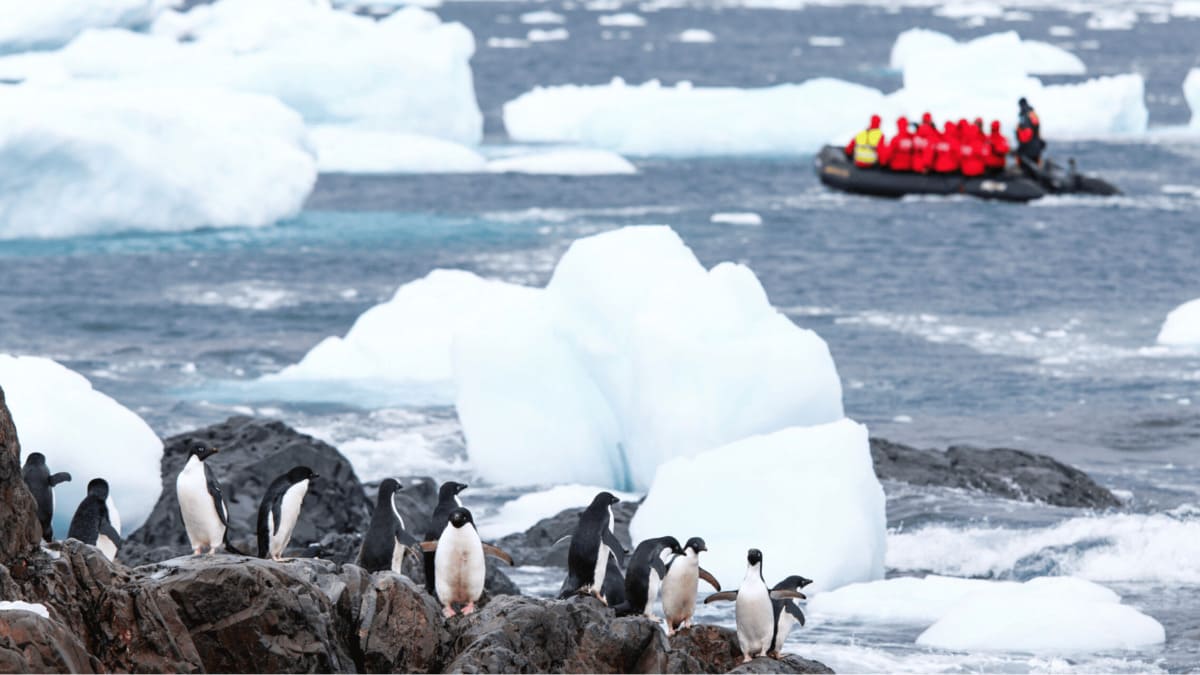
And while spotting emperors in the wild is not easy, there is a way to see them in their habitat! Most emperor penguin colonies are hidden in the Ross and Weddell Seas and difficult to reach, but one accessible place to meet them is on Snow Hill Island, where polar tourists can land via a helicopter excursion.
Emperor Penguin Diet and Hunting Behavior
When it comes to food, emperor penguins are true deep-sea hunters. Using their powerful flippers, they rocket through the water with elegant agility, chasing Antarctic krill, fish, and squid at depths of up to 200 meters (650 feet). But emperors can dive even deeper, and record-breaking dives down to half a kilometer (1,600 feet) have been recorded! And emperors know how to hold their breaths: A 2018 study published by Marine Ecology Progress Series measured a 32.2-minute dive, which was also recorded in the Guinness Book of World Records.
Emperor Penguin Breeding Cycle
Emperors like it cold, right from the start of their lives. During May and June, when sea ice spreads across the Weddell Sea, penguin pairs gather to mate in the middle of the Antarctic winter. The female lays only one egg, which she entrusts to her partner, who spends the following 65 days incubating the egg in his brood pouch, without a bite to eat. While the colony’s penguin dads huddle on the ice, shielding their eggs from the cold, females venture on long treks back to shore, where they feed on seafood until it’s time to return. By the arrival of austral spring, both penguin parents share their chick-rearing duties, with repeated journeys between the sea and the colony. Come December, the downy grey chicks start their first march toward the Southern Ocean.
Adélie Penguins:
The True Antarctic Natives
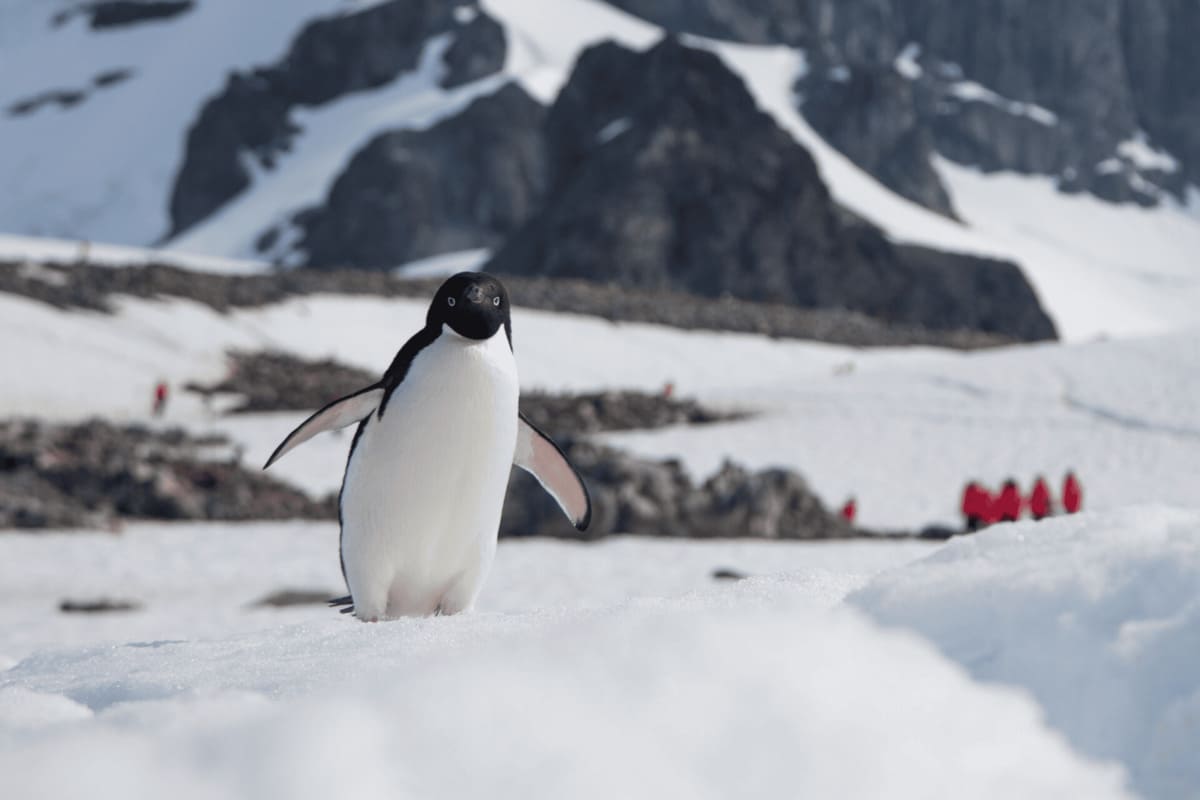
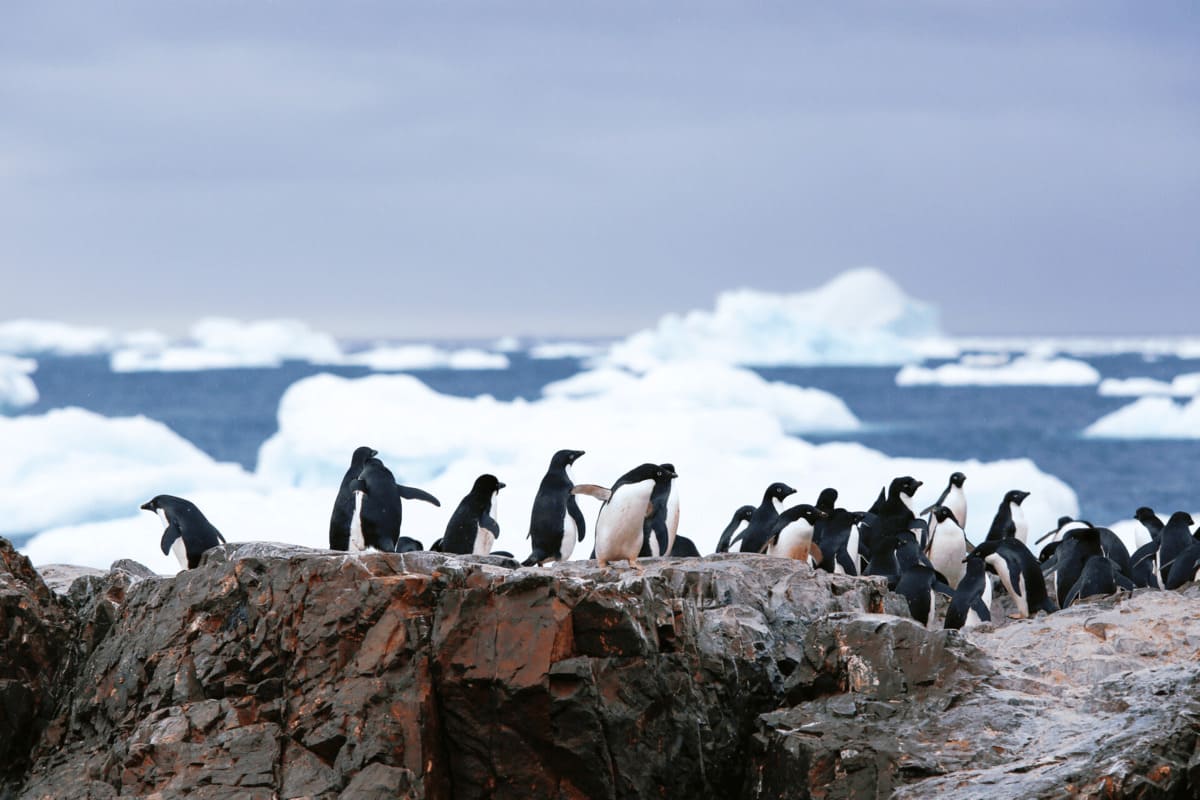
These feisty Antarctic penguins live along the Antarctic Peninsula, in circumpolar coastal regions of the continent, as well as nearby islands. Their iconic name derives from French Antarctic explorer Jules Dumont d’Urville, who in 1840 named the newly discovered part of Antarctica, as well as its tuxedoed inhabitants, after his wife, Adélie. These penguins spend most of their lives at sea and near pack ice, but come breeding time, they seek out ice-free, rocky outcrops. Adélies are plentiful in Antarctica and, according to the Australian Antarctic Program, around 3.6 million individuals lived around the continent as of 2017. During our Antarctic voyages, we usually spot them around Port Lockroy, Petermann Island, and Half Moon Island. It’s always a highlight seeing their noisy colonies and peculiar mating habits, including their habits of stealing pebbles from each other’s nests.
Adélie Penguin Diet and Hunting Behavior
Adélie penguins prefer shallower dives of around 70 meters (230 feet), but when necessary, they can plunge to depths of 175 meters (570 feet) to get their share of krill, fish, and squid. Fun fact: they have a taste for gelatinous treats! A 2017 study in Frontiers in Ecology and the Environment, which equipped a group of penguins with tiny recorders, found Adélies also feed on jellyfish, a food that was previously considered too low in calories for warm-blooded animals with high-energy demands such as penguins.
Adélie Penguin Breeding Cycle
Returning faithfully each year to the same rocky nesting sites, Adélie penguins are known to snatch pebbles from each other when building their stone nests. Female Adélies lay two eggs, and both parents take turns incubating while alternating their feeding trips to the sea. Like other penguin species breeding in the colder reaches of Antarctica, chicks form crèches, huddling together for warmth and protection while their parents forage.
Gentoo Penguins:
The Speedsters of the Antarctic Peninsula
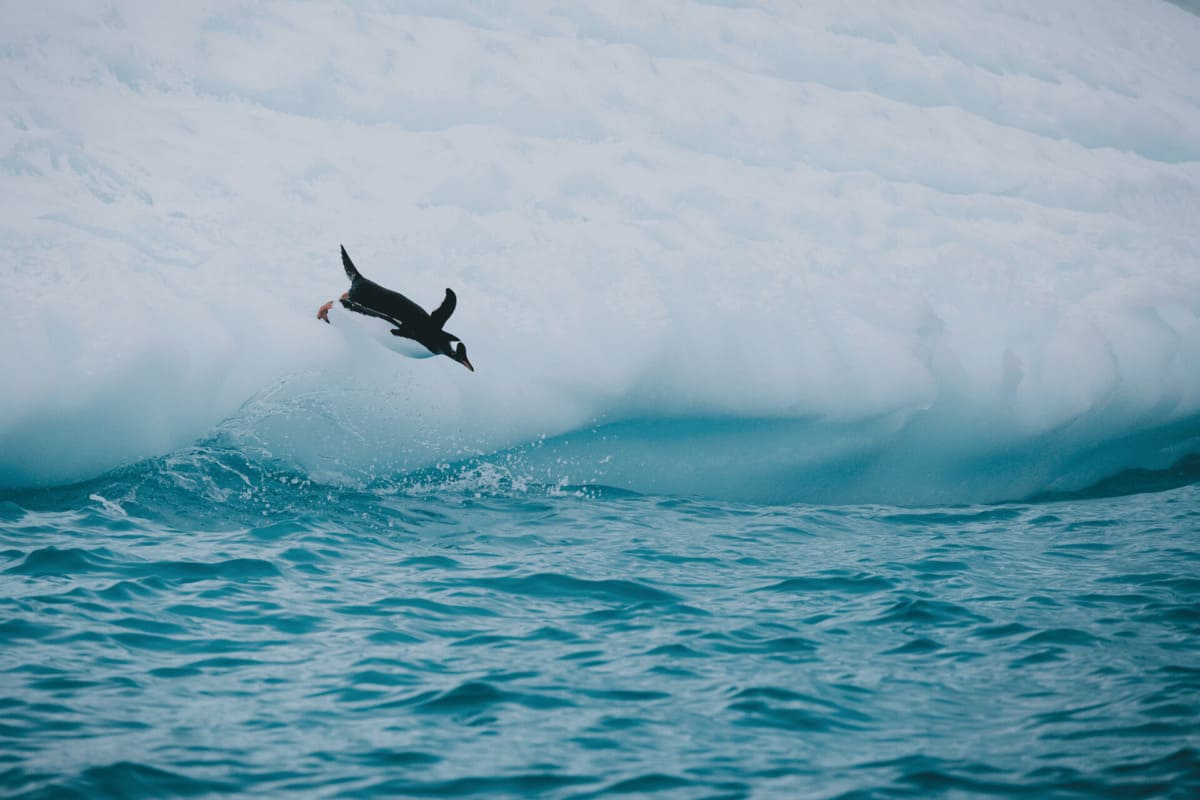
Meet the fastest penguin of all time, darting through the freezing Antarctic waters at Guinness Book of World Record speeds of up to 36 km/h (22 mph)! In a 2023 study, Bo Yin, a mechanical engineer at the Chinese Academy of Sciences in Beijing, found out how gentoos can reach such speeds. By analyzing video footage of their swimming motions and paddle-shaped wings, his team discovered a specific maneuver, called feathering, where the penguins tilt the bottoms of their wings forward and back. This change in the wings’ angle relative to the water reduces resistance, thus accelerating the penguin. It’s hard to believe how fast they are in water when you see them clumsily stumbling across Antarctic and subantarctic beaches on our Antarctic cruises! They are a passengers’ favorite and a guaranteed sighting on our expeditions.
Gentoo Penguin Diet and Hunting Behavior
Gentoos feed on krill, fish, and squid, and their record-breaking swimming speeds give them a major advantage when hunting. While they can dive to depths of 200 meters (650 feet) to pursue food, they don’t dive as deeply as emperor or Adélie penguins, usually preferring to forage in shallow waters close to their colonies.
Gentoo Penguin Breeding Cycle
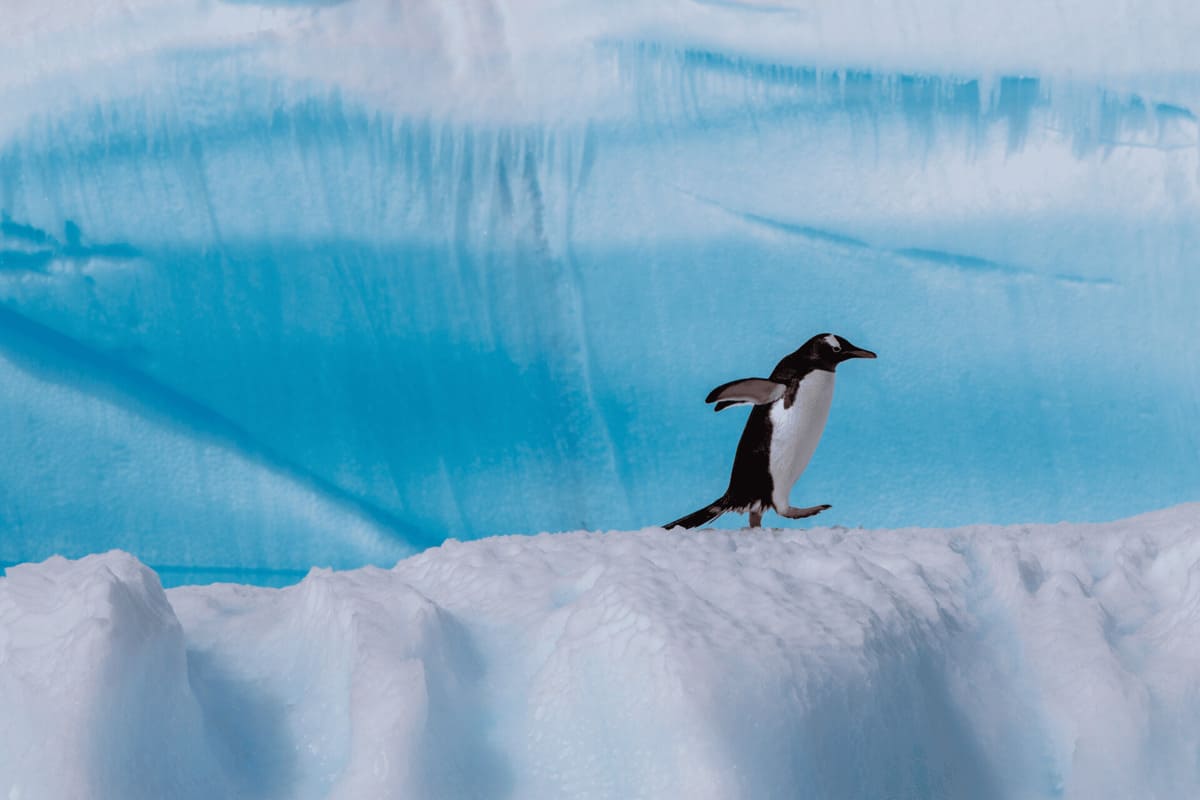
Male gentoos are the romantics of the penguin world, known for giving pebbles to females as part of their courtship. Gentoos choose tufts of grass, open beaches, and ice-free coastal areas as their nesting locations. Both penguin parents share their incubation duties equally, taking turns to keep their typically two eggs warm. It takes around 34 to 37 days for the chicks to hatch. At 70 days old, juvenile gentoos start heading out to sea, while their parents continue to feed them until they master swimming.
Chinstrap Penguins:
The Distinctive Mariners of Antarctica
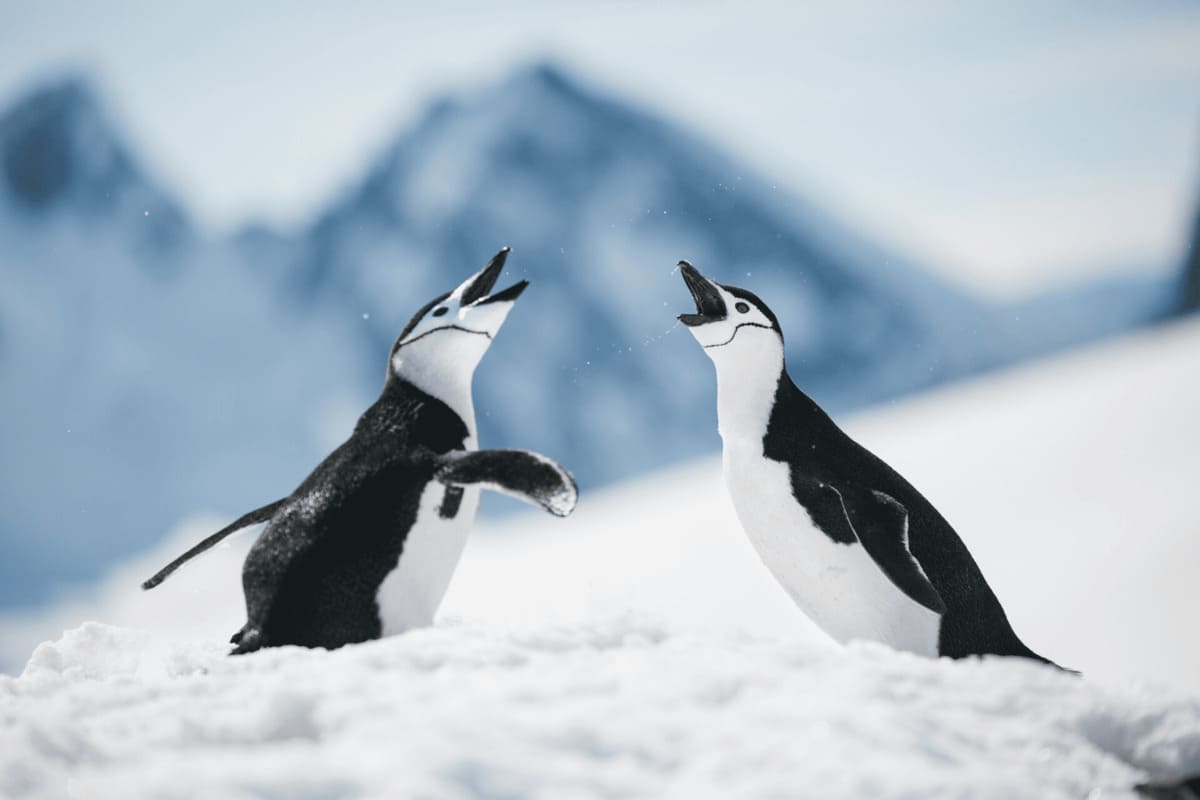
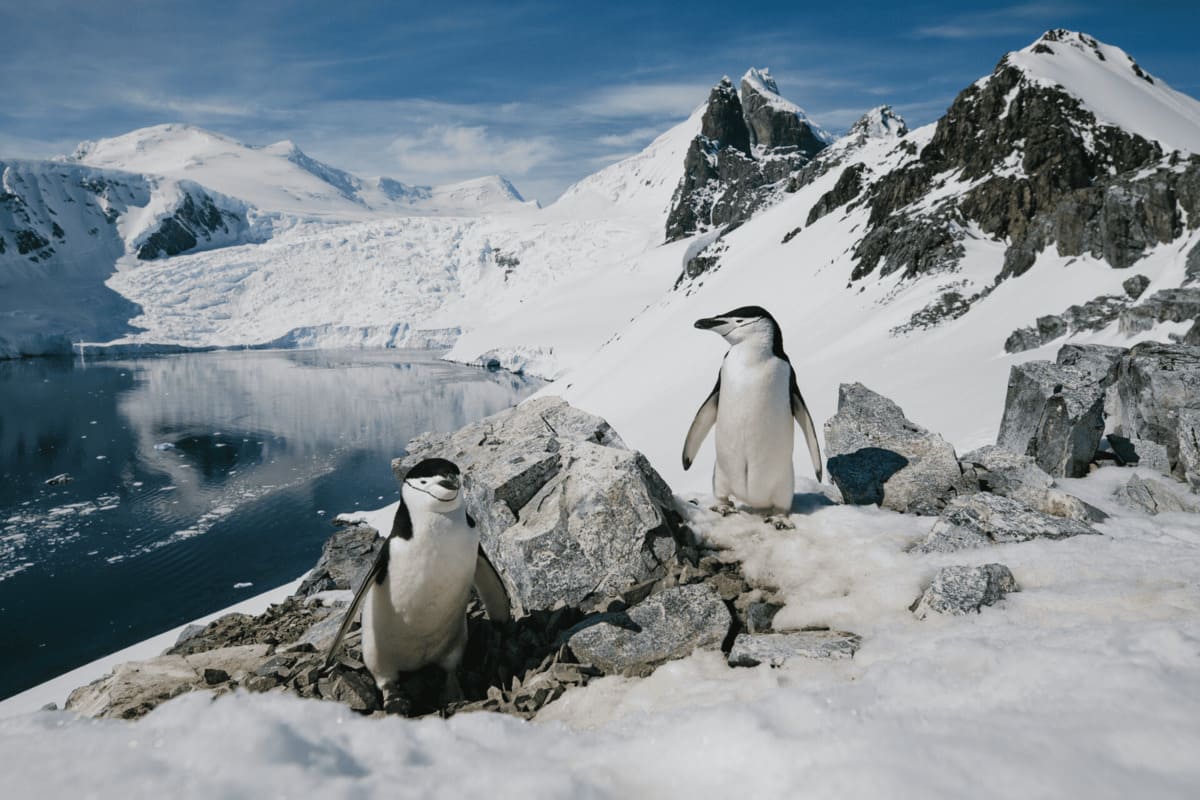
Easily recognizable by their signature black strap line, chinstrap penguins are a common wildlife sighting on our Antarctic expedition cruises. They are excellent climbers (and actually look like they’re wearing protective helmets), using all four limbs to jump large distances to reach footholds. We frequently spot their massive colonies on the South Sandwich Islands, Antarctic Peninsula, South Shetland Islands, and Deception Island. They favor ice-free rocky areas and cliffs for their nesting sites. A 2020 study published in Nature used satellite and drone imagery, as well as ground counts, to establish comprehensive population assessments and found that 3.42 million breeding pairs live across 375 colonies around Antarctica.
Chinstrap Penguin Diet and Hunting Behavior
These iconic penguins almost exclusively feed on nutrient-rich Antarctic krill. A 2024 study published in Royal Society Open Science used deep learning algorithms to analyze what and how much chinstraps really eat. Their dependence on the Antarctic superfood makes them vulnerable, as the WWF warns that warming oceans and shrinking sea ice threaten krill populations. Chinstrap penguins typically feed at depths of less than 40 meters (130 feet). Fun fact: during the day, chinstraps need to dive deeper to get a beakful of krill, as that’s when Antarctic krill avoids the ocean surface and its predators.
Chinstrap Penguin Breeding Cycle
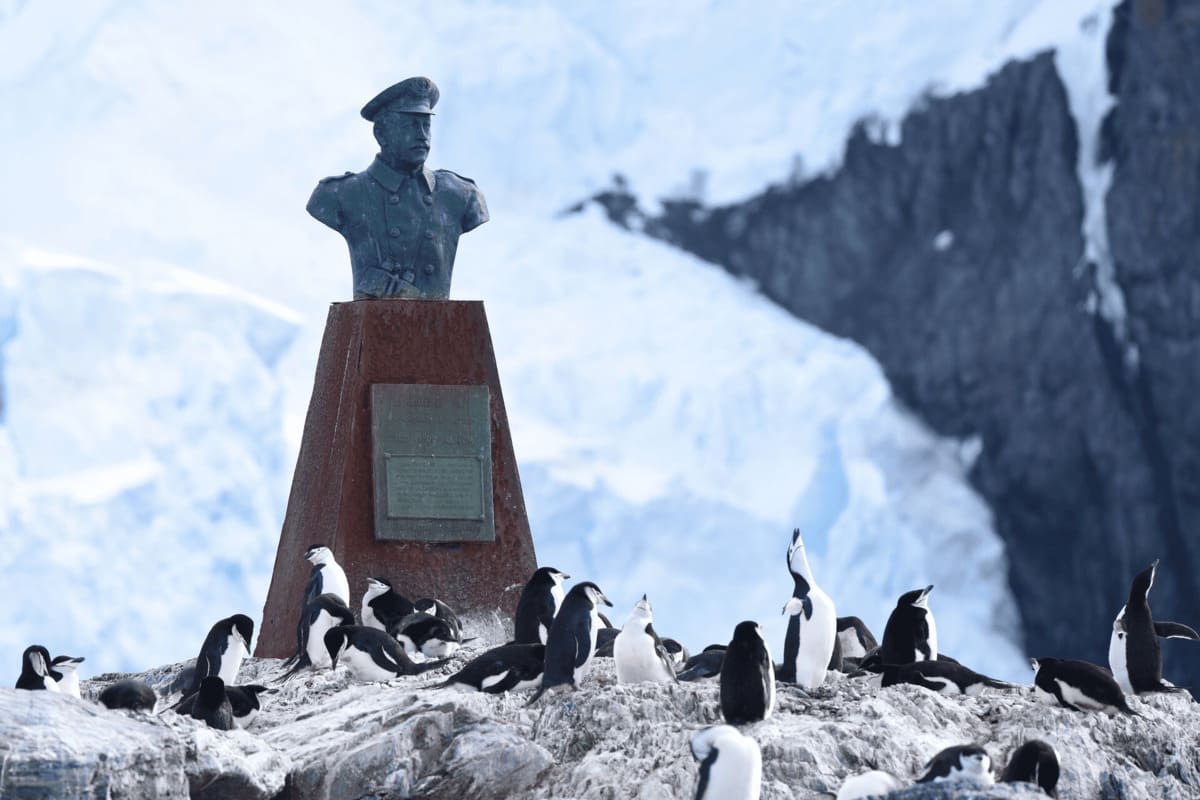
During the Antarctic winter, chinstraps frequent the areas north of the pack-ice zones and return to their breeding spots between October and November. The female typically lays two eggs in late November, and both penguin partners incubate the eggs for around 33 to 36 days. Chinstraps tend to be ill-tempered and territorial, and you can often see them squabbling with their neighbors over the perfect nesting spot. Our Antarctic cruises departing from early November to January are perfectly timed to see them nesting and raising their chicks!
Kings, Macaronis, and Rockhoppers:
Sub-Antarctic Penguin Species
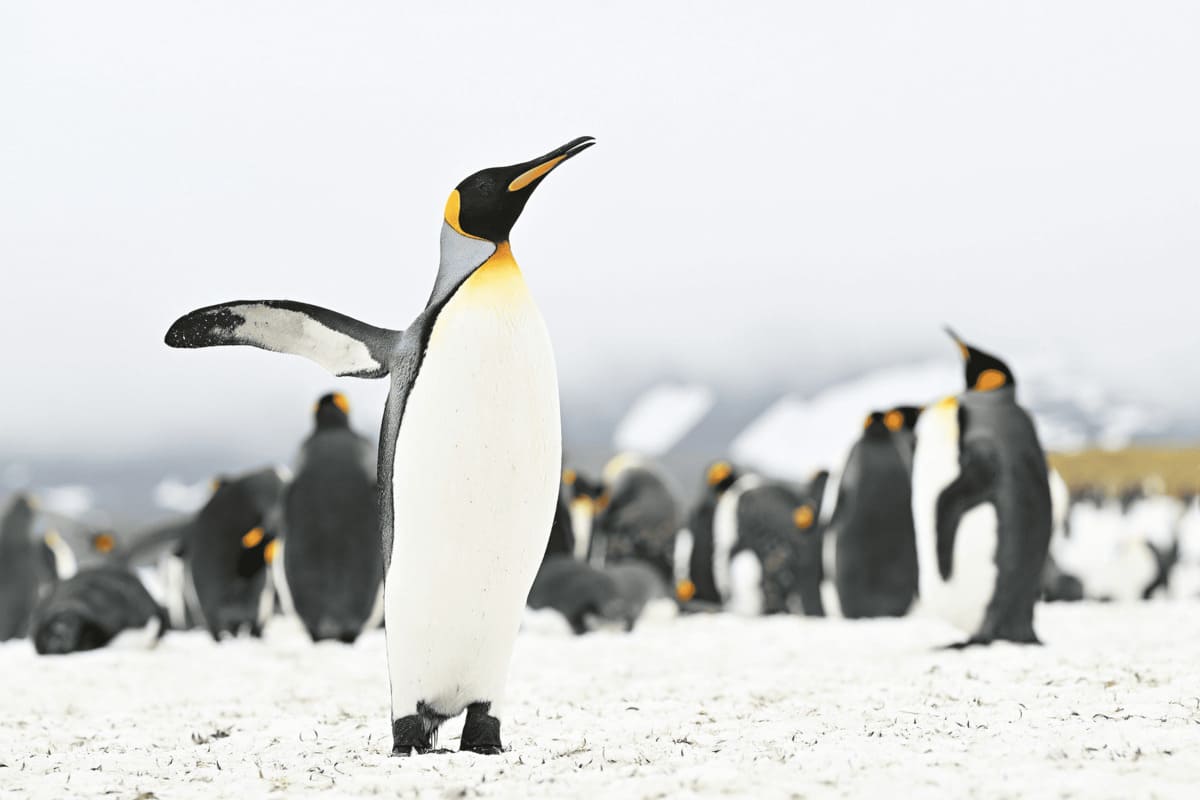
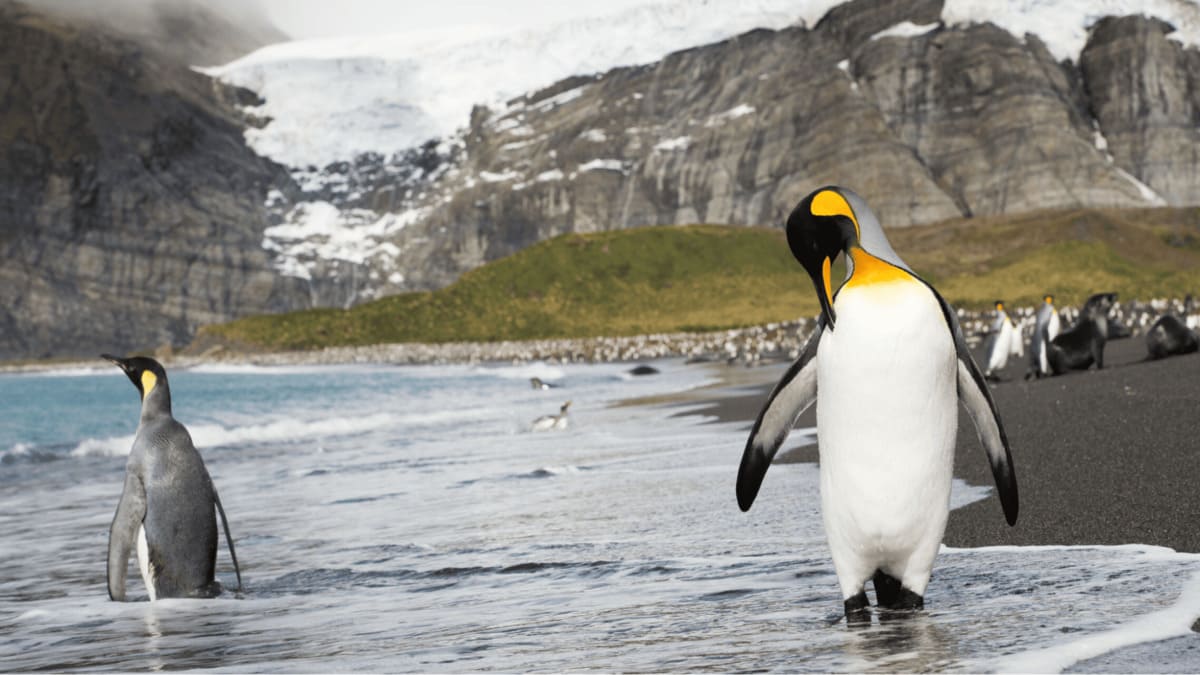
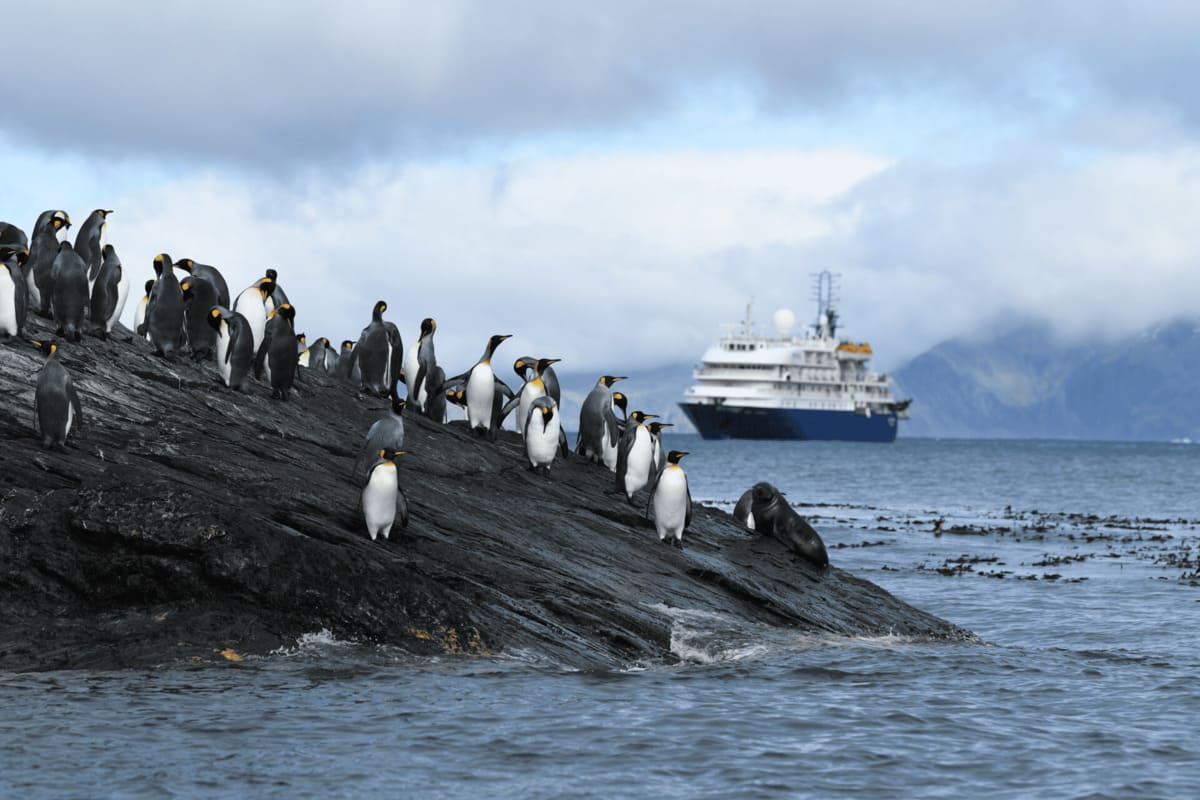
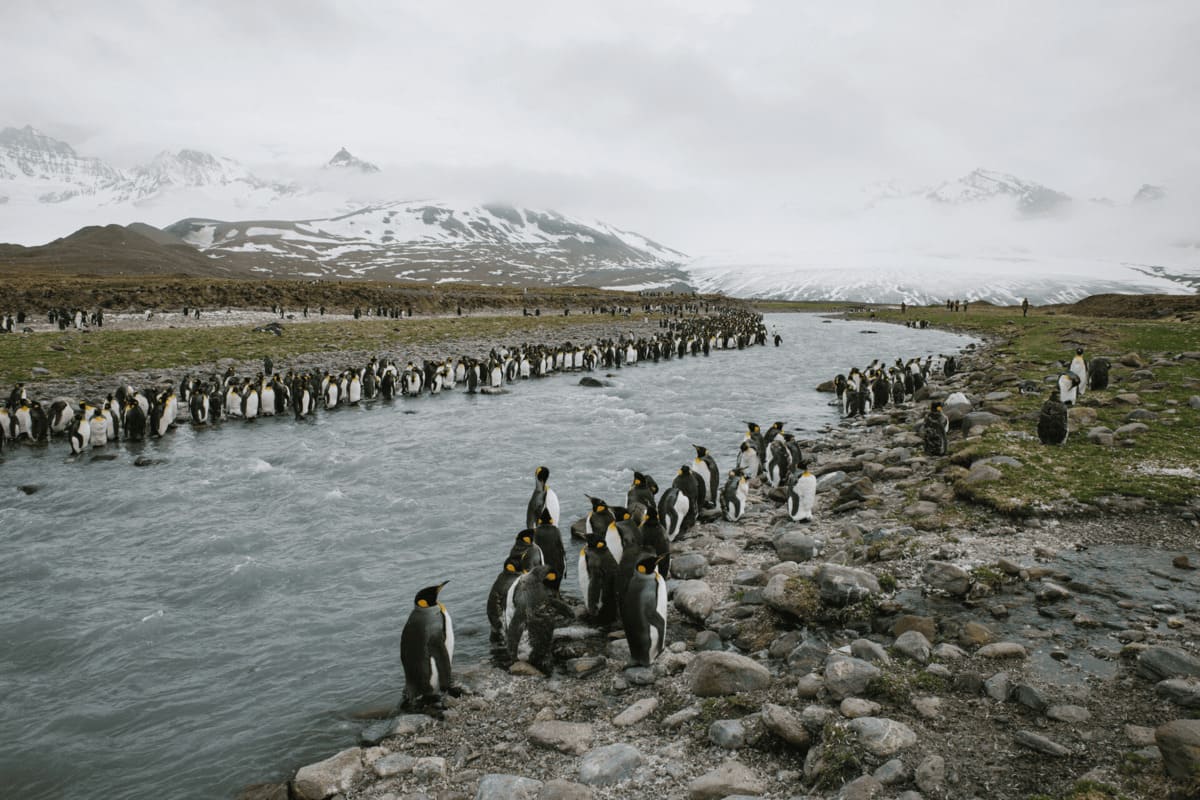
Not all penguins call the icy regions of Antarctica their home. Some of the most charismatic species prefer the milder climates on the subantarctic islands. On our South Georgia and Falkland cruises, you can spot king, rockhopper, and macaroni penguins on pristine and ice-free beaches. On South Georgia Island, you’ll find majestic kings, the second-largest penguins in the world. See them waddling the island’s stunning landscapes with picturesque mountain ranges and expansive plains. According to the British Antarctic Survey, currently around 450,000 breeding pairs inhabit South Georgia. In St. Andrews Bay alone, you can find an estimated 250,000 breeding pairs.
Did you know that macaroni penguins are one of the noisiest species? They’re not only extremely vocal but also bring a touch of flamboyance to the Antarctic. When 18th-century polar explorers spotted these yellow-crested penguins, they named them after the fashion icons of the time, called macaronis: young men dressing in flashy and colorful styles. Their smaller cousins, the bouncy rockhoppers, inhabit similar areas in the subantarctic regions, and true to their name, hop over the rocky slopes and cliffs of the islands. A great way to spot them is to book one of our cruises stopping at the Falkland Islands!
King Penguin Diet and Breeding Cycle
King penguins are great swimmers and divers, spending a large portion of their lives at sea. They can dive to depths of 300 meters (1000 feet), feeding on small fish called myctophids, lantern fish, and squid. During the austral winter, they often need to travel hundreds of miles in search of food, but in summer, the subantarctic waters close to their colonies swarm with prey.
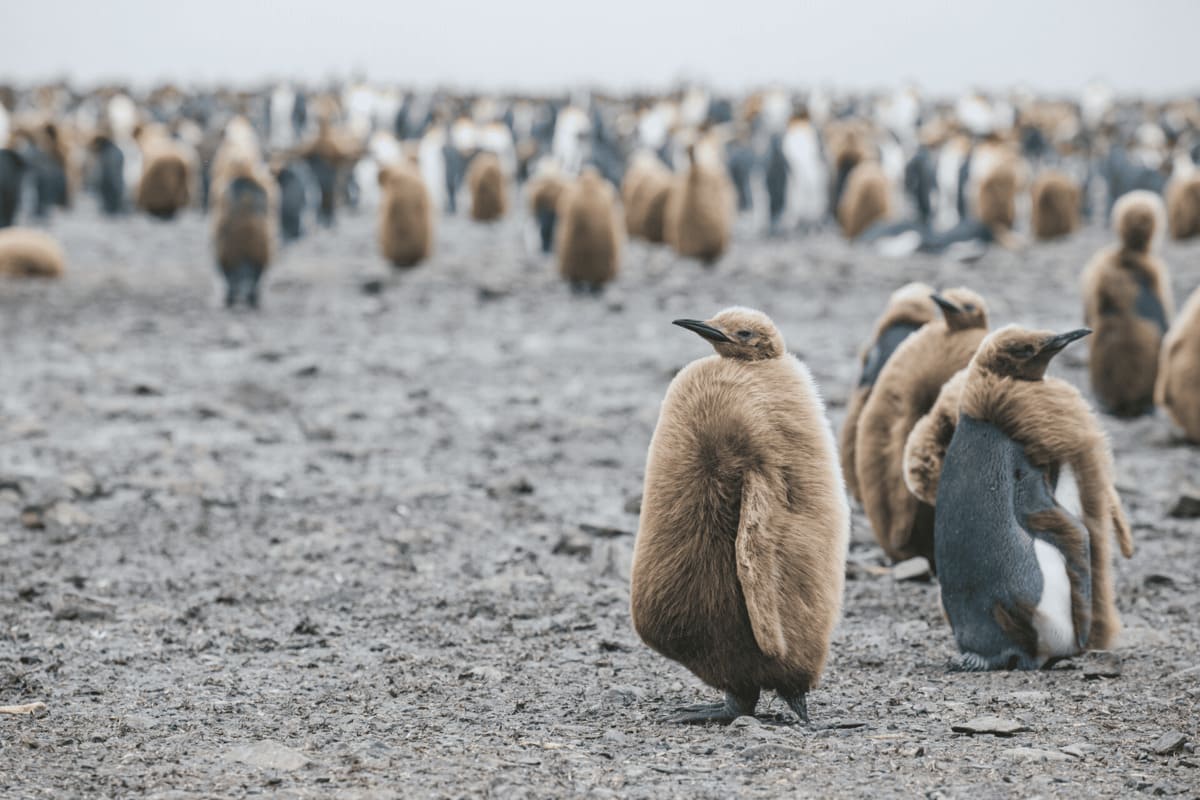
King penguins’ breeding cycles can take up to 14 months, one of the longest among all penguins, allowing them to raise only two chicks in a three-year period. Females lay one egg in November or December, which both parents incubate over the following 55 days. Visit their colonies in late January to see the attentive king parents caring for their fluffy chicks. During the austral winter (April to August), parents head to sea for extended foraging trips, leaving their young ones behind. That’s when the young downy penguins often lose up to 50% of their body weight!
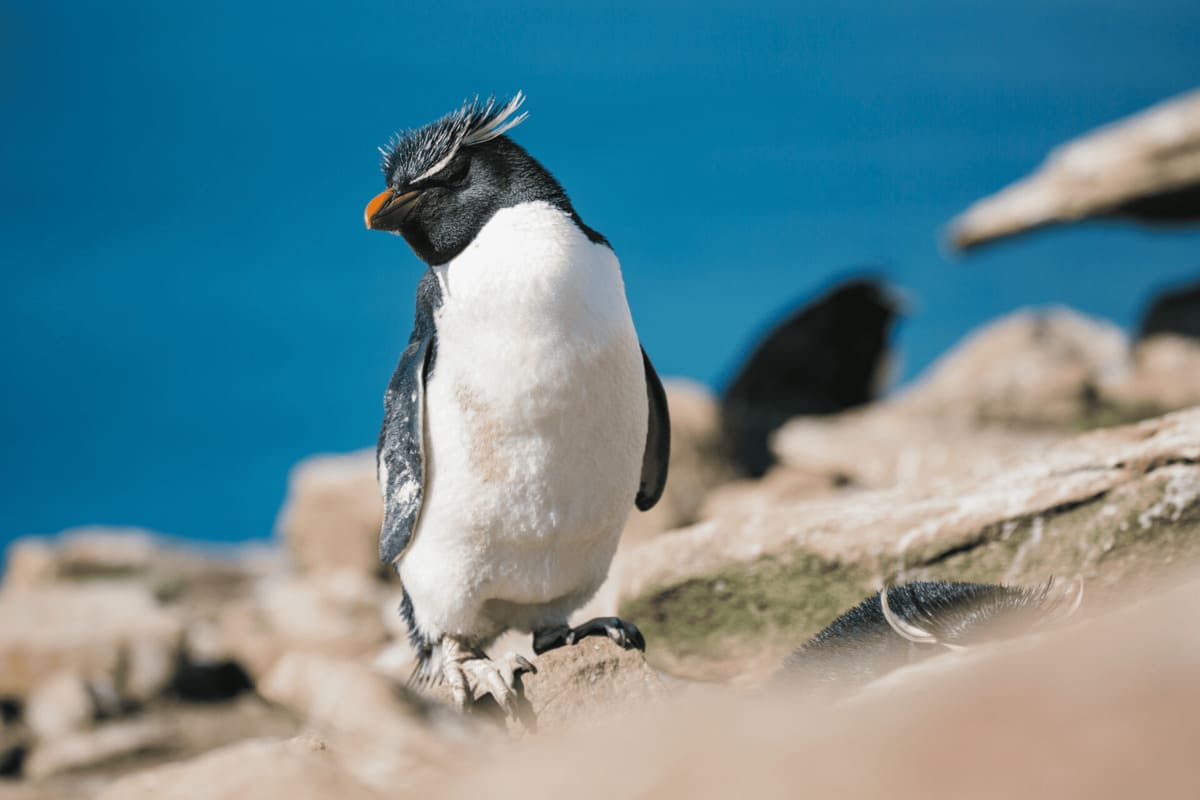
Macaroni and Rockhopper Penguin Characteristics
If you hear a loud braying sound around the subantarctic islands, chances are you’re close to a macaroni or rockhopper penguin colony! Both feature a signature yellow crest on their heads, but how can you tell them apart? We’ll give you a few hints on how to pinpoint the exact species:
- Size matters
Macaronis stand tall at up to 70 centimeters (28 inches), while rockhoppers are smaller, reaching only around 50 centimeters (20 inches). - The shade of yellow
Look closely at their crest feathers! If they appear golden-yellow to orange and fan out from the forehead, you’re likely looking at a macaroni. Rockhoppers have shorter, thinner, and paler yellow crests that start above their eyes and extend along the sides of their heads. - The bill test
Macaronis have a broader, blunter bill, while rockhoppers feature a slimmer beak.
And if you’re still not sure how to properly distinguish them, join one of our cruises and stay close to our onboard penguin experts. They’ll correctly point out each species and give you their full bios during nature walks and Zodiac cruises. (Suggestion links to Falkland/South Georgia cruises).
Amazing Adaptations
How Penguins Survive in Antarctica
These adorable icons of Antarctica have evolved to thrive in Antarctica’s extreme cold! While our travelers see a cute and clumsy bird, we celebrate them as sophisticated masterpieces of nature’s bioengineering.
-
Multi-layer insulation. Their dense feathers trap air close to the body, providing insulation and waterproofing. A thick fat layer, called blubber, provides energy reserves and further helps to retain body heat.
-
Heat conservation. Among all species, emperor penguins choose the coldest parts of the continent to breed. Their specialized nasal chambers help them recover heat lost through breathing, and additionally, their closely aligned veins and arteries facilitate their bodies’ heat recycling process.
-
Behavioral Adaptations. In the icy blizzards of Antarctica, huddling in dense groups helps to stay warm. Cooperative parenting ensures that both parents keep up their energy levels while protecting their young ones from predators and the cold. Their seasonal migrating and nesting are perfectly timed for when food is most abundant and the climate favors their breeding success.
But while penguins are somewhat flexible with adapting to climate changes by switching their nesting sites, continuous sea ice changes pose a potential threat, especially for emperor penguin offspring. “If the sea ice breaks up under them, the young chicks will drown or freeze to death,” Peter Fretwell, a researcher at the British Antarctic Survey, reported to AP News in 2023. As co-author of a 2023 study on record sea ice lows in Antarctica published in Communications Earth & Environment, Fretwell’s team used satellite imagery to analyze nesting sites, trying to find clues about how sea ice decline affects emperor penguins. Their results show that of 62 known colonies, around 30% were affected by low sea ice levels in 2022. And while penguins may recover from one or two bad breeding seasons by looking for more favorable sites, an ongoing sea ice decline may paint a grimmer future.
Penguin Swimming and Hunting Adaptations
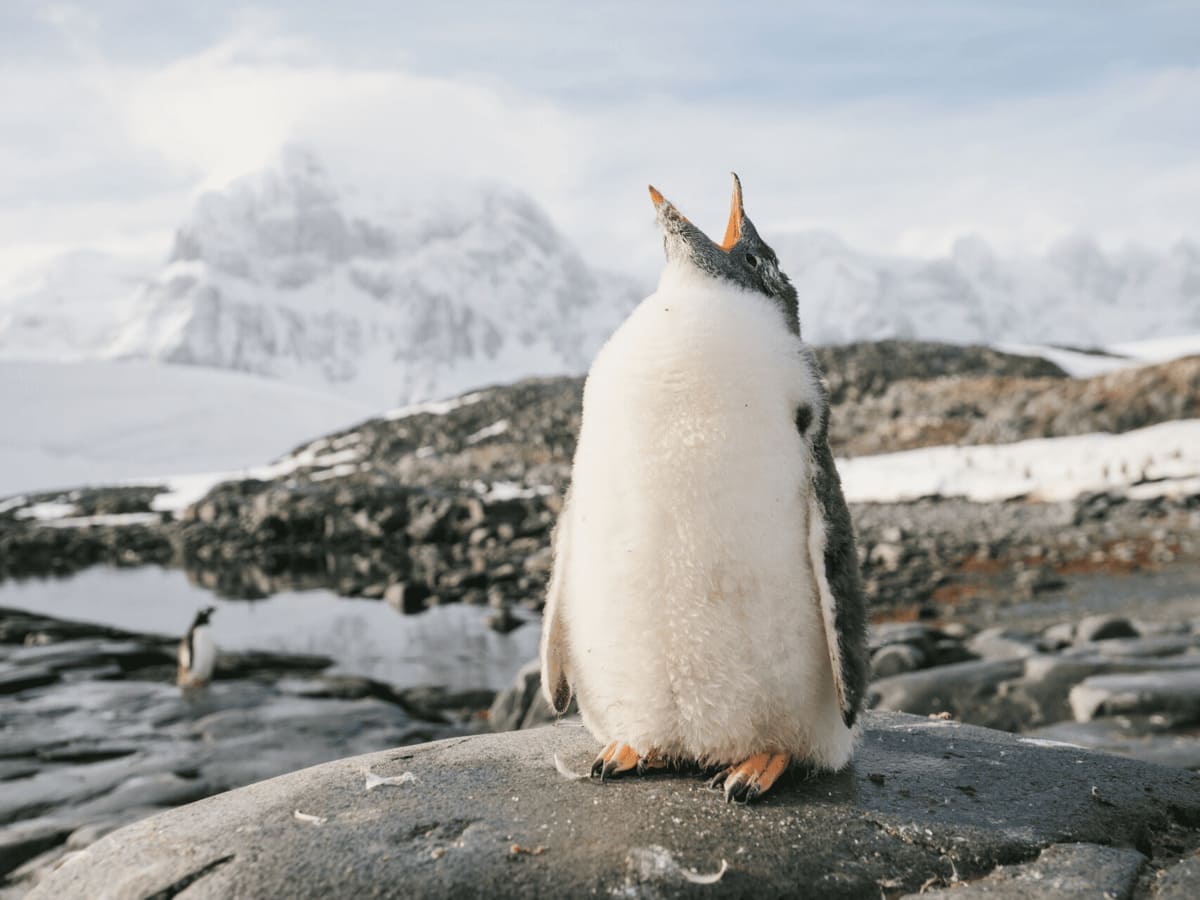
Penguins are built for life in the freezing Antarctic waters! According to researchers, penguins lost their ability to fly somewhere around 60 million years ago, and have since had plenty of time to adapt to their aquatic lifestyle. While clumsy on land, once underwater, these seabirds transform into master swimmers and perfect hunters. Their torpedo-shaped bodies minimize drag, allowing them to glide effortlessly through the sea. Unlike flighted birds, penguins have solid bones, which help to counteract buoyancy during their deep dives. Their iconic paddle-like flippers allow them to propel through the water with incredible speed, abrupt turns, and braking on their hunts for fish and krill.
Penguin Social Behaviors and Communication
Penguin colonies are true soap operas! There’s always something to squabble about: the annoying neighbor invading your territory, the sneaky stone thief stealing pebbles from your newly-built nest, or the charmer trying to move in on your partner. Penguins use a variety of visual and vocal tools to settle their affairs. Males are territorial and defend their nesting sites with loud calls, wing-flapping and, if necessary, aggressive pecking. During courtship, pairs engage in head-shaking and bowing to get to know each other. They keep using these rituals later in their relationships to reinforce their bonds! Penguins can locate their chicks among thousands of birds by their distinctive calls, a vital skill in the noisy colonies. And penguins may even communicate during underwater hunts. A 2019 study published in Peerj recorded underwater vocalizations of penguins, especially when feeding. Andrea Thiebault, a biologist at Nelson Mandela University in South Africa, and her team recorded more than 200 distinct underwater vocalizations. Scientists are curious to find out in further studies if this is just a mere expression of excitement when finding food, or if it could serve other purposes, such as communication for hunting success.
Where to See Penguins in Antarctica:
The Best Viewing Locations
It’s surprisingly easy to see penguins in the wild! You don’t have to venture deep into Antarctica’s icy interior, as these iconic seabirds prefer the coastal regions as well as the subantarctic islands. And there aren’t any penguins living directly on the South Pole. One of the best ways to encounter multiple species is on an expedition cruise to Antarctica and the subantarctic islands. Spot gentoos, rockhoppers, and macaronis on the grassy slopes of the Falklands, kings on South Georgia Island (for example, at St. Andrews Bay and Salisbury Plain), and Adélie and chinstraps around the Antarctic Peninsula and Deception Island. Zodiac cruises, kayak excursions, and guided shore landings will bring you as close as possible to wildlife while observing the minimum 5-meter (15-foot) distance required by IAATO (International Association of Antarctica Tour Operators) regulations.
When to Visit Antarctica:
The Best Penguin Seasons
The austral summer, from November to March, is the perfect time for penguin encounters in Antarctica. While you can also spot penguins during the winter, most species spend the colder months at sea on extensive foraging sprees. Visit between November and December to see the charming penguin courtship and nest-building rituals. By January, chicks start to hatch, and throughout February you can see the busy penguin parents attending to their fluffy offspring. November through February is the best time to visit for wildlife photography!
Conservation Challenges:
The Future of Antarctica's Penguins
With the polar regions warming and sea ice declining, how will penguin populations be affected in the future? A 2025 study published in Nature Communications: Earth & Environment by Peter Fretwell, a senior geographic scientist with the British Antarctic Survey, and his team analyzed emperor penguin populations via satellite imagery from 2009 to 2024 on the Antarctic Peninsula, Weddell Sea, and Bellingshausen Sea. The authors found penguin numbers declining by 22% over those 15 years. Scientists worry this trend may be similar for other regions of Antarctica. Emperor penguins particularly depend on stable sea ice, which has become patchy and unreliable in recent years.
And it isn’t just the loss of habitat that worries researchers. Ocean warming and sea ice loss endanger krill, the main food source for penguins and many other Antarctic species. As it is one of the most delicate ecosystems on Earth, tourism in Antarctica adheres to strict rules and regulations to preserve its wildlife and pristine nature. We at Poseidon Expeditions advocate for sustainable, responsible small-group expedition cruising, ensuring low-impact visits to Antarctica. And our expeditioners may start the journey as visitors but return as enthusiastic ambassadors for the preservation of these fragile ecosystems.
Planning Your Antarctic Penguin Expedition:
Expert Tips
If seeing penguins is on your bucket list, there’s no better place than Antarctica. As seabirds, penguins frequent the coastal areas and subantarctic islands, making them easy to spot on expedition cruises. With over 26 years of polar cruising and wildlife experience, we’ll give you our top tips for planning the perfect expedition adventure!
- Choose your cruise
All of our Antarctic cruises offer incredible penguin encounters! Depending on your time and budget, you can choose from 12-day adventures crossing the Drake Passage to the Antarctic Peninsula to extended 23-day expeditions that also visit the Falkland Islands and South Georgia, home to rockhoppers, macaroni, and king penguins! Ready to book? See our upcoming departures here: LINK to Antarctic cruises. - Hop aboard our Zodiacs
We organize regular Zodiac excursions and shore landings whenever conditions permit. From aboard our small, inflatable, motorized boats, you can get the best viewing opportunities for penguins and other wildlife! Our experts help you identify each species and tell you everything you’ve always wanted to know about your favorite penguins. - Paddle in a kayak
Join our kayak club and explore at your own pace. It will give you close-up encounters, and we’ve had cases when penguins darted in and out of the water right next to our kayaks! - Bring zoom lenses and binoculars
It’s the best way to observe the hustle and bustle of the colonies and take the best wildlife pics from a safe distance, without disturbing their daily routines. That way you can capture their natural behaviors and take home amazing penguin shots! - Keep your eyes open
During landings, you’ll be overwhelmed by so much wildlife around that it’s easy to miss what’s happening right behind you. We’ve had countless situations when people were focusing on one penguin group nearby while a few curious birds quietly waddled up from behind!
Join one of our upcoming Antarctic cruises and see penguins in the wild! With us, encounters are always safe for you and the wildlife, as we proudly follow all IAATO guidelines and operate under the Antarctic Environmental Protocol, ensuring our voyages have a minimal impact on this pristine wilderness. We’ll see you aboard!
FAQs
What types of penguins live in Antarctica?
There are seven penguin species found in Antarctica and its adjoining islands. Emperor penguins and Adélie penguins are among the true Antarctic species, while gentoo, rockhopper, macaroni, and king penguins are found on the subantarctic islands.
How many penguin species live in Antarctica?
There are seven penguin species in Antarctica and the surrounding islands.
Where can you see different penguin species in Antarctica?
You can see different species on the Antarctic Peninsula, such as gentoo, chinstrap, and Adélie penguins. The subantarctic islands are great to spot king, macaroni, and rockhopper penguins. If you want to see emperor penguins, Snow Hill Island features an accessible colony.
What is the best time of year to see penguins in Antarctica?
While generally you can spot penguins year-round, the Antarctic summer (November through March) is the best time to see them in their large breeding colonies on land.
How do Antarctic penguins survive the extreme cold?
Penguins stay warm through dense, insulating feathers, a thick layer of blubber, and specialized blood vessel systems that conserve heat in their extremities. Social behaviors like huddling help to stay warm as a group.
Do all penguins live in Antarctica?
No, not all penguins live in Antarctica. Only emperor and Adélie penguins are true Antarctic residents, while rockhoppers, macaronis, and kings prefer the subantarctic islands. Magellanic penguins are found along the southern coasts of South America, and Galapagos penguins only inhabit the Galapagos Islands, near the equator.
Why do penguins live in Antarctica?
Penguins thrive in the Antarctic region, enjoying the colder and krill-rich Southern Ocean. As flightless birds, they enjoy a relatively land-predator-free environment, allowing them to nest ashore and forage in the nearby waters.
What are the unique characteristics of emperor penguins?
Emperor penguins are the largest penguins on Earth and incredibly adapted to the extreme cold. They breed during the Antarctic winter months and do not build nests. Males incubate the egg in a warm skin fold, balancing the egg on their feet.